How might the world of Elaine Constantine’s photography connect with Post-Impressionist canvases?
Until the mid-twentieth century, photography was not considered a distinct or fully realized form of fine art. From its technical advent in the first half of the nineteenth century—specifically in 1822—it was perceived merely as a way to capture reality in a static, almost unemotional manner, akin to portraiture, landscape, and so on.
As technology advanced toward the end of the 19th century, photography became an indispensable element of visual communication. Photography played a significant role in the commercial sector, particularly advertising; however, the general public—and more specifically, the artistic community—continued to view the field as secondary, essentially no more than a «tool.» That is, while the role of photography in terms of social necessity was undeniably growing due to the demand for a high-quality, innovative perspective on mundane items such as posters, announcements, and product packaging, it was still largely perceived as subordinate.
Even at this stage, in order to shake off the clichés of «soullessness» and «staticity,» photographers begin to employ various methods of «animation.» For instance, creating collages from multiple shots or utilizing composite printing.
Later, in the 1920s, influenced by avant-garde painting, modernist and subsequently postmodernist movements emerged. Photography was no longer viewed from the conventional «human» perspective but, conversely, was compared in perception to something more akin to an autonomous art form.
Time marches on; technology evolves, photographers' skill deepens, and photography becomes a commonplace subject in society. What was once a trend gradually integrates into daily life.
«Fashion photography» emerges as a distinct phenomenon. In the 1920s and 1930s, magazines like Vogue and Harper’s Bazaar actively developed and became global leaders in the field of fashion photography. Later, in the postwar years, this concept was re-evaluated, leading to its full «dawn» in the 1950s and 1960s.
By the 1980s and 1990s, fashion photography embraced various innovative approaches, such as the work of the iconic photographer Helmut Newton.
On one hand, photography was evolving as an independent art form, undergoing a natural transformation for the better—exactly as people who were passionate about this craft imagined it 50–100 years ago.
However, while at the end of the 19th and beginning of the 20th centuries photography was rejected as lacking dynamism from an artistic perspective, by the 1980s, this movement had become nearly the defining characteristic of the era.
This raises a question: if physical freedom is achieved in photography, does that extend to metaphorical freedom?
Yes, there is movement in the photography now. Yes, dynamism prevails. And yes, undeniably, we see progress.
But is there freedom in these excessively «perfect» facial features? Can a photograph constructed by a man according to his own canons of «unrestraint» truly convey genuine freedom? Is there true will in this physique? Is there beauty within these confines?
Elaine Konstantin — a photographer who transcends the bounds of «perfect» 1990s glossy photography.
She never aspired to mimic glossy perfection; it was precisely for this that she was so beloved. In the photographs, sincerity and character shine through—her appearance is hardly the main focus.
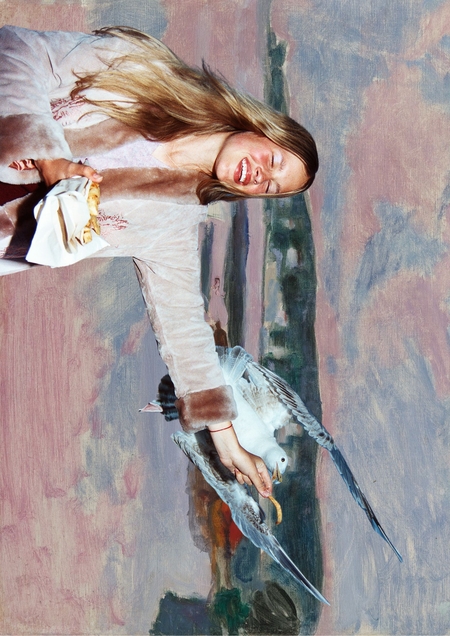
Ellen Constantine, «Seagull,» 1997
I like the idea of freedom and informality—it’s the antithesis of the idealized image that many fashion houses strive for, which often turns people into mere commodities.
I recently read in letters between the great Post-Impressionist Vincent van Gogh and his brother Theo:
The artist is free to exaggerate, to create… a nature more beautiful, more simple, more comforting than ourselves…
The great Dutchman based his assertion on the philosophy of creation by Guy de Maupassant, which he outlines in the preface to the novel «Pierre and Jean»:
«Instead of extensively explaining the emotional state of a character, objective writers look for the action or gesture that a person in a specific state of mind, under certain circumstances, will inevitably perform. They compel the hero to behave from the beginning to the end of the book in such a way that all his actions, all his impulses, are a reflection of his inner nature—a reflection of his thoughts, desires, or doubts. They thus conceal psychology rather than displaying it, making it the framework of the work, similar to the invisible bones that constitute the human skeleton. When an artist paints our portrait, he does not show our skeleton. Great artists are those who instill a personal illusion in humanity.»
The psychology of action, gesture, feeling, and emotion—this entire dynamic energy of sequences stretching into infinite space—pervades the paintings of Van Gogh, Paul Gauguin, Toulouse-Lautrec, Georges Serra, Pierre Bonnard, and other Post-Impressionists to an equal extent as the photographic images of Elaine Constantin.
It is here that the mental kinship of such diverse forms of creativity emerges so clearly—forms cast by the river of time onto the shores of different epochs and cultures.
TABLE OF CONTENTS
I. DANCE Dynamics Comparison
II. VICE Antithesis
III. FEELINGS AND SENSITIVITY Emotional Comparison
DANCE
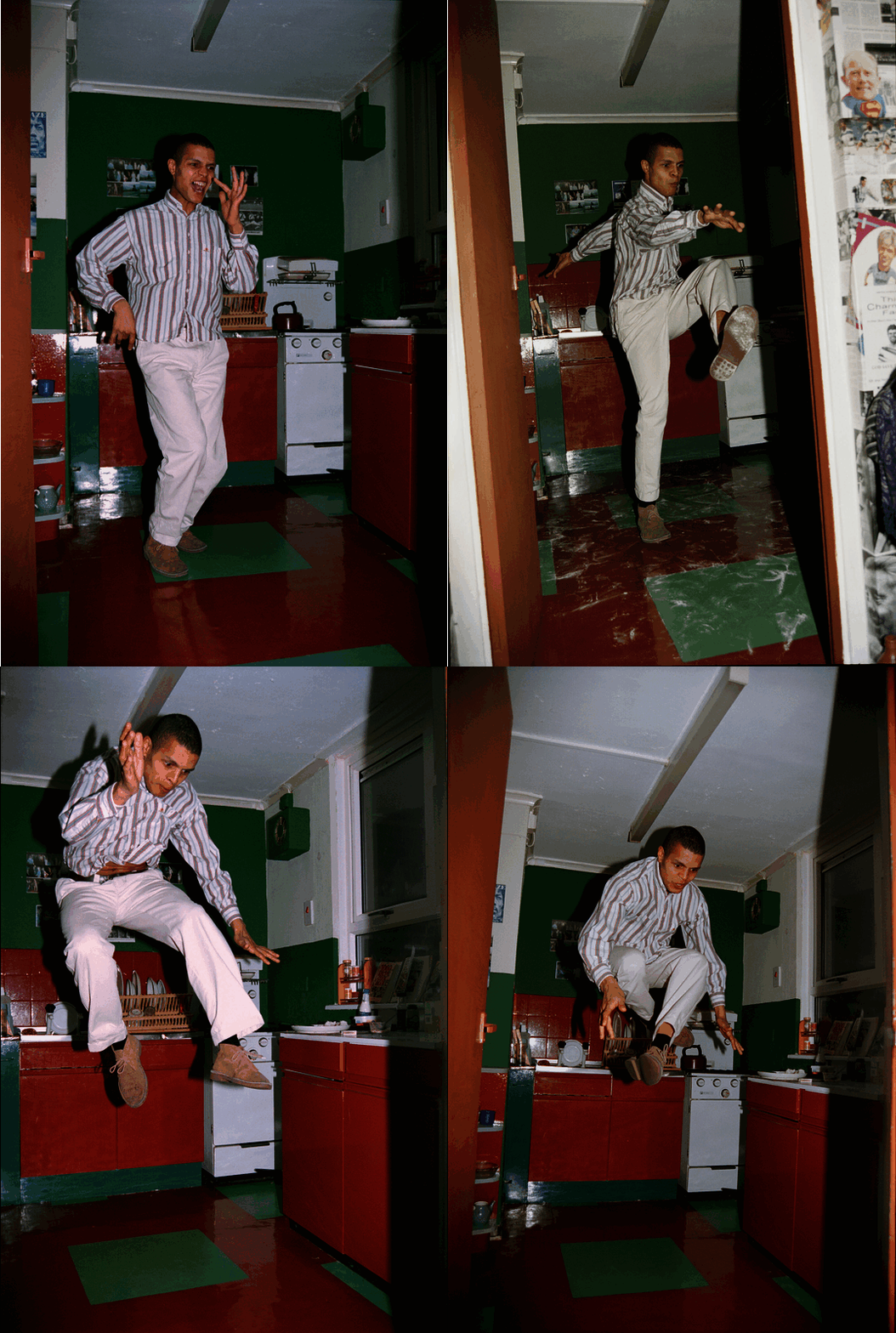
Elaine Konstantin, Series of 4 Works, «Steve’s Kitchen, ” 1993
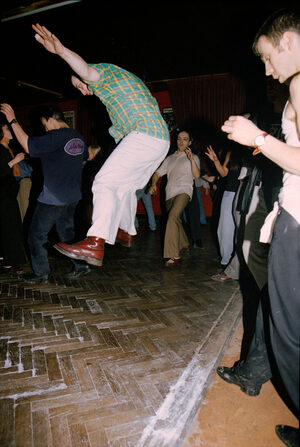
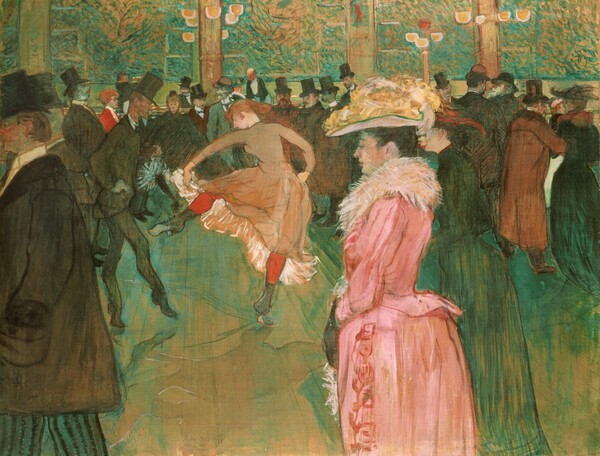
Eileen Constantine «Nimrod,» 1993 // Henri de Toulouse-Lautrec «Dance at the Moulin Rouge,» 1890
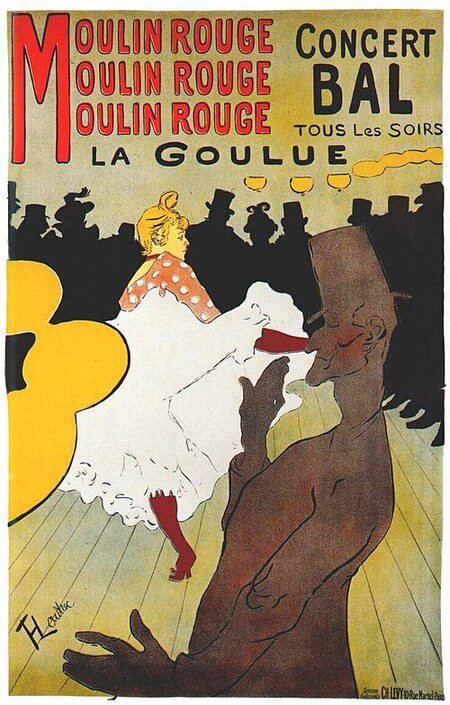
I am highlighting dance as a particularly relevant theme for comparison in my research.
The author most closely aligned with this topic is, naturally, Henri de Toulouse-Lautrec. His works frequently feature movement and dance, partly due to the famous Moulin Rouge cabaret, where he often frequented and found inspiration. This is why you see the nude figures alongside the vulgarly dressed ladies—and incidentally, they are typically quite curvaceous.
Henri de Toulouse-Lautrec, «Moulin Rouge» poster, 1890
My flash blinded everyone on the dance floor.
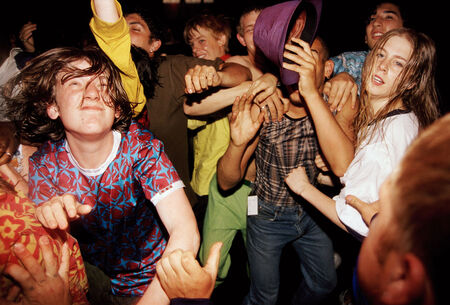
Konstantin sees «the river of time» in dance—it flows through life: from carefree teenage dances at local London parties to the classic, poignant moments of a «Tea Dance.»
Ellen Konstantin, «Slam,» 1997
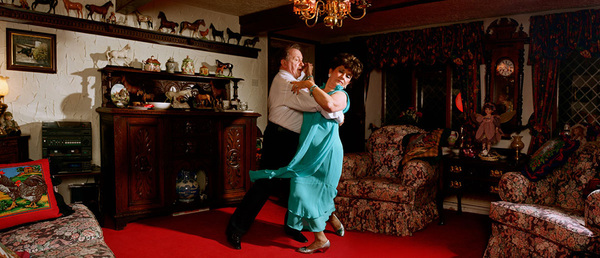
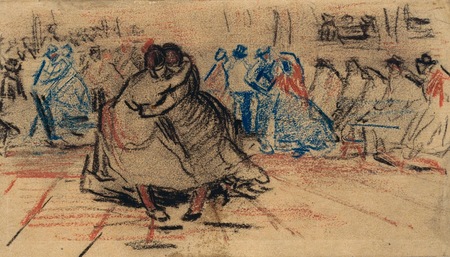
Elaine Constantine, «Liz and Norman» from the «Tea Dance» series, 2002 // Vincent van Gogh, «Dancing Couple,» 1885
VICE
Fragment of Pierre Bonnard’s painting, «Woman in Black Stockings,» 1900
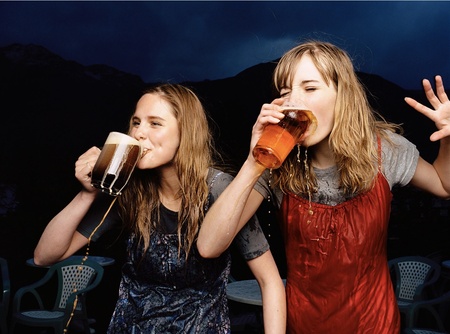
Eileen’s work is an ode to youth, the irony of mistakes, and the lightness of existence. In none of her works can I find judgment of «flaws"—though they are not presented as such. Alcohol here is not a means of escaping reality, but rather another attribute of youth that does not entirely distort it.
Eileen Konstantin, shoot for Vogue Italy, 1999
Vincent van Gogh, «The Drinkers, ” 1890
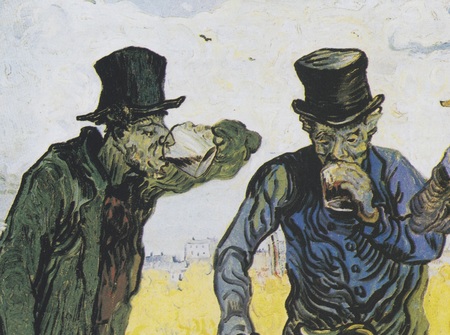
Examining «The Drunks,» the theme of alcohol dependency emerges—a way to escape reality—the banality and everydayness of the working class. A life in which, from a young age, there is an inclination to reject reality in an attempt to distort it with alcohol. In the background are industrial buildings and a cloudy sky, as if shrouding the possibility of a healthy life.
In virtually every photograph, Konstantin explores the delicate line between feeling and sensitivity. Toulouse-Lautrec, conversely, depicts «heavy», morally compromised figures.