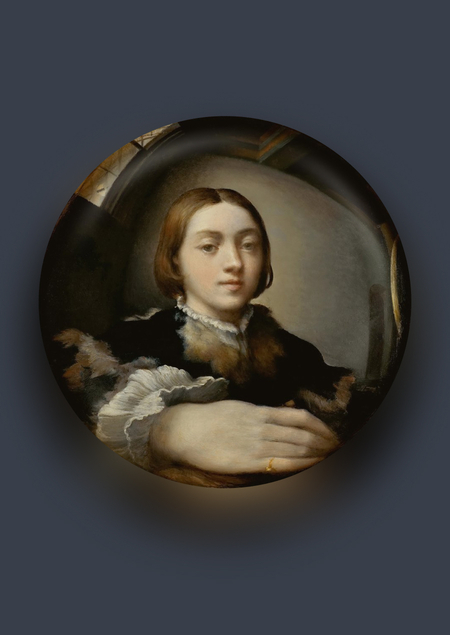
Concept
This timeline analyzes the transformation of the human image in 13th–16th century Italian art—from iconic representations to portraits expressing individuality.
Late Middle Ages and Early Renaissance
The Early Renaissance in Italy represents a transition from sacred convention to the observation of real humans and space. In early examples (Cimabue, Fra Angelico), figures are still subordinate to a golden background and established canon; meaning is conveyed through symbols and signs.
Beginning in the mid-15th century, artists mastered linear perspective and chiaroscuro modeling.
A portrait emerges: Piero della Francesca’s profile is a clear, iconic contour, while Botticelli’s youth is presented without an obvious background, focusing entirely on the character. Girlandaio’s portrait reads as a historical depiction.
Maestro from the Santa Trinita Church, Chimabue, 1288–1292
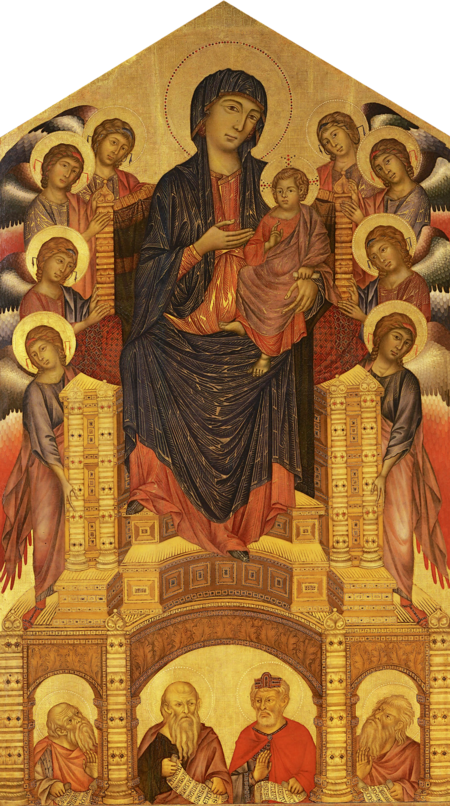
Starting in the 13th century, when portraiture had not yet emerged as a distinct genre, the human image was entirely subsumed by the sacred iconographic tradition. In such compositions, figures lacked individuality and functioned as carriers of religious meaning, yet they began to acquire stable, recurring characteristics.
The face of the Mother of God, despite its adherence to canonical forms, conveys an internal focus and a restrained sense of feeling. While the elements do not form a portrait in the modern sense, they signify the first step toward it.
Madonna of Humility, Fra Angelico, 1430
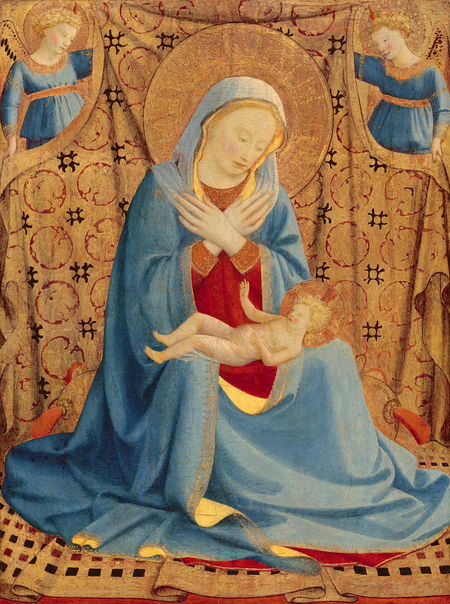
The painting represents a canonical example of art where the human figure is subservient to a decorative and symbolic logic. Archangel Gabriel and the Virgin Mary are depicted against a gold background devoid of depth and perspective, thus excluding any sense of real space. The characters' gestures do not so much convey emotion as they signify meaning: Mary’s sharp withdrawal is a sign of humility and acceptance of divine will, rather than a psychological reaction. The drapery of the clothing emphasizes the rhythm of the composition. In this work, the human being has not yet become an independent subject—they function as a visual vehicle for a sacred message.
Death of a Nobleman from Celano Tadddeo Gaddi, circa 1440
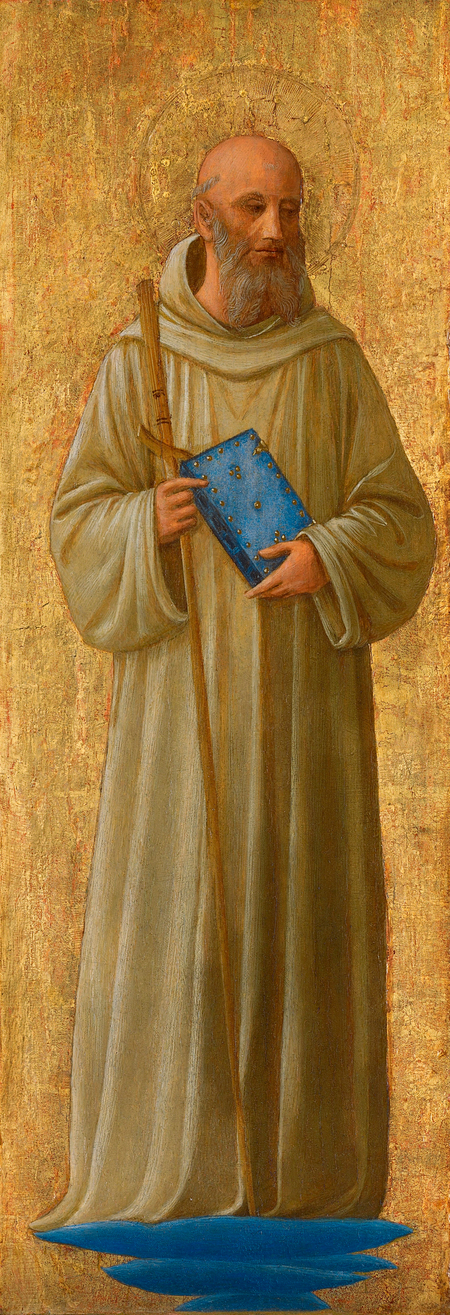
The image of the saint merges iconographic tradition with contemporary understandings of corporeality. The figure is presented frontally against a gold background, yet the body is depicted differently—with more shadow and volume. The saint appears not only as a spiritual symbol but also as a real person occupying a space.
St. Francis and Bishop Fr. Beato Angelico, 1440s
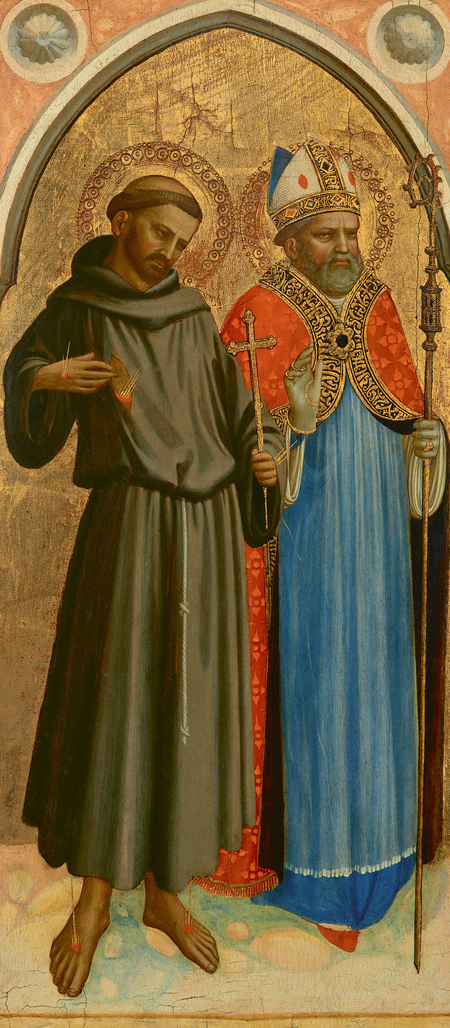
Two figures engage in a visual dialogue built through gesture, bodily turns, and the direction of their gazes. The architectural niche establishes a sense of real space.
What becomes important is not only the religious identity of the saints, but also their human interaction.
Madonna della Loggia, Sandro Botticelli, 1467
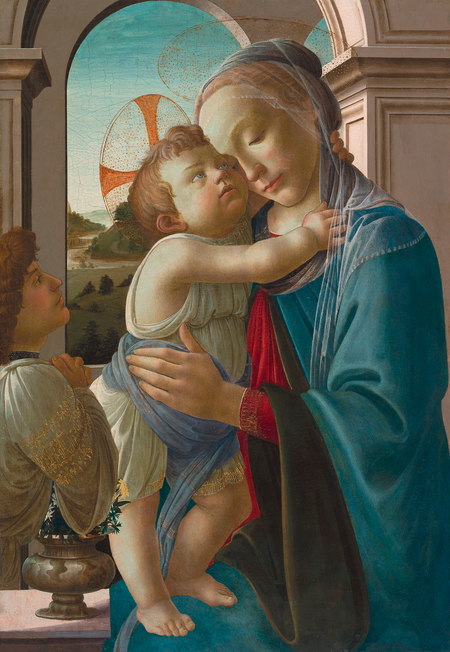
In this early work, Botticelli imbues the sacred subject matter with human warmth.
The Madonna and Child are depicted within an architectural space, grounding the scene in a real, earthly world. They touch each other with their faces; the gestures are soft and natural. The contact between mother and child becomes the primary carrier of meaning. Human feeling becomes the mode of expressing the sacred.
Madonna and Child by Sandro Botticelli, circa 1470
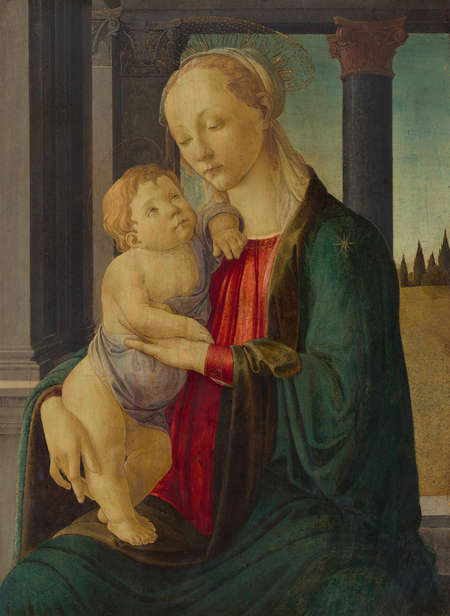
In this painting, the image of the Madonna and Child is built upon gentle physical contact and a serene emotional gesture. Mary bows her head toward the child, and the infant reaches for her, creating a sense of trust. The architectural space and the landscape in the background lend stability and reality to the scene, connecting the sacred narrative with earthly, human experience.
Madonna and Child, Sandro Botticelli, circa 1470
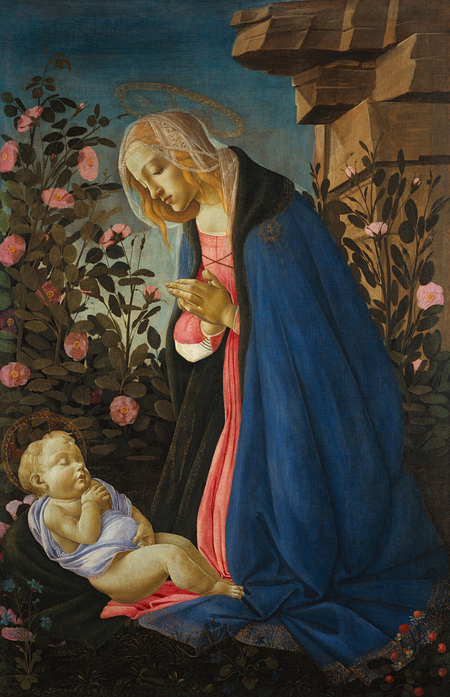
The composition retains a religious canon, yet the figures become more plastic. Maria’s gaze is directed at the child; her gestures emphasize care and attention.
Portrait of Battista Sforza, Piero della Francesca, circa 1472
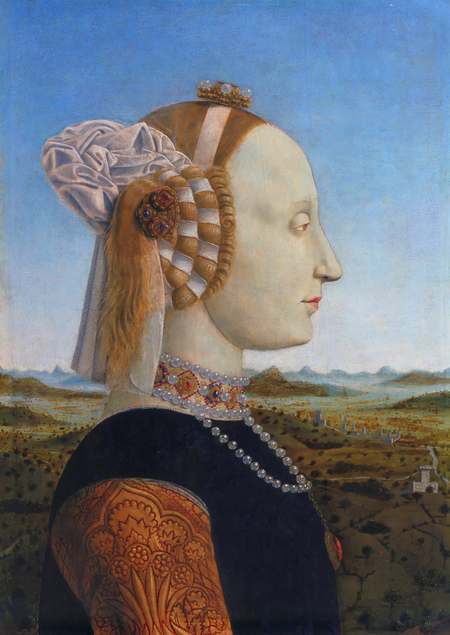
In this portrait, the space is constructed to be extremely flat and conforms to the principle of profile imaging. The model’s figure is presented as a sharp silhouette, almost graphic in its structure, devoid of volumetric modeling.
Portrait of a young man by Sandro Botticelli, c. 1475
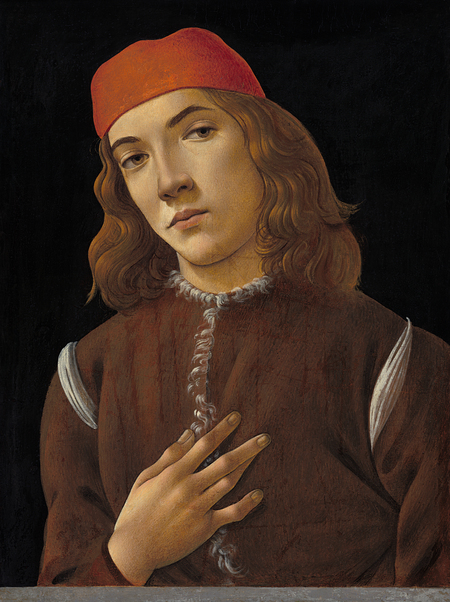
The portrait represents a significant step toward portraying the human as an autonomous subject. The young man is depicted from the waist up, against a neutral background, and without religious attributes. The gesture of the hand pressed to the chest suggests an internal state rather than a social role.
The human being becomes the central and sole subject of the image.
Mary Adoring the Infant with the Boy John, Lorenzo di Credi, 1480.
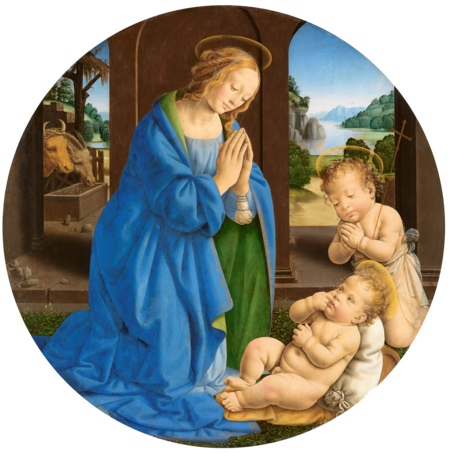
The circular format enhances the feeling of an intimate, enclosed space. Mary is depicted kneeling before the infant lying on the ground, which underscores both maternal love and religious reverence. The figures are integrated into a harmonious composition, and the landscape in the background evokes a sense of the real world.
Portrait of a Lady by Domenico Ghirlandaio, 1490
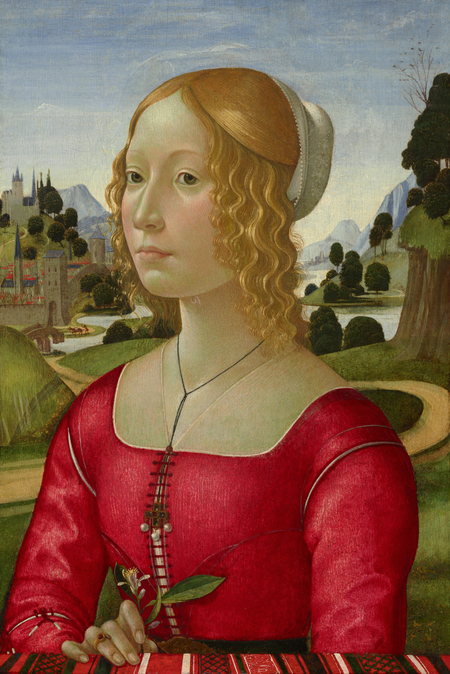
This Portrait concludes the chronology, demonstrating the final formation of portraiture. The profile emphasizes the clarity and rationality of the image, while the landscape creates a sense of an objective, measurable world. The sacred entirely gives way to the human and the earthly.
2. High and Late Renaissance
The High and Late Renaissance was a period when the rules of perspective, proportion, and chiaroscuro discovered in the fifteenth century evolved into a language of psychological expression and individual vision.