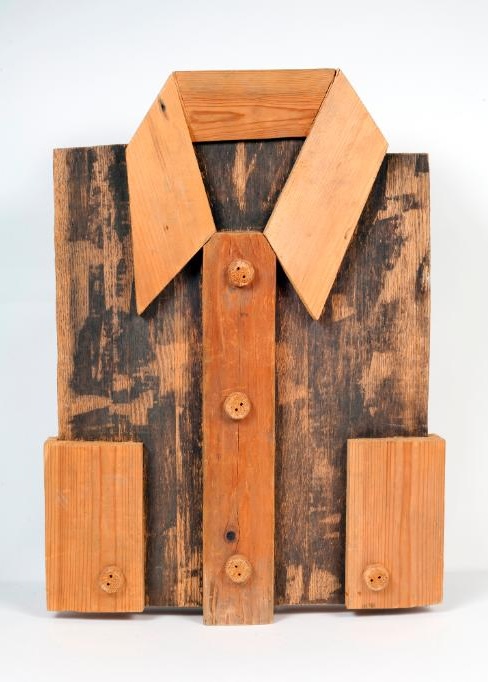

Conceptualism—the art of ideas and texts; analytical, intentionally anti-aesthetic, and non-representational. It emerged as a movement in Anglo-American art in the mid-1960s, with key figures including Joseph Kosuth, Lawrence Weiner, Robert Barry, Douglas Huebler, and the Art & Language group. In his essay «Art After Philosophy» (1969), J. Kosuth proclaimed conceptualism a discipline meant to replace philosophy, declaring the end of traditional modernism: from now on, the goal is not to produce art, but to study its nature.
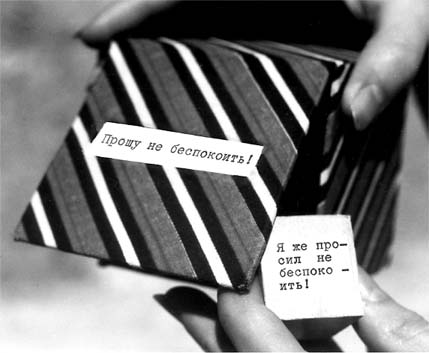
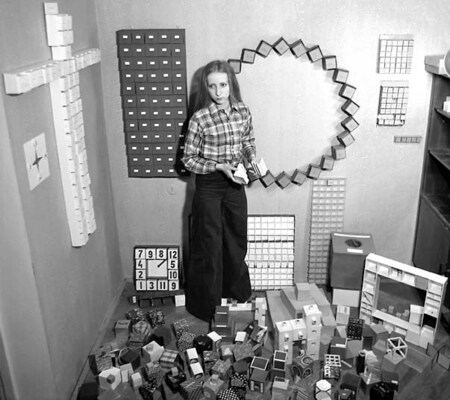
Rimma Gerlovina | «Do Not Disturb» | 8 cm³, wood, cardboard, fabric, paper | 1974 [1] | Rimma Gerlovina | Photographer with works | Documentary Photography | 1976 [2]
Moscow Conceptualism emerged in the early 1970s, developing parallel to its Western counterparts, yet acquiring distinct characteristics. It encompasses the artistic practice of several generations of Moscow artists and poets engaged in conceptual research—sometimes consistently, sometimes in isolated periods. Under the conditions of Soviet censorship, Moscow Conceptualists often referenced hidden semantic codes and played with ironic language, creating multilayered statements that transcended both official and traditional unofficial art. They understood conceptualism not as a specific movement, but rather as a philosophical-aesthetic methodology. Borrowing its tools, they adapted it to the Soviet cultural context and worldview.
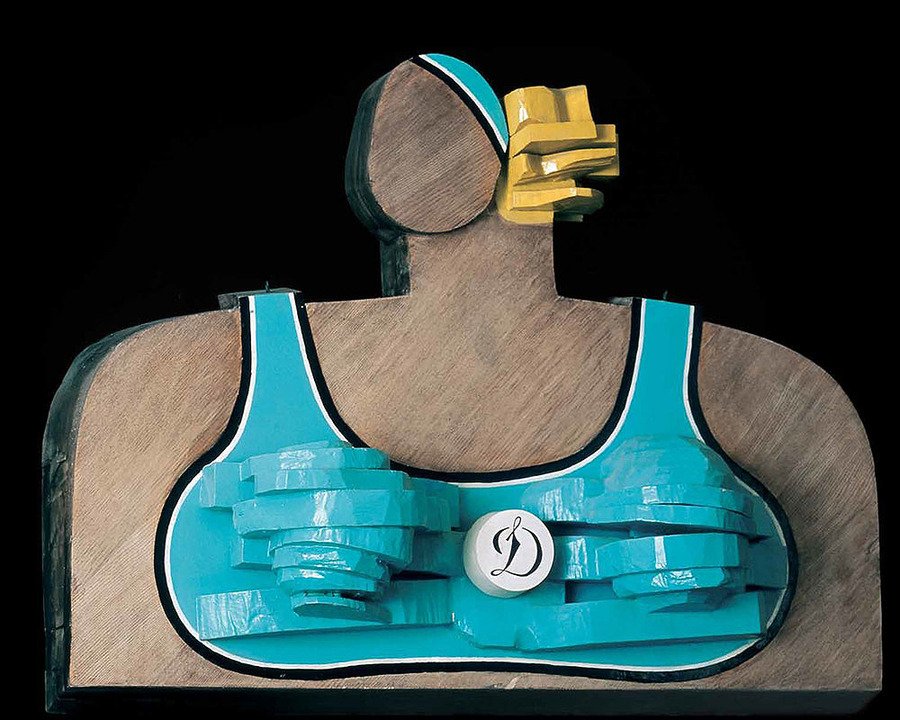
Boris Orlov | «Dinamovka. Variant II» | metal, enamel | 1978 | V. Ovcharenko Collection [3]
A whole list of distinctions raised doubts about the applicability of the term «Conceptualism» itself to the Soviet art scene. However, as Boris Groys notes, Anglo-American Concept Art is just one of many conceptual currents that spread globally in the 1960s–1970s. Despite differences in methods, materials, style, aesthetics, and ideologies, all conceptual artists were united by an interest in «the relationship between image and language.»
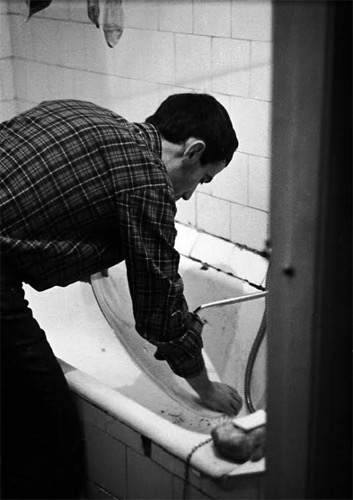
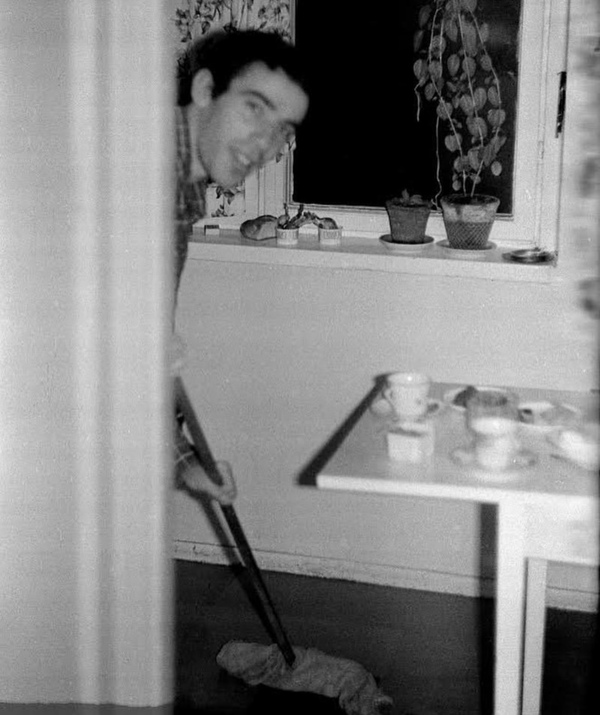
Yuri Albert | «Household Help» | Activity Documentation | 1979–1981 | Author’s Property [4–5]
Moscow Conceptualism emerged during the so-called «Brezhnev stagnation"—a period characterized by total compromise, social apathy, and disillusionment, particularly following the 1968 Prague Spring. The bureaucratization of daily life and the tautology of ideological formulas intensified the sense of timelessness. A tendency toward introspection, previously impossible, began to surface. Within this dense atmosphere of the «long seventies, ” Moscow Conceptualists proposed strategies for reducing ideology and deconstructing Soviet reality through the analysis of linguistic codes and models.
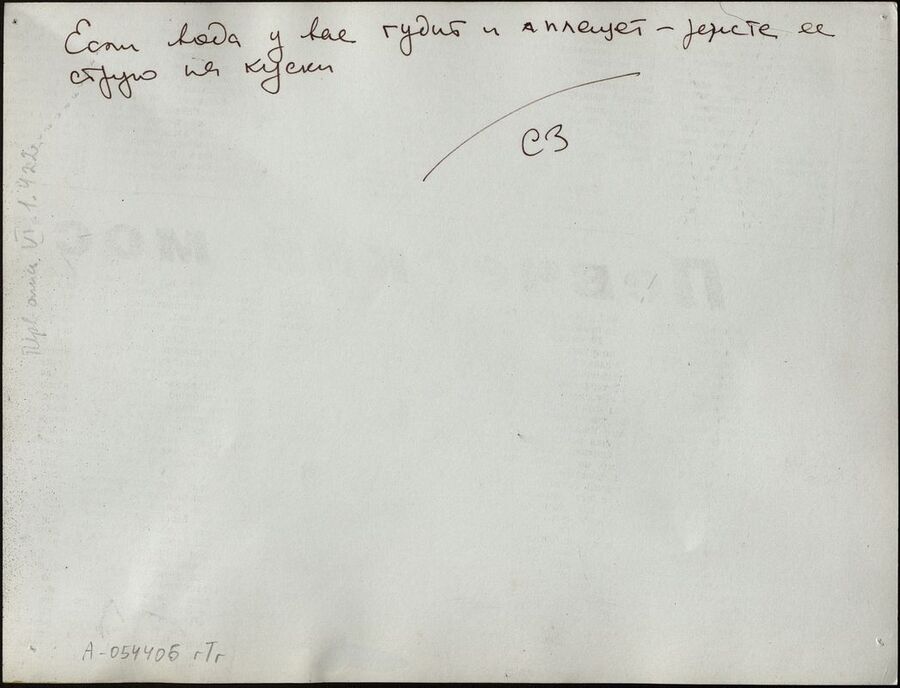
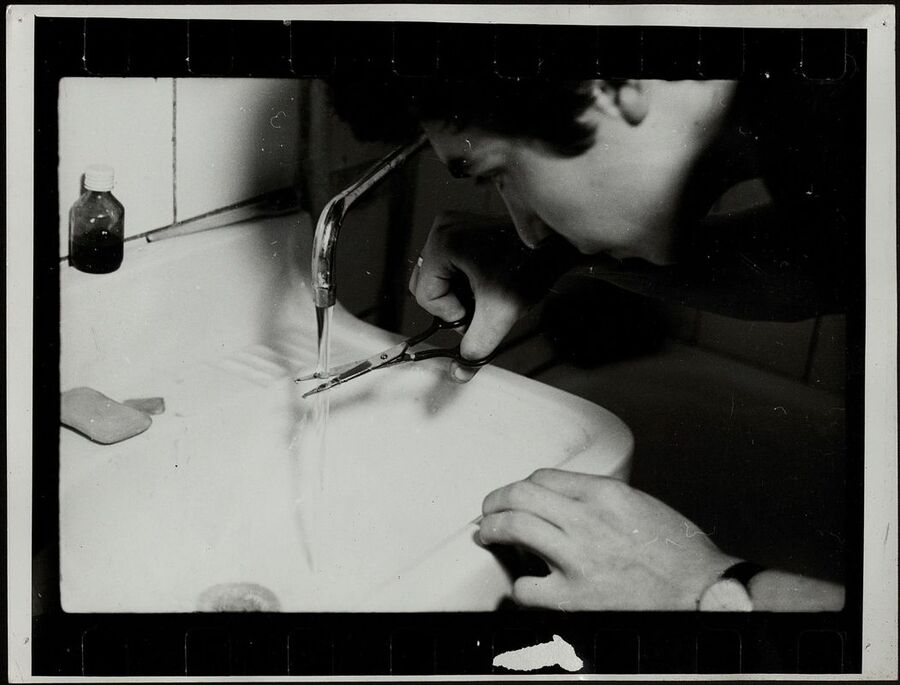
Group «SZ» | from the series «Defense and Self-Defense Courses Against Objects» | staged photography, photographer Yuri Albert | 1981 | Garage Museum archive [6-7]
Heavily sensory-empirical, Moscow Conceptualism drew inspiration from diverse sources—ranging from existentialism and post-structuralism to Buddhism (the concept of emptiness) and mysticism. These philosophical and religious concepts helped artists seek ways to break free from the obsessive reality, to dematerialize it, and to transcend it. Their practices manifested in paintings, objects, albums, book objects, performances, and actions, and the only audience and critics were close acquaintances, since official exhibitions were impossible.
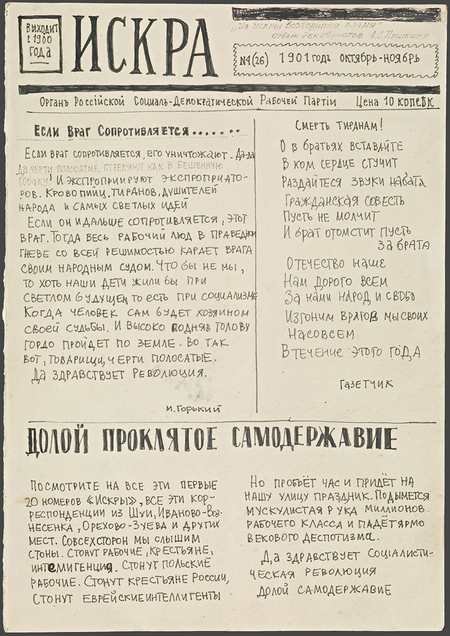
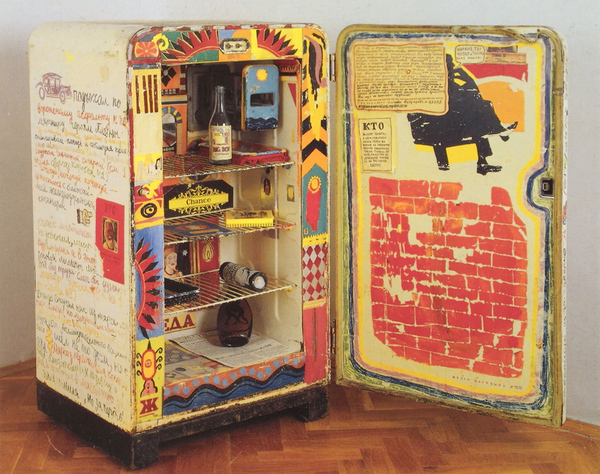
Konstantin Zvezdochetov | «Refrigeration Novel» | refrigerator body, found objects, mixed media | 1982 | State Tretyakov Gallery [8-9]
The starting point for the stylistic formulation of Moscow Conceptualism was Ilya Kabakov’s work, «All About Him (Answers from the Experimental Group)» (1970–1971), which marks a transition from image to text—a shift from one system of representation to another.
Ilya Kabakov | «All About Him (Answers from the Experimental Group)» | organlite, enamel | 1970–1971 | The State Tretyakov Gallery [10]
The use of various forms of Soviet language—from conversational registers to decorative output—became the main discovery of Moscow Conceptualists. Newspapers (Dmitry Alexandrovich Prigov), posters (Erik Bulatov), slogans (Vitaliy Komar and Alexander Melamid, Alexander Kosolapov, «Gnezdo»), «letters to the editor» (Vsevolod Nekrasov, Lev Rubinshtein), «ceremonial portrait» (Boris Orlov), and the communal-colloquial register (Ilya Kabakov)—all of this became subject to re-coding and transformation.
Vitaliy Komar and Alexander Melamid | «The Ideal Slogan» | Authorial reinterpretation of a 1972 work | wood, fabric, oil | 2004 | State Tretyakov Gallery [11]
Artists such as the group «Gnezdo, ” Vadim Zakharov, Yuri Albert, and the group „TOTART, ” among others, pushed further by encroaching upon the Soviet ritual—specifically, communist volunteer days and all forms of socially useful activity—as a unique communicative model. By painting benches with gold paint („TOTART.“ Golden Sunday. 1985), engaging in self-defense against objects („SZ.“ Defense and self-defense courses against objects. 1981), or establishing diplomatic relations between states („Gnezdo.“ We will get one meter closer. 1976), the artists simulated absurd activities, attempting to deconstruct the ritual itself.
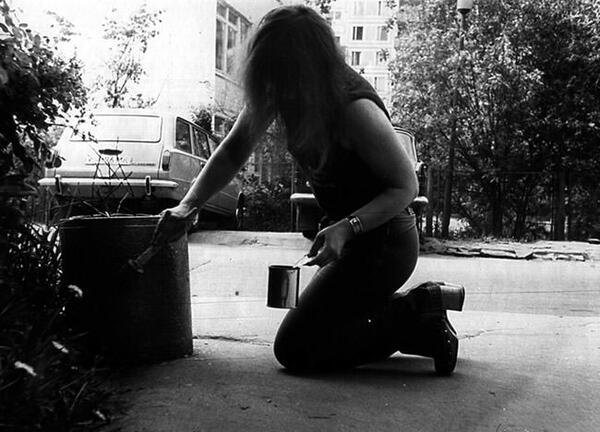
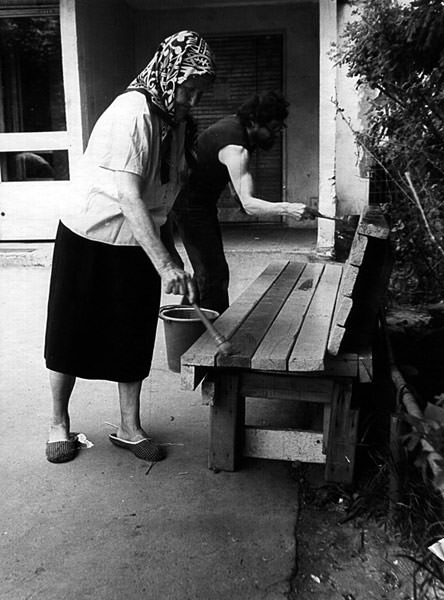
Group «TOTART» | «Golden Sunday» | Photo documentation of the event, Photographer Igor Aleinikov | 1985 | Authors' property [12-13]
The difference in approaches between generations can be seen in the fact that older conceptualists «were convinced of the necessity either to overcome and ignore Soviet discourses or to heroically struggle against them» (Bulatov), while the younger ones interacted with them through a playful deconstruction from within.
Erik Bulatov | «Dangerous» | canvas, oil | 1972–1973 | Zimmerli Art Museum, Rutgers University [14]
A recurring motif in Bulatov’s paintings («Horizon, ” 1971–1972, et al.) is the attempt to gaze beyond the horizon—toward the sky, toward eternity—but this path is constantly obstructed by an intrusive interference rooted in ideological clichés that obscure reality. This sensation of an inability to break through gives rise to the genre of the „conceptual painting, ” structured around an internal conflict between space and plane.
Eric Bulatov | «Horizon» | canvas, oil | 1971–1972 | MAGMA [15]
By the mid-1970s, Kabakov and Pivovarov began producing the album—a distinct genre of Moscow Conceptualism: loose sheets featuring hand-drawn illustrations with a deliberate dramaturgy and narrative, often supplemented by textual commentary. Possessing an absurdist yet philosophically metaphysical tone, these albums explore everyday life, solitude, and «the un-placeable.» For Kabakov, the very act of turning the pages becomes an essential component—a tangible metaphor for time.
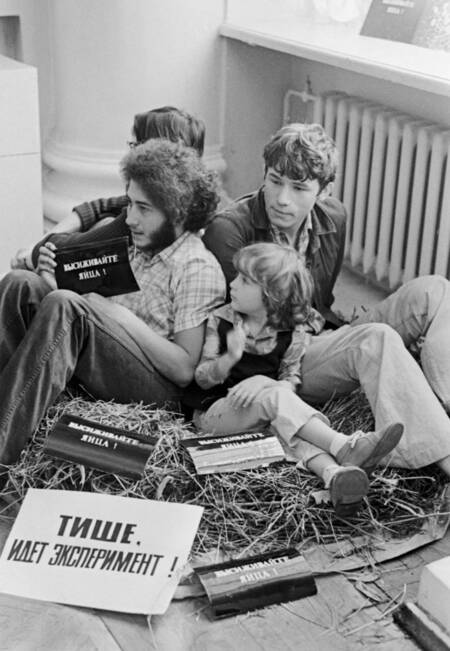

«Nest» Group Action at the Exhibition Opening in the «House of Culture» Pavilion at VDNKh | 1975 | Garage Museum Archive [16] | Dmitry Prigov | «Glasnost» | 1987 | State Tretyakov Gallery [17]
The artists of the «Collective Actions» (KA) group, founded by Andrei Monastyrsky in 1976, proposed a different strategy. Their first action was «Appearance,» held in Izmailovskoye Pole, where the metaphorization of language through imagery and the subsequent interpretation of the witnessed event by the audience played a key role. The KA’s space-time actions were built around a meticulously planned scenario, often consisting of deliberately convoluted, tautological, tedious, irritating, absurd, or «empty» actions. Essentially, they demonstrated various ways of liberating oneself from the «ideological social space of a coordinated reality"—it came down to seeking internal freedom within a state of total unfreedom.
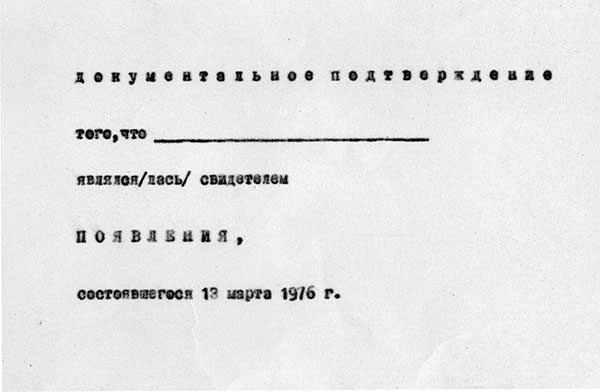


Group «Collective Actions» | «Appearance» | Moscow, Izmailovskoye Pole | March 13, 1976 [18–20]
Not bound by strict frameworks, Moscow Conceptualism evolved into an original model of self-reflection and firmly took root among artists, forming an independent school with its own theory, body of work, aesthetic, and adherents. Conceptualism became the intrinsic tradition for Moscow’s unofficial art that subsequent generations of artists—post-conceptualists, 1980s New Wave figures, and others—unquestionably referenced. It was Conceptualism that reintroduced contemporary art to the Soviet Union in its international sense, equating Moscow practices with global ones. International exhibitions and publications played a significant role in this, including the first article on Moscow Conceptualism in Flash Art Issues 76–77 (1977), which influenced the selection of works for the Venice Dissident Biennial in 1977.


Group «Nest» | «Assisting the Soviet Government in the Battle for the Harvest» | 1976 [21] | Group «Nest» | «Fertilizing the Land» | 1976 [22]
In 1978, philosopher Boris Groys published a manifesto in the samizdat journal «37, ” which was later reprinted in the journal „A-Ya”—a publication that became the main voice for Soviet unofficial contemporary art in Europe and the United States. In the same years, exhibitions were held in the United States, organized by Norton Dodge and Margarita Tupitsina, including Russian New Wave (1981). During the Perestroika period, Moscow Conceptualism was firmly established as an artistic brand, akin to the „Russian Avant-Garde“ or „Viennese Actionism.“
«Collective Actions» group | «Slogan» | Action photo documentation | 1977 | Archive of Andrey Monastyrsky [23]
If conceptualism became a definition, then social art was a self-designation. It was conceived by Vitaly Komar and Alexander Melamid in 1972 and defined in the «Manifesto of Social Art» as «the clash between a style suggesting a particular theme and a theme contradicting that style.» The term «social art» was constructed analogously to the term «pop art» and was largely oriented around its strategy. However, instead of capitalist advertising and mass-produced goods, the object of appropriation and interpretation was Soviet propaganda—a peculiar analogue possessing a significant hidden similarity.