
Культура — это столп цивилизации
Culture, in its classic sense, refers to museums, theaters, and architectural ensembles. These are elements that require specialized training, contextual knowledge, and paid admission.
Памятник — это голос
A monument is the voice of an era, frozen in bronze or granite. Our nation decided to grant it the right to speak forever.
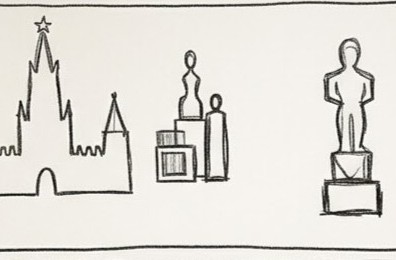
The representation of a state or a city must be meticulously curated, as this is what is given the authority to speak forever. Experts know whom to remember, honor, and glorify—in central Moscow, these choices are visible at every turn. Even preschoolers know Pushkin, Gogol, Lenin, or Zhukov, and these figures are so tangible that sometimes they seem like ghosts living on, whose souls never find peace.
However, ghosts do not reflect in mirrors, and one cannot speak with them; therefore, the wise—or, conversely, the less thoughtful—constantly gather them up, creating a cultural narrative. The former attempt to amplify the visual impact, but often become engrossed in current phenomena relevant to the cultural community; the latter prefer to hide behind emotion: «This was important; this is our identity; this is where history unfolded!»
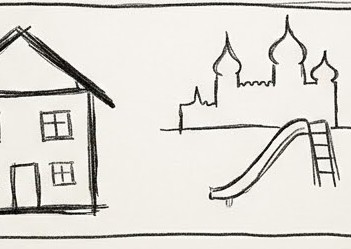
But what happens in places where there are hardly any monuments? Where the only sculpture is a rusty slide in the yard? Typically, specialists, wishing to achieve a certain status, do not document these places, and they remain on the periphery of the city’s cultural map.
The fundamental problem I want to discuss in my project is that the lack of cultural capital in a specific territory almost entirely strips it of its status as a bearer of history, and its inhabitants of their status as heroes of their own time. This is how the «cultural deafness» of the outskirts is born—where people become accustomed to their voices having no weight.
Музей под открытым небом
Central Moscow is a dense stratum of meaning and signs. Every alley and building represents an important element of the cultural-historical code.
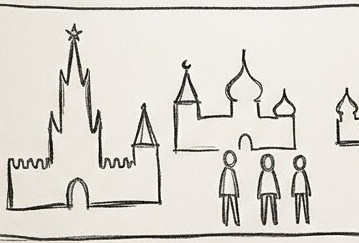
You can wander there for hours and read the city like a book. The facades tell the stories of merchants, nobles, revolutionaries, and writers. The fountains, monuments, and frescoes constantly converse with one another in the imagination of an enlightened person.But often this person fails to notice that the cultural narrative can be dictated by someone else—and this center views the outskirts as mere suburbs. When it is necessary to broaden the cultural scope, the center frequently tries to fuse everything into a monolith, without offering any tools. The center states: «Here are my monuments, my museums, my theaters. Come and learn to partake.» Meanwhile, the periphery stays silent because it has nothing to present besides panel apartment buildings and courtyards. But does this mean that there is no culture there? Or is it simply that the culture in these places presents itself differently—as the non-ornamental, shadowed side of the city, one that doesn’t require pedestals or plaques?
Контраст: центр vs окраина
Sometimes it feels like the city center, despite having numerous monuments, lacks a cohesive identity. One might call it a «museum"—one that is undoubtedly striking for its historical depth and scale, yet sometimes feels empty. And if you venture out to the outskirts, you might ask: What if these gray ruins, despite their simplicity, contain something relevant, and more importantly, something authentic?
Revolution, empire, Soviet rule, capitalism—all of it has mixed and layered itself upon one another. And within this narrative confusion, amid countless meanings and quotes, one can understand nothing. A tourist photographs himself with the Kremlin, unaware of how many times it has been rebuilt, nationalizes Lev Nikolaevich Tolstoy, without knowing what a complex and doubtful man he was. Sometimes, without even knowing that his faith did not align with the state religion, without reading the diaries to which he dedicated his final years, where he wrote: «State power rests on tradition, on science, on popular election, on raw force—on whatever you wish, but not on the church…»This study posits that people from the provinces do not play culture; they live in it, without the option of being or not being cultural. They simply exist, and their everyday life is culture because culture must, first and foremost, reflect lived experience. Therefore, conversations on park benches, absurd freestyle sessions in a friend’s apartment, or diaries detailing life within a panel labyrinth can sometimes reveal something more. But this «more» usually remains phantasmal, and it is unlikely to find a place in a grand museum hall. Here, I introduce a central dichotomy that will run as the red thread through the entire study: «culture as institution versus culture as lived experience.» It is precisely this divide that I aim to bridge.
Репрезентативные места центра
The Kremlin, GUM, Patriarch’s Ponds, Arbat, the Tretyakov Gallery. Everyone knows these places because they form the image of Moscow.
When someone says «Moscow, ” tourists typically recall this kaleidoscope of lights, wisdom, grandeur, and history. But this is only one Moscow depicted on postcards. There is another capital, composed of districts like Belyaevo, Chertanovo, Butovo, and others. You certainly won’t find them in tourist brochures. This land is covered in endless courtyards, panel buildings, garages, and uniform streets. Yet, people live in this other Moscow—people whose very voices breathe the spirit of Moscow.
Культура становится эксклюзивом
Culture, in the classical sense, requires a specific place and time.
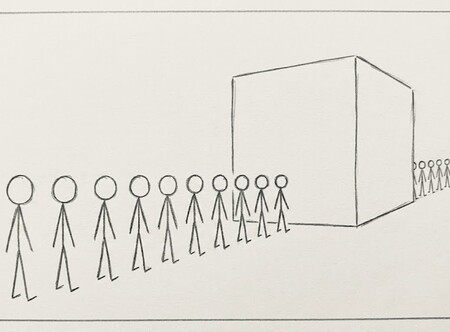
To be a cultured person, one needs to attend museums, theaters, and exhibitions. You must be prepared, or you won’t understand anything. Culture risks becoming an exclusive commodity, accessible to only a select few. It requires resources—money, time, and education.So, what should a teenager from Belyaevo do? What if the route to the Tretyakov Gallery takes an hour, the ticket costs as much as two shawarmas, and most importantly, the tour guide speaks a language that he doesn’t fully grasp? He is excluded from the cultural sphere. In that silence, he is told he is unsophisticated because he doesn’t frequent cultural spaces. Then, this entire treasure trove—museums and theaters—speaks not to him, but to someone else. This creates the very gap that my upcoming installation seeks to bridge. I will discuss it in more detail later. But it is already clear: if culture speaks only one language, it is doomed to be incomprehensible to those who speak others.
Район не дает повода выйти
The neighborhood doesn’t ask me what I want to become. It hums a lullaby about needing to close my eyes sooner so I can go to work in the morning.
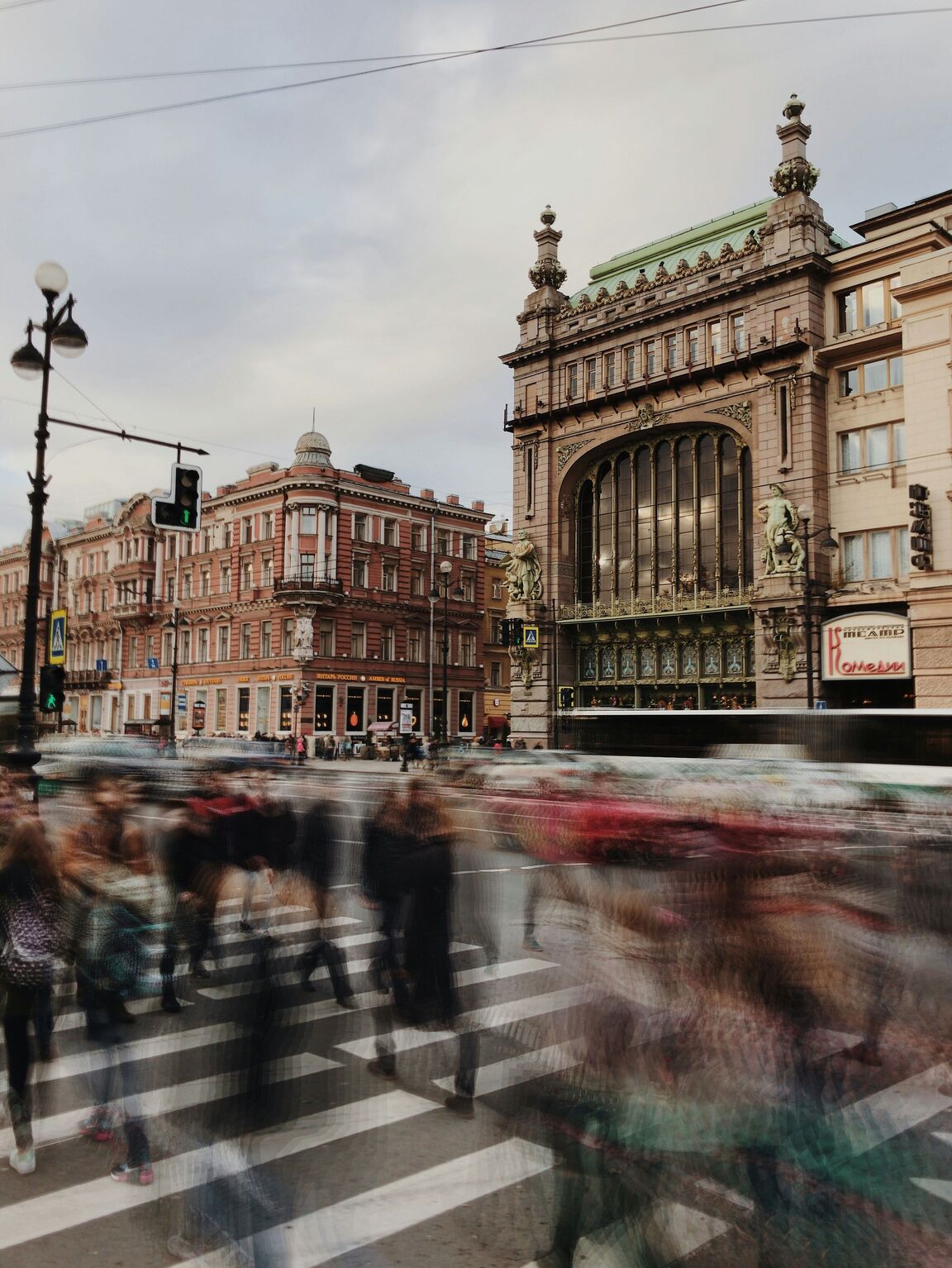
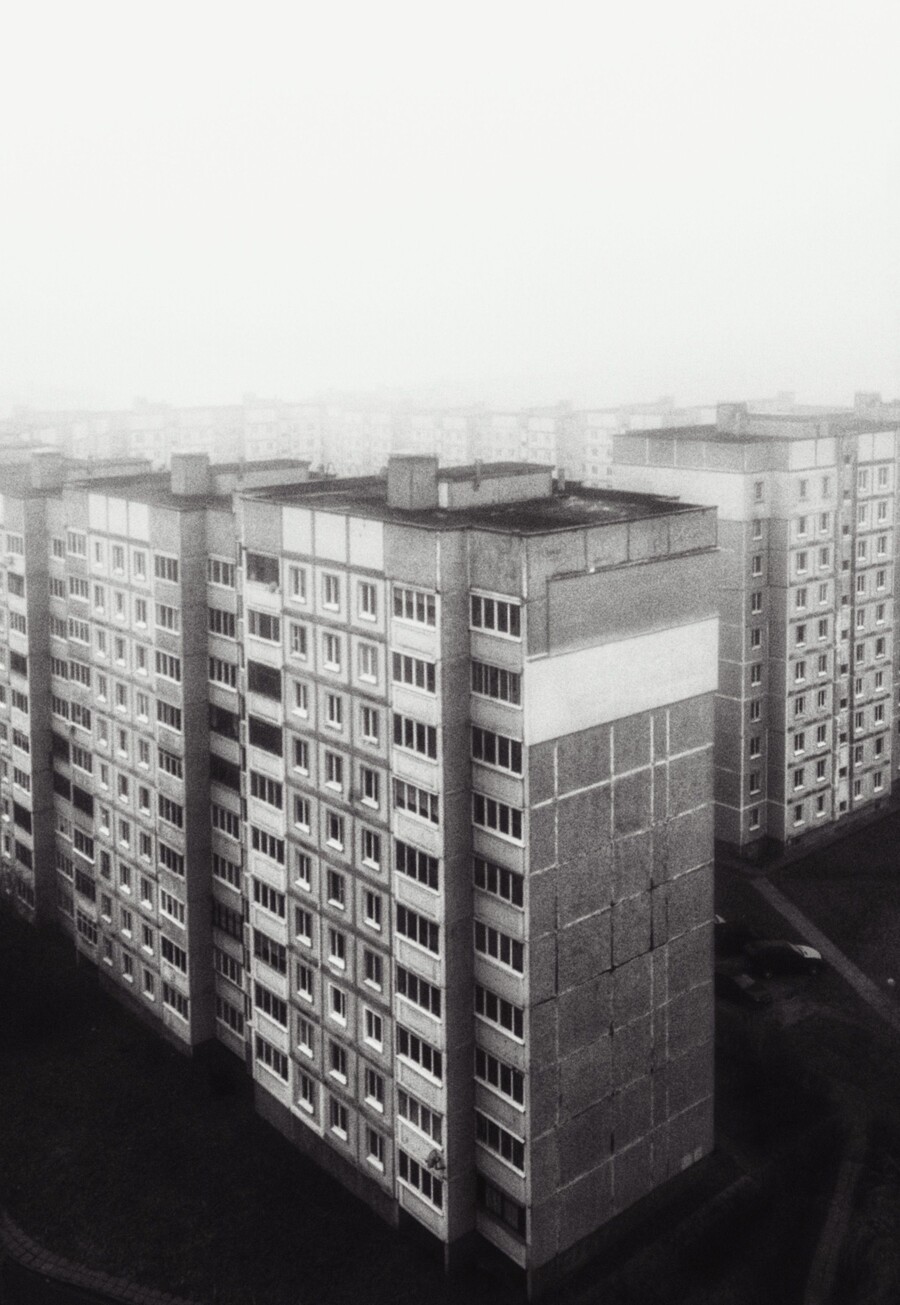
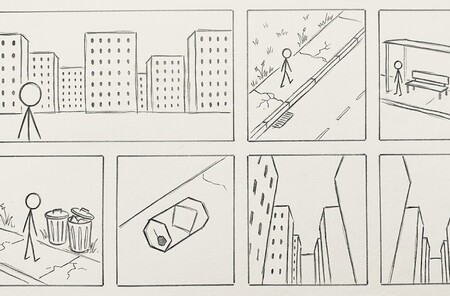
Public space is not a mirror in which a resident can see themselves as interesting. It is simple and rather utilitarian: a courtyard, a parking lot, a playground—and that’s it.
Therefore, people often retreat into TV series, computer games, or listening to kitsch music. Many mistake this for laziness, but in my opinion, it is a defense mechanism. Because, again, public space does not serve as a mirror reflecting an interesting self. Thus, home remains the only place where one can truly be oneself. Home represents a closed space devoid of cultural dialogue. There are people, their minds, and loved ones mired in mundane, everyday problems. But I cannot stay home because, in the modern world, the home needs to be more on a symbolic and psychological level. This conflict—between home as a refuge and the neighborhood as a potential stage—I will resolve through a soundscape. The soundscape transforms the neighborhood into an extension of the home. Home, in turn, becomes the starting point from which movement outward begins.
Детская площадка как платоновский
кружок
The first pole is a space—a symbol of the residential neighborhood, a place for mothers with strollers and teenagers with beer. The second is the Platonic circle, the ancient ideal of conversation where thought is born in the dialogue between two people.
In this piece, I found the convergence of two poles. Reflecting on my teenage years, I realize that living thought is born precisely in such places—certainly not in closed-door offices. My installation attempts to argue that a conversation on a regular bench in Belyayevo can be deeper than any lecture in the city center; we just seem to have forgotten how to hear it. A bench in a residential area is the same agora, only it lacks columns and Socrates. Yet, the dialogue still happens there. However, modern people have stopped valuing it because they are accustomed to believing that culture resides somewhere in a transcendent world—but not here. I want to shatter this misconception: philosophy is born not in lecture halls, but in conversations on benches; we have simply stopped noticing it.
Культура есть, но тебя в ней нет
The entire cultural narrative dictates the center. It views the peripheries as mere «bedrooms» and demands mimicry. However, if we recall Deleuze’s words, mimicry is an unnatural reaction because «The crocodile does not pretend to be a tree trunk, and the chameleon does not pretend to be the color of its surroundings. The pink panther, too, pretends to be no one and imitates no one. It merely colors the world in its own color—pink upon pink—becoming this world itself…» («Capitalism and Schizophrenia, ” Gilles Deleuze and Félix Guattari)
Места становятся призраками
These places have no brand. They shouldn’t be shown. — Where should we go? — To the vacant lot where I spent the night. It sounds absurd, but it was a place where I could be myself.
These spaces are phantoms because they lack branding. They have no name, no sign, no entry in a guidebook. They are just a vacant lot behind the garages, a bench by the entrance, an abandoned construction site. You cannot show these places to others because if a culturally aware person asks, «Where should we go?» and hears «vacant lot» (even though it was a place where you sat at night, abstracting from everyday problems, immersing yourself in escapism), they won’t understand. It sounds absurd, unrespectable, and uncultured.
But for a teenager from a residential district, that vacant lot was the only place of freedom. A place where they could just be themselves and no one demanded that they be «normal.» It was where they could look at the stars, listen to music, and talk about things they couldn’t say at home. And when you grow up, this can be traumatic because these places are lost in the past and become just that—the past. You cannot touch them again, you cannot share them with others, you cannot bring a friend and say, «Look. This is my universe!» They remain only in your mind, becoming Derrida’s phantoms, ghosts. They exist, yet simultaneously they do not, and as a result, the person carries that solitude within them for life because their personal geography is neither documented nor acknowledged by anyone.
Что такое «вненаходимость
In-presence — a term coined by Alexey Yurchak that describes a state of mind where an individual is within a system but does not believe in its inherent meaning.
Alexei Yurchak introduced a term to describe the state of the late Soviet person. You continue to reproduce the system’s language—attending meetings, voting in elections, singing anthems—yet you do not believe in the content of these rituals. You are inside, but mentally, you are outside.
This created a unique phenomenon. People, while continuing to reproduce the system’s language, mentally and existentially occupied a position of «non-belonging» in relation to it. They were not outside the system, but neither were they fully inside its ideological field—they existed in a kind of «internal emigration.» I find this state surprisingly similar to how today’s teen from a suburban area exists within a cultural system that does not recognize them: they speak its language, but they do not believe that the language is about them.
Авторитетный дискурс как пустой знак
The Party’s language has devolved into a set of ritualized formulas. What was important was how it was said, not what was said.
By the era of late socialism, the form of ideological statements began to prevail over their content. Language was a rigid formula created during the Stalinist period, even though Stalin himself had been eliminated. Party reports, front-page newspaper articles, and leaders' speeches consisted of blocks of clichés that could not be rearranged. It was precisely this strict immutability of form that allowed citizens not to delve into the content, because there essentially was no content to begin with.Yurchak calls this a «shift in performativity.» Adhering to the ritual was important, but not its substance. Prigov, who lived in Belyayevo, exposes the fact that authoritative language became an «empty sign.» When words cease to mean what they mean, the only thing left to the artist is to play with their visual shell. And this play becomes not just an aesthetic gesture, but an act of survival in a world where words have lost their weight.
Пригов как Герцог Беляево
Prigov proclaimed himself the «Duke of Belyaevsk.» He transformed a typical residential area into the center of his artistic universe.
Dmitry Alexandrovich Prigov—one of the key representatives of Moscow Conceptualism. In his personal mythology, he proclaimed himself the «Duke of Belyaevsky, ” transforming a typical, impersonal Soviet residential microdistrict into a sacred space—the center of his private artistic universe.
For Prigov, Belyaevsky was a conscious conceptual construct. He elevated the district into a locus of power, immortalizing it in poems, performances, and stichograms. In doing so, he demonstrated that even a drab panel building could become a canvas for great art. Crucially, he did not attempt to beautify the district or import anything external into it. Prigov took what already existed and reinterpreted it as value. This represents the fundamental difference between his approach and classical cultural policy: it is meaningless to impose culture onto a neighborhood if you fail to find the culture that is already there.
Стихограмма как медиум
Stichogram is a graphic act of performance with language. Letters coalesce into visual blots—"black holes» of meaning.
Prigov translates this complex social position into the realm of visual and textual art. A stichogram is a graphic act of performance using language. The visual deformation of text becomes an exact analog for how the contemporary mind has «deformed» and «shifted» rigid ideological clichés.
In a stichogram, text often loses its syntactic and lexical function. Letters break apart into visual blots, into graphic objects. Prigov demonstrated the emptiness of authoritative language. He assembles new, paradoxical patterns from blocks of shattered meaning. The stichogram becomes less a poem in the conventional sense and more a document of the language’s condition—its fatigue, its senselessness, its struggle to survive.
Стихограмма «АЯ»
The binary opposition of «A» and «Ya”—the first and last letters of the alphabet. The space between them is read as a question: „Am I?“
The subject of this specific analysis is Dmitry Prigov’s monumental poem, «AYA, ” located on the facade of a residential building in the Belyevo district. At the formal-linguistic level, the composition is built around the collision of the first and last letters of the Russian alphabet—“A» and «Ya.» This opposition alludes to the idea of total coverage while simultaneously pointing to the artificiality of the linguistic construct that this literacy enforced.
The central element that shapes meaning is the space between them—a space of potentiality—which is read as the existential question, «And I?.» This question marks the birth of individual consciousness attempting to self-define within and against the collective discourse. The gap is a space for the subject. It asks: amidst all these letters, amidst all these meanings imposed by the system, is there room for me?
Динамика вопроса
The question «And me?» slowly expands. Around it, you can see smaller «And you?», «And them?». I believe these express a search for the Other.