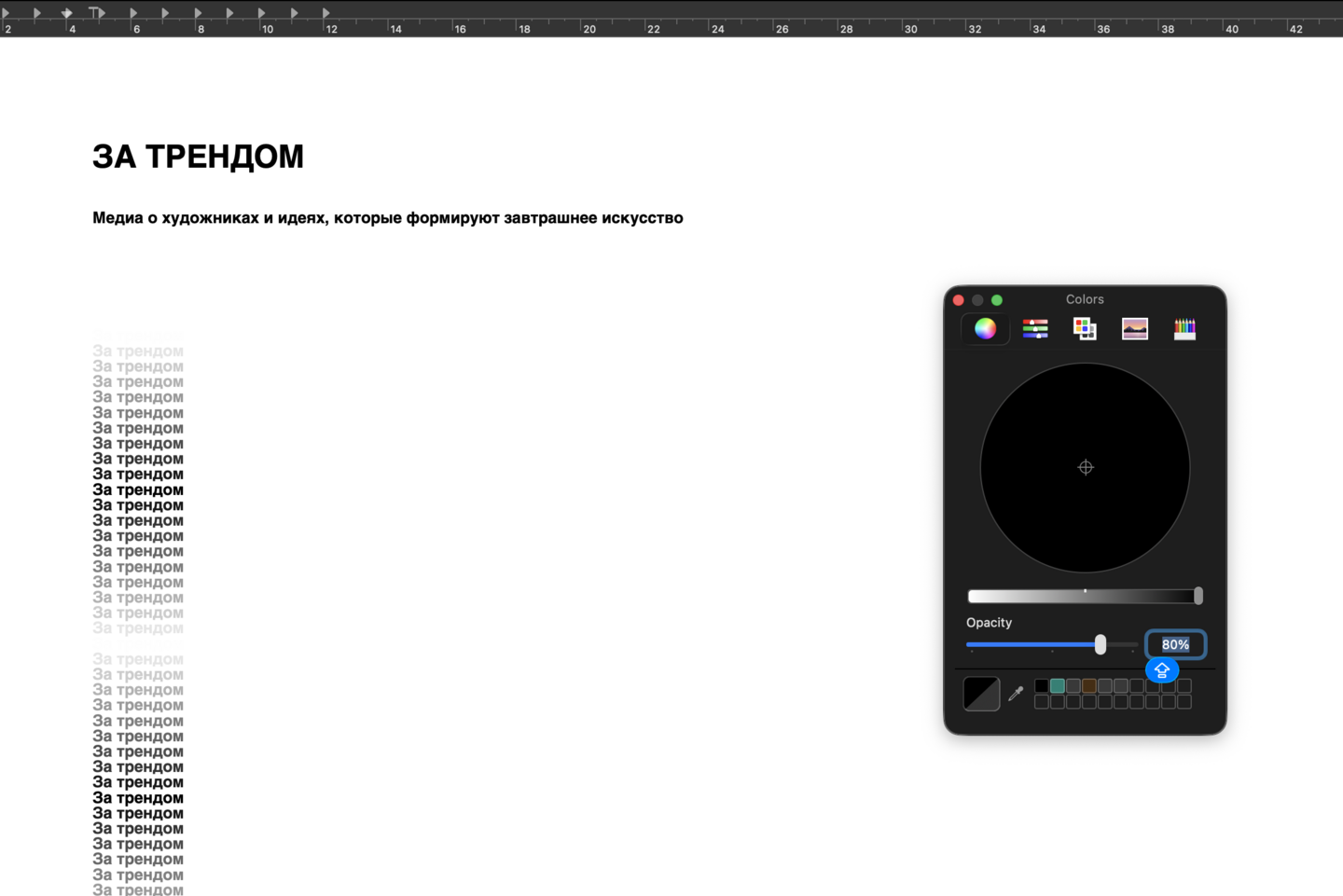
«TRENDSETTER» — a media platform for artists whose work is valued for the depth of its content and the originality of its artistic statement, rather than solely the artist’s popularity.
Core principle: not just to recount who is known today, but to show what ideas are shaping art tomorrow.
Format: Telegram Channel
Main Sections:
• Artist profiles;
• Interviews;
• Art projects and series of works;
• Ideas and meanings behind the pieces.
Data Sources
The primary source of information for the «FOR THE TREND» media outlet is the artists themselves—their work and artistic statements.
1 Authors' Social Media Telegram, Instagram, and other platforms. These are used to get to know the artist, study their work, creative process, and current projects.
2 Personal Websites and Portfolios Biography, description of the artistic approach, and concepts behind specific works and projects. If the author elaborates on the idea behind their work, these materials can form the basis of a publication.
3 Interviews with Artists If information in public sources is insufficient, a brief interview is conducted (not a public one—rather, pre-publication). This helps uncover the author’s intent, the history of the work’s creation, and the meaning they embed within it.
4 Additional Materials Photographs of the artwork, author’s commentary, and descriptions of exhibitions and projects. These complement the main material and help articulate the publication’s theme with greater precision.
Information Gathering Principle
First, we study the materials available about the artist. If these materials sufficiently detail their work and concept, a publication is prepared based on them. If the context is insufficient, the editorial team contacts the author and conducts a brief interview (see section 3).
All collected data is compiled and verified before preparing the final material.
Data Processing Scheme
- Human Curation• Artist Selection. The editor identifies an interesting author and evaluates their work and artistic concept. • Material Research. Social media, portfolios, and project descriptions are reviewed. • Author Consultation. Interviews are conducted as necessary to gather missing context. • Editorial Review. Facts, quotes, and alignment with the media concept are verified. • Publication Approval. The editor makes the final decision on releasing the material.
- Machine Processing (AI)• Collection and Structuring. AI assists in systematizing materials provided about the author. • Information Analysis. It isolates key themes, ideas, and characteristics of the artistic project. • Interview Handling. It transcribes audio recordings, highlights important responses, and generates a summary. • Text Preparation. It helps draft a publication and suggests headlines. • Editing. It checks spelling, grammar, and text structure.
Artist Selection → Source Research → Interview (if necessary) → AI-Assisted Information Synthesis → Text Preparation → Editorial Review → Publication
Guidelines for Automated Services
AI is utilized as an editorial support tool: it assists in processing information, analyzing materials, and preparing publication drafts.
1 Work Only with Provided Sources When preparing materials, the AI must rely on the artist’s social media, portfolio, interviews, and other verified sources.
2 Prohibition Against Inventing Information The AI must not fabricate biographical facts, artwork titles, quotes, events, or authorial statements. If information is insufficient, this must be noted for the editor.
3 Preserving Authorial Intent When processing interviews and artwork descriptions, it is crucial to preserve the artist’s original thought, not alter the meaning of their statements, and not attribute foreign ideas to them.
4 Editorial Style Texts must be clear, substantive, and engaging. Avoid overly complex phrasing, cliché sentences, and promotional exaggerations.
5 Pre-Publication Review Any text generated or processed by AI must be reviewed by a human. Only the editor approves the final version.6 Image Handling and Copyright AI must not use images without confirming the source and obtaining publication permission. Priority should be given to photographs and works provided by the artists themselves.
AI helps the editorial team process information more quickly, but it does not make independent decisions about the content of publications. The media’s primary function is to convey the artists' ideas accurately and with sensitivity.