За пределами трека
медиа о современной музыкальной культуре и ее влиянии на повседневную жизнь
Beyond the music track—media covering contemporary music culture and everything that forms around it: people, places, visual imagery, and communities.
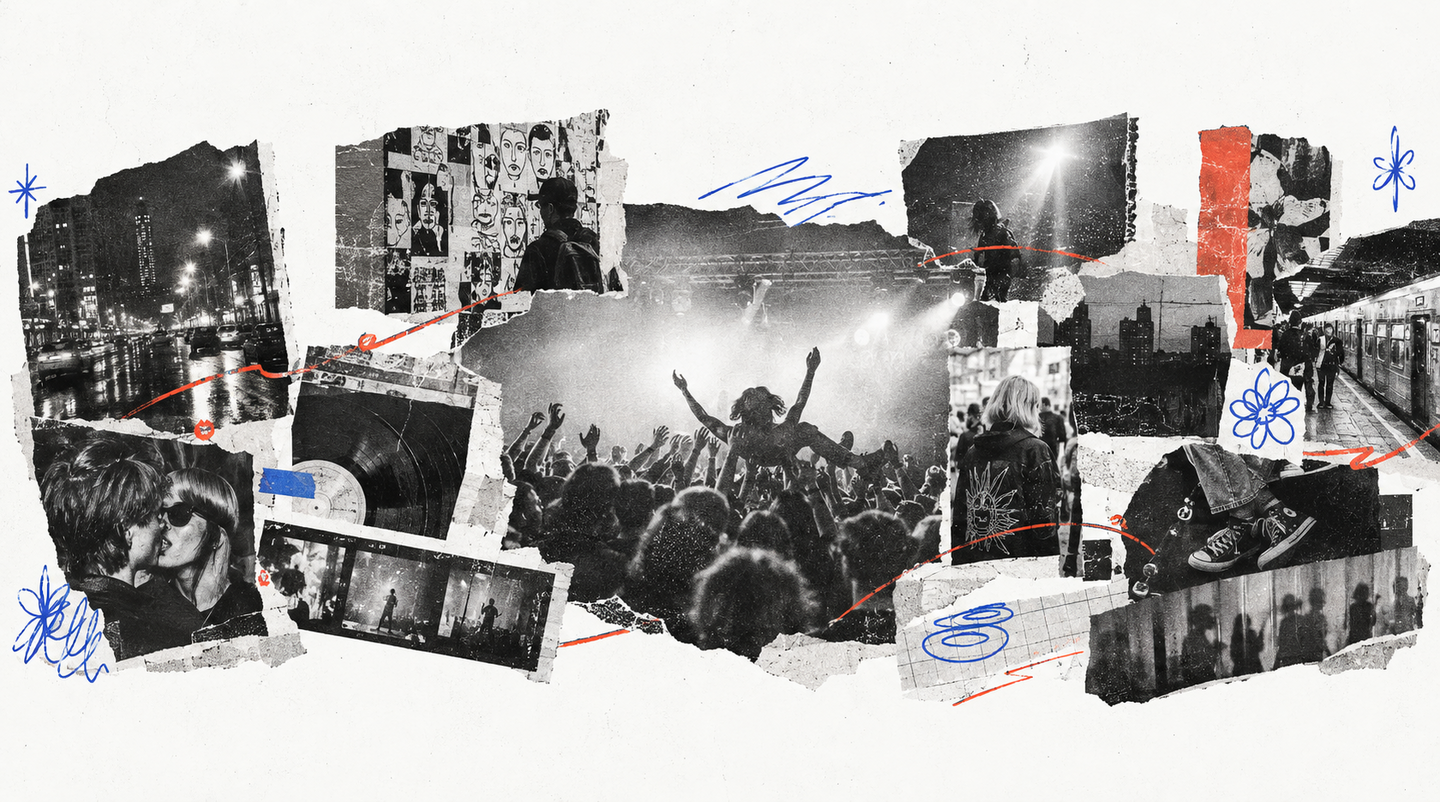
Music is not limited to sound or the names of performers. It influences the style, art, urban environment, and lifestyle of entire generations. This project explores these connections, shedding light on phenomena that often remain outside conventional music media. The focus is not only on established artists but also on local scenes, independent projects, emerging talents, and the people who are shaping music culture today.
Media Goal: to help readers better understand contemporary musical culture, discover new names and phenomena, and notice the connections between music and the surrounding world.
Data Sources for Media
To research topics and prepare materials for «Beyond the Track,» we utilize several types of sources:
Music Platforms: Spotify, Apple Music, Bandcamp, SoundCloud — for discovering new artists, releases, and musical genres.Music Media: The Flow, Afisha Daily, Pitchfork — for tracking current trends, finding featured artists, and studying music scenes.Social Networks and Communities: Telegram, VK, TikTok — for monitoring trends, local communities, and emerging talent.Primary Sources: interviews with musicians, event organizers, photographers, and other participants in the music industry.Offline Environment: concerts, festivals, clubs, music stores, and independent venues — for sourcing stories and connecting with local scenes.Research and Statistics: music industry reports, analytical materials, and audience studies — for verifying trends and engaging with data.
When preparing publications, information is cross-referenced from multiple sources. Social media and music platforms help identify topics, while interviews, official materials, and research allow for deeper exploration and fact-checking.
Data schema, human and machine processing
Work on the «Beyond the Track» materials begins with identifying musical phenomena, figures, and themes worthy of attention. AI helps to systematize information, transcribe interviews, and uncover potential avenues for further research. The editorial team verifies facts, selects stories, and determines how to present them within the context of contemporary music culture.
After publication, the team analyzes audience response: views, saves, comments, and shares. This helps us understand which topics are engaging and informs the planning of future content.
How it works: AI assists in processing information, while the human is responsible for its accuracy, interpretation, and editorial decision.
Guidelines for Automated Services
In the development of «Beyond the Track, ” automated services and AI are used to accelerate routine tasks, generate ideas, and analyze information. At the same time, all tools must align with the theme and the media’s editorial style.
Information Retrieval and SynthesisUtilize AI to compile thematic collections, identify relationships between musical phenomena, and structure materials. Facts, dates, names, and quotes must be verified against original sources.
Text EditingUtilize tools to transcribe interviews, develop outlines, edit, and adapt publications for various platforms. The final text must retain the author’s voice and avoid becoming a generic retelling.
Visual Content CreationUse automated services for photo editing, mockup preparation, and creating supplementary graphics. Visual materials must adhere to the «Off-Track» aesthetic. Generated images must not be presented as documentary photographs of real events.
Audience Analysis Automate the collection and systematization of open metrics: views, reactions, saves, and clicks. Use the results to evaluate formats and plan publications, avoiding conclusions based on a single metric.
Verification and EthicsDo not upload confidential data to third-party services without permission. Verify copyrights for images, music, and text. Do not publish unverified information or synthesized quotes attributed to real people.
Core Principle: Automation helps the editorial team work faster, but it does not replace human review, authorial insight, or responsibility for published material.
Content Creation
From a Musical Phenomenon to History
Influence
How music reflects upon the urban environment, daily habits, self-perception, and ideas about style. The connection between music, cinema, art, design, and lifestyle.
Previously, we also outlined areas that could be used as separate categories or incorporated into the main sections.
Sound — new artists, genres, releases, musical recommendations, and sonic shifts.
Culture — the intersection of music with fashion, film, photography, design, and contemporary art.
Beyond the Track — phenomena surrounding music that are not music itself: visual imagery, communities, venues, and cultural habits.
Discoveries — lesser-known artists, independent projects, and local scenes that have not yet achieved widespread recognition.
Music Routes — clubs, concert venues, city music spots, and spaces associated with specific scenes.
Personal Experience — listeners' stories, concert memories, musical habits, and the role music plays in people’s lives.
Topics related to media creation itself
In addition to the substantive sections, we prepared blocks for the presentation detailing how the project will operate: Data Sources for Media—music platforms, industry publications, social networks, interviews, concerts, festivals, and research.