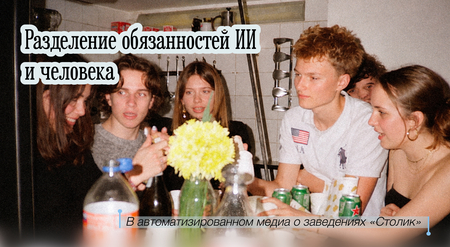
ЗА ЭТИКЕТКОЙ // ДАННЫЕ МЕДИА
От источников до публикации: как создаются материалы канала.
MEDIA CONCEPT
«BEHIND THE LABEL» — an author’s Telegram channel exploring how cosmetic and perfumery brands in the Russian market build their image through packaging, advertising, copy, and social media.
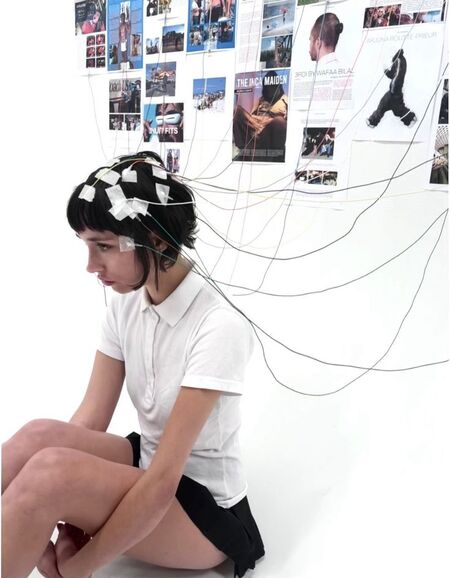
The channel analyzes real advertising campaigns and collaborations: what idea the brand is conveying, why it uses a specific visual technique, and how that technique reveals the product. Original concept shoots demonstrate how the same communication objective can be solved differently.
The channel is aimed at designers, SMM specialists, marketers, and founders of beauty brands. Its goal is to help them understand the logic behind other brands' decisions and find techniques they can adapt to promote their own products.
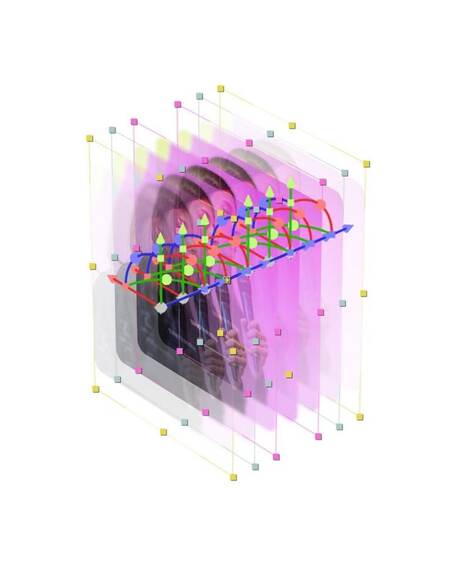
Objective: To demonstrate how beauty brands create product imagery and to help readers adapt successful techniques for their own projects.Target Audience: Designers, SMM specialists, marketers, and founders of cosmetic and fragrance brands.Unique Selling Proposition (USP): «BEHIND THE LABEL» combines analyses of real campaigns and collaborations with original photo concepts. Specific examples illustrate how brands solve communication challenges and what other visual solutions are possible.See more in Assignments #1 and #2.
DATA SOURCES FOR MEDIA
«Labeling» draws upon open-source materials from cosmetic and fragrance brands. This process helps trace how a single concept unfolds across packaging, advertising shoots, and social media.
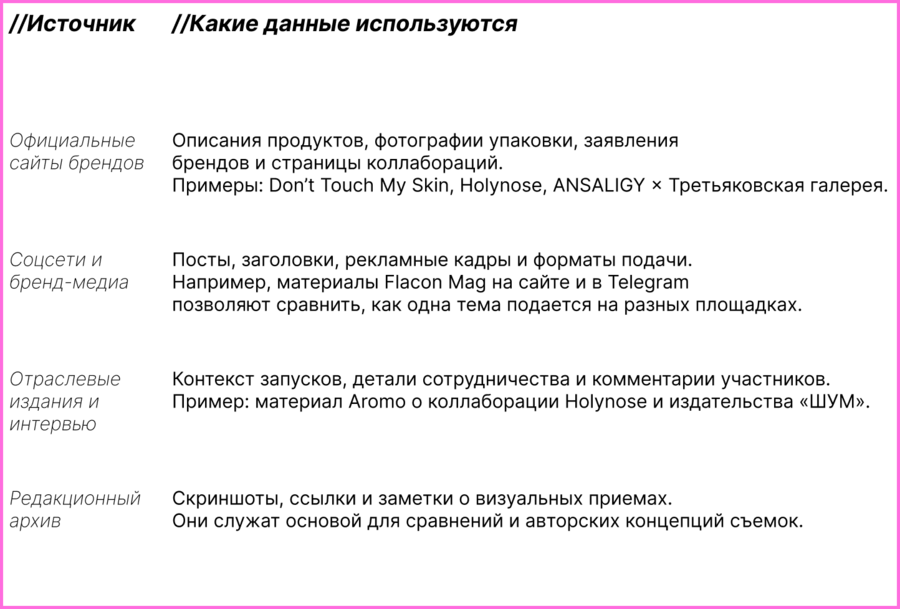
For every material, the link, publication date (if specified), and the specific segment used for the analysis are saved. In the final post, facts from sources are separated from the editorial interpretation and the author’s ideas.
SOURCE SELECTION CRITERIA
Relevance: The material reveals a specific technique used in the packaging, advertising, or social media of a beauty brand. Reliability: Priority is given to official materials, participants' commentary, and industry publications. Verifiability: A link and the exact excerpt upon which the analysis is based can be provided. Visual Clarity: There is an image, screenshot, or quote that helps explain the technique. Context: It is clear what product, campaign, or period the material relates to.
DATA PROCESSING FLOWCHART
PORTFOLIO EXAMPLES
//Breakdown of a Real Collaboration: Holynose × «SHUM» 1/ The Editor selects a case and feeds the brand page and the project article to the AI. 2/ The AI compiles the card: participants, the reason for the collaboration, the fragrance description, and source links. It flags information that requires verification. 3/ The Editor fact-checks and formulates the conclusion: the fragrance complements the book on the Berlin techno scene, helping to evoke the atmosphere of the Tresor club. 4/ The AI generates a draft based on the verified facts and the conclusion. The Editor refines the text, selects the visuals, and schedules the release time. The delayed posting service publishes the approved post.
//Original Photo Concept: «City After the Rain» for Holynose 1/ The Editor provides the concept idea and describes three shots: the bottle on wet concrete, water droplets on metal, and a sprout next to the bottle on the asphalt. 2/ The AI visualizes the shots according to the brief and the bottle reference. 3/ The Editor reviews the series and requests revisions: make the sprout more noticeable, place the bottle on the asphalt, and remove any text. The AI refines the image based on these instructions. 4/ The Editor approves the final visuals and tags it as an independent concept featuring AI visualization. The delayed posting service publishes the approved post.
GUIDELINES FOR AUTOMATED SERVICES
For each service, the materials it receives, what it returns to the editor, and the conditions under which the work stops have been defined.
RULES FOR USING AUTOMATED SERVICES

1/ Source Processing. The AI receives links, texts, and screenshots selected by the editor. From these materials, it compiles a content card: brand, product, campaign participants, date, and key facts. For each fact, the source link and the confirming excerpt are saved. Gaps and discrepancies are flagged for editorial review.2/ Text Drafting. The AI drafts a post based on the verified facts and the editor’s conclusion. The text must differentiate between information drawn from the sources, observations from the visuals, and the author’s interpretation. Brand intentions, audience reaction, and campaign outcomes are mentioned only when supported by evidence.3/ Visual Creation. The AI receives the idea description, references, and specific requirements for each visual. Any revisions modify only the specified details. The editor verifies compliance with the brief and approves the final visuals as the author’s concept realized with AI visualization.4/ Scheduled Publishing. The service receives the approved package: the text, images in the correct sequence, captions, and links. The post is published in the [TAG] Telegram channel at the designated time without alterations. If the publication fails, the service notifies the editor.
POST EXAMPLES
//How the scheme works in practice:
On the left — Holynose × «SHUM.» Analysis of a real collaboration: AI helps gather facts from sources, the editor verifies them, and formulates a conclusion. The image is an illustration for the post.
On the right — «City After the Rain.» An original concept: the editor sets the idea and the composition of the frames, and AI visualizes them based on the brief. It is indicated on the card that this is an AI visualization.
//How the concept works in practice:
On the left is «Face to Art.» An analysis of the ANSALIGY and Tretyakov Gallery collaboration: how a museum portrait on a patch package becomes an invitation to engage with art. The card features an editorial illustration.
On the right is «Color Beyond Boundaries.» An original concept for KRYGINA cosmetics: a red stroke transitions from the skin to the glass, unifying three frames. The images were created using AI based on an editorial brief.
CONCLUSION
In the media outlet «ЗА ЭТИКЕТКОЙ, ” AI systematizes sources, prepares drafts, and creates visuals based on the brief. The editor fact-checks, formulates conclusions, and approves the posts before publication.
Four mockups demonstrate how this process functions across two formats: analyzing a real collaboration and presenting an original photoshoot concept. In the analyses, facts are substantiated with sources, whereas in the original concepts, AI-generated frames are labeled as AI visuals.
LINKS

https://holynose.ru/about https://aromo.ru/news/events/holynose-i-shum-predstavili-sovmestnyy-proekt-lstenar/ https://ansaligy.com/tretyakovgallery/