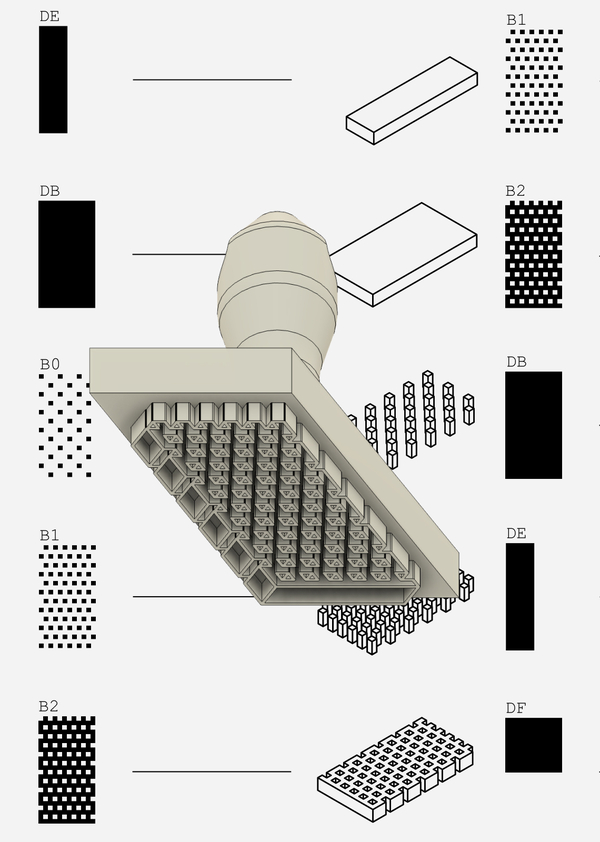
Concept
In construction, assemblage means erecting an object from large, prefabricated components on-site, whereas in programming, the «assembler» language refers to a canvas compiled from blocks of code. The intersection of these meanings led to the concept of reassembly. I use Unicode block elements as the material for this reassembly—these act as the fundamental graphic «bricks.» I transform digital code into physical, three-dimensional stamps. These tools allow me to manually build and reconfigure infinite modular compositions.
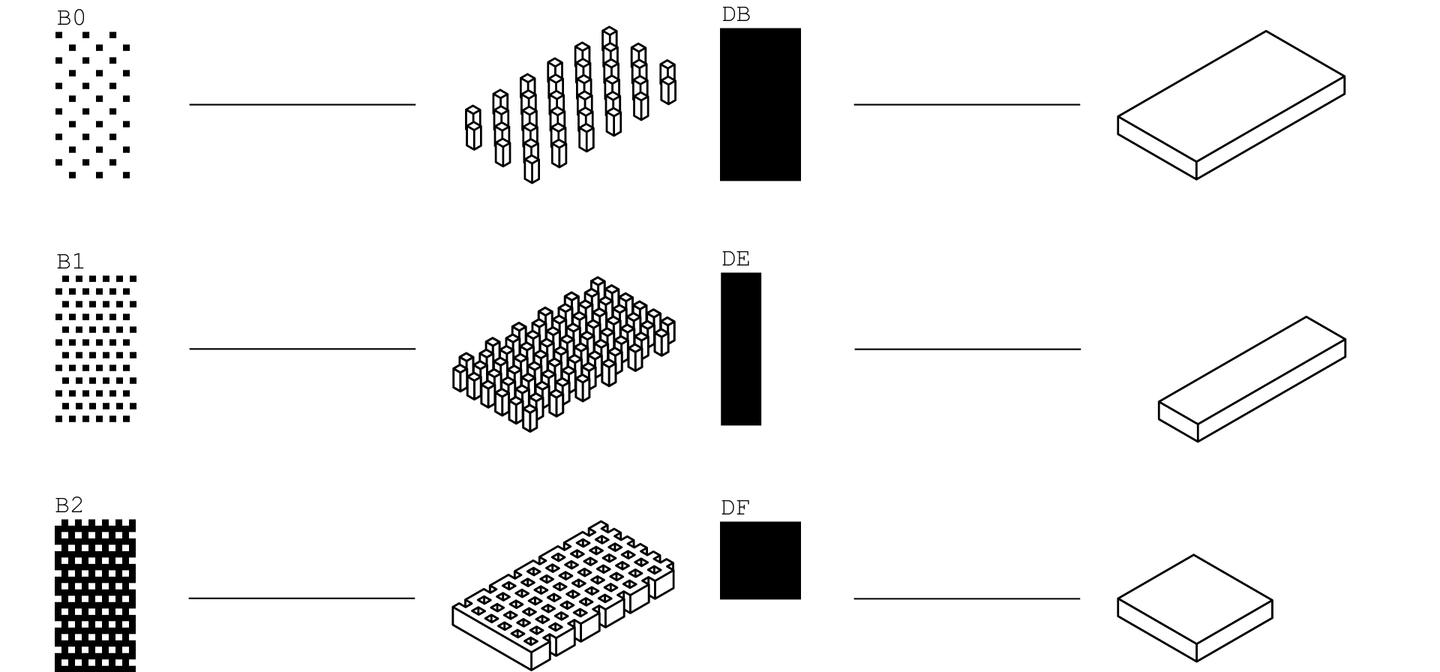
Process
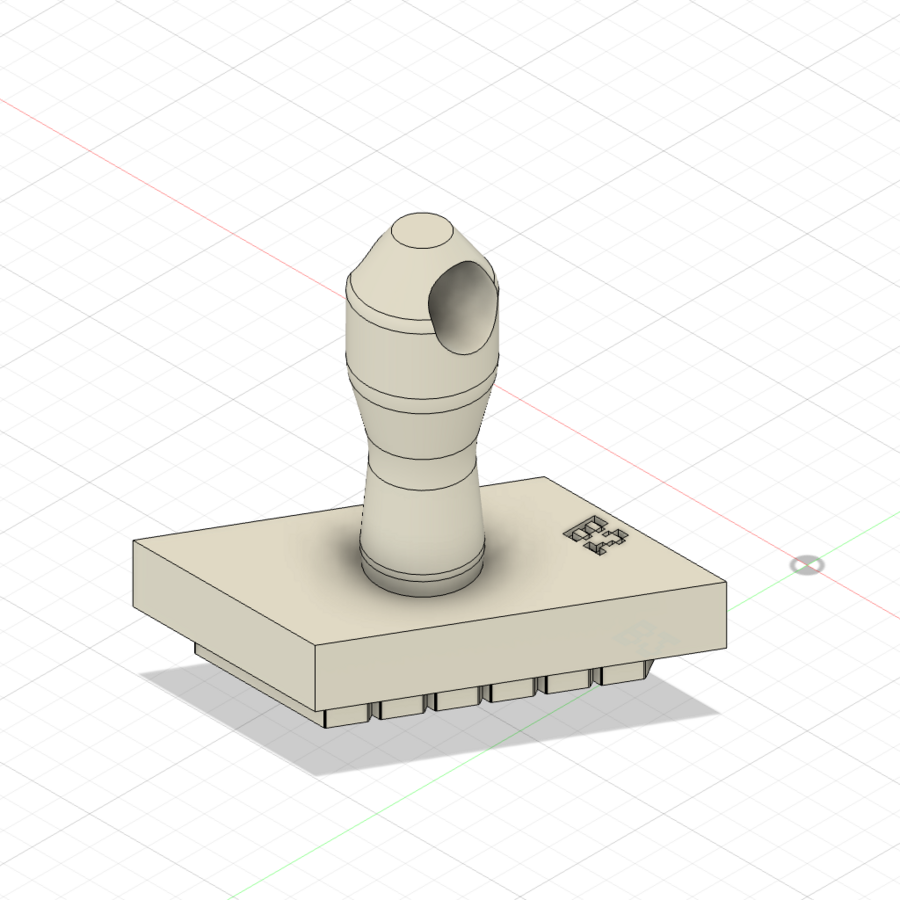
During the test print, it was discovered that when printing the stamp as a single object, the relief contacts the build plate and flattens under the weight of the upper layers. Furthermore, support structures leave marks on the build surface. As a solution, the model was divided into two parts: the base is printed with the relief facing up, and the handle is printed separately. After printing, the parts are glued together.
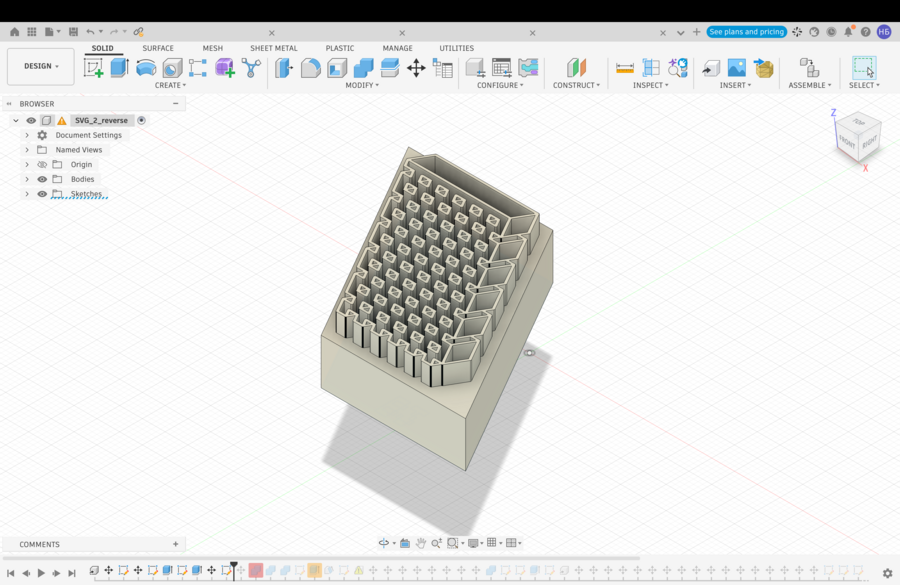
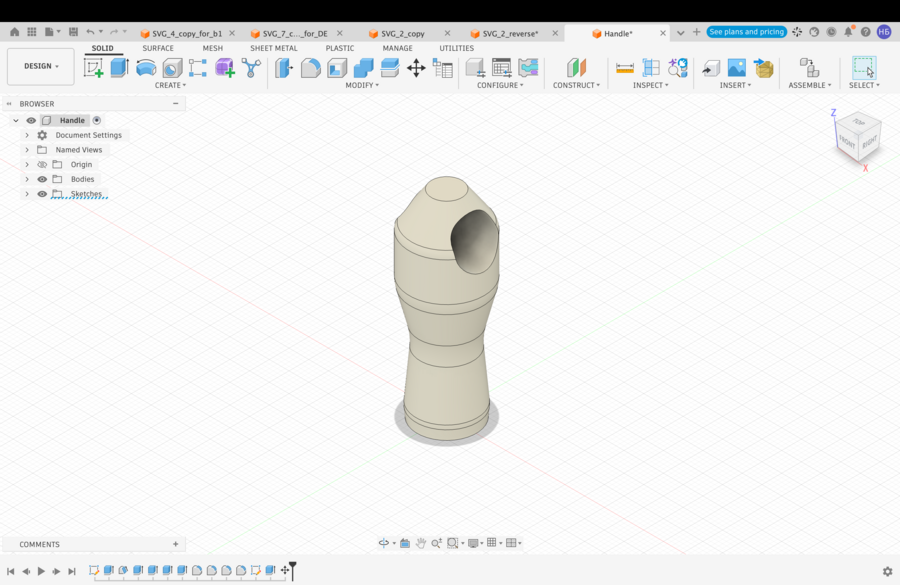
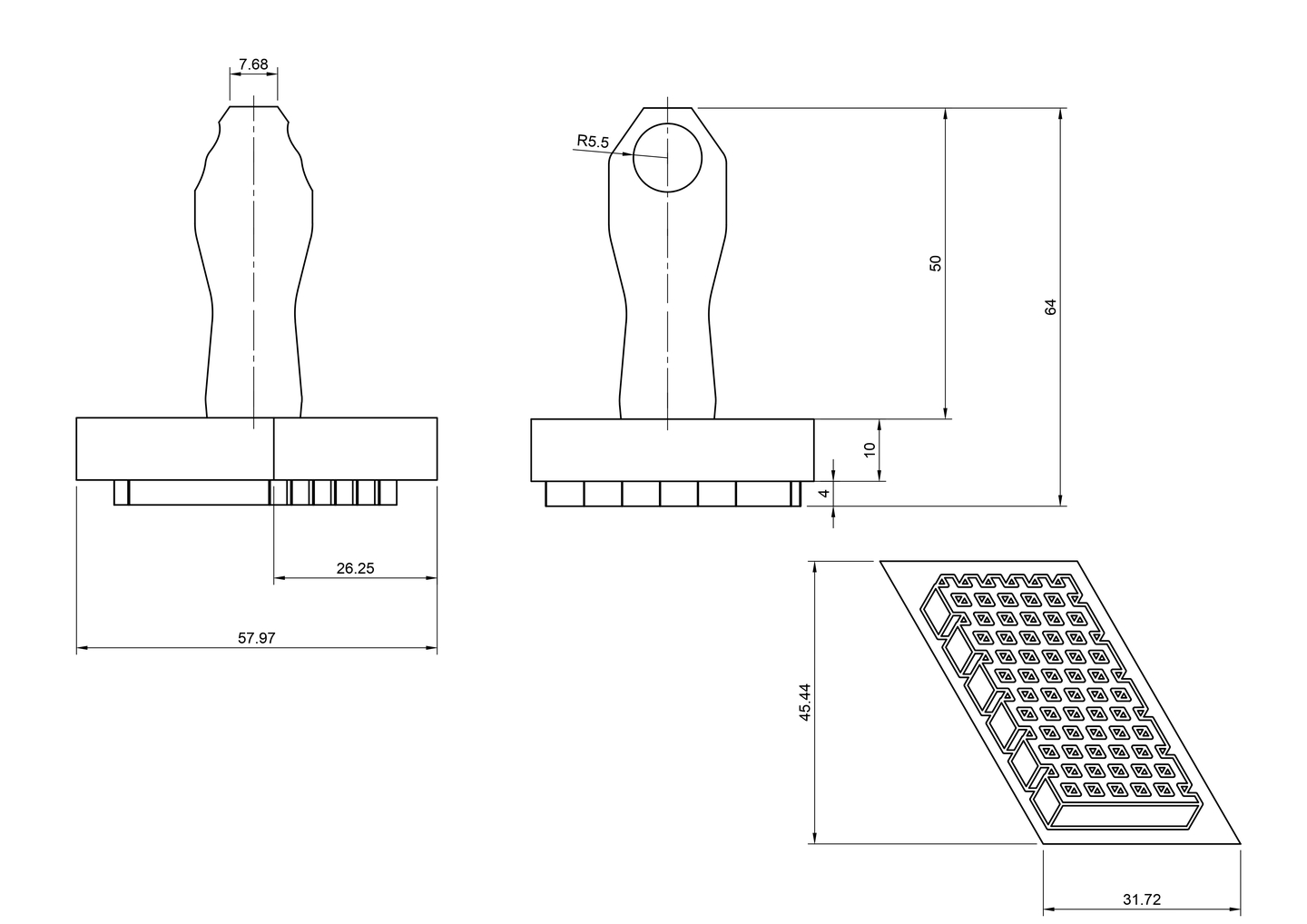
The Modeling Process in Autodesk Fusion
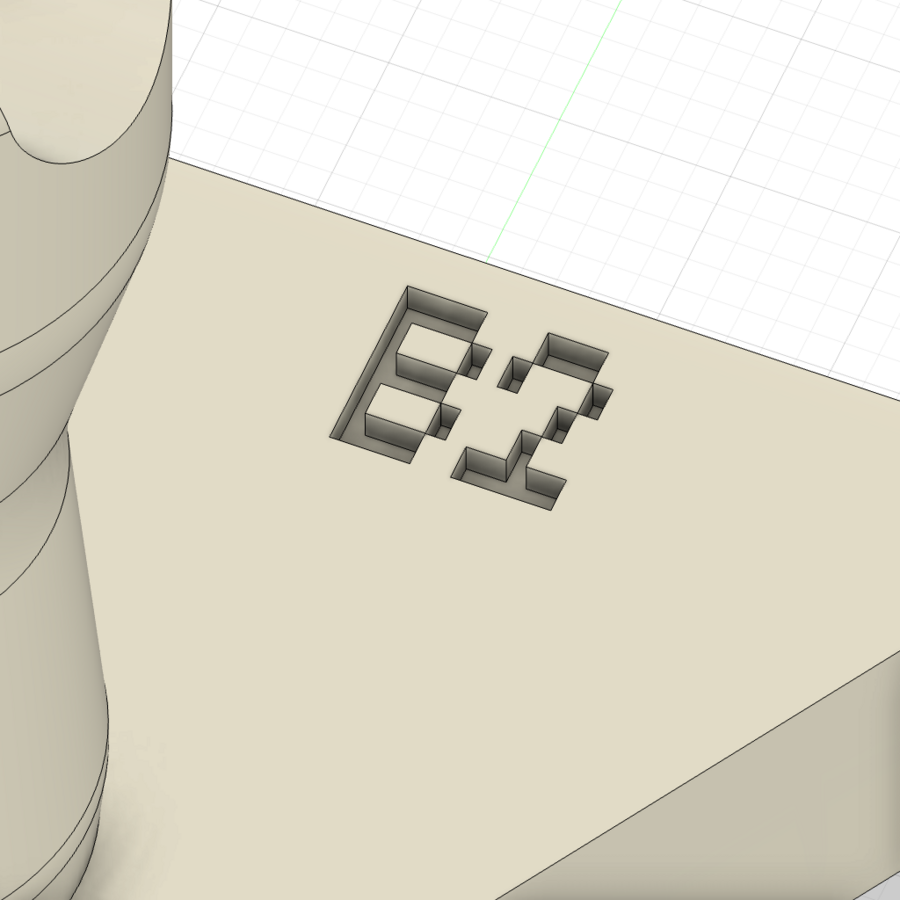
The stamp features a concave relief with the designation of the Unicode symbol name.
Materials
Rigid plastics (PLA / PETG / ABS): for test printing and printing handles.
Problem: They do not spring back when pressed. The paint distributes unevenly, resulting in a dirty imprint. FDM print layers create a micro-relief, causing small «brick» elements to sink in.
Elastic (rubberized) materials: Flexible photopolymer resin (SLA): Provides a smooth surface without layers. This is essential for complex Unicode symbols.
Result
Collaboration
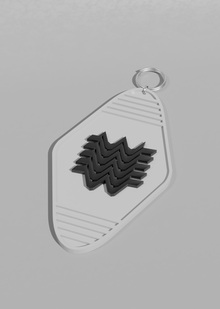
The project is one of two complementary components. My colleague Anya created carabiners that function as both a mounting system and a tool for organizing work on site. The die construction was designed so that they can be attached to the carabiners.
Collaboration: Ani Kudryashova’s Carabine Series
Packaging