Concept
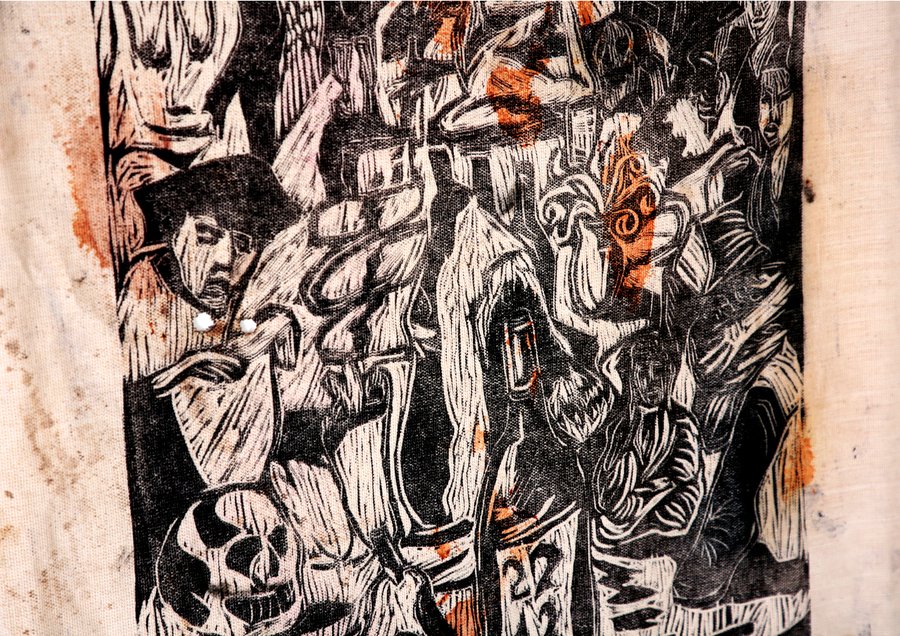
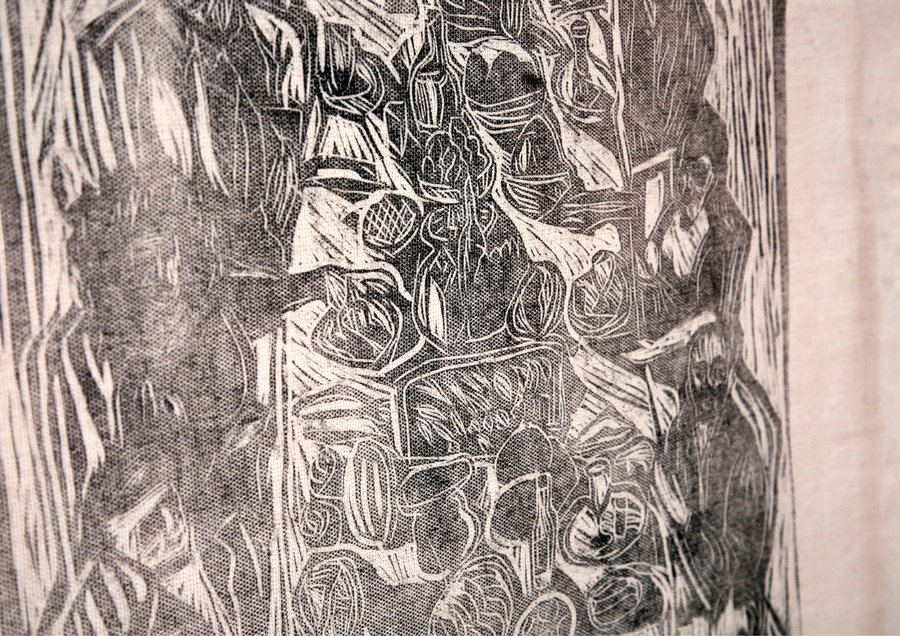
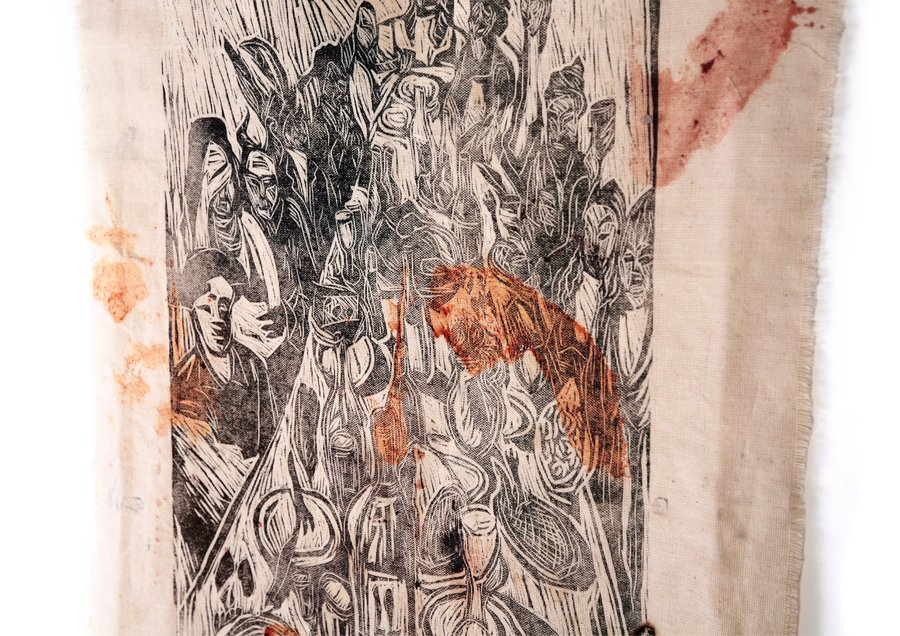
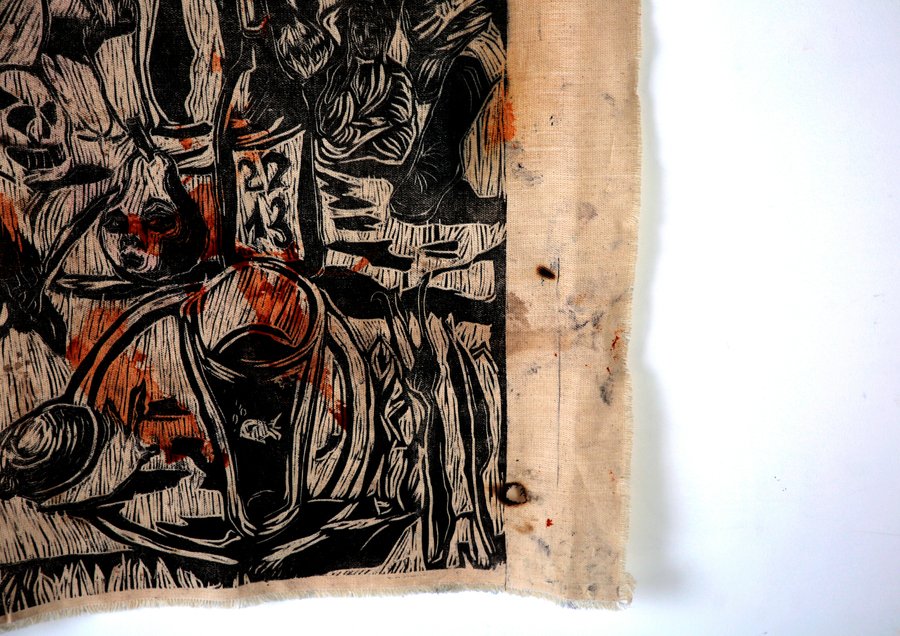
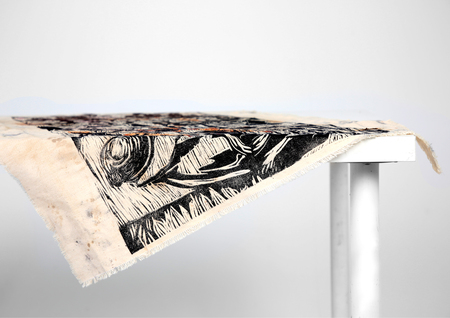
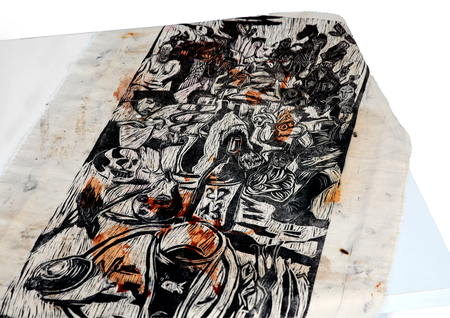
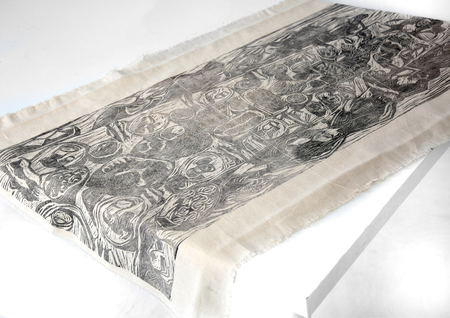
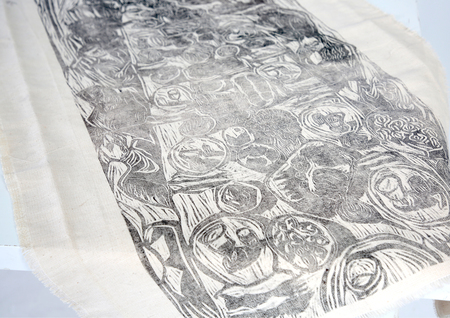
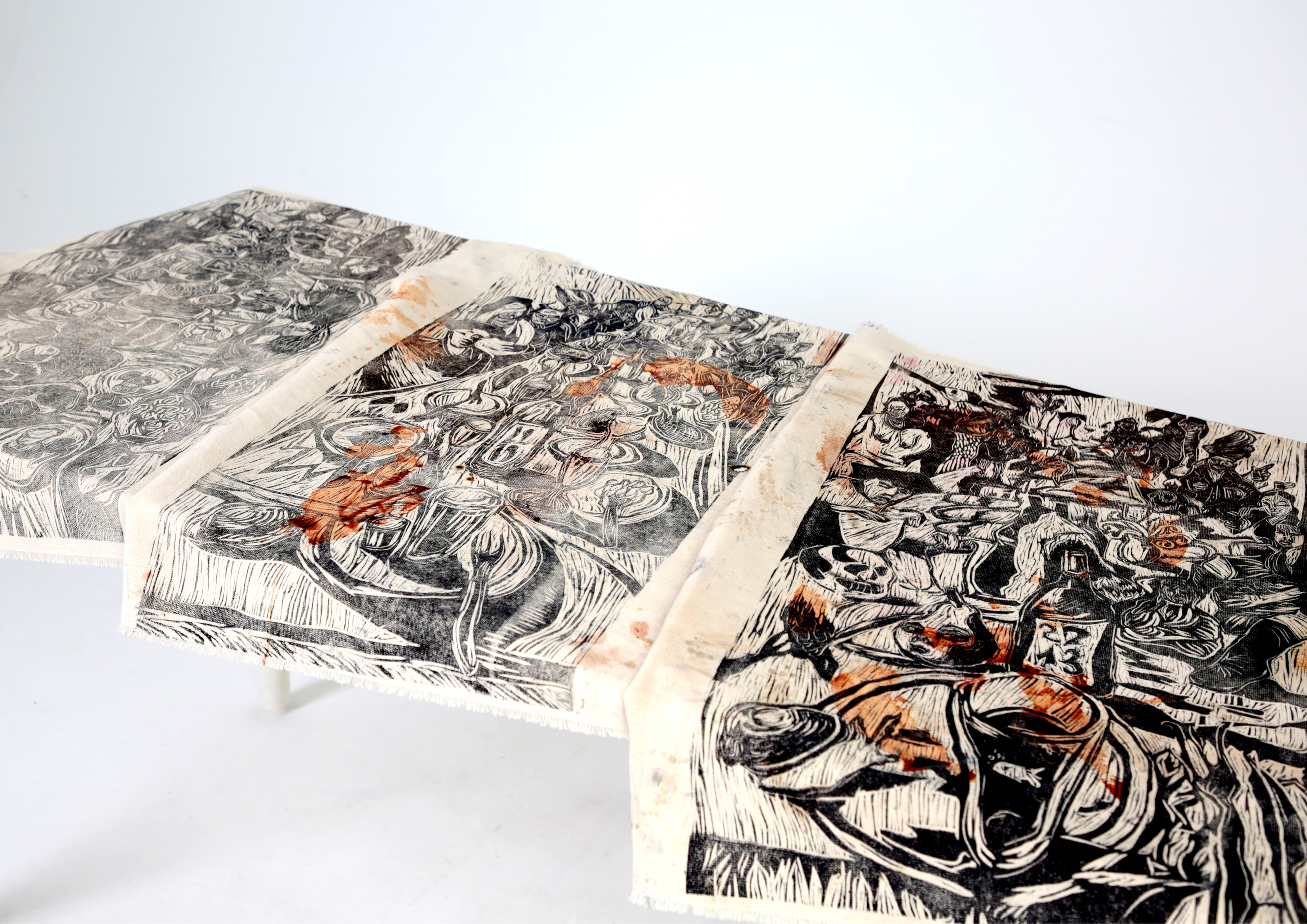
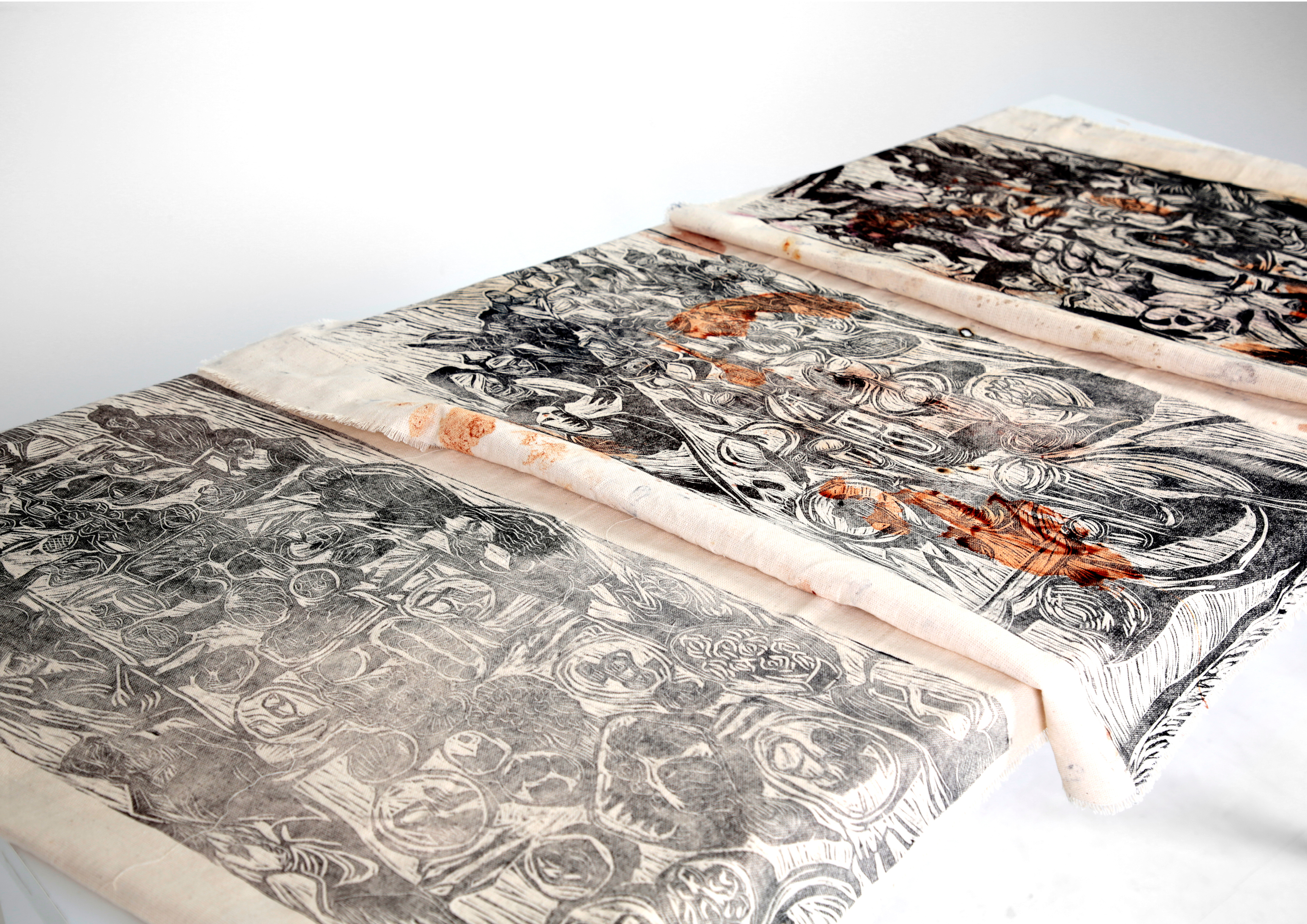
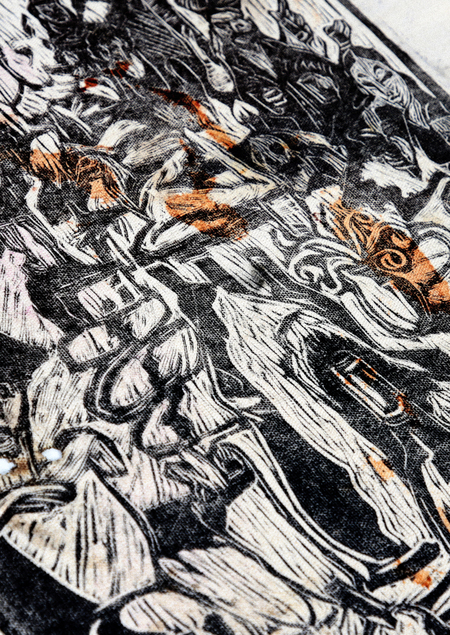
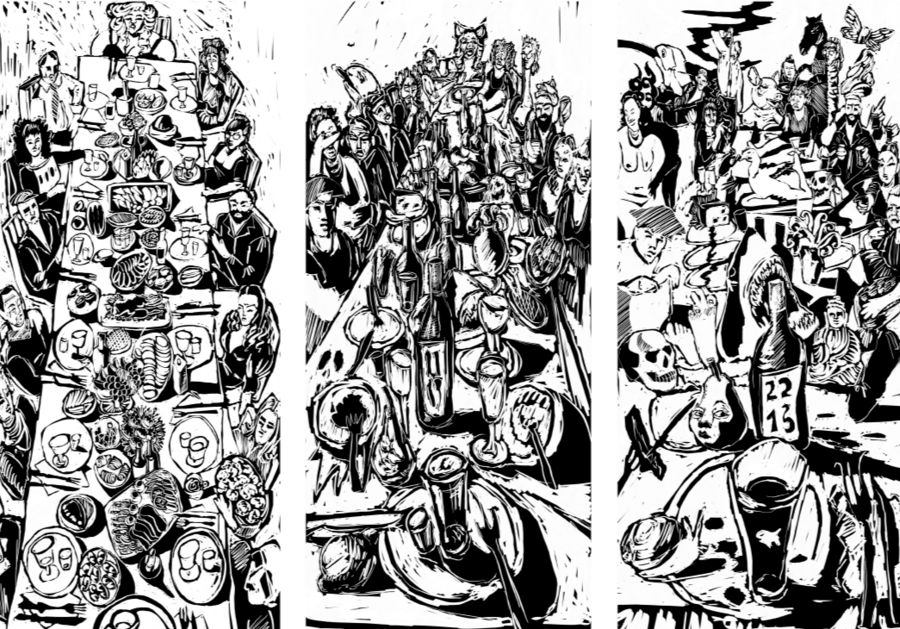
The linocut series, «Vinaigrette,» explores the process of meaning diffusion and the dynamics within a family feast. Initially, the act of setting the celebratory table has a clear structure, layout, and seating arrangement. The gastronomic element of post-Soviet tables possesses a unique charm: endless salads, appetizers, and alcohol, embellished with culinary aberrations such as aspic fish, raw liver, and five-finger canapés. Gradually, the emphasis shifts from consuming food to the social interactions within the family, which reveal and define each character. The feast ceases to feel real—the space seems to drift, the participants lose their human qualities, and the contents of the table take on an extremely random character. It is an absolute cacophony, a hellish bacchanal, a feast of vanity. Vices manifest not only in the people but also in the food, the tableware, and the tablecloth.
Each linocut illustrates a distinct stage of this process: beginning with a conditional order and rhythm, the middle—where characters and objects begin to undergo metamorphoses and shift meaning—and the end—the climax of the feast, where every action reaches its peak. To prepare the vinaigrette, the hostesses chop various seemingly incompatible ingredients into cubes and arrange them, forming a system similar to table setting. Next, everything is mixed; the pieces begin to refract meaning upon each other, forming the mass of the vinaigrette.
Technique
Linocut high-print technique (linocut). First, digital layouts (sketches) are created for each composition. These are then transferred onto the linoleum. A printing matrix is carved into the linoleum. Subsequently, the image is transferred from the matrix onto the printing plate using a printing press.
Digital Sketches
Matrices
Final Print