[problem]
① Trust crisis and inauthentic inserts: Due to the abundance of synthetic analogs, imitations, and stones of unknown origin, the buyer is disoriented, fears counterfeits, and doesn’t understand the value for which they are paying.
② Total standardization and the loss of material essence: In the pursuit of the assembly-line ideal, jewelry completely loses its soul and uniqueness. Instead of possessing a rare gift of nature, the buyer receives a mass-produced item that visually and texturally resembles anonymous costume jewelry.
[Collection] — a jewelry brand built upon the value of natural uniqueness. Instead of molding the stone into an ideal, repeatable shape, we preserve its natural characteristics and build the design around them.
[Project Team]
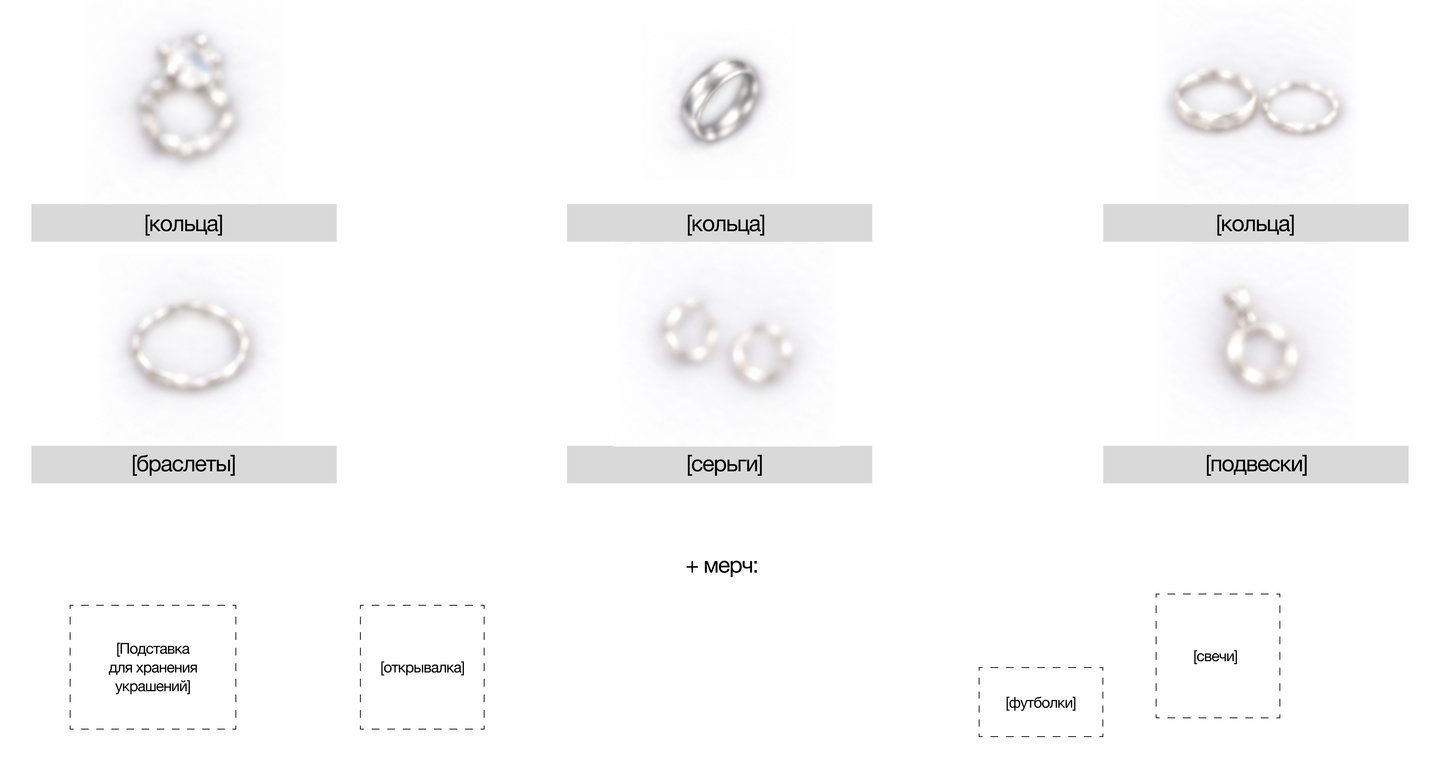
① The brand identity must unify the collections and adapt to new brand formats.
② The brand will evolve through visual content, targeted online promotion, and a physical presence in appropriate spaces.
[Archetypes]
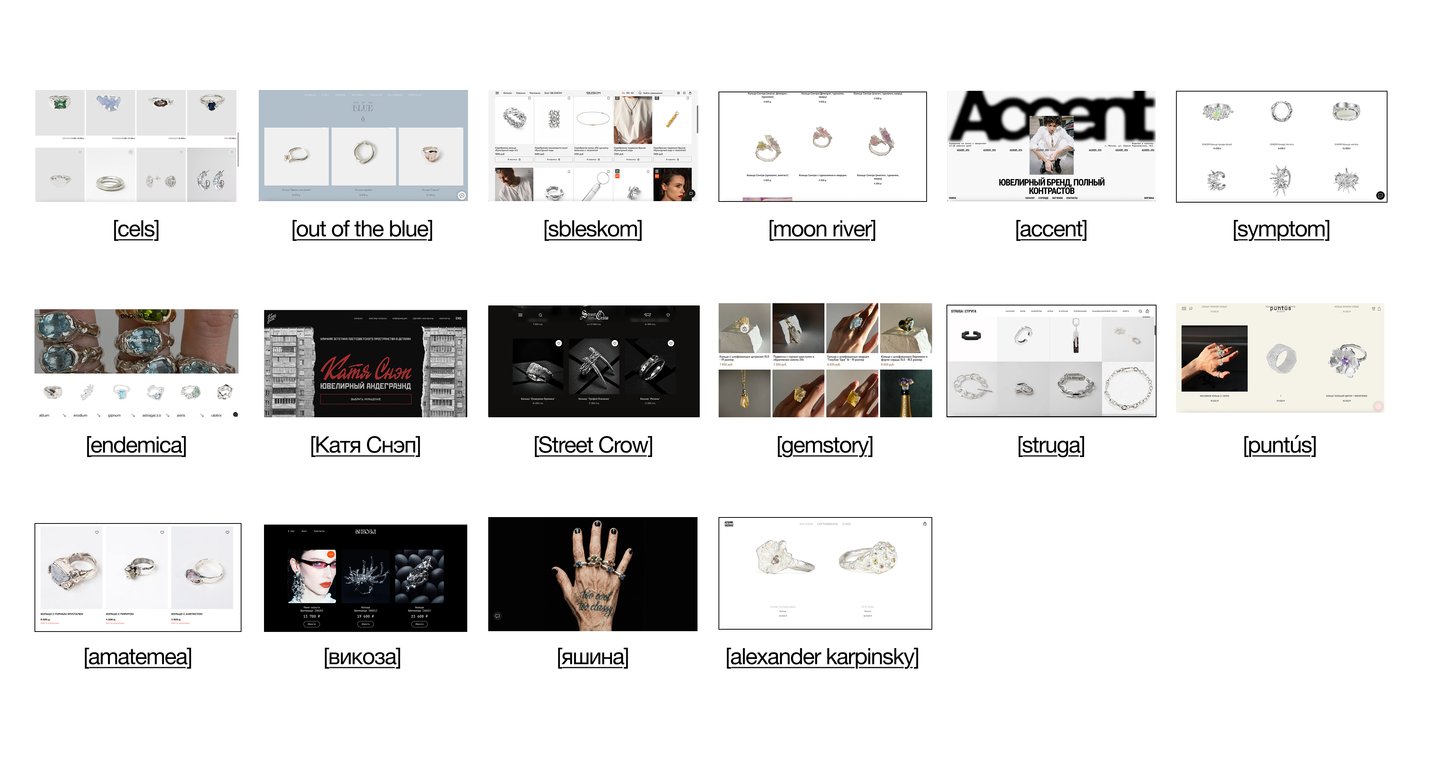
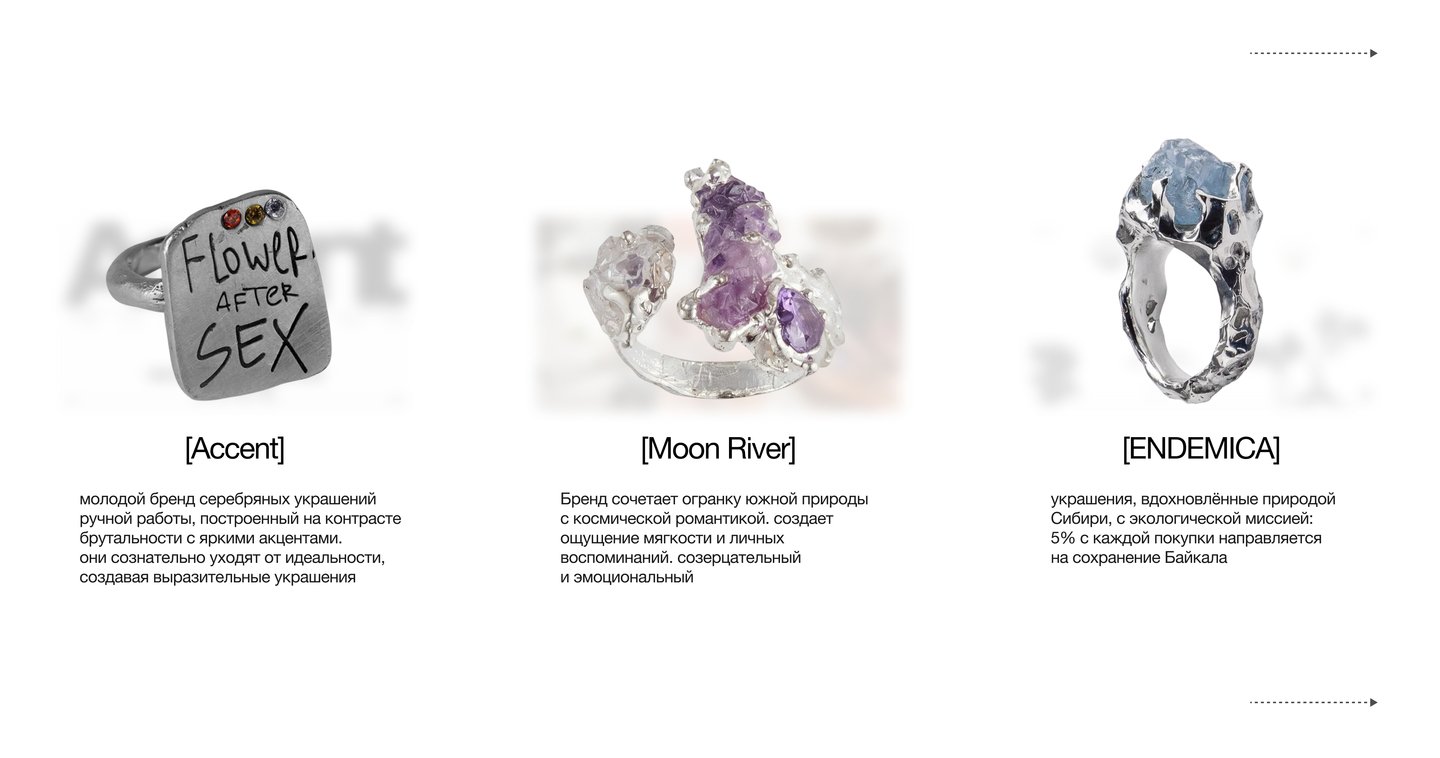
[Competitors]
[target audience]
Age: 26–45 years
Geography: Russia, primarily Moscow and Saint Petersburg, as well as other major regional cities.
Brands: Maison Margiela, Rick Owens, You Wanna, 2MOOD, TopTop, Ushatava, Red September, PEPFER, Volchek, Imakebags, ARNY PRAHT
Income: Above average, but not focused on luxury consumption. They can afford designer items, but approach purchasing selectively. They combine expensive accessories with vintage, resale, and local brands.
[motivation]
developing a personal style, self-expression through detail, aesthetic discernment, a drive for authenticity, the search for uniqueness, meaningful consumption
[Needs / Pain Points]
the need for items that remain relevant outside of fleeting trends, market uniformity, the artificiality of materials, the difficulty of finding truly unique—not mass-produced—pieces, and a deficit of originality
[Pricing Positioning]
Timeline