Research Concept
The depiction of Hell in medieval art is becoming increasingly significant. This study aims to compare the visualization of the underworld during the Romanesque and Gothic periods. The research focuses on identifying how the imagery of Hell evolves from a simple antithesis to Heaven in the early Middle Ages to a full narrative in later periods. Within the works of art, one can trace the evolution of the figures and their differences, which demonstrate the increasing complexity of the Hell imagery and the formation of a terrifying space beyond merely visualizing the torment of sinners.The images of death and suffering in Hell, which sinners experience, gradually develop up through the early and High Middle Ages, a period characterized by Romanesque art. The concept of a terrifying afterlife continues to evolve and crystallize during the Late Middle Ages and Gothic period. Following the trend of the Catholic worldview, the «terrible image of death» emerges, causing the depiction of Hell and its space in art to become an independent, narrative subject.
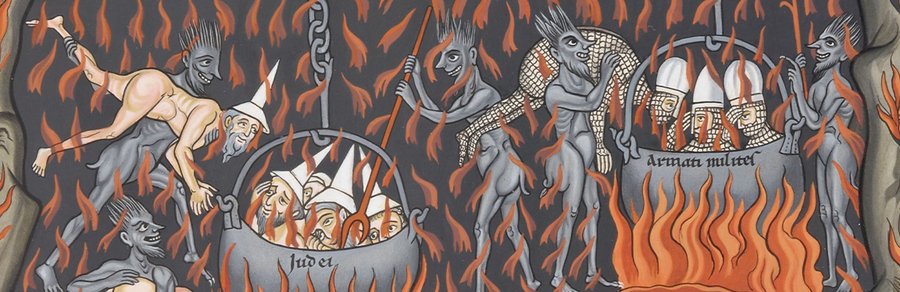
For the study, the periods of Romanesque and Gothic art were selected to illustrate the transitional phase in conceptualizing the infernal concept and in the formation of visual motifs. By applying typological logic to structure the chapters, it is possible to analyze how the depiction of the underworld evolved across different art forms—such as monumental sculpture, freestanding sculpture, and illuminated manuscripts—during these periods.
In my research, I relied on authoritative sources and scholarly articles concerning the formation of the medieval concept of Hell and its development in art.
Key question: How did the depiction of Hell evolve from a narrative to a formed narrative character during the transition period between Romanesque and Gothic art?
Research hypothesis: Under the influence of religious doctrine and the desire to amplify the effect of impending punishment, the image of Hell acquired an independent narrative. This narrative transformed under the influence of Romanesque concepts into a Gothic narrative that presented some differences from previous understandings.
The main objective is to identify the difference in the depiction of hell between Romanesque and Gothic art.
Research Sections
Research Concept
Comparison of Images of Hell on Cathedral Tympana
Comparison of Depictions of Demonic Creatures in Sculpture
The Space of Hell in Illuminated Manuscripts
Conclusion
Bibliography
List of Image Sources
Chapter 1. A Comparative Study of Images of Hell on Cathedral Tympana
Comparing Romanesque and Gothic art, one can turn to the most common art form of the era—the cathedral.During the Romanesque period, depictions of Hell were primarily cautionary, serving as a «means of terror» for sinners. The representation of the underworld in the Gothic period is notable for its use of narrative motifs, such as the «weighing of souls, ” and its increased visual complexity.
Tympan of the St. Foy Basilica portal in Conques (first half of the 12th century). Romanesque art
St. Foy’s Abbey Church in Conques. Tympanum of the «Last Judgment"—fragment.
The chaos in the depiction of Hell is particularly evident on the tympanum of the portal of Saint-Ouen Basilica in Conques. We see a scene beneath Christ’s feet: here, the division is clearly traced between a wide passage leading to paradise and the terrifying maw of Leviathan opening the way to hell. Thanks to the lack of discernible structure, the image of Hell appears chaotic and disordered.
St. Foy’s Abbey Church in Conques. Tympanum of the «Last Judgment"—a fragment.
St. Fou Abbey Church in Conques. Tympanum of the «Last Judgment”—a fragment. https://www.flickr.com/photos/ricardo/7732025012/
The figure of the Devil is central and emphasizes the primary purpose of contrasting Hell with Paradise during the Romantic period: his main function is to depict the punishments that follow specific sins. Therefore, visual images are constructed based on different degrees of torment experienced by sinners.
Saint-Lazare Cathedral in Autun (1112–1132) Romanesque Art
The stark, rigidly sectioned image depicts the scene of the Last Judgment. The most evocative motif is the Weighing of Souls, presided over by the archangel Michael and the devil.The depictions of sinners are also integrated into the overall system of terror: they are devoid of hope for salvation and are shown in unnatural, elongated postures. Emphasis is placed on monstrosity and physical torment.
Thus, images in the period of Romanesque art are of a creative nature; through vivid depictions of sinners and hellish creatures, they convey the theme of punishment but do not yet form an independent narrative. Although depictions of Hell already existed, they were intrinsically linked to the inevitability of the Last Judgment.
Notre-Dame Cathedral (1163–1345). High Gothic
The central portal of the cathedral depicts the «Last Judgment,» which conveys a solemn impression. The Gothic depiction does not abandon the Romanesque scheme but rather intensifies the visual imagery, organizes Hell, and significantly strengthens the narrative character.
The cathedral tympanums continue to focus on the image of Christ the Judge, occupying only the right side of the relief.
The imagery of the demons, which become increasingly less anthropomorphic compared to the Romanesque period, is particularly expressive. They attempt to tip the scales of the sinners, while those shackled in chains cannot find a path to purification.
Compared to the rigidity of the Romanesque period, depictions of hellish beings are characterized by a diversity of grotesque forms and fantastic plasticity. Gradually, the suffering of the afterlife becomes increasingly emotional in representation.
Amiens Cathedral (1220–1269). High Gothic