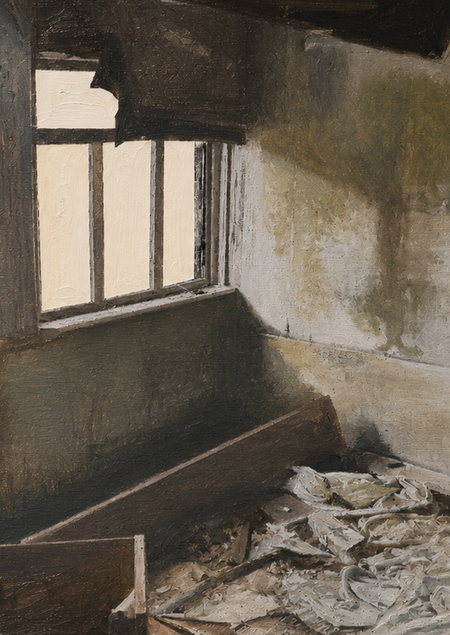
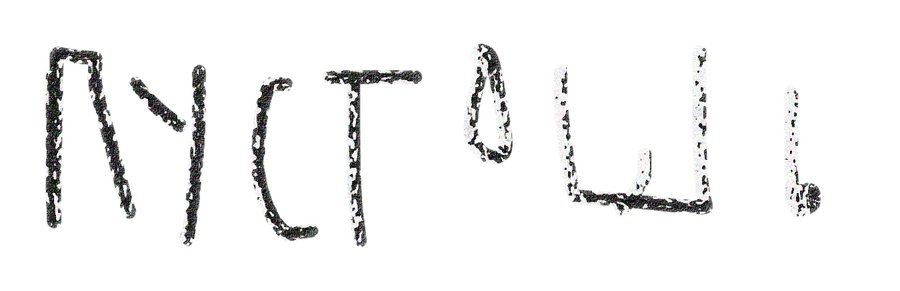
The central theme unifying the works is the transformation of perceiving environmental objects outside of temporal frames and designated spaces. The disruption of familiar object identification occurs due to the absence of ancillary markers of belonging. All visual representations of these places are «cut out» from their context and subsequently relocated into the category of monumental and eternal.
Deconstruction doesn’t have to be merely loss; it can be a way to see something for the first time.
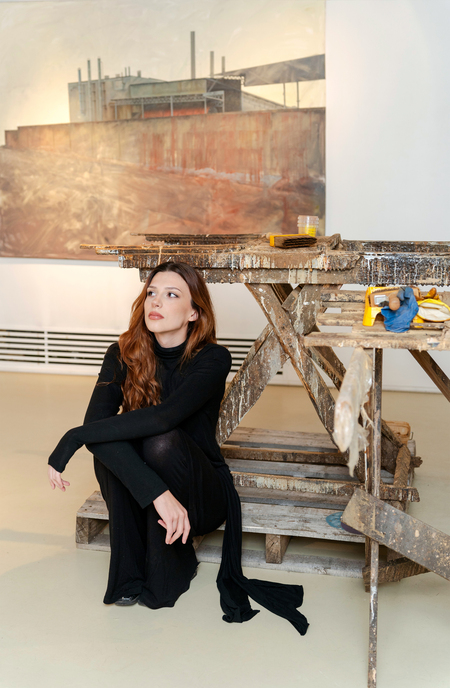
My artistic practice focuses on ontology and the study of abandoned spaces. Unlike Camilo José Vergara, Pavel Odelyanov, Gregor Schneider, and others, who explore ruins from a historical context to shape their relationship with them as isolated remnants or traces of personal or societal disaster, I strive to concentrate solely on the space’s former functionality and the visual representation of decay. For me, fieldwork is crucial—during these visits, I «dissect» every corner of a building, paying attention to every detail and how it integrates into the stratification of accumulated detritus, thereby losing its objecthood and recognizability. As a result, my works become an extension of my personal engagement with abandoned sites, reflecting my characteristic «intense observation» and impartiality.
Vitaliy Pushnitsky comes closest to my perception of ruins, but his work is often anthropocentric. He builds his narrative based on human action within space. For example, the cycle of paintings «Studios. Waiting”—shows a moment of spatial suspension and the build-up of chaos, which is the artist’s emotional reaction „behind the scenes“ to the progression of postmodernism. I, however, depart from this principle, intentionally removing the human figure from view to foreground the architecture and the fluid form of the abandoned space—which, in my opinion, is inherently self-sufficient.
A ruin isn’t necessarily a «smaller» architectural object than a new construction; it can be another form of the same architectural existence.
«ARMATURE» — painting series (small format)
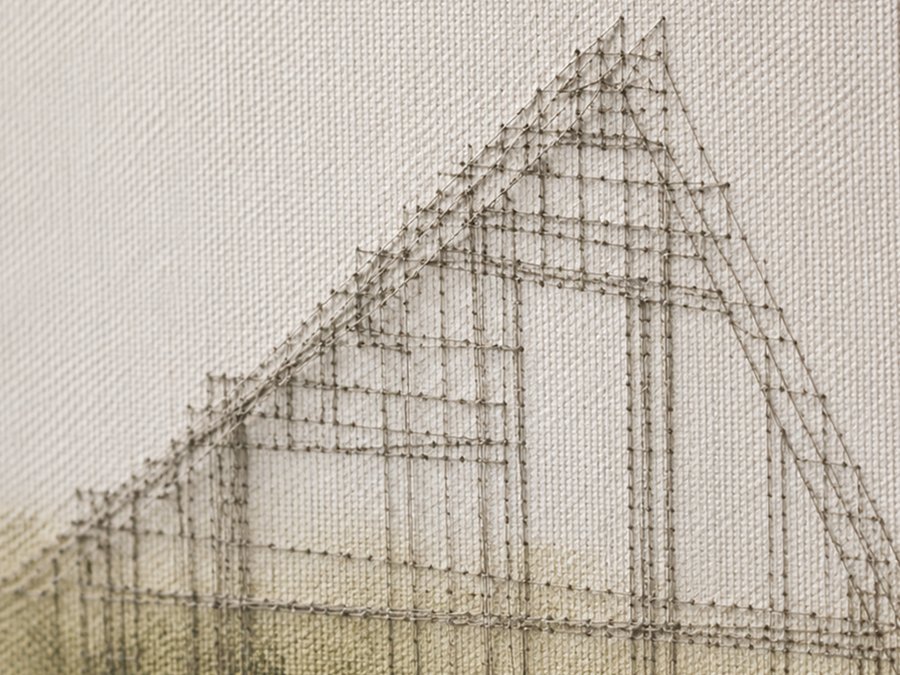
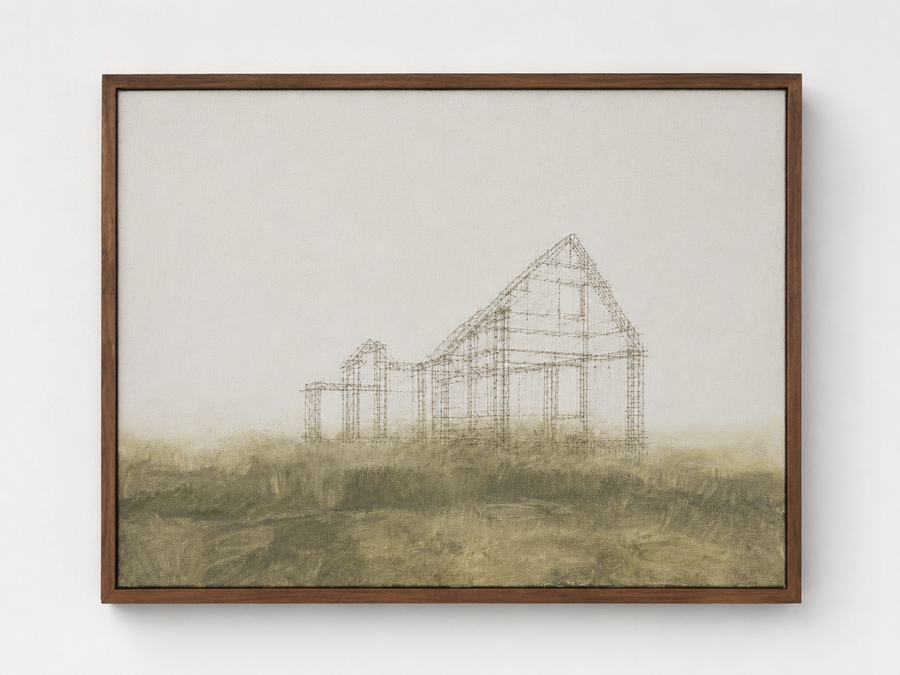
Example artwork (3D mock-up)
The series of paintings titled «Rebar» is dedicated to the internal framework of architecture, hidden from view. The intentional exposure of metal rods portrays the process of decay in a more fundamental way. The structures evoke the concept of «incompletion”—buildings that have been abandoned without gaining markers of human presence. In the paintings from the Rebar series, forms emerge from abstract fields, equating to untouched natural landscapes.
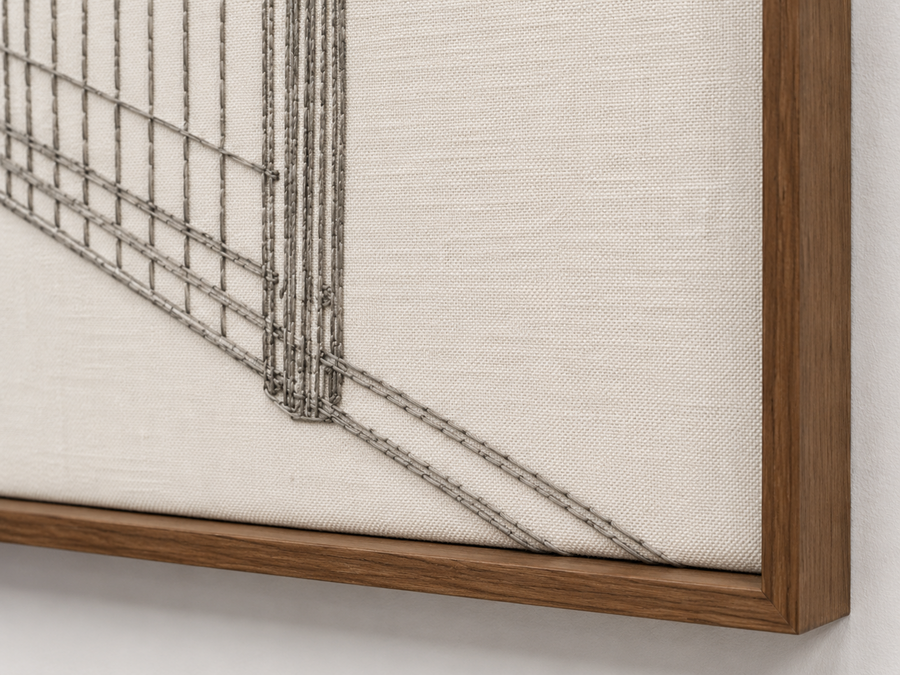
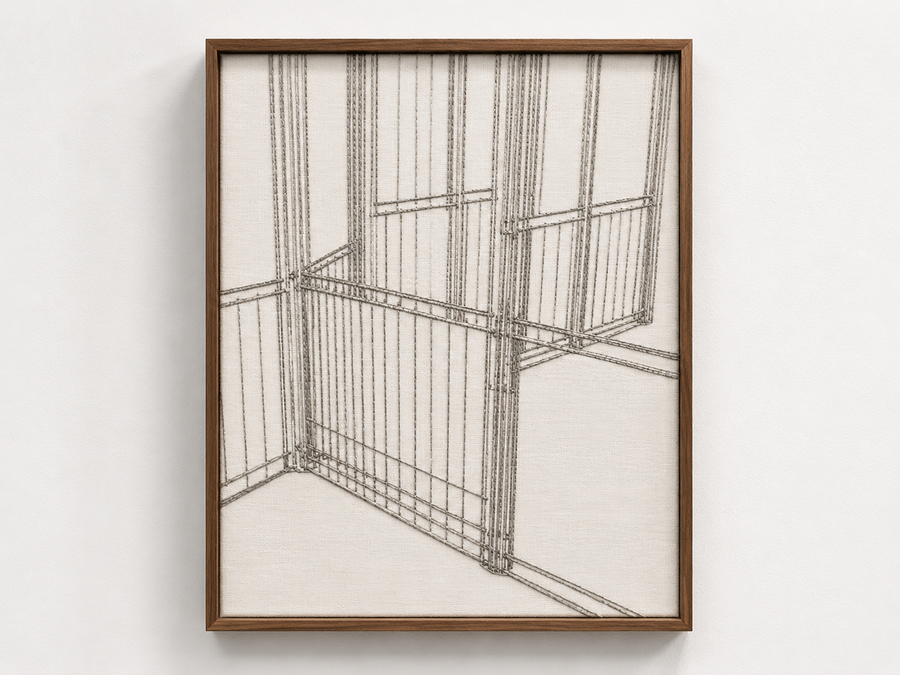
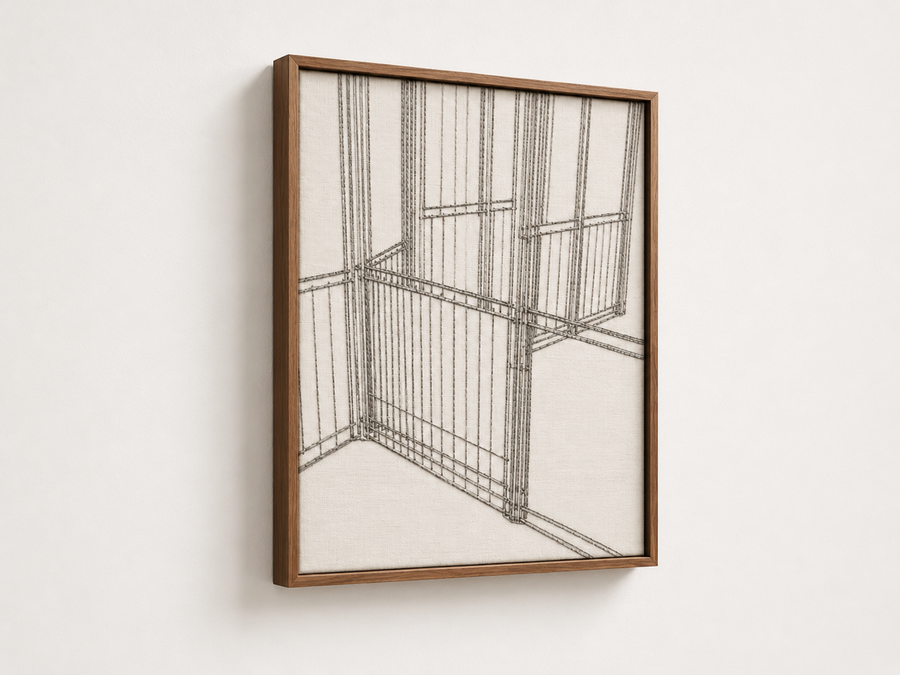
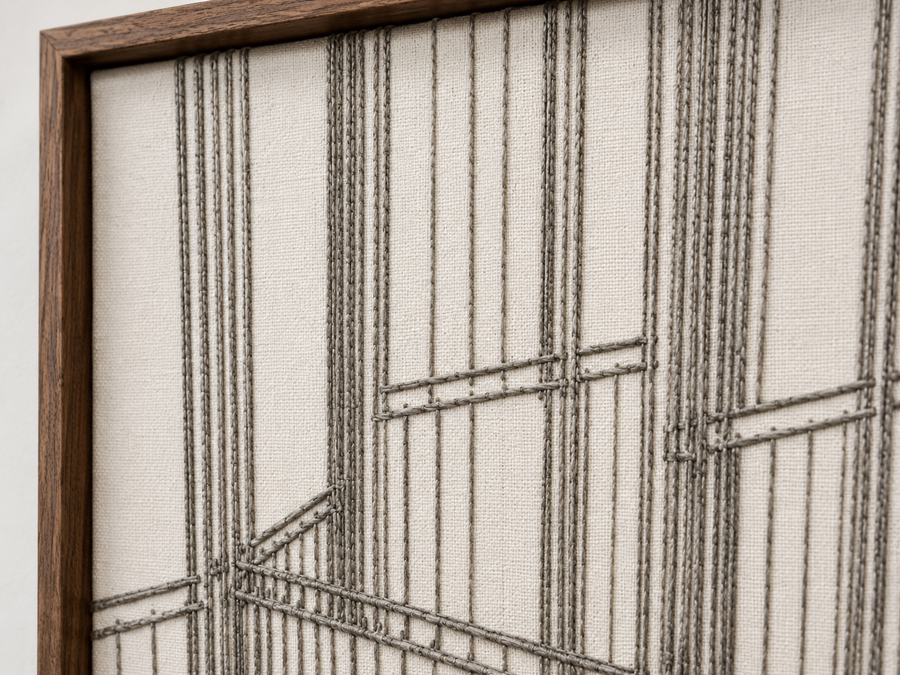
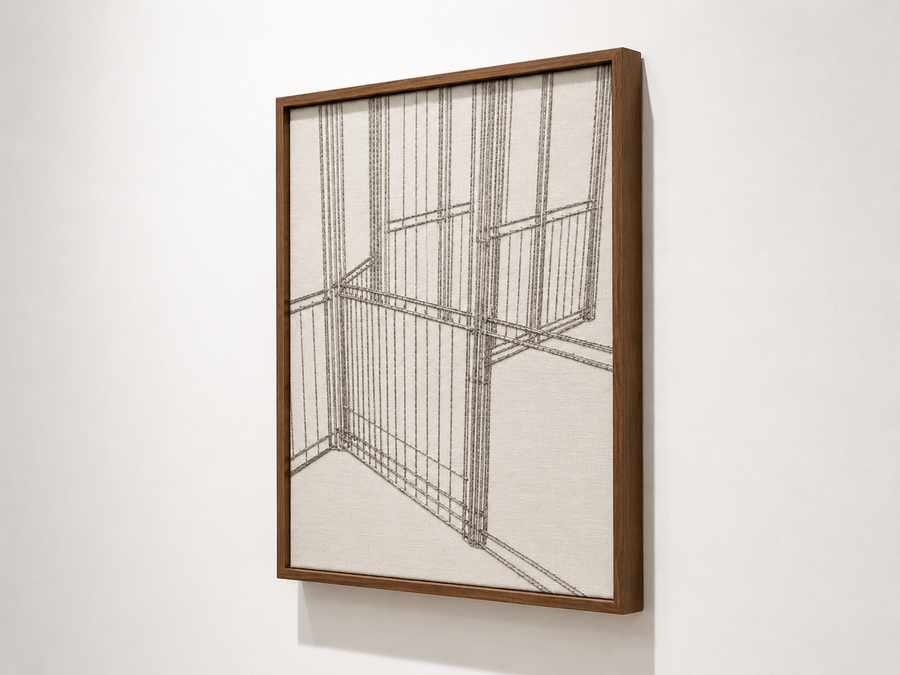
Example of a «3D Mockup» artwork
In «A Tour of the Monuments of Passaic, ” he introduces the formula of „ruins in reverse”—that is, „ruins“ that seem to exist before full construction, already afflicted by obsolescence.
«SKIMMING» — a series of paintings (large format)
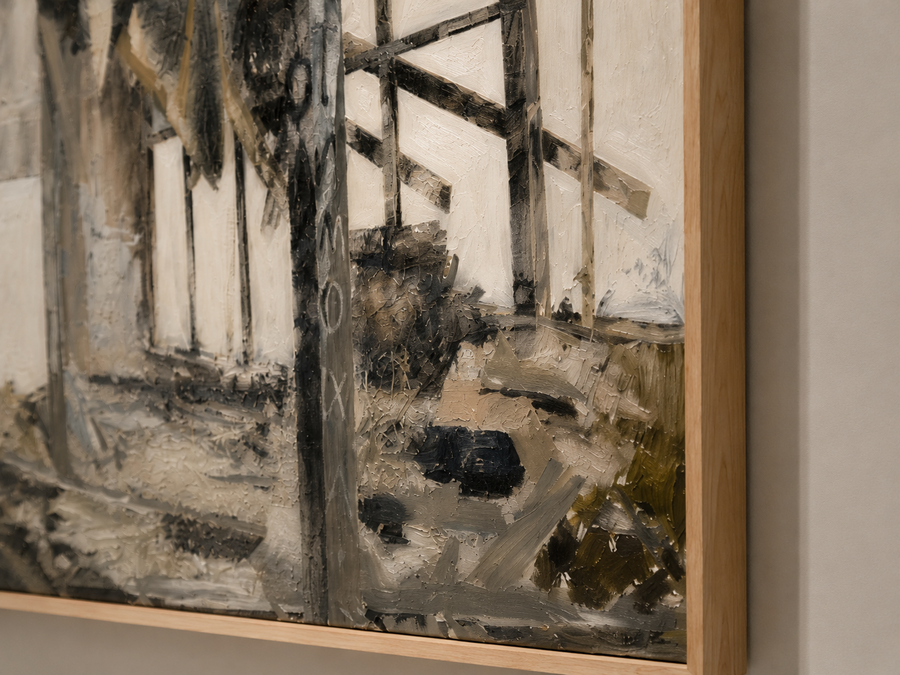
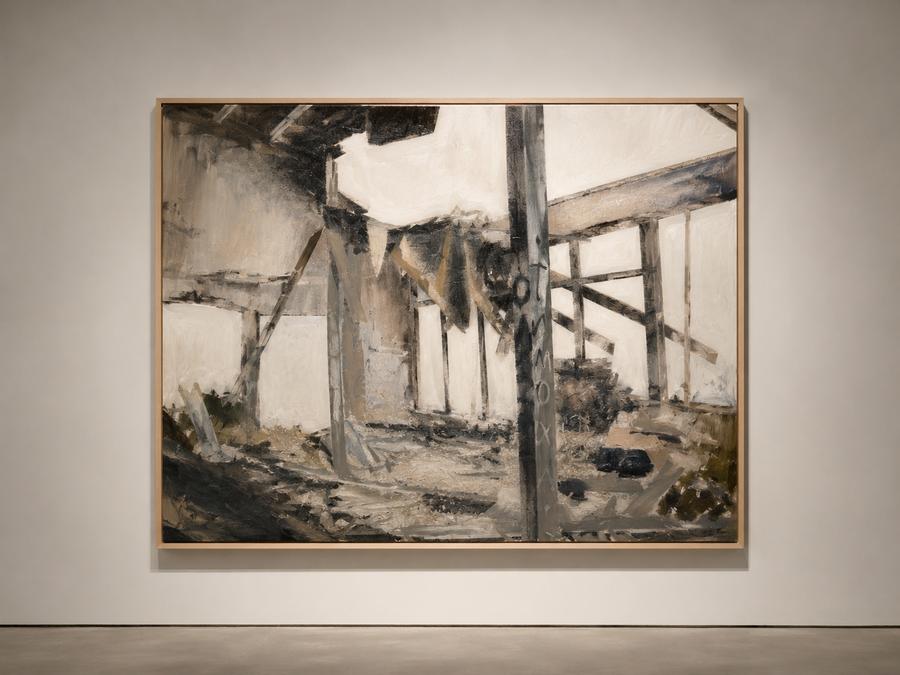
Sketch concept (3D model)
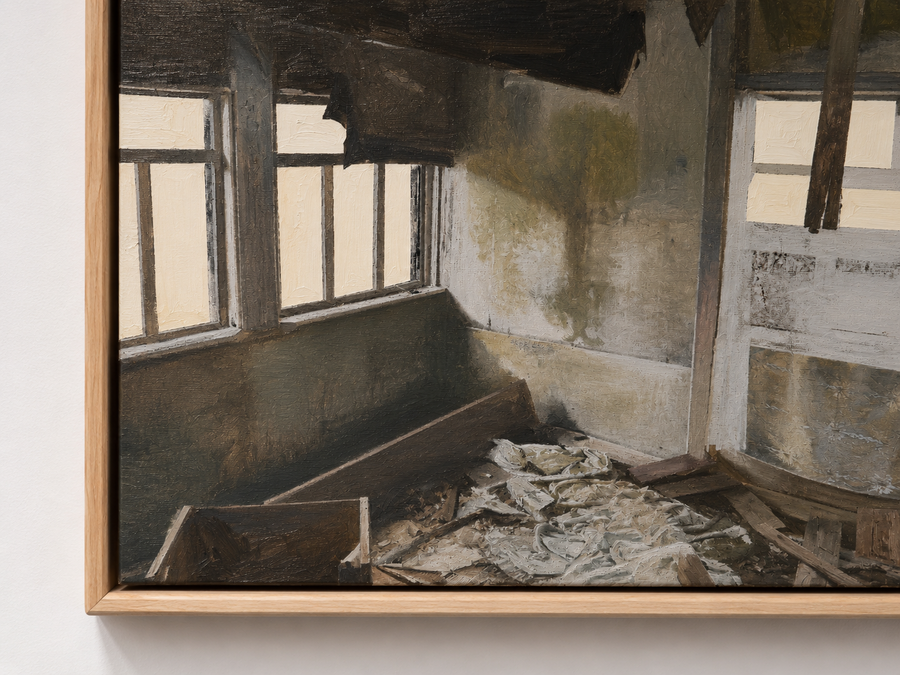
The paintings from the «Fissuring» series are structured as a visual diary of decay. The central theme of the work is the attempt to «cut out» a ruined building from the context of time and space by disrupting familiar structures and orders. The absence of a background becomes an ontological gesture. It dismantles reliance on coordinates: precisely where is this place, when did this occur, whose home is this? As a result, the specific building ceases to be a biographical instance and becomes a model of the general principle of deterioration. For Smithson, this was called translating time into the «objective present»; for Benjamin, it involved rejecting a «sympathetic» immersion into an epoch in favor of reading history «against the grain.»
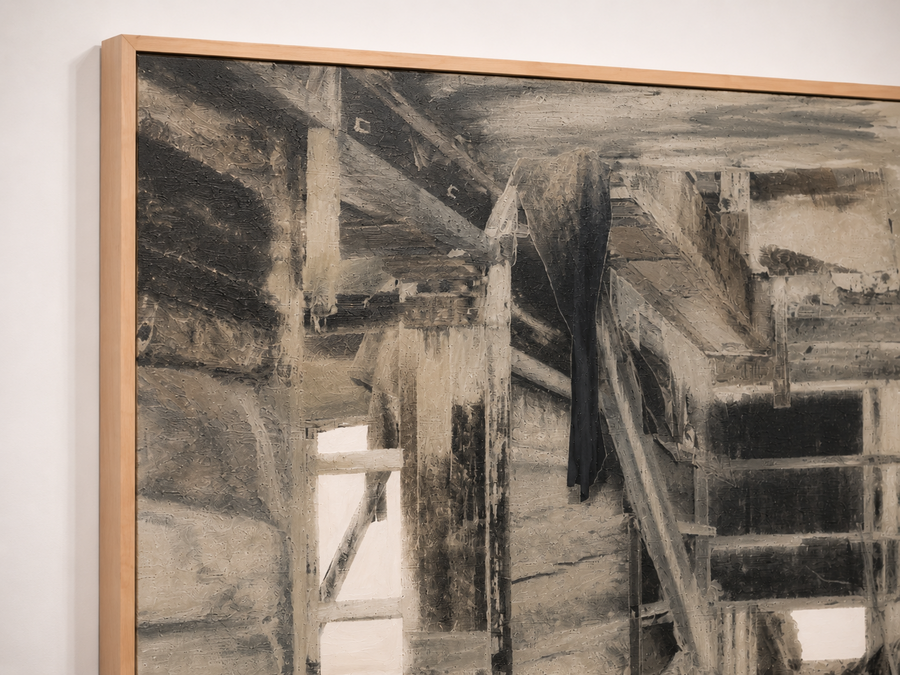
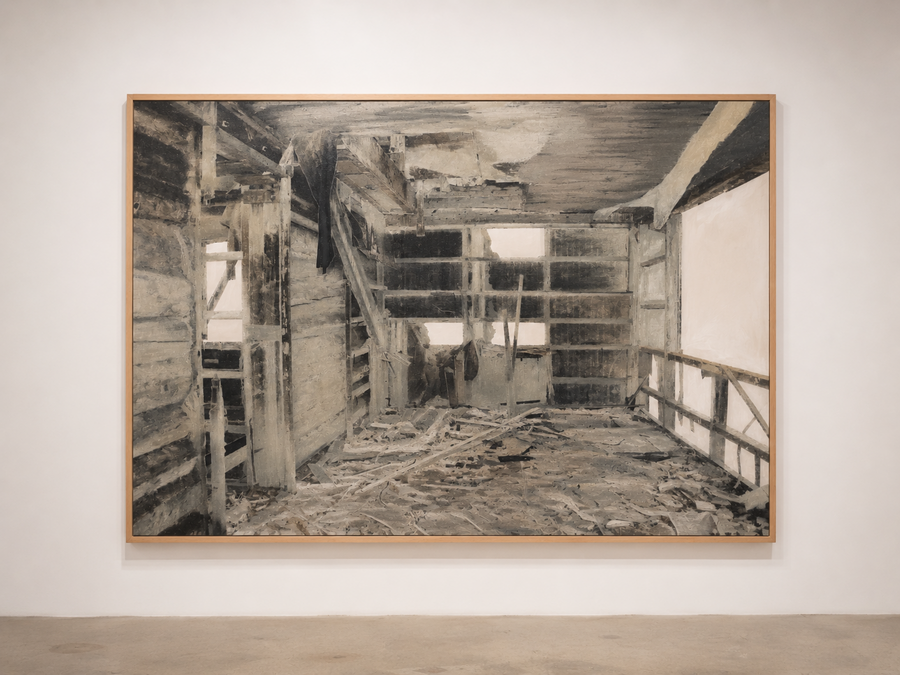
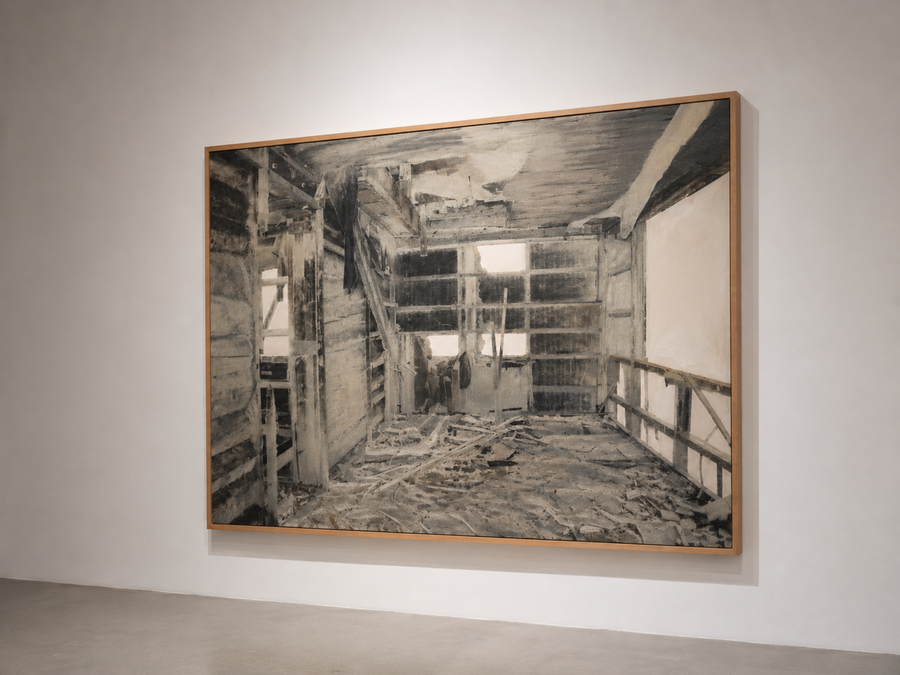
Concept Sketch for the Work (3D Model)
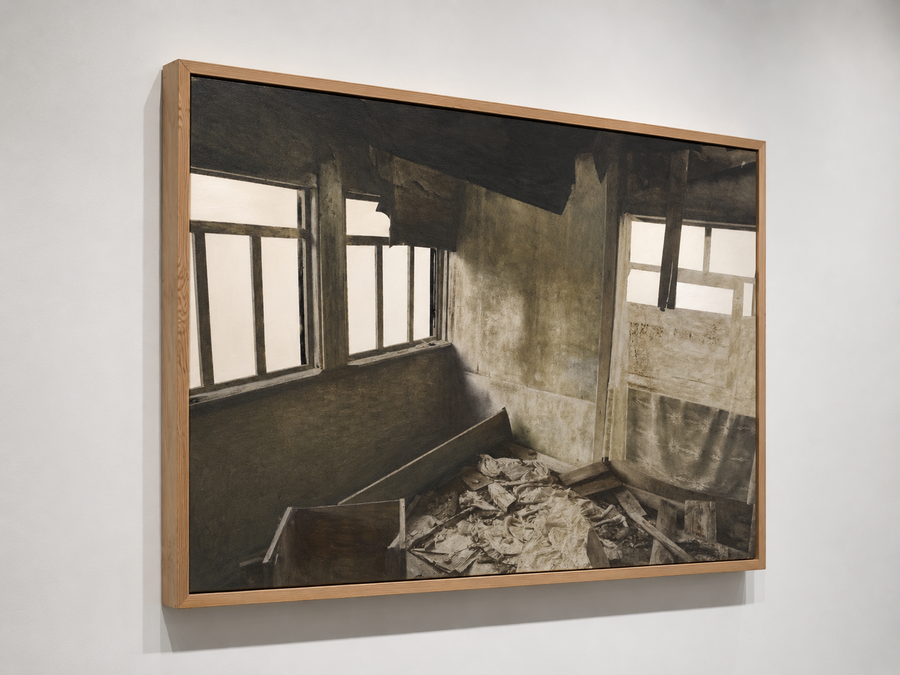
Sketch for the painting (3D model)
In «Decomposition,» the individual is no longer the sole organizer of space: the house continues to be shaped by rain, dampness, wind, corrosion, crumbling, and the decay of wood and plaster. This captured destruction ceases to be a prolonged process and instead becomes a accumulated mass of consequences—a stasis of catastrophe. The project does not aestheticize decline; rather, it directs the viewer’s gaze inward, toward the very processes of disorganization. This is why what is important in the paintings are not spectacular facades or picturesque «views,» but the interiors of the space.
«STEKLA» — Object Series
3D Mockup of the «Glass» Series
The project «Glass» consists of twenty shards from windows and door openings sourced from various abandoned buildings. The numerous repetition of a single element leads to visual blending, transforming an individual object into a typology. Unlike Bernd and Hilda Becher, whose typologies reveal differences within a single class of architectural forms, «Glass» explores the common logic of decay through the multiplicity of similar fragments.
3D Mockup: «Glass» Series
«THIS WAS ALWAYS THE SKY» — A Photography Series
The project «There Was Always Sky Here» consists of photographs of the sky taken on different days and in different years. The almost unchanging backdrop is connected with small, dated notes about what happened on that day. This series transforms the sky into an archive of everyday life.
The sky is presented as both a literal and conceptual horizon of the day: it accompanies every event, yet does not align with any of them. The captions document not historical milestones, but what usually remains outside the museum—the weather, the route, a phone call, news, silence. They are structured according to the principle of a card catalog, shifting perspective, and generic ambiguity.
3D mockup of a hanging display
The series of photographs references Heidegger and his term «average everydayness”—the mundane. The sky ceases to be a sublime landscape and becomes that which is always already present in the ordinary state of being. Merleau-Ponty provides the central concept for the project: the present lies between the absent horizons of the past and the future. Here, the sky becomes literally the horizon of any given day—a backdrop that is always with us, but rarely thematized.
Photography serves as a tool for me—to «take notice of places in the here and now”—that is, a way to think about where we are.