Media Concept
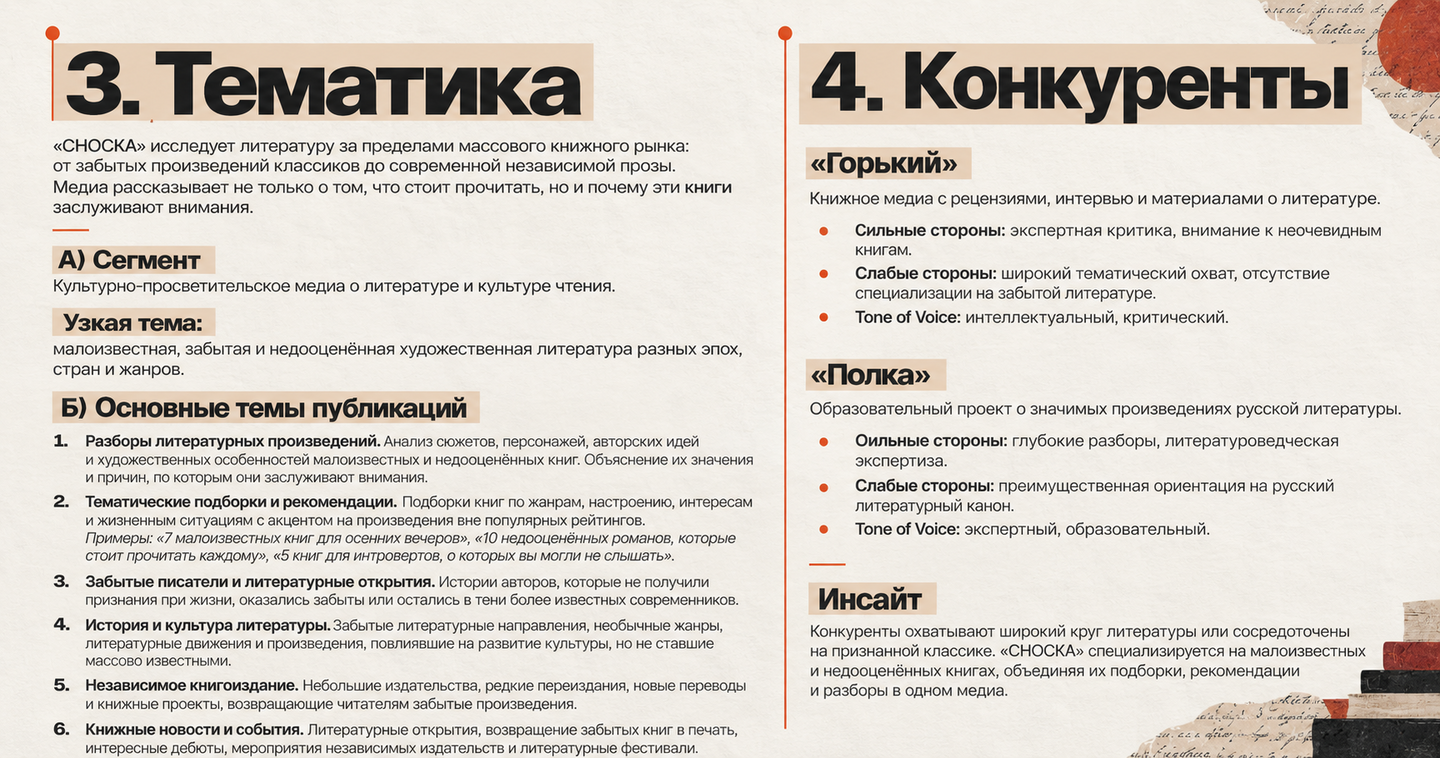
«SNOSKA» is a media platform dedicated to lesser-known, forgotten, and underrated books. This project introduces readers to interesting literature that seldom appears in popular selections or book rankings. The media’s goal is to broaden readers' horizons, draw attention to unjustly overlooked works, and help the audience discover new books and authors.
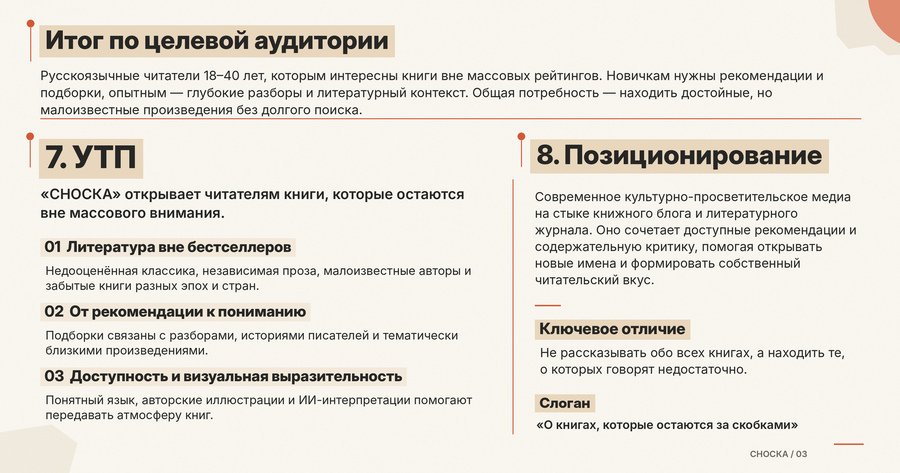
Half-Year Thematic Plan
Month One: Why Do Great Books Go Unnoticed?
The first month introduces the audience to the concept of «SNOSKA» (The Uncharted/The Undiscovered) and its core principle: a book’s popularity does not always reflect its literary merit.
We start by exploring the question of why some works become bestsellers while others remain virtually unknown. This is influenced by publishing policies, advertising, literary awards, translations, and reader trends. Importantly, lesser-known literature is not necessarily more complex or less engaging for the general reader.
The goal for this month is to demonstrate that seeking books outside of the top rankings can be an exciting way to expand one’s reading experience.
Publication Topics:
— Introduction to «SNOSKA»: the need for literature media outside of the bestseller lists. — «Is a Good Book Always Popular?» — An introductory article. — Why some books become famous while others remain in the shadows. — Who shapes book rankings and literary trends. — Anna Karenina’s «Ice» — an analysis of an unusual novel outside of mainstream literature. — A selection of «5 Books You Might Not Have Heard Of, But Should Read.» — What is a literary canon, and how do books enter it? — An article on «How Book Marketing Influences Our Reading Preferences.» — Poll: «How do you usually choose your next book?» — The «Discovery of the Week» segment — a first look at the media’s permanent feature.
Additional Content:
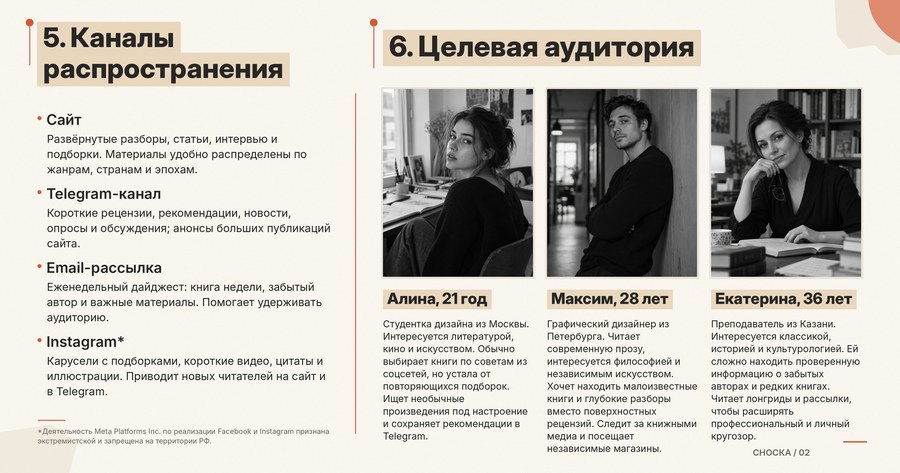
On the website: an introductory section, initial book and author profiles, and curated materials for new readers.
Telegram: project introductions, short reviews, the first editions of «Discovery of the Week, ” polls on reading habits, and discussions about book rankings. Announcements for major articles and website features.
Instagram*: a carousel titled „5 Books Outside the Bestsellers, ” short videos featuring literary discoveries, visual quotes, and an introduction to the media’s concept. This aims to draw readers to the website and Telegram.
Newsletter: „Why Do We Read the Same Books?“ and „Five Literary Discoveries of the Month.“
Month Two: The Classics We Forgot
After exploring the concept of media, we transition to classical literature. However, instead of focusing on the typical school curriculum pieces, attention is given to books that have not achieved the same widespread recognition or have faded into the shadow of other authors over time.
This month demonstrates that literary classics are far more diverse than the commonly accepted list of great works. Among these forgotten or less popular books, you can discover unusual artistic forms, timely ideas, and themes that resonate with the modern reader.
Publication Topics:
— Why some writers are studied in school while others are barely remembered. — Bruno Schulz’s «The Cinnamon Shops”—an analysis of an unusual literary world. — Carson McCullers’ „The Heart Is a Lonely Hunter”—a novel about solitude and misunderstanding. — How works become classics and why they lose their readership. — A selection of „7 Underappreciated Classic Works.“ — Obscure classics for those who dislike literary fiction. — The article: „Why the literary canon changes over time.“ — How the perception of books evolves across decades. — Stories of writers whose work gained recognition much later in life. — Poll: „Which classic book has been an unexpected discovery for you?“
Additionally:
On the website: a „Forgotten Classics“ section featuring analyses, author biographies, and recommendations.
Telegram: weekly recommendations of forgotten classics, short plot and character breakdowns, interesting facts about the works, polls, and discussions of what has been read.
Instagram*: carousels titled „5 Classic Books People Rarely Mention“ and „Classics Not in the School Curriculum, ” short videos about the works, and visual interpretations of literary eras.
Newsletter: „Classics Beyond the School Curriculum“ and „Five Works Deserving a Reread.“
Month Three: Authors Who Remain in the Shadows
In the third month, the focus shifts from the works themselves to the creators. Why don’t talented writers always gain recognition? How do historical circumstances, publishers, critics, and public perception influence a literary career?
Through the personal stories of authors, the media reveals that literary fame depends on more than just the quality of the writing. Some writers become popular posthumously; others receive recognition through reissues and new scholarly research.
Publication Topics:
— Why talented writers may remain unknown. — Women in literary history: authors who were eclipsed by their contemporaries. — Gene Rhys and «The Wide Sargasso Sea”—a fresh perspective on a familiar literary history. — Fernando Pessoa: a literary life that continued after the author’s death. — How critics and publishers shape a literary reputation. — Writers whose works were rediscovered decades later. — A selection: „6 Authors You Should Know.“ — Literary pseudonyms: why writers hid their identities. — Article: „Female Writers That Literary History Has Long Overlooked.“ — Poll: „Do you choose a book by the author or by the plot?“
Additional Resources:
On the website: a „Forgotten Names“ section featuring biographies, stories of literary lives, and a catalog of works.
Telegram: the „Forgotten Name of the Week“ column, offering brief biographies, book creation stories, literary facts, and discussions of lesser-known authors.
Instagram*: carousels featuring writers' stories, archival photographs, visual quotes, and short videos about unusual authors' lives. This draws attention to the site’s biographical materials.
Newsletter: „Writers We May Not Have Known“ and „Six New Names for Your Library.“
Month Four: Literature Beyond the Familiar Map
After becoming acquainted with individual authors, we are expanding the geography of our reading. This month is dedicated to the literature of countries and cultures whose works are relatively rare in mainstream Russian-language recommendations.
The focus is on books from Asia, Africa, Latin America, and other regions. Through fiction, the reader is introduced to new narrative styles, cultural contexts, and literary traditions.
It is important to demonstrate that such works are interesting not just for their geography, but also for their artistic merit, universal themes, and unconventional authorial approaches.
Publication Topics:
— Why world literature is much broader than the usual circle of authors. — «Pedro Páramo» by Juan Rulfo — an unusual narrative structure and the world of Mexican literature. — «The Northern Migration Season» by Tayeb Salih — a story about cultural identity and the collision of worlds. — Kobo Abe: Japanese literature beyond the most popular names. — A selection of «7 books from different countries that will broaden your understanding of literature.» — How national culture influences a literary text. — The role of the translator: why the same novel can sound different. — Literary movements rarely found in mainstream recommendations. — Article: «How translation affects the global popularity of literature.» — Poll: «Which country’s literature would you like to discover?»
Additional Resources:
On the website: an interactive map of literary discoveries featuring works, authors, and countries.
Telegram: the «Literary Geography» section, featuring weekly recommendations of books from different countries, short pieces on national literary traditions, polls, and translation discussions.
Instagram*: carousels titled «5 Countries — 5 Unusual Books, ” visual selections of literature from different regions, and short videos about lesser-known foreign works and their authors.
Newsletter: „Around the World Through Obscure Books“ and „Five Literary Journeys Without a Ticket.“
Fifth Month: The Second Life of Forgotten Books
The fifth month is dedicated to how literature finds its way back to readers. Books that have long vanished from sale can once again become subjects of discussion through new editions, fresh translations, independent publishing houses, and dedicated book communities.
Readers will learn about the book industry and the individuals responsible for making once-forgotten works accessible again.
Special attention is paid to independent publishing, editorial processes, and contemporary approaches to popularizing literature.
Publication Topics:
— How forgotten books receive a second life. — Independent publishers: those who return rare literature to readers. — The history of the re-releases of Anna Kavan’s novel, «Ice.» — Why certain books remain un-reissued for decades. — A collection: «5 Reissues That Can Introduce You to Forgotten Classics.» — How cover design influences a work’s perception. — An interview with a representative from an independent publishing house or a translator. — New translations of old works: why they are necessary. — The article: «How an Independent Publishing House Operates.» — News on rare reissues, book festivals, and independent publishing projects. — Survey: «Can a cover make you interested in an unknown book?»
Extras:
On the website: the «Second Life» section featuring reissue stories, materials on publishing houses, and a catalog of literary comebacks.
Telegram: News on reissues and independent publishing, short interviews, reviews of new translations, editorial recommendations, and discussions on book design.
Instagram*: Comparisons of old and new book covers, carousel posts on reissues, short videos about publisher operations, and visual selections of rare books.
Newsletter: «Books That Have Returned» and «Five Interesting Reissues.»
Month Six: How to Find Your Books Outside the Rankings
This final month synthesizes previous topics, shifting the focus entirely to the reader.
Over the past six months, the audience has been introduced to underrated classics, forgotten authors, international literature, and independent publishing. Now, the media’s role is to help the reader apply this knowledge independently.
The month is structured around selecting literature based on personal interests, mood, and artistic preferences. The central idea is that to discover fascinating works, you don’t necessarily need to rely on bestseller lists or the opinions of others.
Publication Topics:
— How to independently discover unique books. — Why popular book rankings don’t always align with personal taste. — A selection of «10 Underrated Books Everyone Should Read.» — «5 Books for Introverts”—literature about solitude and the inner world. — „7 Books for a Spring Mood”—an atmospheric collection beyond typical recommendations. — How to choose books based on favorite themes rather than just genres. — Where to look for rare works: libraries, independent shops, publishers, and online catalogs. — Article: „How Literary Taste Forms and Why It Changes.“ — Reader Book Discoveries from „SNOSKA“: audience recommendations. — Final piece: „30 Literary Discoveries in Six Months.“ — Poll: „Which book has been your greatest discovery thanks to SNOSKA media?“
Additional Resources:
On the website: a thematic library of materials from the past six months, navigation organized by interests and moods, and personalized reading paths.
Telegram: interactive collections based on subscriber requests, reader recommendations, discussions of favorite works, polls, and the final series, „Literary Discoveries in Six Months.“
Instagram*: carousels like „Books for Your Mood, ” „5 Books for Introverts, ” „What to Read When You Want Something Unusual, ” short videos summarizing the half-year, and audience recommendations.
Newsletter: „How to Find Books That Truly Suit You?“ and „Your Next Literary Journey.“
Content Examples
EXAMPLE 1
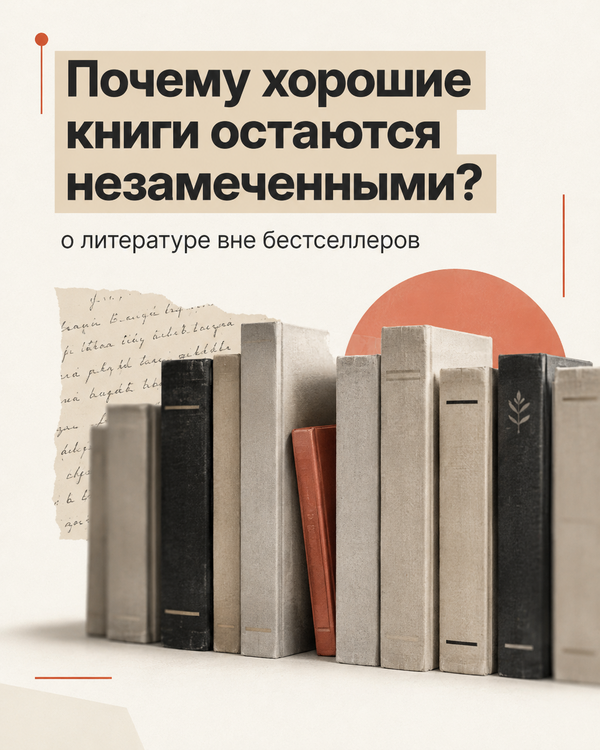
Telegram Channel · Introductory Post · Month 1
Why Do Great Books Go Unnoticed?
Think back to the last five books that were recommended to you. Most likely, you’ve already seen some of the titles on social media, in bookstores, or in ratings.
It seems like we are choosing from thousands of works, but in reality, we most often encounter a relatively small number of books that have managed to capture an audience’s attention. To reach us, a book must travel a fairly long path. It needs to be published, translated, distributed, stocked in stores, and ideally, persuaded someone to talk about it.
But what happens to works that fail at any of these stages?
Some books go unnoticed during the author’s lifetime. Others lose popularity decades later. A third gain recognition in one country but are practically unknown elsewhere. And this doesn’t necessarily speak to their literary value.
«SNOSKA» is dedicated to exactly these kinds of works. We will find lesser-known, forgotten, and undervalued books, analyze them, talk about the authors, and share recommendations.
There is an entire literary world beyond the bestsellers—one that is often as vibrant as popular literature.
What little-known book has been a true discovery for you?
POST 2
Site · Artwork Analysis · Month 1«Ice» by Anna Kavan: A Novel About a World That Cannot Be SavedImagine a world slowly being consumed by ice. Cities vanish, familiar order crumbles, and people continue pursuing their own goals, as if the unfolding catastrophe is merely a backdrop to their personal stories. It is in such a world that Anna Kavan’s 1967 novel, «Ice, ” takes place.At first glance, the work resembles post-apocalyptic science fiction. An unnamed narrator journeys through a world gripped by an ice catastrophe, searching for a mysterious girl with silver hair. However, it soon becomes clear that this is not a typical tale of the end of the world.· Catastrophe Outside and Inside ·In the novel, it is nearly impossible to separate the narrator’s reality from his imagination. Events shift according to the logic of a dream; the space constantly transforms, and the characters find themselves in situations that do not always lend themselves to rational explanation.The ice gradually destroys the world, but simultaneously becomes a reflection of the characters' internal states—alienation, fear, loneliness, and the inability to establish true intimacy.· Love or the Desire to Possess? ·The narrator’s relationship with the girl is particularly intriguing.He claims he wants to find and save her. But as the story progresses, it becomes increasingly difficult to view his drive as selfless.The heroine is constantly made an object of others' desires and decisions. Men try to control her fate, while the girl’s own voice is almost lost amid their preconceived notions of who she should be.Therefore, the novel can be read not only as a story of global disaster but also as an exploration of power, dependence, and destructive obsession.
· Why should you read it? ·«Ice» does not offer the familiar clarity of a plot. It is a disquieting, at times almost hallucinatory text that leaves the reader with more questions than answers. Its distinctiveness lies precisely in this: the end of the world here is occurring not only to the planet but also to humanity’s ability to understand one another.The novel will appeal to readers who enjoy experimental prose, psychological dystopias, and works that allow for multiple interpretations.Perhaps the main question of «Ice» is not even whether humanity can survive the catastrophe, but whether people are capable of ceasing to destroy each other while they still have the chance.
POST 3
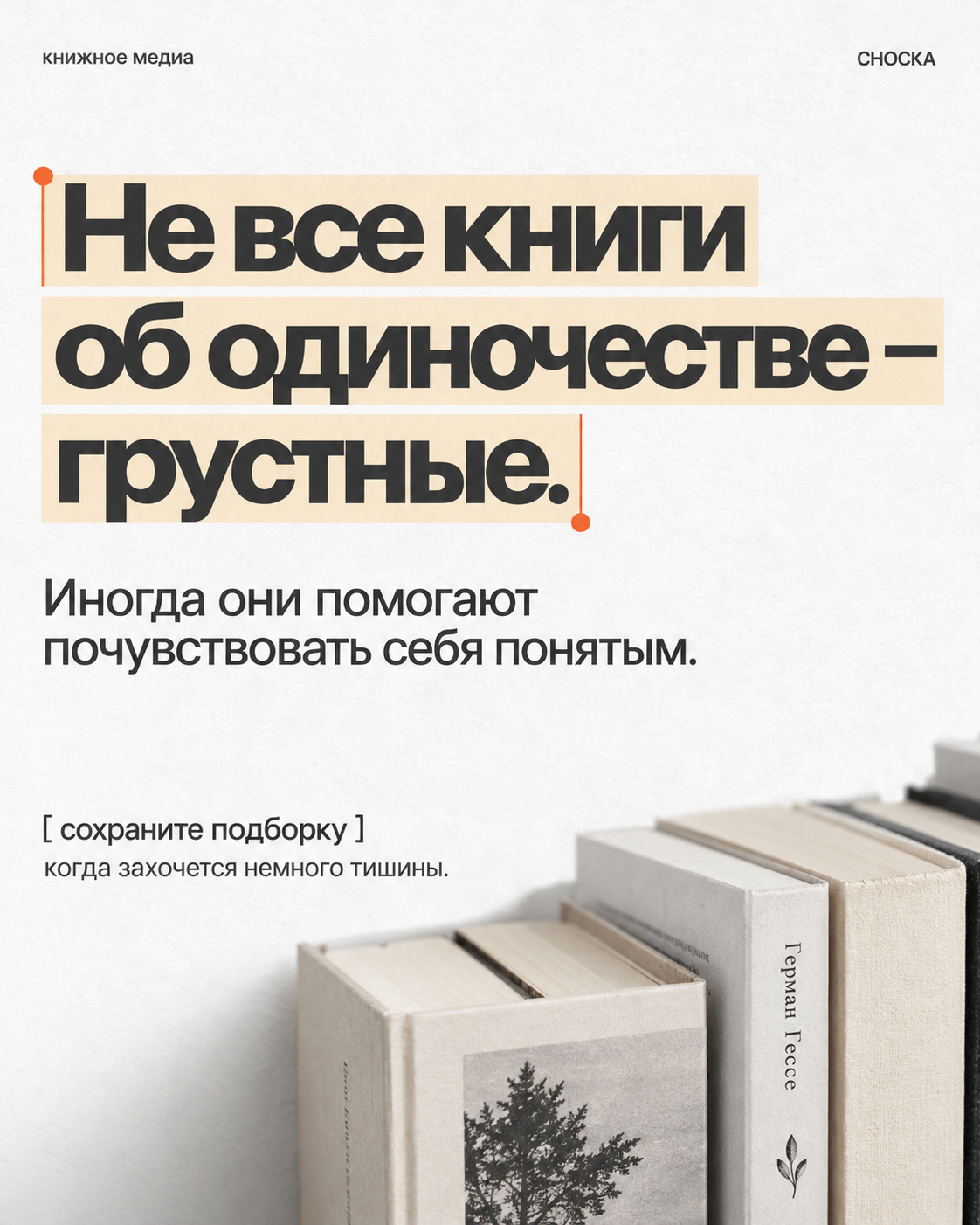
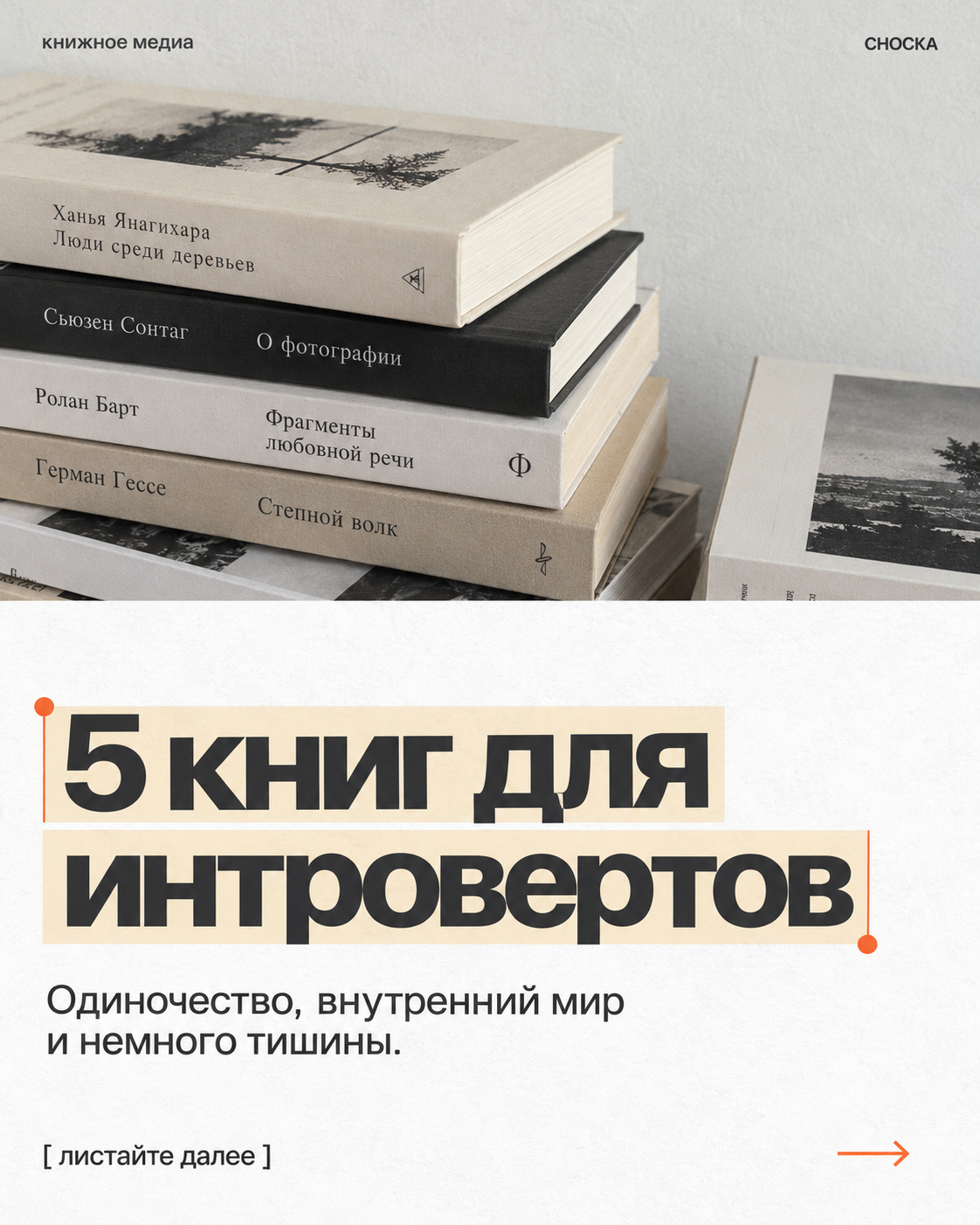
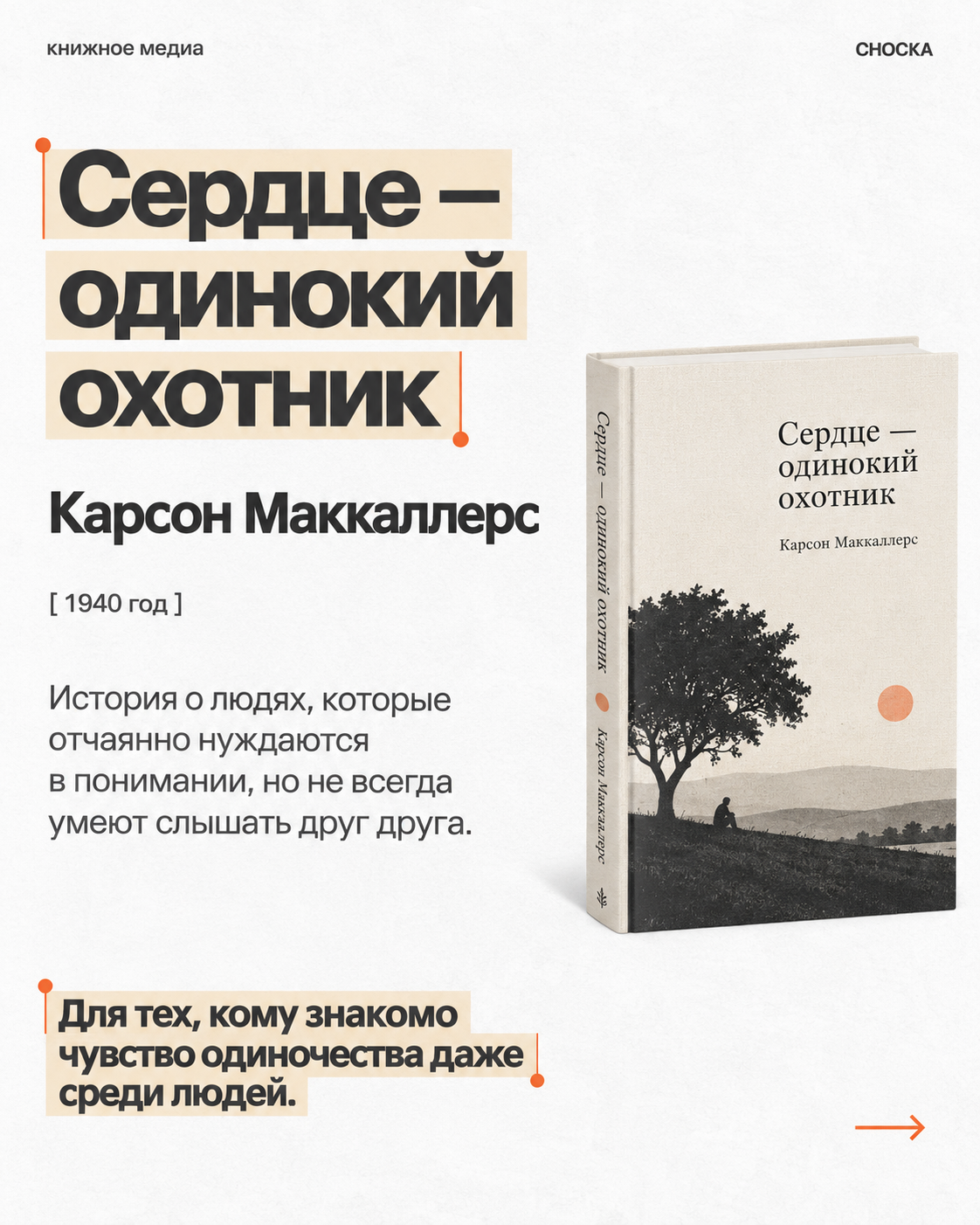
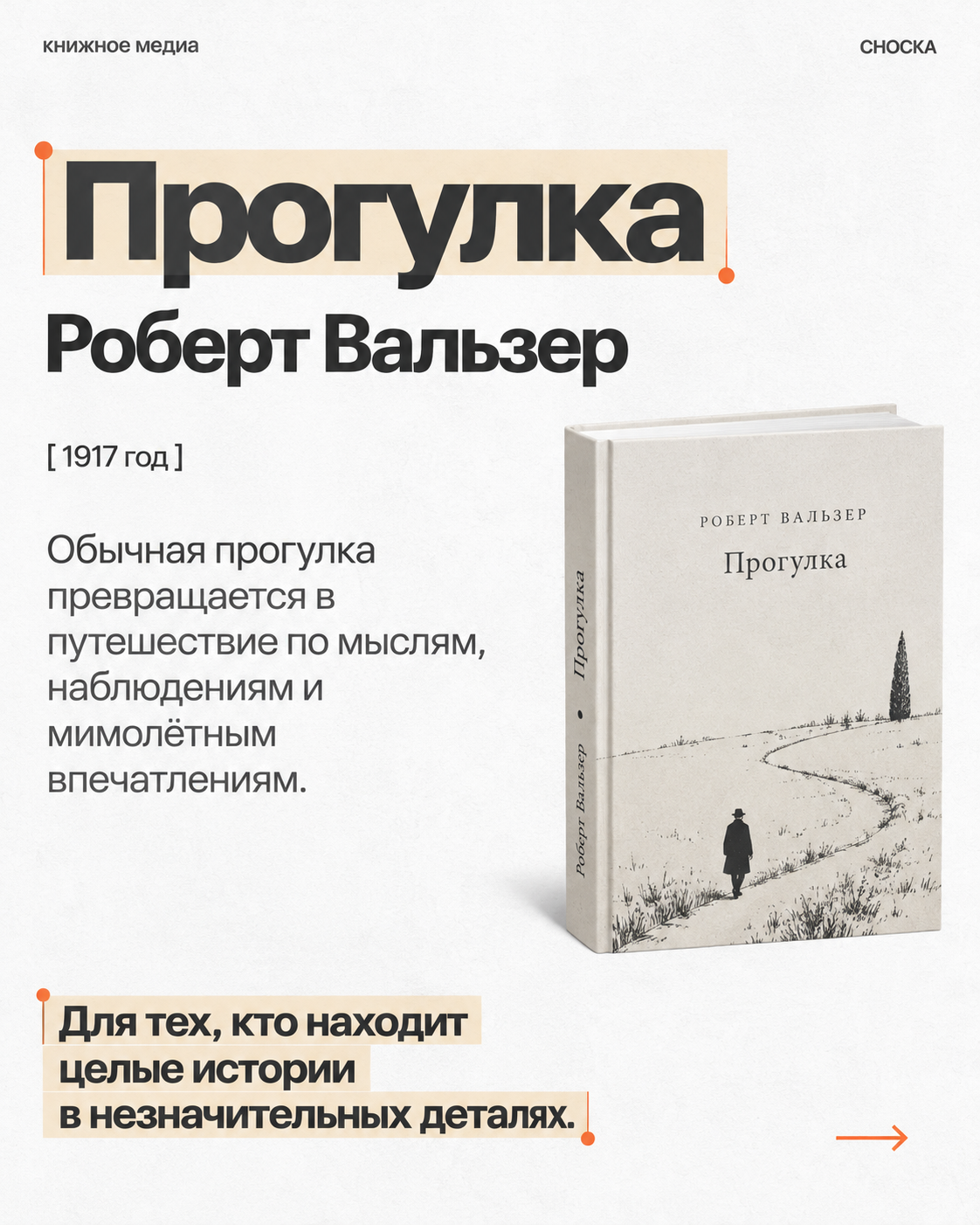
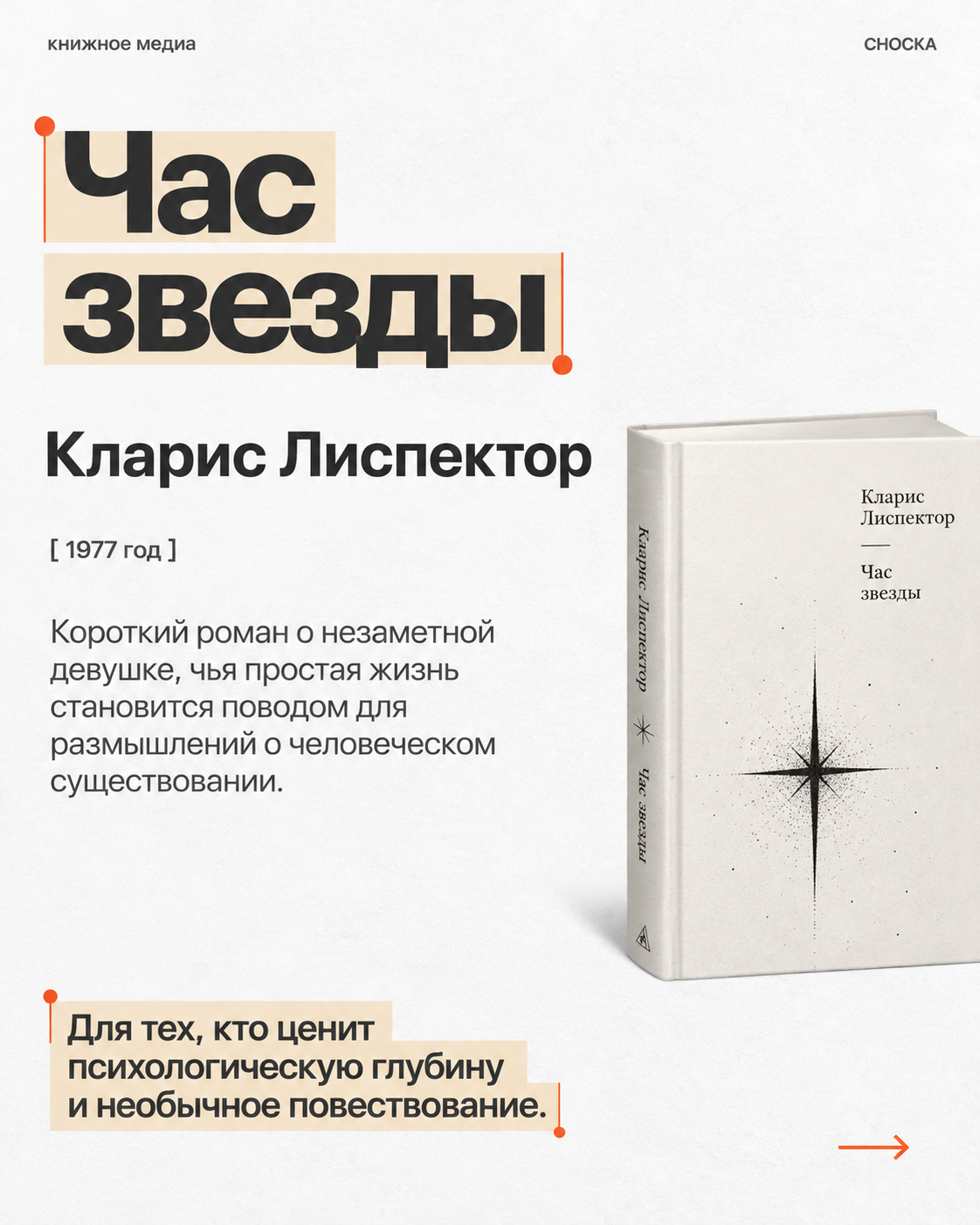
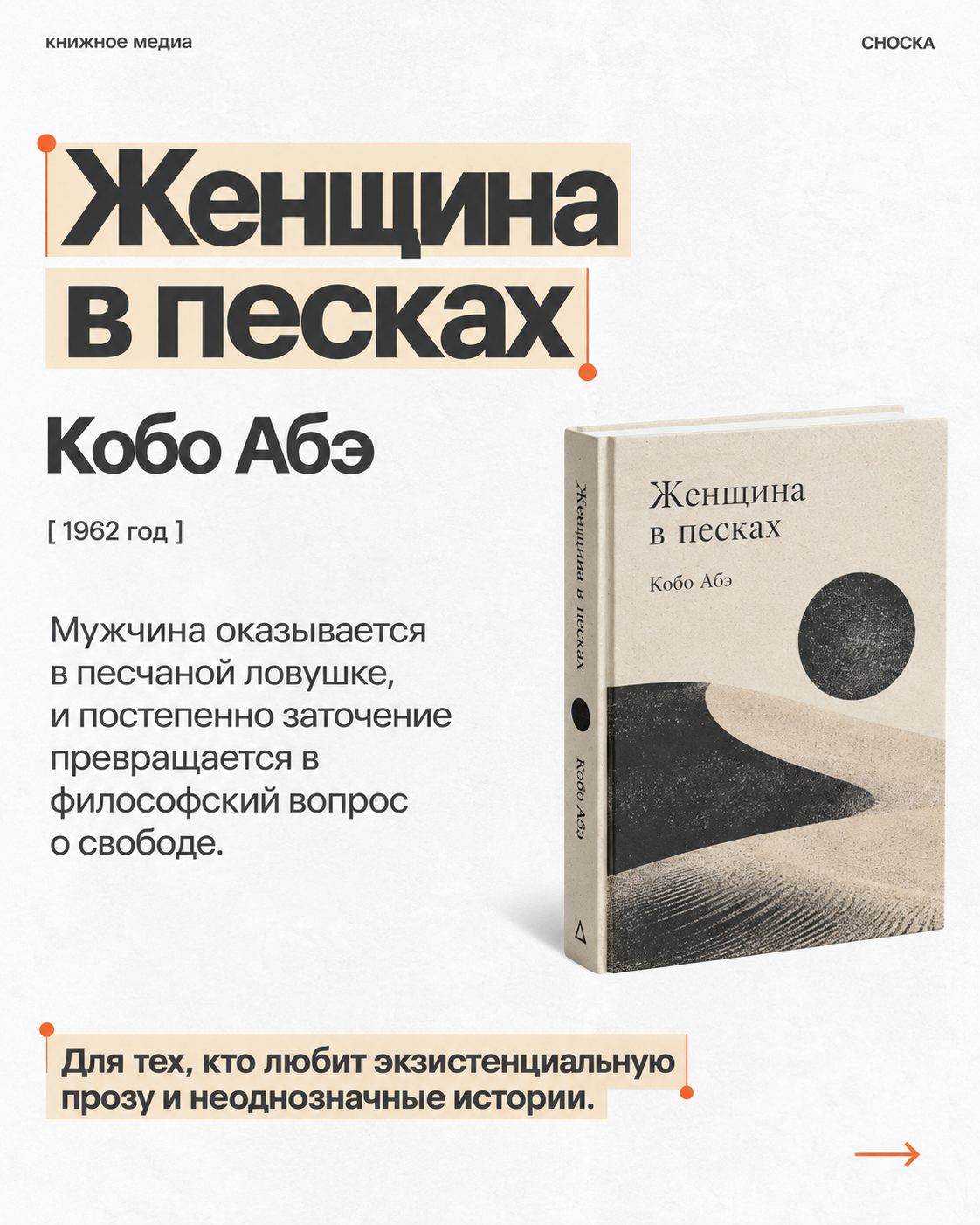
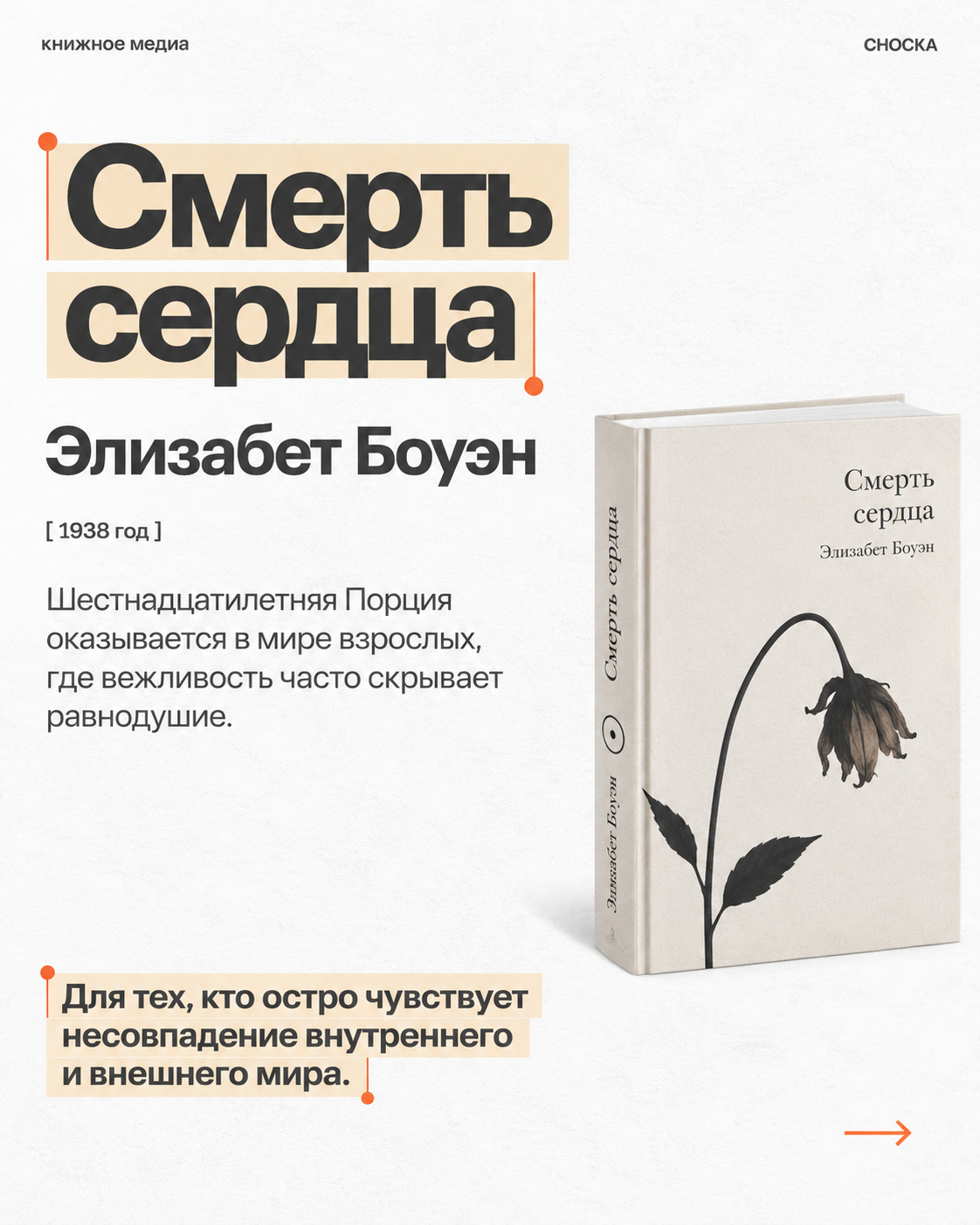
Text under the carousel:Introversion doesn’t necessarily mean a love for solitude. Sometimes it’s just a need for space to process one’s own thoughts.We’ve compiled five works that explore the human inner world, alienation, and the search for understanding in different ways.What books help you spend time alone with yourself?
POST 4
Telegram Channel · Writer’s History · Month 2
Bruno Schulz: The writer who turned the mundane into myth
Imagine a small provincial town where shops morph into mysterious spaces, familiar streets lose their definition, and an ordinary father gradually becomes almost a mythical figure.
This is roughly the world of Bruno Schulz—a Polish writer and artist, one of the most unusual authors of European Modernism.
Schulz was born in Drohobych and spent most of his life in his hometown. In 1934, his collection «Brown Shops» was published—a work where childhood memories transform into fantastic reality.
There is no conventional plot here. Instead, there is atmosphere, sensation, and image. The city becomes a living organism, and the everyday constantly changes form.
The character of the protagonist’s father is particularly fascinating. He is both an ordinary man and a fantastic figure, as if existing between the child’s reality and imagination.
Schulz demonstrates that literature does not necessarily have to invent new worlds. Sometimes, it is enough to look at familiar things in a new way.
The writer’s life ended tragically in 1942 when he was killed during the German occupation of Drohobych. Yet, his small literary legacy continues to captivate readers with its unconventional language and astonishing ability to transform the commonplace into something fantastical.
If you enjoy magical realism and prose where atmosphere is more important than plot, try «Brown Shops.»
Do you also enjoy works with an unconventional narrative logic?
POST 5
Website · Literary Analysis and Essay · Month 3«The Wide Sargasso Sea»: The Story of a Woman Denied a VoiceIn literature, there are characters we know solely through the accounts of others. Their actions are explained by different people, yet their own feelings and motivations remain unknown to the reader. But what happens when such a character is finally given the opportunity to tell their own story? This is the central question underpinning Jean Rhys’s 1966 novel, «The Wide Sargasso Sea.»· Who is Antoinette? · Charlotte Brontë’s famous novel, Jane Eyre, features Bertha Mason—Mr. Rochester’s first wife, who is confined to the house. The reader knows almost nothing of her past. She exists primarily as a menacing figure, obstructing the happiness of the protagonists.Jean Rhys proposes looking at this story from a different perspective.The protagonist of her novel is Antoinette Cosway—a woman who later becomes that Bertha. However, she is no longer a secondary character within someone else’s narrative; she is a person with her own memories, fears, and desires.· When Someone Else’s Voice Dictates Your Fate ·The novel is set in the Caribbean region following the abolition of slavery in the British Empire. Antoinette’s life is shaped by social conflicts, racial prejudice, and the complex relationship between colonial and European cultures. Her position becomes especially vulnerable within her marriage. Her husband gradually forms his own perception of her without ever attempting to understand her inner world.Even the heroine’s name becomes subject to someone else’s authority: Antoinette begins to be called Bertha.This moment proves symbolic. The person slowly loses the ability to define their own identity autonomously.
· Why is the Novel Important? · The novel demonstrates how differently the same events can be perceived depending on who is narrating them.Jean Rhys draws attention to figures who often remained on the periphery of classical narratives. Thus, a familiar story transforms into a meditation on power, language, identity, and the right to be heard.
· Who should read this? · Anyone interested in the reinterpretation of classics, female characters with complex psychology, and works that explore the relationship between the individual and society.And perhaps after this book, you will want to reread Jane Eyre—but this time you will notice a very different character.
POST 6
Text beneath the carouselLiterary traditions from different countries offer vastly different ways to tell stories.We have gathered five works to help you explore unique plots, artistic techniques, and cultural contexts.Which country’s literature would you like to start with?
POST 7