Media Concept
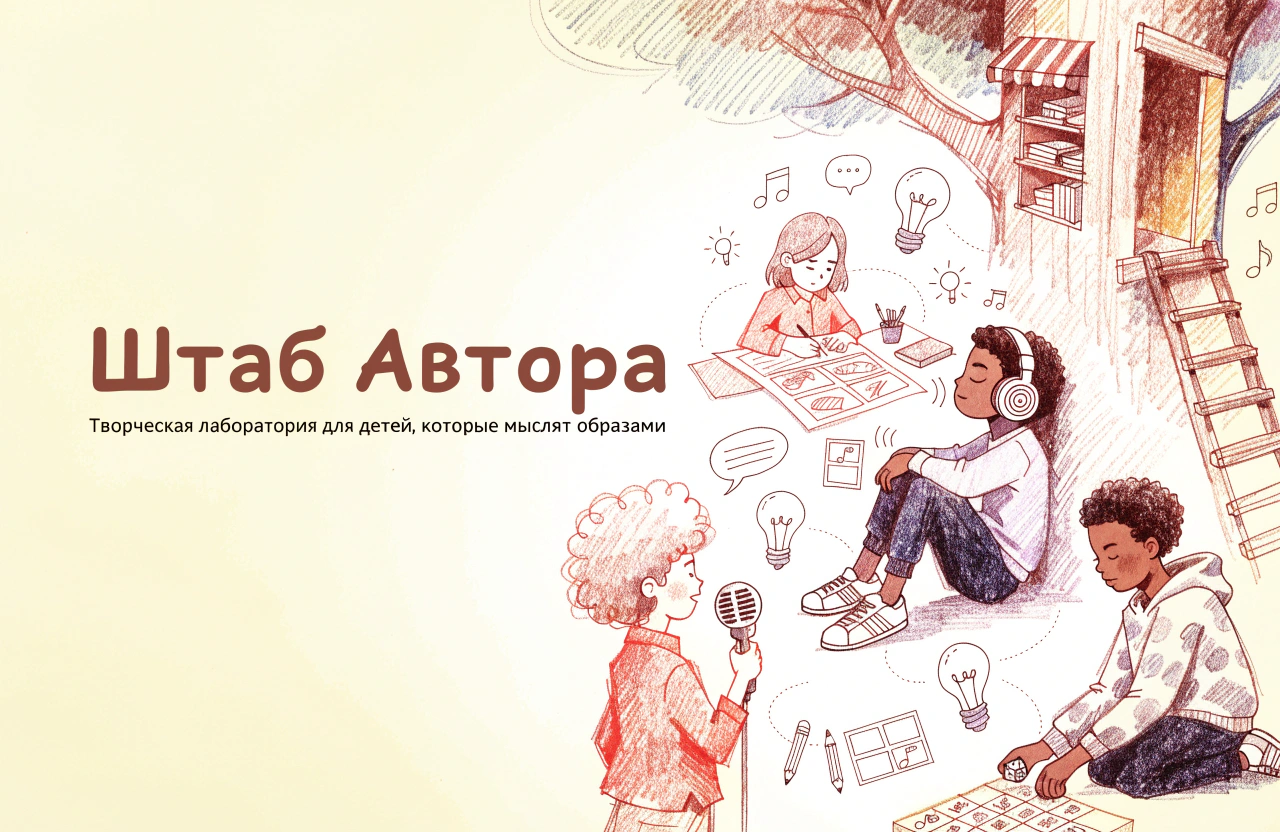
Author’s Hub is a new space for children’s leisure and creativity. Here, a child doesn’t come to learn something according to a prescribed curriculum, but to create something entirely their own. This is not a writing school, a remedial center, a typical club, or mere entertainment. It is an environment of authorship—a place where a child first experiences: «My ideas have value. I can create something unique. I can be an author.»
We created a community through a messenger service where kids can share their ideas and form teams to bring creative concepts to life.
Data Sources for Media
1. Internal (User) Data Sources
Content Created by Kids: Idea drafts, written pieces, drawings, voice messages, and polls about what teams they want to form. This serves as the initial material for the «Project of the Week» and «Inspirational Idea» features. Messenger Engagement Metrics: Number of reactions to posts from other kids, activity in team chats, and frequency of hashtag usage (e.g., find_team, my_idea). Internal Poll and Voting Results: Data from bots or in-app messenger polls indicating which meeting formats, topics, or tools interest the kids more. Success Stories (Case Studies): Data on how an idea from a chat evolved into a real project (how long it took, what difficulties were overcome, and who was involved).
2. Feedback from Parents and Mentors (Facilitators)
Parent Feedback: Short surveys (via bot or form): «How has your child changed after a month at the Hub?», «What is missing in our community for you?». Curator/Moderator Observations: Notes on how the students interact in teams, what roles they adopt (leader, idea generator, executor), where conflicts arise, and how they are resolved. Barrier Data: Reasons why students do not see their ideas through to completion or leave a chat (collected through exit surveys).
3. External Trend and Market Sources
Research on Children’s Digital Leisure: Reports from companies (such as Yandex, Sber, Kaspersky, ResearchMe) detailing how Generation Alpha children use messengers, which platforms they prefer, and what they feel is missing. Competitor and Adjacent Niche Analysis: Other children’s communities on Telegram/Discord, platforms for children’s creativity (e.g., «Kidbooks,» «HSE Art and Design Kids School,» etc.). What are they doing well in terms of attention retention? Trends in Children’s and Teen Culture: Topics popular among children (games, books, YouTube channels, memes) that can be used as «hooks» for generating original ideas (e.g., «Create your own character for a universe you love»).
4. Expert and Partner Resources
Expert Interviews: Child psychologists (focusing on self-worth and confidence), project-based learning educators, practicing writers, or artists. Their quotes and advice could make excellent content for the parent section of the channel or instructional tips for the students. Partner Organizations: Libraries, museums, and local cultural centers that can provide information on which children’s initiatives they are willing to support (for example, by offering a venue for a children’s project exhibition).
5. Technical and Analytical Sources
Telegram Bot Analytics (if available): Engagement funnel (how many kids clicked «Generate an Idea, ” and how many proceeded to the „Find a Team“ step). Activity Heatmaps: At what time of day are the kids most active in the chat (this will help plan the publication of inspiring materials or the launch of new challenges).
When collecting any data, please consider the following:
When collecting any data, please consider:
Parental Consent: Any questionnaire, metric collection, or publication of a child’s idea (even with a nickname) must be confirmed by a parent. Anonymization: When conducting internal data analysis (for example, to improve formats), use anonymized data. Moderation: The data source (chat) must be strictly moderated to prevent bullying, which can instantly undermine the feeling that «my ideas have value.»Data schema divided into human and machine processing
Data Schema: Entities and Processing Division
1. Essence: «Participant Profile» (Creator)
Data: Nickname, age, interest tags (e.g., comics, video games, ecology), parental consent status for data processing and publication, and role (creator, co-creator, researcher). Machine Processing: Storage and encryption of personal data (in accordance with Federal Law 152-FZ). Automatic verification of current parental consent (bot sends an annual reminder to the parent). Matching of interest tags for algorithmic recommendations (e.g., «You might be interested in this team»). Human Processing: Child: Fills out the profile in their own words, selecting what they wish to engage in. Curator: Reviews the profile to understand the child’s context and find an individualized approach to support them (not for evaluation, but for mentorship). Parent: Provides informed consent for participation.2. Essence: «Idea/Project Card»
Data: Idea title, description (text/voice), required resources (who to look for, what is needed), current status (Concept / Team Search / In Progress / Completed). Machine Processing: Automatic keyword extraction and tagging (e.g., the bot suggests tags: animation, need_artist). Routing: automatic placement of the card in the appropriate channel or chat depending on the status. Reminders: automatic notifications to the author («Your idea has been without replies for 3 days—would you like us to help you rephrase it?»). Human Processing: Kid: Formulates and submits the idea. This is the act of authorship. Curator: Provides validating feedback (does not correct errors, but asks guiding questions: «Cool! How do you envision the first character?»). Confirms that the idea holds value. Community (other kids): Leave reactions or send private messages offering help.3. Essence: «Communication and Teamwork»
Data: Chat messages, voice notes, reactions, and shared document outcomes. Machine Processing: Automatic Moderation: Filtering profanity, bullying, spam, and suspicious links (with a «message hidden pending review» tag). Engagement Metric Collection: Tracking who participates and who remains silent (for internal team health analysis, not for public display). Human Processing: Curator (Moderator): Reviews «controversial» messages flagged by the bot. Acts as a mediator in team conflicts, helping the kids reach an agreement rather than punishing them. Kids: Conduct substantive negotiations, assign roles, and create.4. Essence: «Community Media Content» (Channel Publications)
Data: Post drafts, interviews, «Author Diaries, ” and event announcements. Machine Processing: Basic grammar check (while preserving the author’s style and the children’s vernacular). Publication scheduler (scheduled posting). Engagement analytics (reach, saves, shares). Human Processing: Child: Develops the core meaning and content (writes text, draws, records video). Editor/Curator: Helps to „package“ the idea for the channel without rewriting it for the child. Ensures the child’s voice remains authentic. Parent: Gives final approval for publications featuring the child’s image or personal stories.5. Essence: «Reflection and Feedback»
Data: Survey responses («What worked well?», «What was challenging?») and qualitative parent feedback. Machine Processing: Aggregation of quantitative data (generating charts: 80% of kids found a team within 2 days). Basic Sentiment Analysis of text reviews (positive/negative/neutral). Human Processing: Curator/Methodologist: Reads qualitative feedback, identifying latent patterns (e.g., «kids abandon projects during the execution phase, which means we need a template or assistance from a design volunteer»). Project Team: Makes decisions to alter work formats based on these insights.Data Flow Diagram
Input: The child generates data (an idea, a message, a drawing) → Machine Layer: The bot checks for safety, tags the content, saves it to the database, and suggests a format → Human Layer: The curator sees the notification, validates the idea, asks a supportive question, and the child refines their work → Consent Layer: If the data is going into a public feed, the bot sends a request to the parent → Output and Action: The idea is published in the channel, and the bot sends notifications to children with matching interest tags → Reflection (Feedback Loop): After the stage is complete, the children and curators input data on the results, the machine aggregates it, and the humans draw conclusions.
Key Guidelines for the «Author’s HQ» Scheme
The Machine Does Not Judge: The system lacks algorithms that assign «scores» to an idea or to a student. The machine only organizes, connects, and safeguards. Prioritizing the «Human Voice»: If machine grammar checks or auto-editing distort a student’s unique style, human intervention (the curator) has the authority to veto and restore the original authorial version. Escalation to Human Oversight: Any action involving emotion, conflict, project abandonment, or complaint is automatically removed from the automated process and passed to a live curator. Right to Deletion (Right to be Forgotten): A student or a parent can, at any time, request the deletion of all their data and mentions with a single bot command, which the machine must automatically execute within 24 hours.
Guidelines for Automated Services in the Scheme