Media Concept
A creative community for young authors is a new space for children’s recreation and creativity, where a child comes not to learn according to a set curriculum, but to create something of their own. It is not a writing school, not a remedial center, not a typical club, and not just entertainment. It is an environment of authorship—a place where the child first experiences: «My ideas have value. I can create something of my own. I can be an author.»
We created a media community within a messenger app, where children can share their ideas and form teams to bring creative concepts to life.
Media Objectives
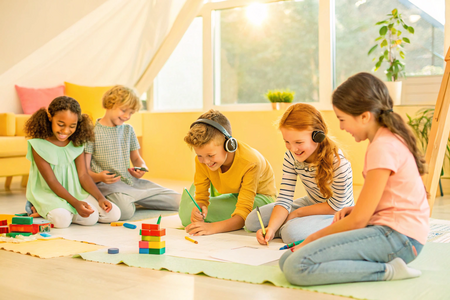
Media Goals:— To create a safe digital environment where children with dyslexia and other neurodivergences can realize their creative potential without barriers related to reading and writing.
— To cultivate a culture of authorship: the child must gain a lasting experience of «I invented it—I created it—my idea has value.»
— To transform neurodivergence from a source of shame into a basis for unique contribution—through teamwork, where each member plays a role based on their strengths.
— To build a vibrant community of young creators that scales from a niche group to a broad audience of image-oriented children.Media Objectives:— To organize an «idea exchange»: accepting, moderating, and publishing submissions from children in any format—voice, drawing, or video.
— To assemble children into project teams and assign roles: world-builder, visualizer, sound designer, voice actor, producer.
— To provide facilitation: to guide each team with an adult moderator until the final artifact is complete.
— To launch regular creative challenges and jams to maintain activity and attract new participants.
— To collect and publish completed projects (podcasts, comics, audio stories) as the community’s portfolio and evidence of the method’s value.
Themes of Future Media
Segment:
Extracurricular creative education and media creation for kids

Narrow Topic: An inclusive digital authorship environment for children with dyslexia and other neurodivergences, where multimodal creativity (voice, drawing, sound, play) becomes the primary means of self-expression and teamwork.
Competitors and Their Analysis
Competition Criteria:
1. Focus of Activity: correcting deficits vs. developing strengths and pure creativity.
2. Barrier to Entry: mandatory ability to read/write vs. multimodality (voice, drawing, sound).
3. Role of the Child: passive student vs. active author and equal team member.
4. Output Format: academic grade/report vs. finished creative artifact (podcast, comic).
Direct Competitors (Serving the same audience: children with learning differences):— Neuropsychological and speech therapy centers incorporating creative elements (e.g., «NeuroSchool,» summer neurocamps).
Analysis: High parental trust, but the focus remains on «correction» and academics. Creativity is secondary here and often induces stress in the child due to implicit demands for results.— Specialized library reading clubs (projects affiliated with the Russian State Library for Children’s Literature and Regional Libraries).
Analysis: A safe and inclusive environment, but there is a strong emphasis on developing literacy skills. Low digitalization and pace, which is less appealing to contemporary children.
Indirect Competitors (satisfy the same need for creativity and leisure, but cater to a broad audience or use different methodologies):— Traditional literary studios and creative writing clubs.
Analysis: High textual expertise, but an extremely high barrier to entry. They are not adapted for dyslexic students, as they require proficient writing and sustained focus.— Spontaneous children’s communities in messaging apps and gaming platforms (clans in Roblox, Minecraft, interest-based kids' chats).
Analysis: Extremely high engagement and natural teamwork. The main drawback: a complete lack of pedagogical facilitation, high risks of bullying, toxicity, and uncontrolled content.
Key Insights from Competitive Analysis:
1. The «Pure Creativity» Niche is Empty: The market is saturated with services designed to «correct» children, yet it lacks a truly safe space where they can simply create without the fear of making mistakes. This is the «blue ocean.»
2. Multimodality as a Killer Feature: Allowing students to use voice, art, or a building tool instead of text removes the primary barrier for dyslexic individuals while simultaneously attracting neurotypical creative children, thus broadening the audience.
3. Deficit of Safe Digital Socialization: Parents are hesitant to enroll their children in open online communities. Combining a modern digital format (Telegram) with professional adult moderation addresses this concern, offering a unique product at the intersection of EdTech and the creative industry.
4. The Shift in Success Currency: Parents are willing to support and fund a project if they see a proud author with a tangible portfolio (artifact) who has learned to collaborate, rather than just a «corrected» child.
Distribution Channel
The main distribution channel is Telegram.
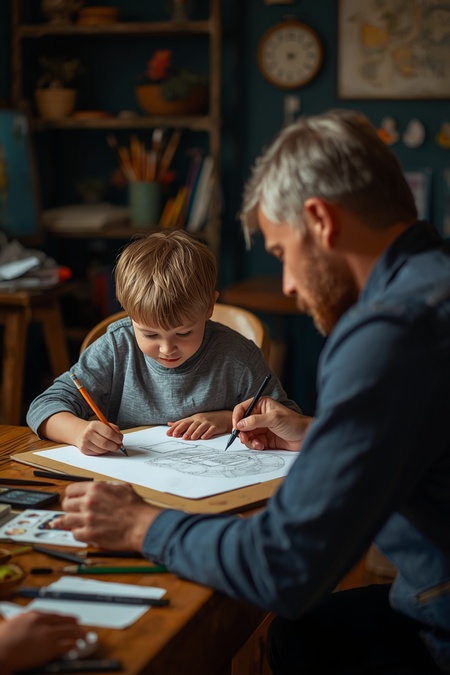
1 Structural Element — Showcase Channel
Type: Channel (only administrators/mentors can post).
Goal: To inspire kids, build parental trust, and market the project.
Content:
Announcements for new creative challenges (e.g., «Sound Week»).
Beautiful showcase cards featuring the best participant work (audio, comics, craft photos), including the creator’s username.
Short video testimonials or behind-the-scenes footage.
Feature: Comments are disabled or strictly moderated to maintain focus on quality and positivity.
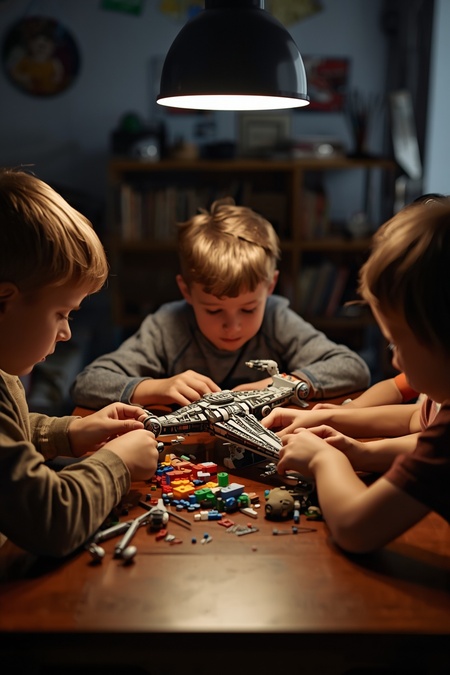
Element 2 of the Structure — A Group with Integrated «Topics»
Type: A group featuring the «Topics» function. It facilitates member communication but keeps it strictly structured by threads. This is critically important: it removes visual clutter and helps kids with ADHD/dyslexia focus on one process at a time.
Goal: Safe communication, networking, and idea exchange.
Thread Structure:
Looking for a Team: «I came up with a story about a detective raven and need someone to draw the character.»
Drafts and Ideas: This is where members can share voice notes, short videos, and sketch photos. The main rule: a 30-second voice note is valued equally to a full page of text.
Finished Projects: Final works for support and likes from the community.
Questions for Mentors: Assistance with technical issues (how to record audio, how to assemble a comic).
Rules and Navigation: A pinned message outlining simple guidelines (no bullying, use usernames only, do not share addresses or school names).
3 Structural Element — Auxiliary Chatbot
Type: Simple Telegram bot.
Goal: To alleviate the fear of a «blank page» and automate entry.
Functions:
Onboarding: The parent fills out a short consent form, and the child selects a creative nickname.
Idea Generator: The /idea button prompts the bot to generate a random creative prompt (e.g., «Come up with a melody from which a rainbow emerges and record it»).
Publication: The child sends the bot a voice note or photo, the bot beautifully formats it, and (with permission) publishes it to the relevant group thread.
Target Audience Description
Segment 1. The Parent-Advocate
Context: The child has been diagnosed with «dyslexia» or there is a suspicion. The parent takes them to speech therapists and neuropsychologists, reads forums. The parent is tired of the word «correction» and watches their child’s interest in studying fade.
Job To Be Done (JTBD):
— «Find an environment where my child stops being 'fixed'.»
— «Be sure they aren’t falling behind, but are developing in their own way.»
— «Get proof of their talent for myself and for the school.»
Why the media is appealing: They see stories in the channel of children «like theirs» who are creating podcasts and comics without laborious writing. This provides hope.
Benefit and Value:
— Emotional relief: «I am not alone, and my child is fine.»
— Ready-made ideas for at-home activities (challenges from the channel).
— Tangible results from the child (an artifact) that can be shown to family and teachers.
Segment 2. The Parent of the Creative Rebel
Context: The child does not have dyslexia, but they are creative, think unconventionally, and feel stifled by the constraints of conventional schooling («copy the example, ” „write as required“). The parent is seeking alternative education and modern pedagogical approaches.
Jobs to Be Done (JTBD):
— „Don’t let the school kill my child’s creativity.“
— „Find a community of like-minded parents.“
— „Give my child space for genuine authorship, not just 'following instructions'.“
Why media is interesting: They see modern, humanistic pedagogy in the program. The philosophy of „idea first—skill second“ resonates with them.
Benefits and Value:
— Access to innovative methodology without the expense of private schools.
— The child finds their „people"—those who are equally unconventional.
— The parent gains the status of an «advanced parent» within their social circle.
Segment 3. Visionary Child (7–10 Years)
Context: They invent worlds, tell stories verbally for hours, and adore fantasy. However, the moment they have to write something down—they panic, get upset, and refuse. In school, this manifests as anxiety and low self-esteem.
Jobs to Be Done (JTBD):
— «To tell my cool story without tripping over letters.»
— «So that adults say 'wow, ' not 'where are the mistakes? '»
— «To find friends who also love inventing things.»
Why Media is Interesting: Here, they can record their idea using voice input in a bot, and it will be transformed into a beautiful card. No one demands that they write perfectly.
Benefit and Value:
— Validating their natural way of thinking (verbal, imaginative).
— First experience of completed creative work (from idea to artifact).
— Boosting self-esteem: «I am an author, not a 'failing student.'»
Segment 4: Builder Kid / Gamer Teen (Ages 10–14)
Context: Thinks in systems and visual imagery. Lives in Minecraft, Roblox, draws comics, and creates mods. Considers traditional «literary clubs» boring and «for little kids.»
Jobs To Be Done (JTBD):
— «Find a team for a collaborative project.»
— «Transform my virtual gaming world into something real.»
— «Gain recognition as a creator, not just a player.»
Why Media is Interesting: Sees the «Find a Team» feed and understands that this is where they can find an artist, writer, or sound designer for their idea.
Benefit and Value:
— Networking: connects with co-creators who have complementary skills.
— Real production experience (from concept to release).
A portfolio they can show in college or at a competition even at age 13.
Segment 5. Young Author (Ages 13–16)
Context: Already writes poetry, maintains a blog, writes fanfiction, or creates audio dramas. Dyslexia is part of their identity, but they don’t want it to define them. They are seeking recognition and a professional community.
Jobs To Be Done (JTBD):
— «Find an audience that understands my style.»
— «Move beyond ‘kids’ clubs’ into adult creativity.»
— «Build a personal author brand.»
Why Media Appeals: Here, they won’t be «taught how to write correctly»; instead, they will be helped to bring their work to release. They see their project grow and achieve real publications.
Benefits and Value:
— The status of a «senior author» and the opportunity to mentor younger creators.
— Real publications (podcasts, anthologies) listing their handle.
— Developing a digital portfolio for future university applications.
All five segments share a common theme: the search for a space where a child’s idea is more important than its technical execution.
UVP (Unique Value Proposition)
«First, your idea. Then, the way to express it.»

We don’t «fix» dyslexia or teach essay writing. We give kids tools—voice, art, sound, and play—so they can immediately begin creating their own worlds, comics, and podcasts, transforming the unique ways they think into a creative superpower.
USP #1 — Barrier-Free Entry (Multimodality) A 30-second voice memo, a drawing, or a performed scene is valued just as highly as written text. We eliminate the fear of a «blank page» and making mistakes.
USP #2 — Real Artifact Over Grade The child leaves not with a «worksheet for corrections, ” but with a finished product: a recorded podcast, an original comic, or an invented universe. This is something to be proud of and something they can show the world.
USP #3 — Skills Through Creativity, Not the Other Way Around We don’t disguise learning as play. We give the task to create something cool, and the child naturally masters speech, rhythm, structure, and focus because they need those skills to realize their own idea.