Navigation Menu
- Introduction
- Concept
- Noise as Material (1910s–1950s)
- Object and Tool (1950s–1970s)
- Space and Environment (1960s–1990s)
- Body, Signal, Data (1990s–2010s)
- Ecosphy of Sound (2010s–Present)
- Conclusion
1. Introduction
This work examines the history of sound art from the 20th to the 21st centuries through the lens of sonic materialism—understanding sound as a physical, technical, and ecological phenomenon. The research question is: how has the perception of sound materiality evolved, and which artists, works, and contexts mark the transitions between its various regimes? The method employs a visual «atlas score»: five sections correspond to five regimes of materiality, with each spread correlating a work, its technical substrate, and its context. The visual language includes diagrams, spectrograms, flowcharts, cross-sections, and maps.
2. Concept
The concept of the work is that the materiality of sound is not merely a backdrop, but the primary subject shift in sound art: the history of the genre emerges as a transition across five modes in which sound is successively perceived as noise-matter, an engineered object, a spatial environment, a data stream, and finally, a responsibility-bearing ecosystem. The thesis is that the shifts between these modes are governed not by stylistic choices, but by how the artist defines the «physical carrier» of sound—moving from air and metal to signal and environment—and each mode redefines not only the material but also the listener’s position. The novelty lies in synthesizing disparate practices into a singular optics of materiality and presenting the history of sound art not as an authorial chronology, but as an atlas of transitions between its modes.
3. Noise as Material (1910s–1950s)
At the beginning of the 20th century, the very concept of what art could be composed of began to change. Sound ceased being solely music and transformed into a physical material—something to be worked with directly, like clay or paint. Three factors contributed to this shift: new recording technologies, scientific interest in acoustics, and artistic movements that were expanding the boundaries of art. It was during this period that three key tenets of sound art coalesced: noise as material, recording as a tool, and silence as an active field of sound.
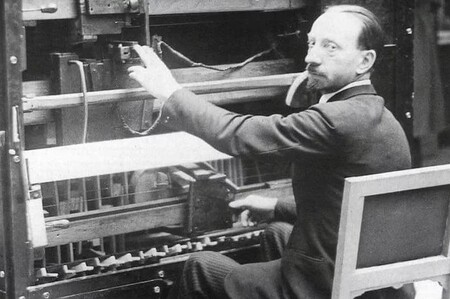
Luigi Russolo
(L’arte dei rumori, 1913) declares that noise is legitimate artistic material. The catalyst is industrialization: the sound of machinery became the sonic signature of the age. He categorizes noises—rumble, whistle, grating—to create a «palette» from which he could work, much like with paints.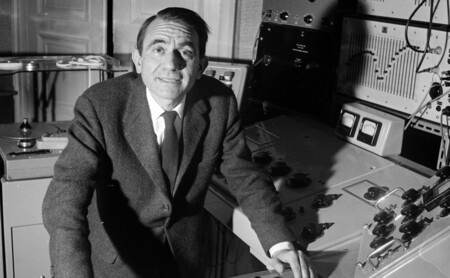
Pierre Schaeffer
(Étude aux chemins de fer, 1948) He treats recorded sounds as objects. This was made possible by magnetic tape: sound can be isolated, repeated, and spliced, existing independently of its original source.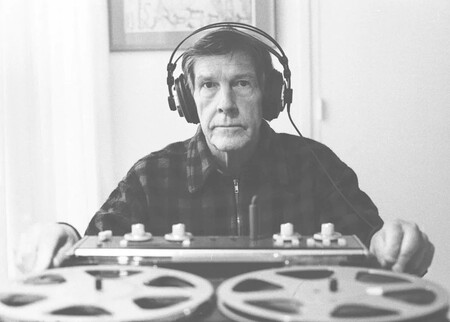
John Cage
(4’33», 1952) uses everything around him as material. The foundation is the scientific idea that absolute silence does not exist, coupled with Zen awareness of the mundane.4. Object and Tool (1950s–1970s)
By the middle of the 20th century, sound had ceased to be merely «music,» but it had not yet become a distinct medium for the studio. The next step was transforming the studio and its equipment into a complete instrument, and the sound itself into a controllable object. This was aided by electronics, magnetic recording, and the idea that a work could be a process rather than a finished product.
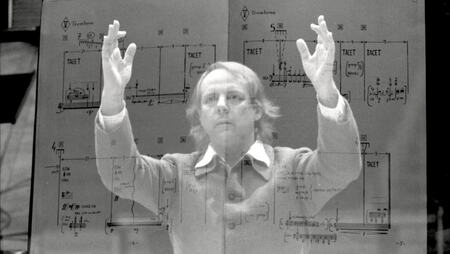
Karlheinz Stockhausen
(Gesang der Jünglinge, 1956) transforms the WDR studio into an instrument: the boy’s voice and electronic signals are edited onto tape into a single composition, and the sound is distributed across five channels around the listener. This was made possible by studio technology and an interest in spatial polyphony.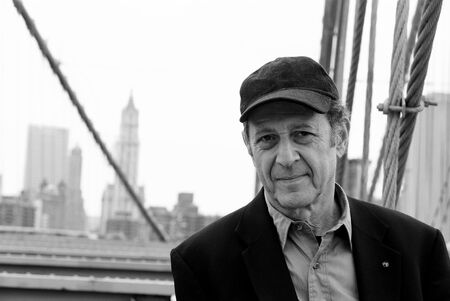
Steve Reich
(Pendulum Music, 1968) constructs the piece using a feedback loop: «microphone—amplifier—speaker.» The swinging microphones produce a sound that amplifies and then decays upon itself. The foundation is process music and cybernetics: the result is not pre-recorded but emerges from the system.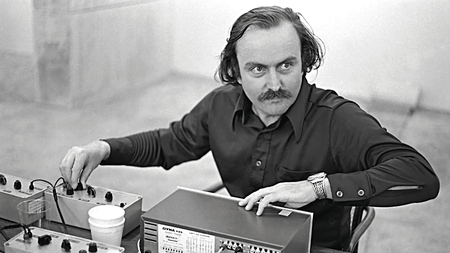
Elvin Lustie
(I Am Sitting in a Room, 1969) repeatedly overwrites his own speech until it dissolves into the room’s resonances. Here, the room functions as a filter, and the work as an experiment in spatial acoustics.5. Space and Environment (1960s–1990s)
Where sound was once an object created and heard in a specific location, the space itself has become part of the artwork. Sound emerges from the concert hall and transforms into a quality of the environment—the street, architecture, the city. This evolution has been made possible by advancements in psychoacoustics, accessible sound recording technology, and a growing interest in everyday spaces.
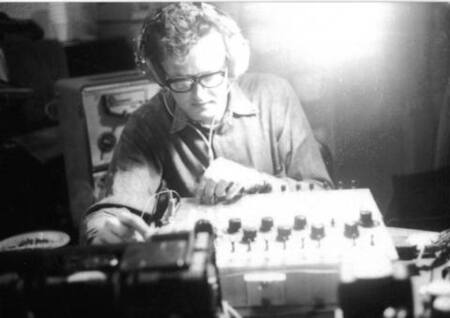
Max Neuhaus
(The Drive-In Music, 1967; Times Square, 1977) works with sound in public spaces: in Drive-In Music, the sound is broadcast via radio and perceived from cars, while in Times Square, it is embedded within the noise of a crowded plaza. The foundation is psychoacoustics and an attention to how a person hears sound in a real environment.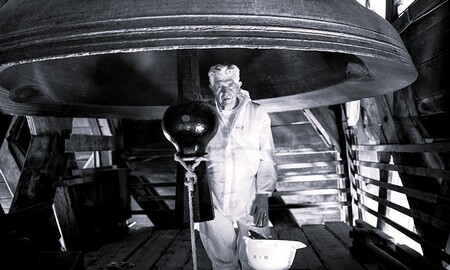
Bill Fontana
(The Sound of Houses, 1980) investigates the resonance of architecture: he «taps» buildings and listens to how the spaces respond. Sound, in this context, is a property of a specific place.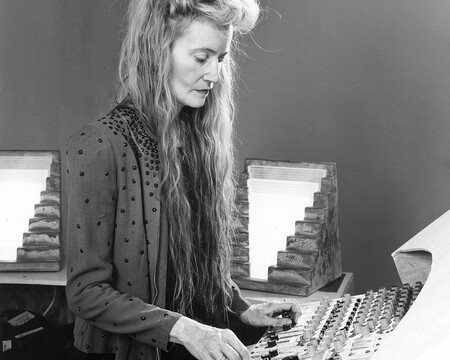
Marianne Amacher
(Soundings, 1983) interprets sound as the «geological layer» of a place: her installations engage with the acoustics of the space and the history of that space.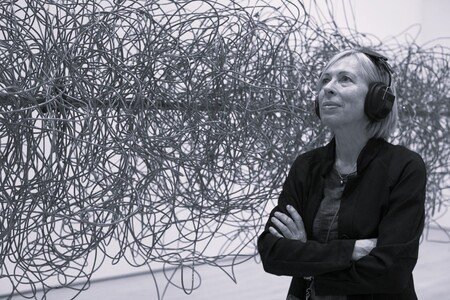
Kristina Kubish
(Electrical Walks, since 2003) — she makes the city’s electromagnetic fields audible: special headphones transform invisible signals into sound. Her foundation is technology combined with an interest in the unseen layers of the environment.6. Body, Signal, Data (1990s–2010s)
By the end of the 20th century, sound definitively ceased to be an external phenomenon—it passed through the body, technology, and digital systems. The listener became part of the work, and sound became the interface between the human, the apparatus, and the data. Multichannel systems, new sensors, and digital technologies helped make this shift possible.
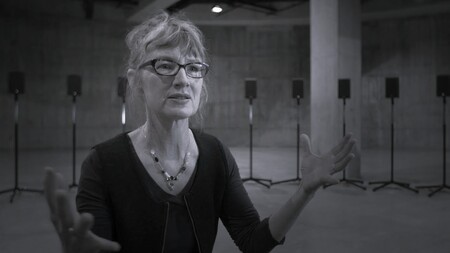
Janet Cardiff
(The Forty Part Motet, 2001) constructs a forty-channel installation: forty speakers are arranged in a circle, each reproducing the voice of a single singer, and the listener walks among them, hearing the choir as if it were alive. The foundation is multi-channel sound and an interest in the corporeal perception of music.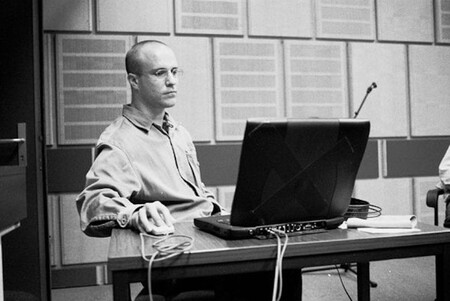
Florian Hekker
(Sound Chairs, 2004) transmits sound through furniture: the vibration goes not into the ears, but into the body of the sitter. Sound becomes a tactile channel, and listening transforms into a physical sensation.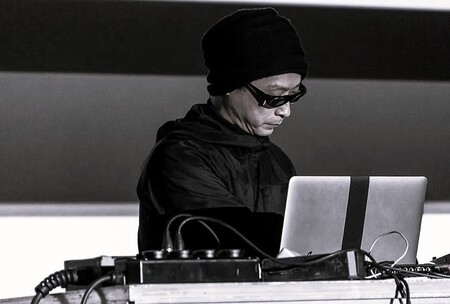
Reiji Ikeda
(datamatics, 2006) Constructs sound from data: digital arrays are transformed into a sound that is perceived as pure structure. The foundation is sonification and digital aesthetics—data becomes audible.7. Ecosophy of Sound (2010s–Present)
In recent decades, sound has come to be understood as an ecological agent—a component of the environment shared by humans, animals, and technology. The question is no longer how to create sound, but how to listen to the environment and what that tells us about its condition. Bioacoustics, ecology, and digital sound analysis methods have helped address this.