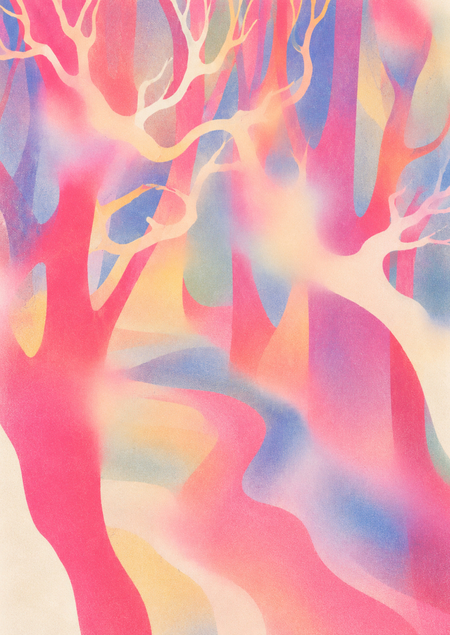
REVERIE — a project focused on training a generative model in a specific visual language, based on the aesthetics of delicate watercolor drawings, soft forms, and smooth color transitions that evoke associations with dreams and distant, pleasant memories.
The project’s visual language deliberately avoids sharp, harsh lines, dark color combinations, and dramatic motifs, instead leaning into soft forms, smooth color transitions, and a light, expressive palette. The goal of the project was to convey a sense of weightless bliss, fantasy, and immersion in a world of dreams, where real objects gradually lose their rigidity and become part of an ephemeral space.
Education
A small sample of 10 square images was gathered for the training set. I generated these images independently using the free version of the ChatGPT neural network, based on a pre-defined master prompt outlining the desired visual style. Key characteristics defined for the set included selective blurring of specific image areas, a moderate degree of abstraction, and an overall watercolor quality.
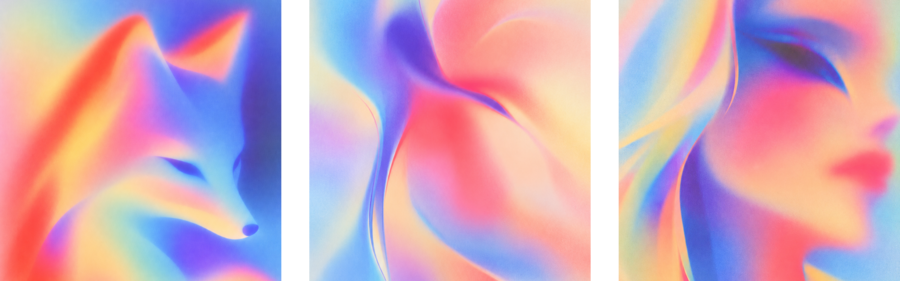
Examples of images used to train the generative model
I did not focus on a fixed color palette, as the goal was to create a unified visual sensation across the entire series through an emphasis on textures and artistic techniques.
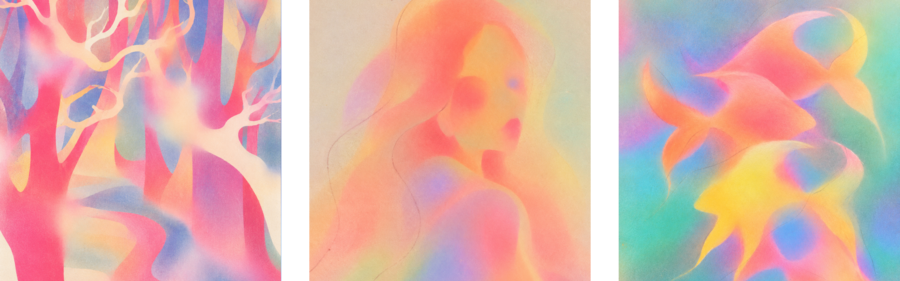
Examples of images used to train the generative model
However, even with the use of a single general prompt, several stylistic variations emerged: some images featured a brighter and more saturated color palette, others possessed a noticeable texture reminiscent of a pencil sketch, and a third set appeared softer, lighter, and more delicate. Therefore, when preparing the prompt for training a new model, I made additional adjustments to establish a more rigorous and cohesive system of visual characteristics.
Image examples used to train the generative model
The Learning Process
In the first stage, a training set of 10 square images, measuring 1004 × 1004 px, which I previously mentioned, was compiled.
After the upload, a check was conducted on the dataset, the number of images, and their original resolution. This confirmed that all images are suitable for further training.
The BLIP model was used to generate the text descriptions. It automatically analyzed the content of each image, after which a general stylistic prefix, «PASTELDISSOLVE style, abstract pastel graphic artwork,» was appended to the resulting description. This allowed the content of the image to be linked to the visual style of the project.
The training utilized the Stable Diffusion XL Base 1.0 model with the application of the DreamBooth LoRA method.
Upon completing the training, the resulting LoRA weights were saved to Google Drive as a backup and for the ability to reuse the trained model. Additionally, the obtained weights were integrated into the original Stable Diffusion XL model.
Final Generations
For each image, the content of the text prompt varied slightly, but the trained LoRA preserved the overall system of visual characteristics.
Resulting Images
By the time we transitioned to generating more detailed images, we decided to drop the use of negative prompting because it only further confused the model, and the results without it were much closer to the original concept.
Resulting Images
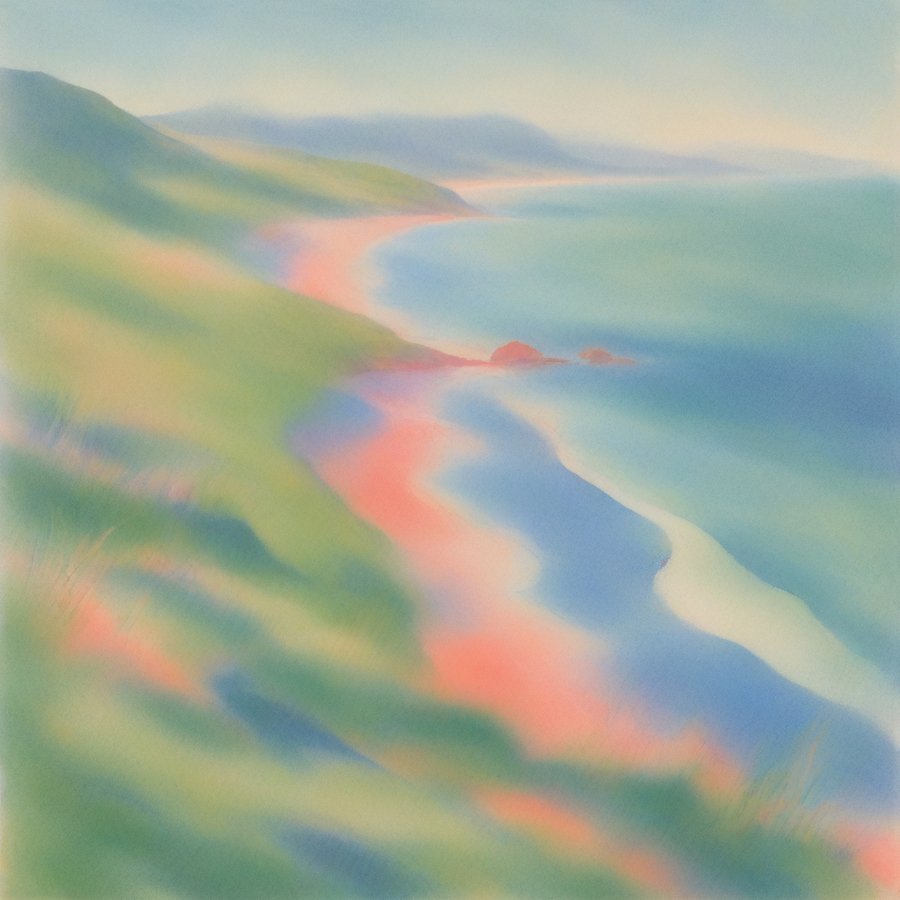
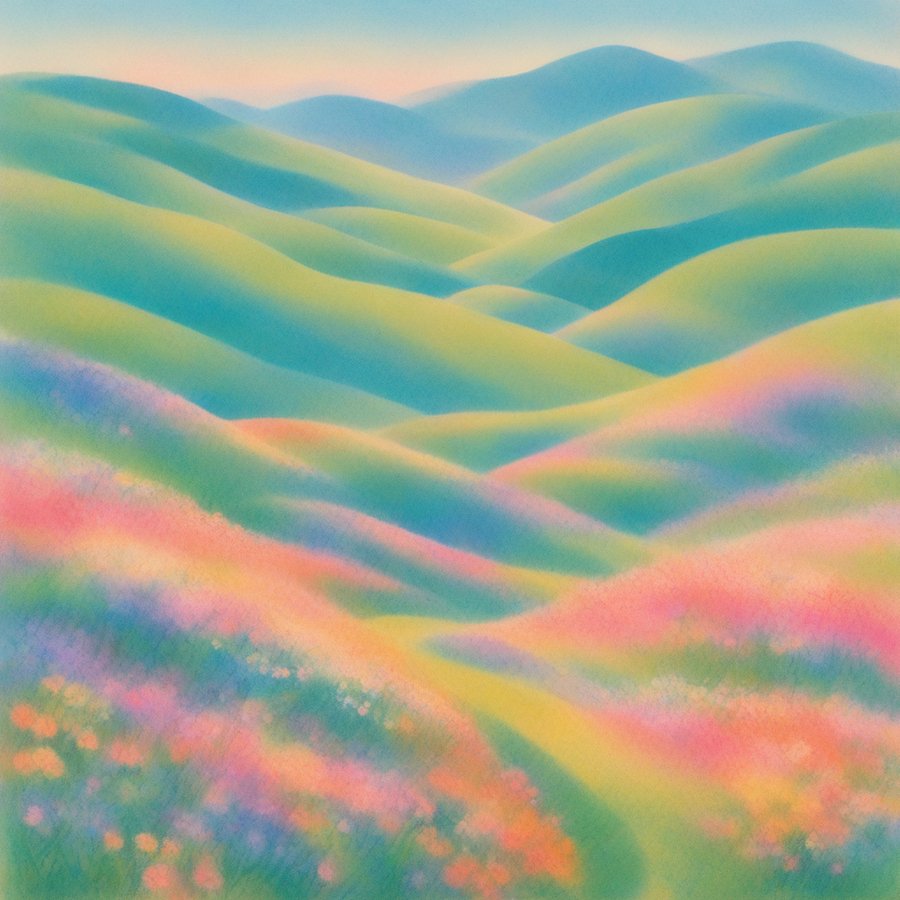
Next, experiments began with new color palettes to see how the model could express itself further. Unexpectedly, the generations started to strongly resemble watercolor paintings.
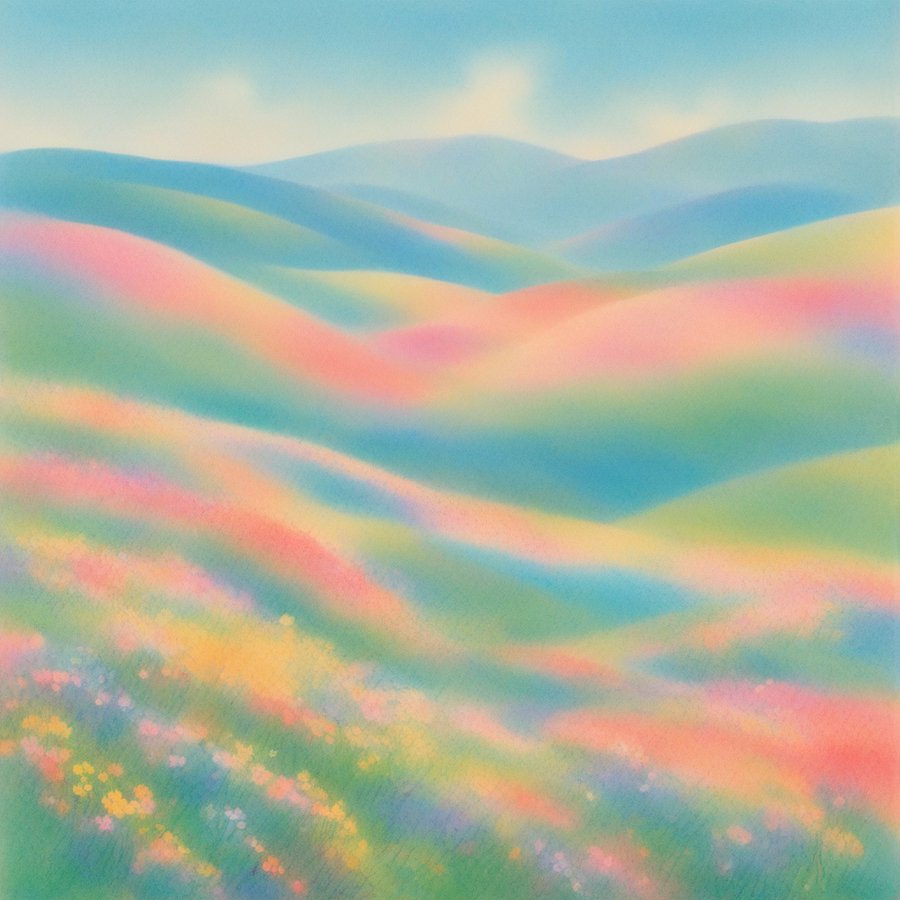
Resulting Images
Resulting Images