Concept
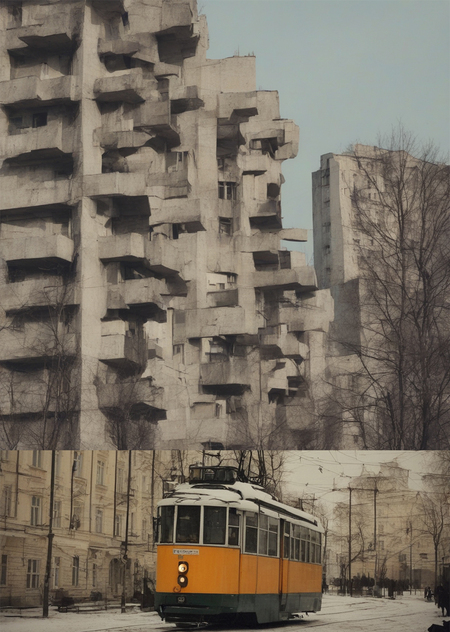
The project focuses on creating a fictional city using a neural network. My personal photographs served as the basis upon which a LoRA model for Stable Diffusion XL was trained. After training, the model was used to generate new urban spaces and objects.
Project Objective
To create a city that doesn’t exist in reality but feels familiar. The resulting design features residential buildings, bus stops, transportation, and public spaces that coalesce into the image of a post-Soviet environment, evoking a sense of recognition and melancholy.
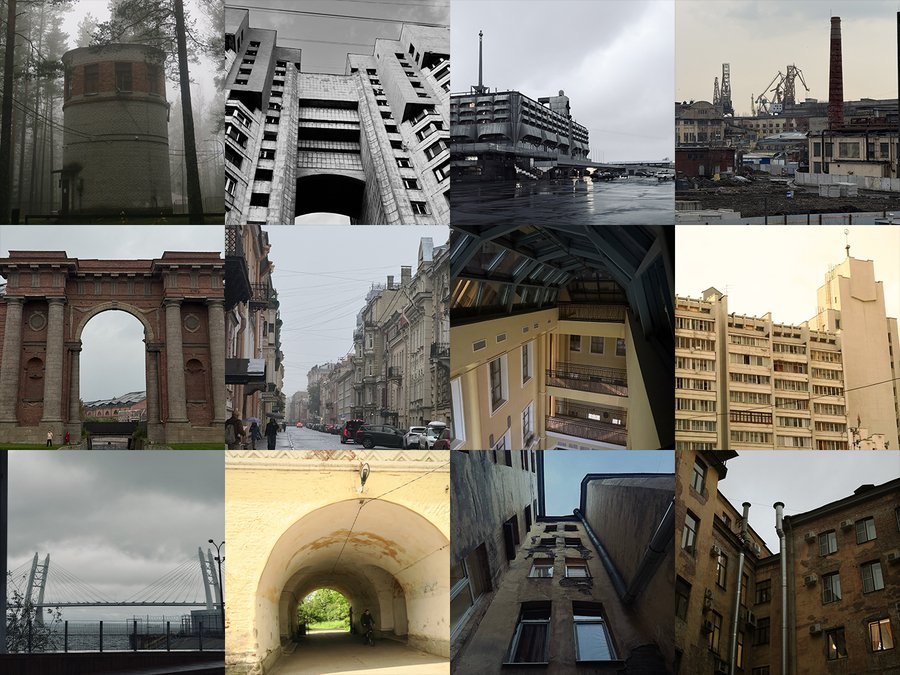
A portion of source images for training
Ready Image Series
Through the training process, a series of images of a fictional post-Soviet city was created using LoRA models. The generations feature residential buildings, streets, bus stops, transportation, public spaces, and architectural structures.
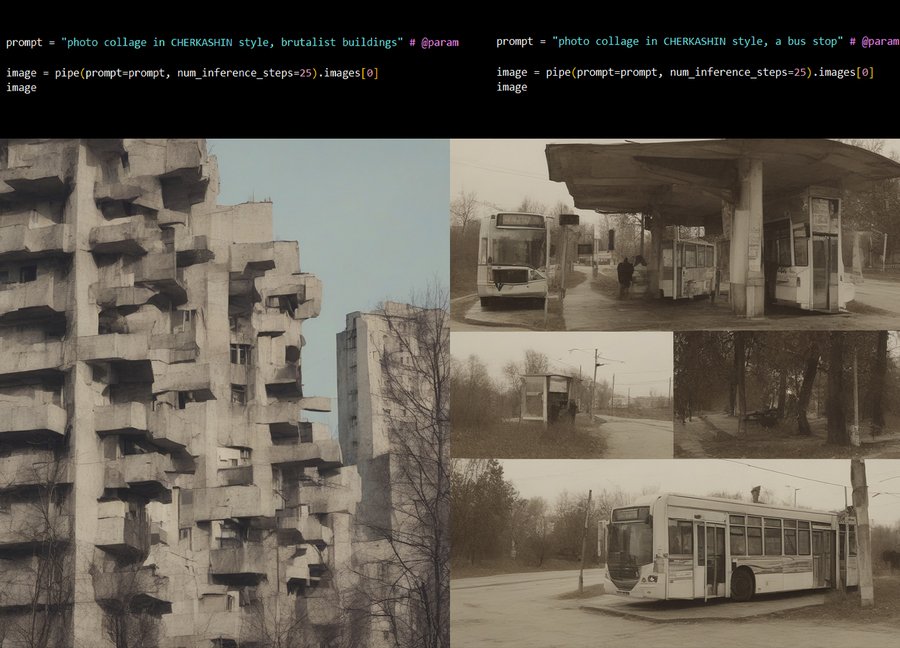
Prompt/Result
Each image was created from a unique text prompt. The same trained model was used across all of them, but the scenarios were varied. This approach allowed us to explore how the neural network generates new urban spaces based on the initial visual material.
Prompt/Result
Prompt/Result
Together, the images form a composite image of a city that does not exist in reality but feels familiar due to recognizable elements of the urban environment.
Prompt/Result
Prompt/Result
Prompt/Result
Prompt/Result
Prompt/Result
Prompt/Result
Prompt/Result
Prompt/Result
As a result of training the LoRA model, a series of images of a fictional post-Soviet city was generated. The neural network transferred the characteristics of the original photographs onto new scenes, creating a familiar yet nonexistent urban environment. The generations vary in composition and detail, but they are unified by a general melancholic atmosphere.
Result Analysis
In this series, an image of a city with its own atmosphere has formed: residential blocks, concrete structures, bus stops, and public spaces look familiar, yet in some places they take on surreal forms. The model captured the general mood of the source material, though it did not always reproduce individual objects and details with precision. Some generations turned out more realistic, while others were distorted and experimental. These differences illustrate how LoRA influences new narratives and how much the result depends on the text prompt.
Prompt/Result
Prompt/Result
The main outcome of the project was not the creation of individual images, but the formation of a cohesive image of a fictional city. Although the generations were created based on different text prompts, they share a common mood: empty spaces, massive architecture, familiar urban infrastructure, and a sense of abandonment. The city feels familiar, yet it cannot be associated with any specific location.
One of the objectives was to test how effectively the neural network could transfer the characteristics of the original photographs onto new objects and scenarios. To do this, I varied the content of the text prompts while maintaining a consistent stylistic marker. This approach allowed me to observe which visual patterns the model had assimilated during training and how those patterns manifested across different narratives.
Prompt/Result
Model Constraints