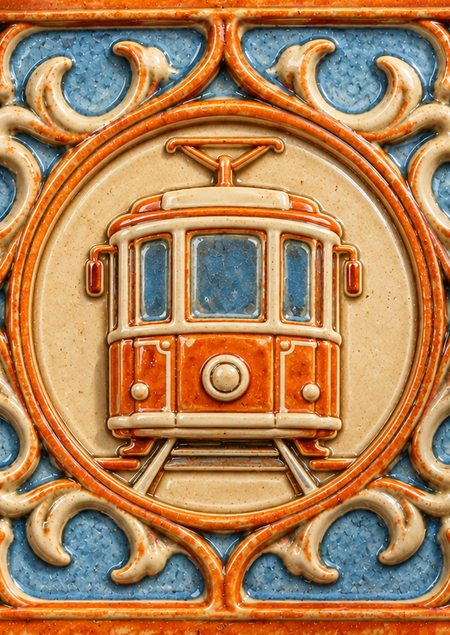
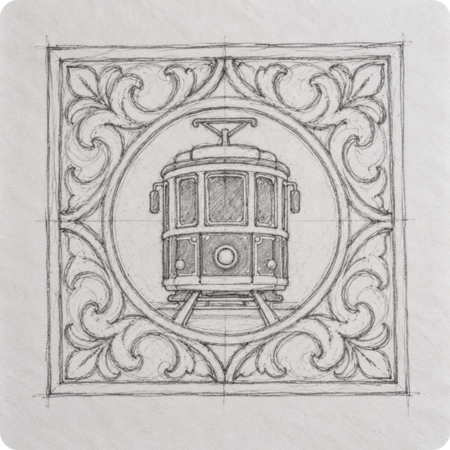
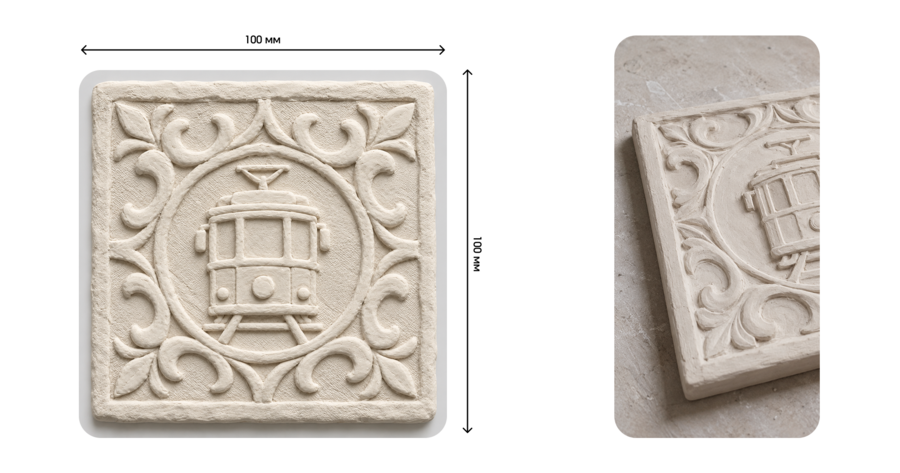
The «Memory Routes» tile concept is based on reinterpreting historical urban transit through the traditions of decorative ceramics. At the center of the composition is a tramway enclosed within a circular medallion, much like a memory preserved in time. The surrounding botanical ornament is inspired by the aesthetic of Art Nouveau architecture and traditional tilework. The flowing lines and symmetrical composition create a contrast with the geometric silhouette of the tram, uniting industrial heritage and decorative art.
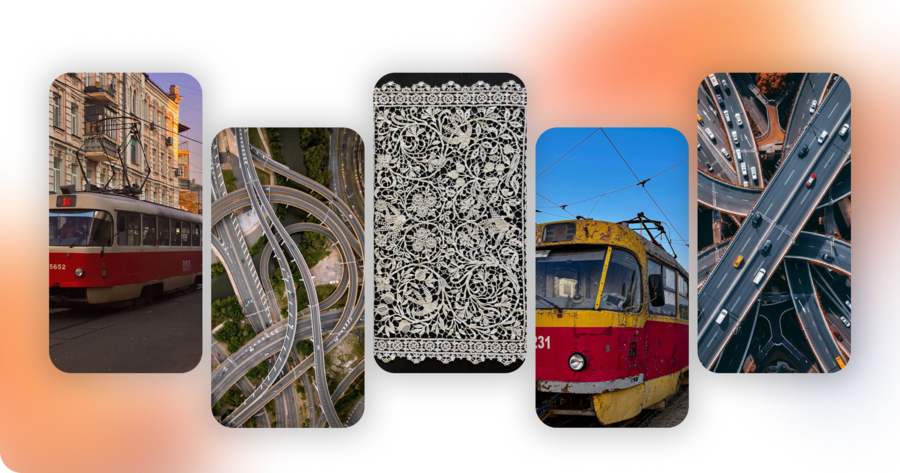
Project Mood
Workflow Stages:
1. Sketch Development
2. Clay Model Creation
3. Mold Making
4. Plaster Mold Creation
5. Slip Casting
6. Drying and Refinement
7. First (Bisque) Firing
8. Glazing
9. Second (Glaze) Firing
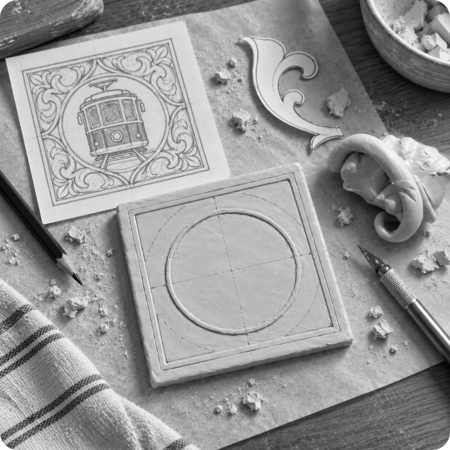
Tile Relief Levels:
Base: 0 mm
Vegetal Ornament: +2 mm
Circular Medallion and Frame: +3 mm
Tram: +4 mm
Fine Details: +5 mm
Maximum relief height—5 mm relative to the base plane.
Workflow
Potential for Further Use:
Mass Production. One plaster mold allows for the creation of approximately 30–50 casts, depending on the plaster quality, technology, and operating conditions. This opens the possibility for small-batch production of decorative tiles.
Variations Within the Series:
Different Glaze Colors: a classic combination of terracotta, green, and cream; a monochrome white option; more subdued combinations of blue, beige, and brown tones.
Different Tram Images: models from various historical periods, reflecting the development of urban transportation.
Different Decorative Elements: variations in botanical ornamentation, framing shapes, and the level of relief detail.
New Tiles Featuring Urban Symbols: historic buildings, street lamps, bridges, train stations, and other recognizable elements of the urban environment.
Finished Product
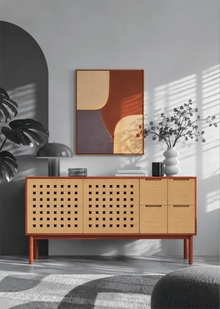
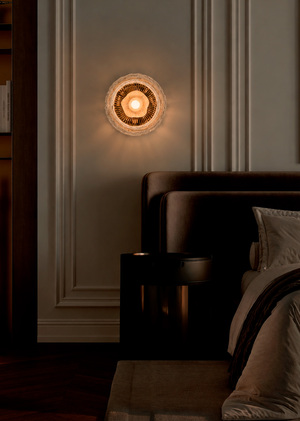
Interior Visualization