Рельеф как рассказ
Дворцовые рельефы Ниневии
Concept
Palatial reliefs from Nineveh dating to the 7th century BCE depict scenes with dozens of participants. Archers stand in ranks, chariots move among the combatants, and figures approach the king. A single scene might span several adjacent slabs, such as in the cycles of the Siege of Lachish and the Battle of Til-Tûb [2, pp. 94–97, 101–105]. When examining an individual fragment, it is easy to focus on a gesture or pose and miss its place within the overall sequence.In this study, I examine how individual actions coalesce into a narrative of royal victory. By what criteria do we discern the continuation of an event? How do we understand who is acting together and to whom the victory belongs? The position of the figures within the scene and the connection between episodes are compared to answer these questions.
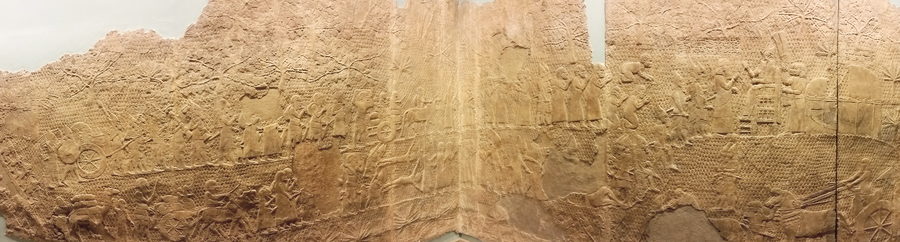
Fig. 1. Reliefs from Lachish in the British Museum exhibition. Reliefs dating to c. 700–692 BCE.
The work utilizes general relief views alongside enlarged details. The general views depict adjacent episodes, while the details illustrate specific elements such as head turns, hand positions, and weapon direction. Close-ups are presented alongside broader images to maintain the connection between gestures and the surrounding figures. The museum panorama gives insight into the overall scope of the cycle, and the order of the plaques and the attribution of fragments are clarified using the catalog.
The concept of victory here encompasses both military success and a successful royal hunt. Therefore, alongside battles and encounters with lions, themes of feasting, libations, and banquets are also represented. These scenes depict the aftermath of a concluded event, allowing us to trace how the narrative continues following the confrontation and how its outcome is portrayed. The palace reliefs of Nineveh from the 7th century BCE were integrated into the room décor. Images could span several adjacent plaques. This is evident, for example, in the cycles depicting the siege of Lachish and the Battle of Til-Tûb [2, pp. 94–97, 101–105]. On the photograph of the museum exhibit from Lachish, one can see several adjacent plaques and imagine what portion of the series a single scene occupies. The sequence of plaques and the attribution of individual fragments are confirmed by the catalog.
Material Selection Principle
For this research, reliefs from two palaces in Nineveh were selected. The Southwest Palace contains cycles depicting the siege of Lachish, created around 700–692 BCE, and the battles of Til-Tûb, dated approximately to 660–650 BCE [1] [2, pp. 94–97, 101–105] [4]. Scenes of a hunt and a garden banquet, dating to around 645–635 BCE, originate from the North Palace [3] [6, pp. 203–204, 210]. These dates establish the chronological boundaries of the study.The selection is driven by the types of actions that can be compared. In the Lachish cycle, the siege, assault, and reception at the throne are several parts of one ensemble. In Til-Tûb, attention is focused on episodes involving Teumman within a multi-figure battle scene [1] [2, pp. 94–97]. The hunt allows for a comparison of the king’s actions both on a chariot and on foot, as well as an examination of the recurring motif of the lion. The pouring and banquet scenes are included as examples of post-conflict events. Analyzing these is necessary for the final section of the research, which is dedicated to the resolution of the action.The illustrations alternate between sequences of details from a single relief and comparisons between different scenes. For every fragment, it is crucial to maintain its connection to the entire slab or ensemble. Therefore, an individual gesture is examined within the context of other figures, and the placement of an episode is verified against the overall appearance and description of the monument.The foundation of the source work comprises three publications. Barnett’s, Blythroy’s, and Turner’s catalog is used to organize the slabs and identify fragments from the Southwest Palace [2, pp. 94–97, 101–105]. Chicago Watanabe’s articles concern narrative methods, including the repetition of a single participant [8, pp. 103–104, 107–112] [9, pp. 347–349]. The RINAP 5/1 corpus of royal inscriptions contains names and details about actions that are difficult to ascertain from a photograph, especially when part of the relief is missing [7, pp. 315–316, 345–349].
Ill. 2. Assyrian Masters. Til-Tuba: battle scenes and the river, c. 660–650 BCE. The British Museum.
Key Question: What compositional devices unify the individual actions in Niniveh palatial reliefs into a narrative of royal triumph?
Hypothesis: I hypothesize that the connection between the actions is primarily defined by the placement of the figures. The overall composition unites the participants, while the repetition of one character in different poses conveys the sequence of events. The king’s role may be expressed through his own action or through the gestures directed toward him by those around him. Scenes of reception, ritual, and feasting should demonstrate how the narrative continues after a battle or hunt.
Research Sections
The study is divided into three chapters based on compositional challenges. Initially, the direction of movement and the relationship between figures within the scene are examined; subsequently, the conveyance of time through character repetition is explored. The third chapter focuses on the placement of the main subjects and how the depicted action relates to the king.
Chapter 1. Direction of Movement
The phalanx and siege of Lachish are compared with the battle and flight to the river in Til-Tûb. This analysis addresses the orientation of bodies, the positioning of weapons, and the lines of the ground. These characteristics allow one to trace how multiple figures coalesce into a shared action.
Chapter 2. Time in a Single Image
Using the examples of the hunt and episodes involving Teumman, character repetition is examined. This raises the question of which criteria allow neighboring figures to be perceived as a single participant across different moments of an event.
Chapter 3. Principal Figures
At the core of this chapter are Sennacherib receiving guests and Ashurbanipal hunting. The placement of the king is contrasted with the actions of those around him. The scene depicting Teumman’s death is analyzed alongside the inscription that links the warrior’s action to the ruler’s triumph.
Chapter 1. Direction of Movement
Ill. 3. Assyrian Masters. The Siege of Lachish: archers and slingers, c. 700–692 BCE. British Museum.
Ill. 4. Assyrian Masters. The Siege of Lachish: top row of archers, c. 700–692 BCE. British Museum.
1.1. Archer Structure
The archers of Lachish are facing to the right. Their faces, outstretched arms, and bows are directed in one direction (Fig. 3–4). Below this repetition is supported by their feet advanced forward and the general line of the ground (Fig. 5). Gaps are maintained between the arrows, so the pose of each is clearly discernible. As one moves from one figure to the next, the direction hardly changes. Thus, the individual arrows coalesce into a formation oriented toward a common objective.
Ill. 5. Assyrian Masters. The Siege of Lachish: bottom row, c. 700–692 BCE. The British Museum.
Fig. 6. Assyrian Masters. The Siege of Lachish: figures in the left part of the procession, c. 700–692 BCE. British Museum.
1.2. Archers and Bowmen
The movements of the arms differ between archers and crossbowmen. The hand holding the bow is extended forward, while the crossbowman’s arm is raised for the throw. In the bottom row, the figures are standing closer together, occasionally overlapping (Fig. 6). Furthermore, their torsos are oriented in the same direction. The variation in weaponry and gestures does not disrupt the cohesion of the formation—participants are performing different actions within a unified advance.
Fig. 7. Assyrian Masters. The Siege of Lachish: assault on fortifications, c. 700–692 BCE. British Museum.
Fig. 8. Assyrian Masters. The Siege of Lachish: Inclined ramparts and siege engines, c. 700–692 BCE. British Museum.
Fig. 9. Assyrian Masters. The Siege of Lachish: fortifications atop earthen mounds, c. 700–692 BCE. British Museum.
1.3. Assault Diagonals
The movement along the walls of Lachish shifts direction. Earthworks rise diagonally toward the fortifications, and siege engines are positioned along them (Figs. 7–9). The walls and towers become a common target for groups dispersed across the platform [2, pp. 101–103].
In the previous segment, the rhythm set by the archers along the ground dictated the direction. Here, figures and machines are distributed along several diagonal lines. Each line leads toward the fortifications, allowing the viewer’s gaze to move from one embankment to another, maintaining a connection across the assault sectors.
Ill. 10. Assyrian Masters. Til-Tuba: chariot and figures around it, c. 660–650 BCE. British Museum.
Ill. 11. Assyrian masters. Tell-Tuba: land battles, c. 660–650 BCE. The British Museum.
1.4. Participant Battle Groups
In Til-Tub, several confrontations are depicted nearby. In illustration 10, a chariot, horses, and fallen figures take up most of the fragment. The overlapping bodies make it difficult to discern individual movements. On the adjacent section (illustration 11), a pair of opposing warriors is visible in the lower left. A round shield is positioned between them, and their weapons are aimed toward the adversary. Further to the right, figures are already running among the fallen bodies toward the river.To follow the battle, one must transition from one group to another. Within each group, the direction is determined by how the participants are oriented toward each other. This direction then changes alongside the action—a duel, a fall, or a flight. Therefore, it is difficult to encompass the entire fragment in a single gaze, much like the line of archers from Lahish.
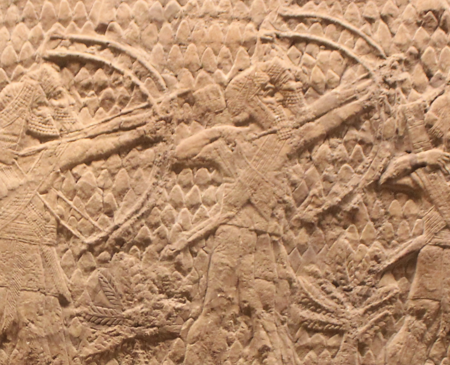
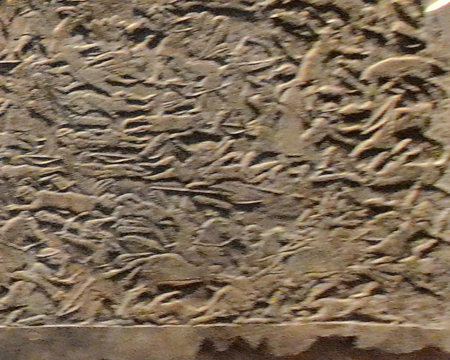
Fig. 15. Assyrian masters. On the left — the city of Lachish (c. 700–692 BCE), on the right — the Tigris River (c. 660–650 BCE). Fragments. The British Museum.