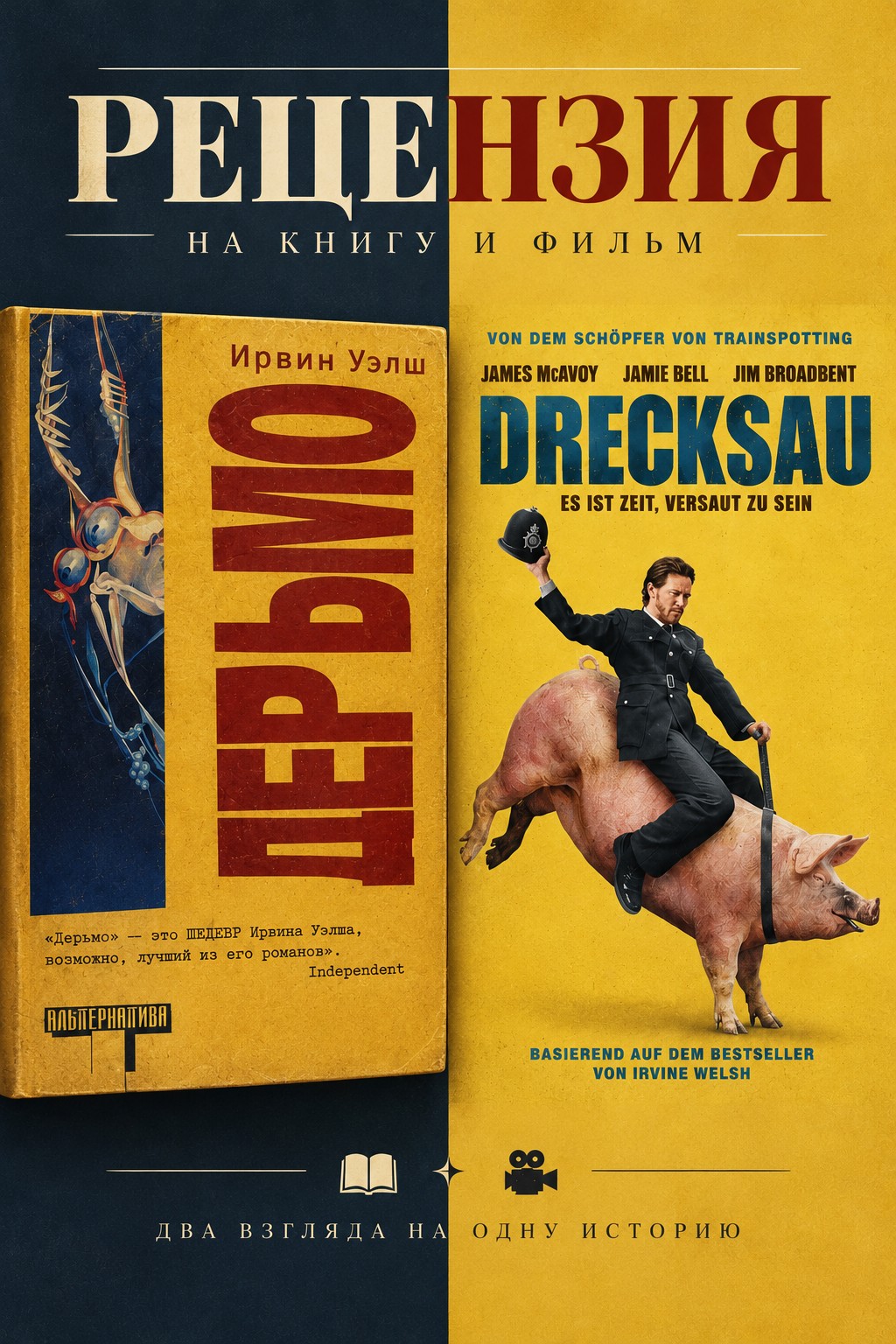
A comparative review of John S. Baird’s film Dirt and Irvine Welsh’s novel Filth. I analyzed how the same story—about a corrupt Edinburgh detective—sounds in literature versus film: why the book compels reflection while the movie elicits emotion, where the ribbon-narrator went astray, and how James McAvoy softened the protagonist. The review concludes with recommendations on whether to read or watch first, along with ratings for both works.
Sometimes the film adaptation follows the book step by step. Other times, it diverges. John S. Baird’s «Filth» took a third path: it borrowed Irving Wells’s story and recast it in a polished setting while retaining all the original anxiety. The novel speaks directly to the reader, without softening anything, but the film takes a gentler approach, incorporating good music, and you only realize at the end that you are walking on very thin ice.
The action takes place in Edinburgh on Christmas Eve. Detective Sergeant Bruce Robertson wants a promotion and, to achieve it, he plots against his colleagues—spreading gossip, setting traps, and exposing others' secrets. The investigation into the student’s murder remains secondary to his machinations. He drinks heavily, indulges in everything possible, and gradually loses the ability to distinguish between reality and his own fantasies. This is a story about a man who virtuously manipulates others yet is utterly incapable of managing himself.
Book: A Voice That’s Hard to Turn Off
Irving Welsh writes in a vibrant, sharp, and very Scottish tongue—a dialect, slang, and thoughts that interrupt one another. In the Russian translation, some of this sharpness is inevitably smoothed out, so one should approach judgments about the original language through the translation with caution.
In my opinion, the most interesting element of the novel is its form. Bruce Robertson does not narrate alone. Alongside him sounds the voice of his wife, Carol Robertson, who observes him from the outside, and, most importantly, the voice of the tapeworm inhabiting the protagonist. When Bruce Robertson falls silent, the narrative sometimes shifts to the worm, as Kirkus noted back in 1998. This device is audacious and witty: the most important things about a person are told by the entity living beneath their skin. According to the Salon reviewer, it is this worm that recalls Bruce Robertson’s difficult childhood—a period without which his behavior would be incomprehensible. The parasite functions here both as a joke and as a metaphor: Bruce Robertson feeds on the weaknesses of others, while the worm feeds on him.
Bruce Robertson himself is a very difficult character in the book. He has a coarse, biased attitude toward women, people of different races, and those unlike himself. However, Irving Welsh presents this not as his own position, but as a portrait. The author himself explained that Bruce Robertson grew up in a Thatcherite, individualistic environment, and his personal affliction reflects the sickness of society. In other words, he is not some random eccentric, but a product of an atmosphere where harshness is seen as strength and cynicism as pragmatism.
The novel can be exhausting. Over three hundred pages of one assertive voice require patience, a point critics also noted: the Salon reviewer felt that the protagonist’s monologue is occasionally funny, but it makes the book slightly unbalanced. This is the price of the chosen method.
Film: Energy, Rhythm, and One Great Actor
John C. Bird shot this picture at a relentless pace: fast editing, vibrant inserts featuring Bruce Robertson’s visions, and a moody yet vibrant Edinburgh. The music is a delight in itself. Upbeat pop hits play over somber scenes, and the contrast is highly evocative—the film makes you laugh and immediately makes you feel awkward about your own laughter. It’s a clever device.
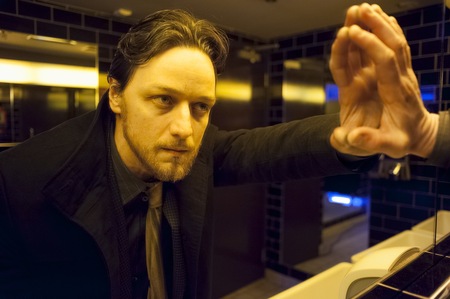
James McAvoy is magnificent in this role. He plays with zeal and charm, and then, with the same fervor, shows how the hero loses his footing. His best moments aren’t loud; they are quiet—those seconds when the mask slips slightly and you can see how genuinely unwell Bruce Robertson is. The critic at Cultbox wrote that by the end of the film, you feel sincere sympathy for the hero, and I agree with that assessment. There is only one reservation some reviewers raised: James McAvoy looks too fresh and energetic for a man so exhausted by life.
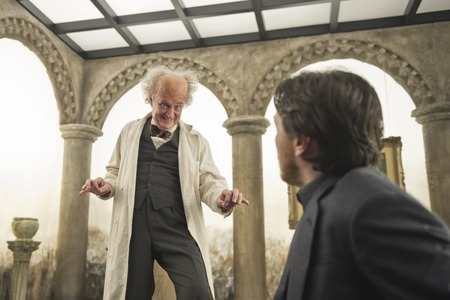
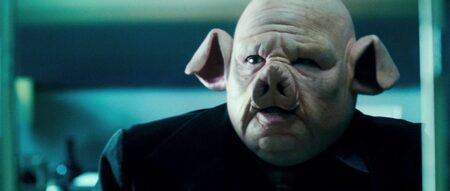
The supporting cast is crafted with care. Jamie Bell plays Ray Lennox, Bruce Robertson’s colleague and rival, maintaining a balance between simple demeanor and his own concerns. Eddie Marsan plays Clifford Blades, nicknamed Bladsey, the hero’s friend, and portrays him so movingly that his role is remembered more vividly than many of the loud scenes. Imogen Poots plays Amanda Drummond, the only woman vying for promotion. Joanne Froggatt, as Mary, brings softness and hope to the picture. Jim Broadbent plays Dr. Rossi, who will be discussed further below.
Comparison: What Remains and What Has Changed
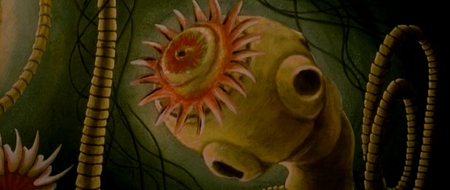
The Worm and Dr. Rossi. The most noticeable change. In the novel, the Worm is a full-fledged narrator; in the film, he is reduced to a mere allusion: a diagram of the parasite hangs on Dr. Rossi’s wall, and the Worm briefly appears in one of Bruce Robertson’s visions. Dr. Rossi takes over the role of the inner voice—that is, the hero’s conscience. Critics were divided: some called the substitution a failure, others accepted it. I prefer the latter. Cinema struggles to convey a monologue from within, so it required a face, and Jim Brodbent gives this face expressive, slightly unsettling features. It is a pity for the Worm, but the substitution is clever.
Tone. The book is sharper and harsher. The film remains quite bold, but it presents everything with more irony, and reviewers have noted multiple times that the adaptation turned out less dark than the novel. There is a harshness in the film, but the humor functions as a softening layer.
The image of Bruce Robertson. In the book, he keeps the reader at a distance, and you analyze him like a complex puzzle. In the film, James McAvoy gives him human warmth, and sympathy arises sooner. He becomes a more tragic character—one you want to understand and pity. It is neither better nor worse, but simply a different inflection: the book makes you think; the film makes you feel.
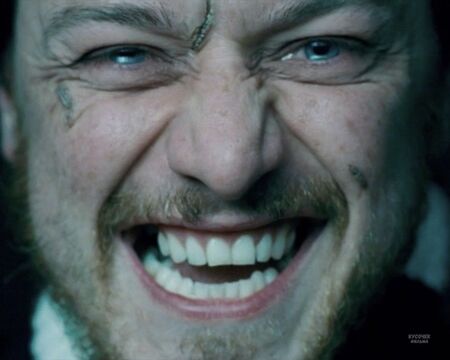
Insanity: a word or an image. A word, I think, is more precise: in the book, you feel from within the narrator’s perception unraveling as the text itself becomes less stable. The film, however, shows this colorfully: visions, the image of Dr. Rossi, festive tinsel layered over anxiety. The book penetrates deeper; the cinema strikes brighter.
Social critique. There is less of it in the film. The novel presents Bruce Robertson as part of an entire environment and era, whereas the film focuses more on the personal drama of a single individual. The social backdrop remains, but it recedes into the background.
The film can be judged on its own merits. And it should be. As a standalone piece, the film is an energetic, witty, and at times deeply bitter tragicomedy with brilliant acting. Those who know the book will notice that it was bolder in places, but that does not prevent the film from being independent and whole.
Conclusion
What First? If you want to approach the subject matter more gently and quickly, start with the film. If you are ready for denser and more complex reading, take the book.
Who It’s For. The novel is for those who appreciate unconventional literary form, language, and sharp social observation. The film is for those who value dark comedy, strong acting, and a character downfall story that allows for empathy.
Ratings. Novel: 8 out of 10. Bold, original, but exhausting. Film: 7.5 out of 10. Brilliant James McAvoy and excellent supporting cast, but the film is slightly more reserved than it could have been.