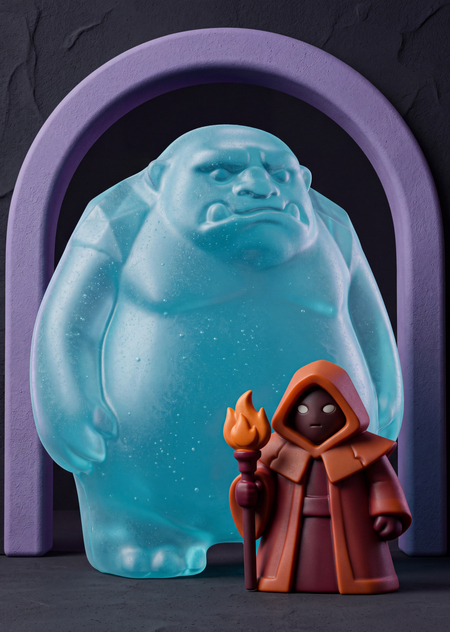
Concept
Mylomon started as my academic project—kids’ soap molded into monsters with tiny human figures inside. I devised a simple mechanic: the monster swallowed the hero, and to save him, you had to gradually wash away the shell. My goal was to transform handwashing into an engaging game and help children form a healthy habit.
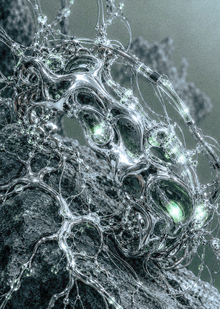
In the rebranding, I retained the concept of rescuing the character but recontextualized it for a teenage audience. I was inspired by the culture of collectible toys from the 2000s and 2010s—unusual creatures, miniature heroes, and the desire to build one’s own squad. Instead of child-friendly monsters, I created grotesque fantasy beasts from semi-transparent soap, each concealing a knight, a fire mage, a forest tracker, a gnome blacksmith, or a moon witch.
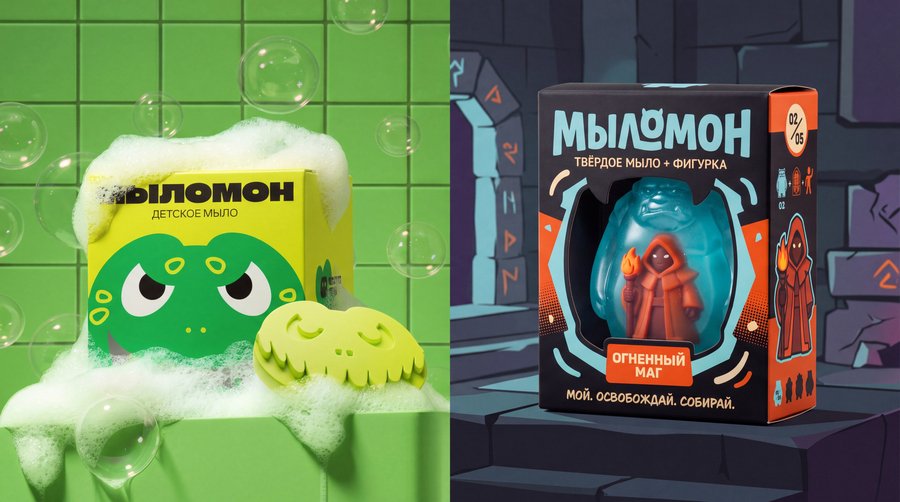
Key visuals
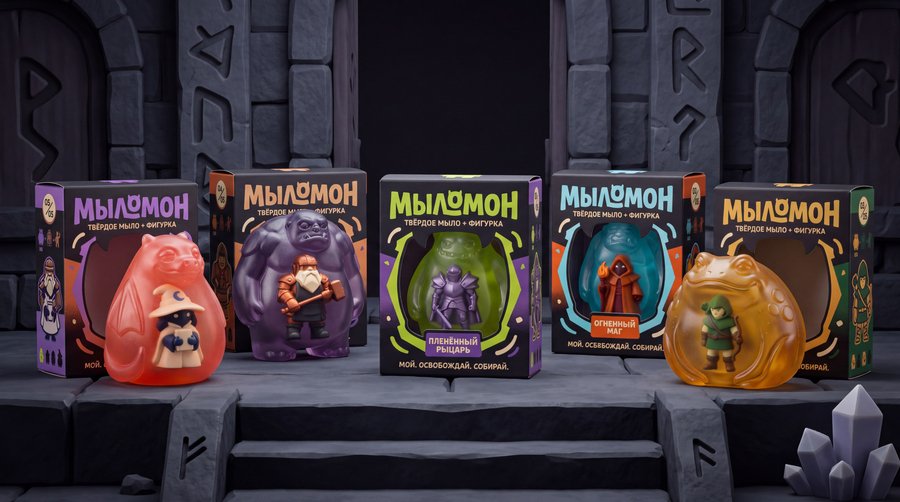
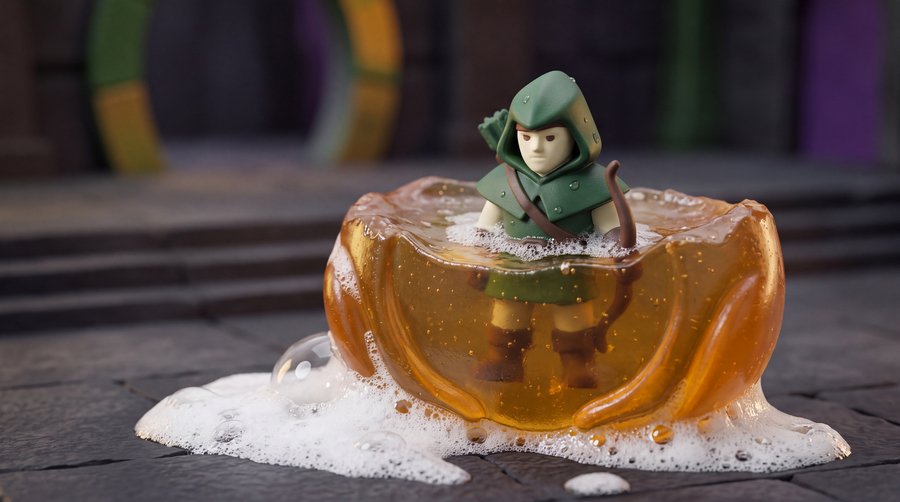
Merchandise
Space
Promotional Materials
Identity
The Creation Process
To create the visuals, I used the neural network Figma Weave, employing the Nano Banana 2.1 model for image generation. Assistance with prompt composition came from Perplexity.
In Figma Weave, a convenient node-based generation system is used—for instance, after refining the initial prompt in Perplexity, I attached the previous result as a reference for subsequent generation to maintain a consistent visual style.
For creating case studies, I would compile references that included both the specific objects needed in the image and references regarding camera angle, composition, depth of field, and level of detail—all to achieve a result as close as possible to my vision.
Sometimes, to recognize or transfer certain graphic elements to another medium or substrate, a pair of initial references was insufficient, so I often included all the graphic elements that appeared during production.