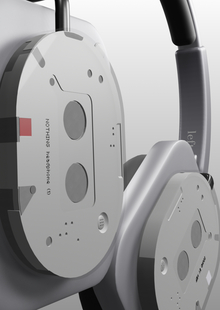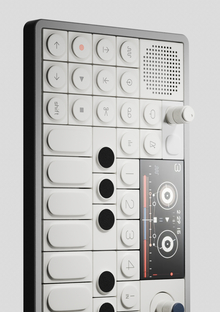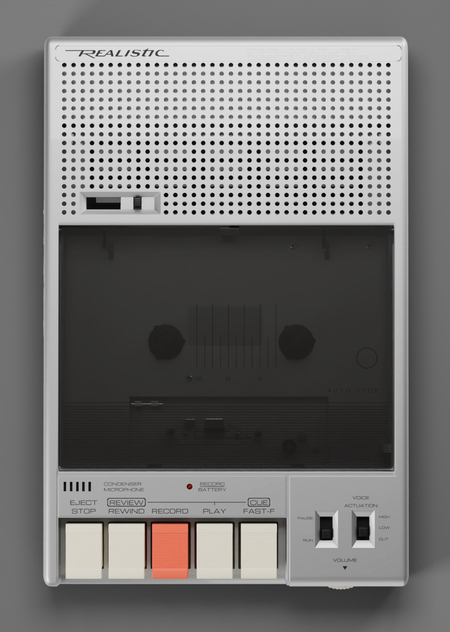
As part of this project, I researched the Realistic CTR-75 cassette recorder (Radio Shack, 1986)—its history, the principles of its form-making, and its design language. I chose it because it represents the established archetype of the cassette recorder seen in movies and television series, recognizable by its shape and a single red key. Based on this analysis, I created a 3D model of the device and the final visualization.
About the structure
CTR-75 — a portable cassette recorder for capturing speech: lectures, interviews, voice memos. It was released under Realistic, Radio Shack’s private label, and manufactured in Taiwan for the chain.
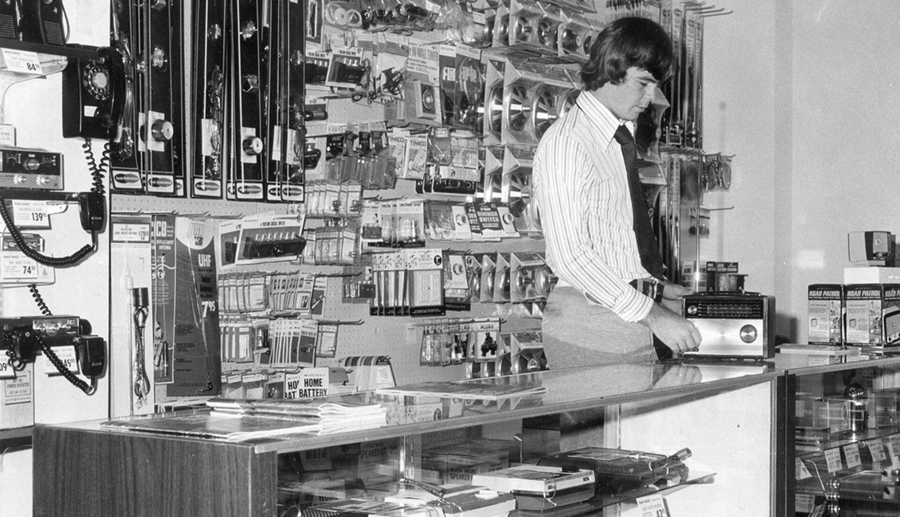
The design is inspired by the early Philips cassette recorders from the late 1960s, which shared a similar layout: speaker at one end, cassette in the center, and controls toward the front. The CTR-75 retains this configuration but integrates all the necessary components for recording into a single housing.
The slim, 32 mm enclosure accommodates the microphone, speaker, tape transport mechanism, and four AA batteries.
Historical Context
In 1963, Philips introduced the compact cassette, initially as a medium for dictation. By the late 1970s, the cassette also became memory storage for home computers; it was sold alongside the TRS-80 Radio Shack with a Realistic CTR-41 cassette deck. After the Walkman’s appearance in 1979, music went portable, and the desktop cassette deck remained a tool for voice recording. The CTR-75 was a mature version of such a dictaphone. In the 1990s, similar devices were superseded by digital recorders, and the Realistic brand was discontinued.
Original device
CTR-75 doesn’t invent a new type of device; it transforms a familiar cassette recorder into a simple, everyday tool. Its main innovation is voice activation: recording starts only when the voice is detected, saving tape by eliminating pauses.
It solves the problem of excessive equipment. The built-in condenser microphone and battery power allow for recording without an external microphone or cords, and its flat body rests stably on a desk.
What sets it apart from competitors is its accessibility: an inexpensive model priced at $59.95 was sold in thousands of Radio Shack stores and was designed for anyone who needed to record speech—students, teachers, and journalists alike.
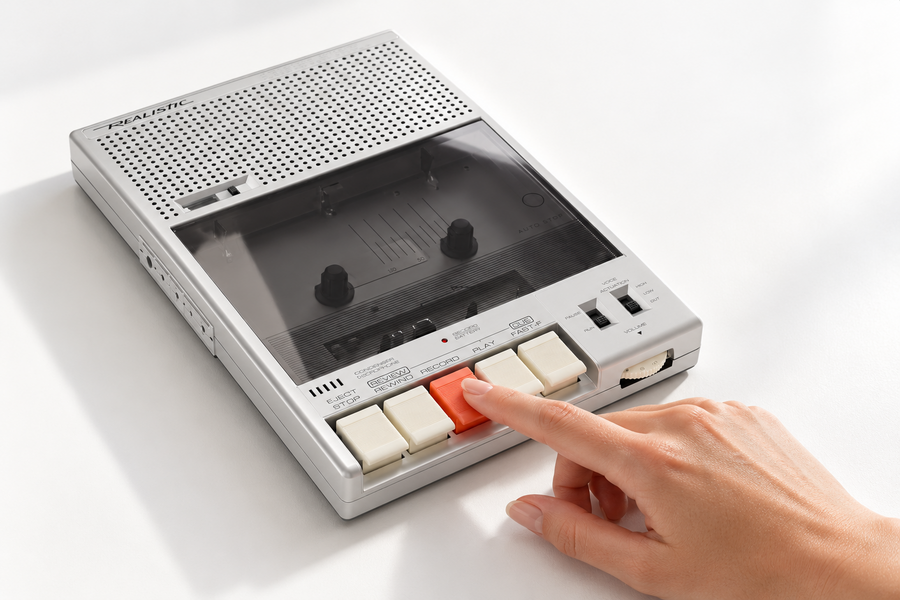
Its strength is its simplicity: five labeled keys, two knobs, a volume wheel, and a single bright accent—the red RECORD button.
Its weaknesses are the «metal-finish» plastic, disposable batteries, and the cassette format, which has since become obsolete.
Archetype Analysis and Construction
The form is based on a flat rectangular bar composed of two cast halves, with the seam between them hidden by a double groove. The keys, cassette window, grille, and drives also emerge from the rectangle. Circles appear only where function requires them: the speaker openings, spindles, volume wheel, indicator, and sockets.
The top panel is divided into three zones along one axis: sound toward the far edge, the cassette in the center, and controls toward the near edge. The keys project forward, making the dictaphone convenient to use when resting on a table, as the hand does not cover either the speaker or the window.
Visualizations
The model was built in Blender: the chassis, keys, switches, cassette, and battery compartments with hinged lids.