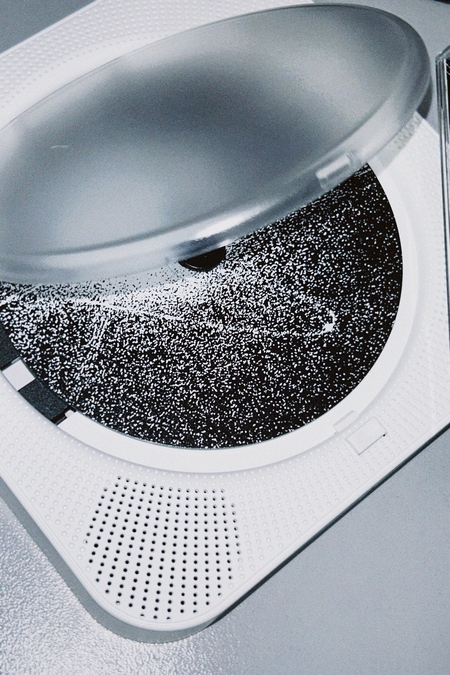
Concept
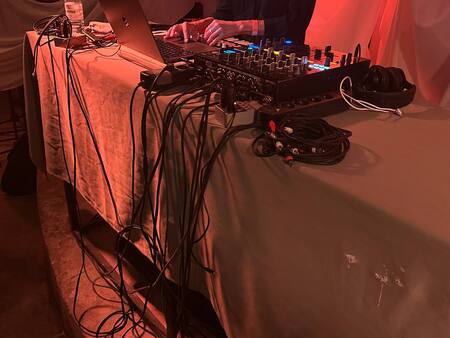
Burelom is a media outlet focused on experimental music. Each month, the editorial team attends a music event and conducts conversations with attendees to understand how they interpret and perceive what they hear.
Social Networks
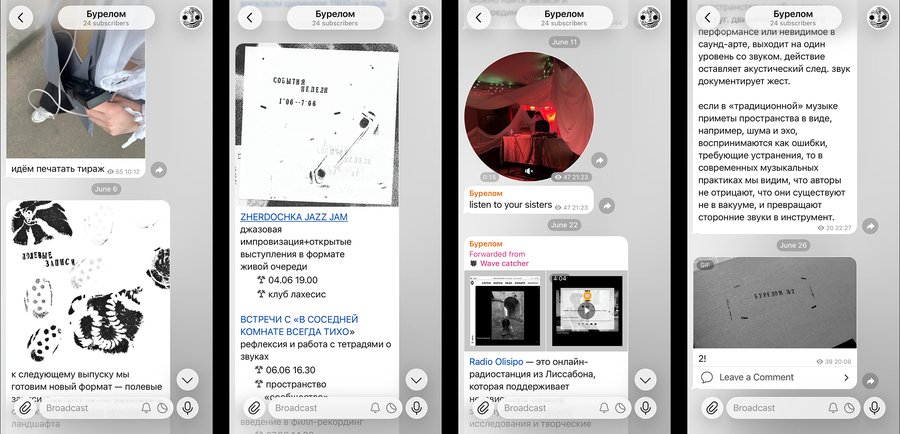
The project’s Telegram channel features: articles, essays, photos, and videos from events, as well as offline formats for use outside of social media (brochures for home printing, code).
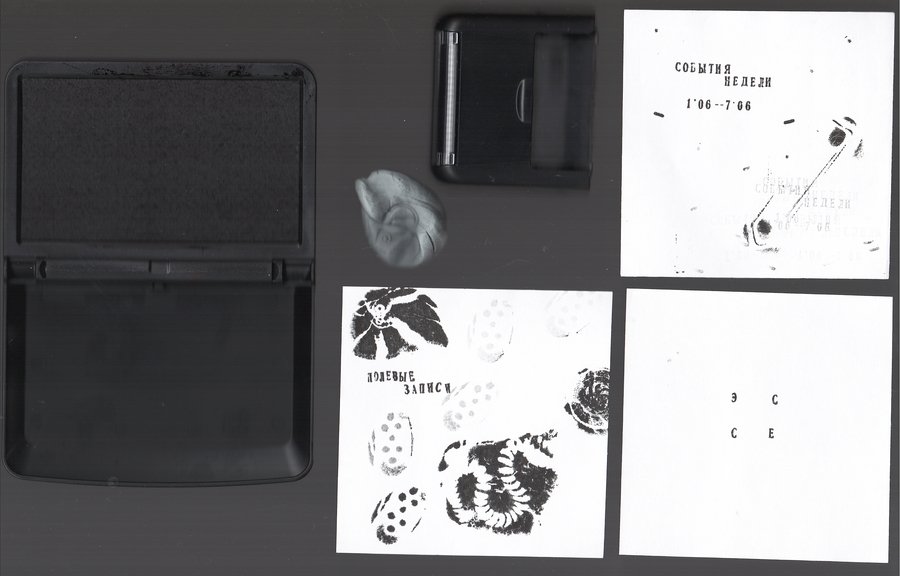
Informative posts are accompanied by graphics created under three constraints:
- A 9 cm x 9 cm sheet of paper
- A self-inking stamp
- A stamp pad and an ink blotter, used to imprint objects on the workspace
The «Process» webpage presents a series of questions that illuminate the key stages of the team’s work in creating media and researching the relevant cultural field.Answers to these questions are documented in various formats, including excerpts from correspondence, audio recordings of editorial discussions, text notes, and visual references.
The publications feature materials that accompanied the production of the issue but did not make it into the final print.
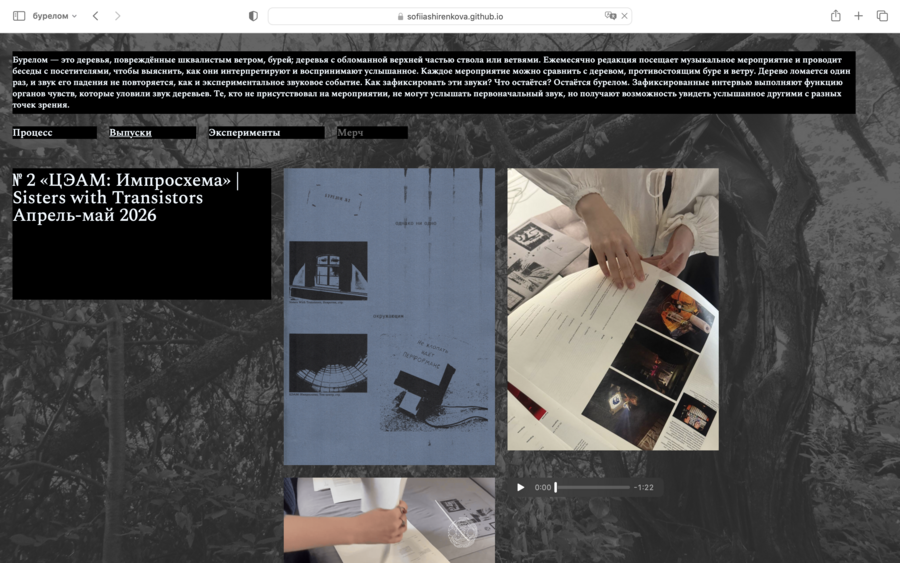
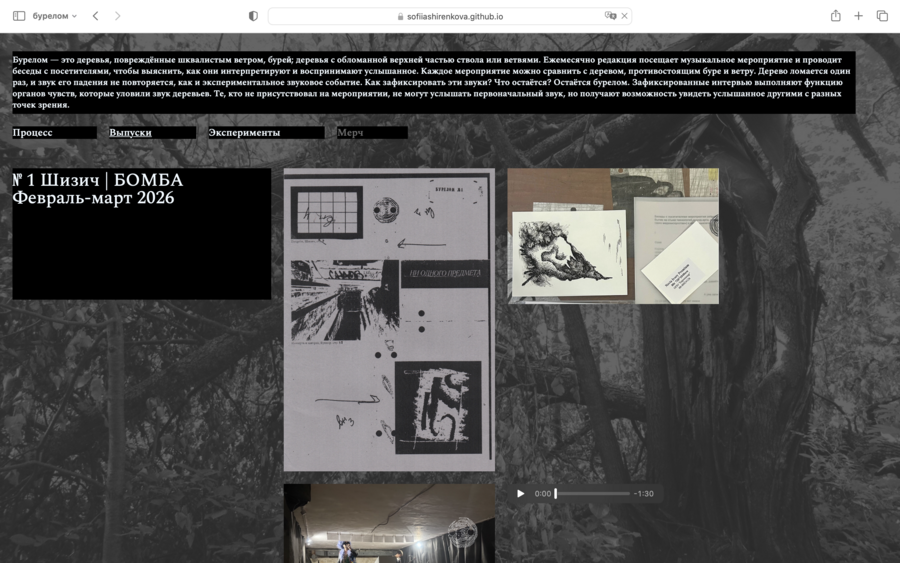
The «Experiments» webpage features materials dedicated to experimental practices and the team’s internal initiatives.
Alumni
In the second issue of «Bureloma, ” we feature interviews with attendees of the musical events „TSEAM: Improschema“ and „Sisters with transistors.“Volume: 28 pages
Format: 11.7in × 8.3in
Paper: Nevia Ivory Premium 80gr
Printing: Spectral
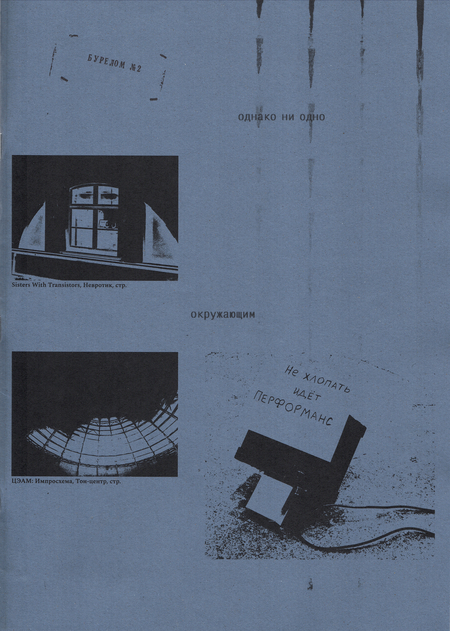
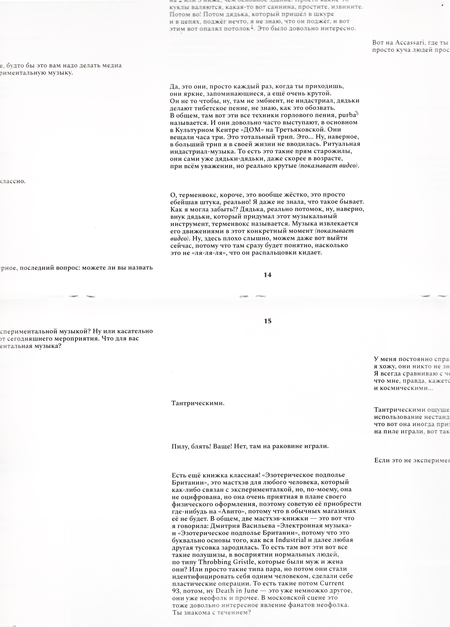
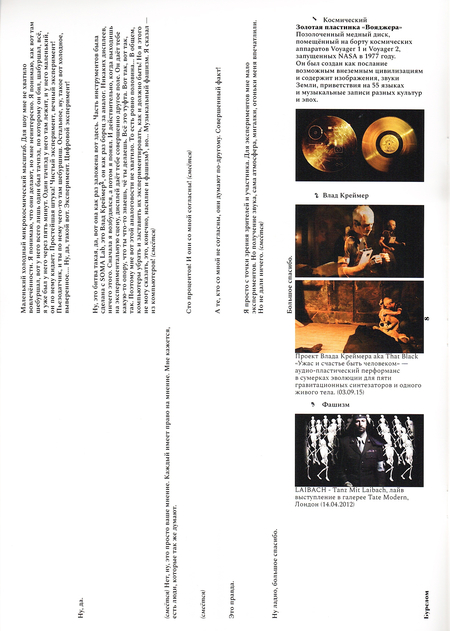
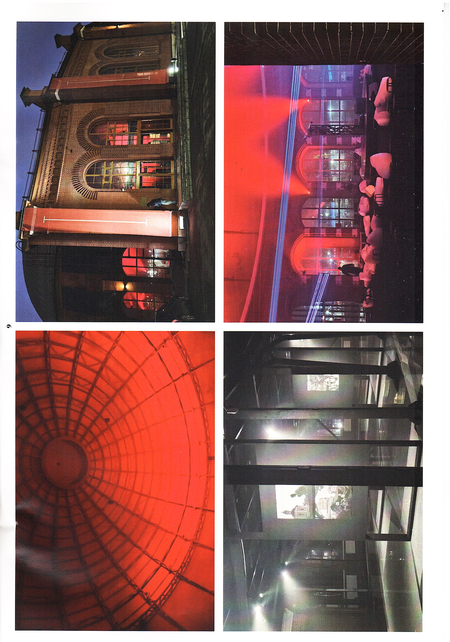
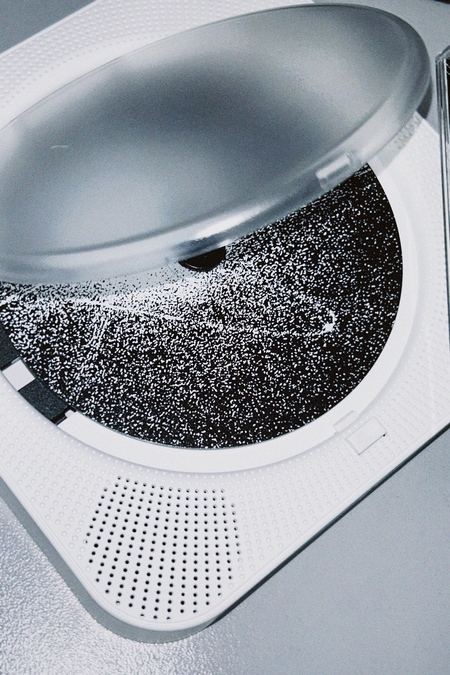
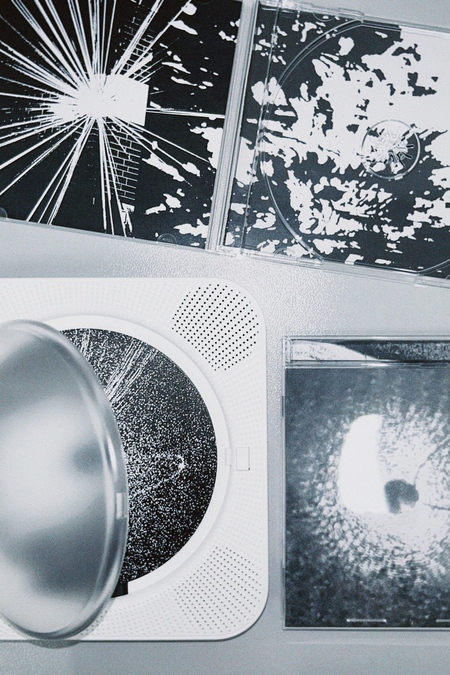
Each copy of the second issue comes with a disk containing the editorial sound diary in a field recording format.
Auditory Experiments
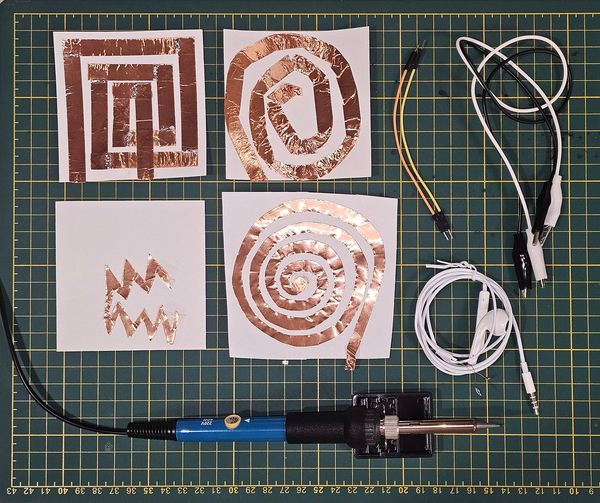
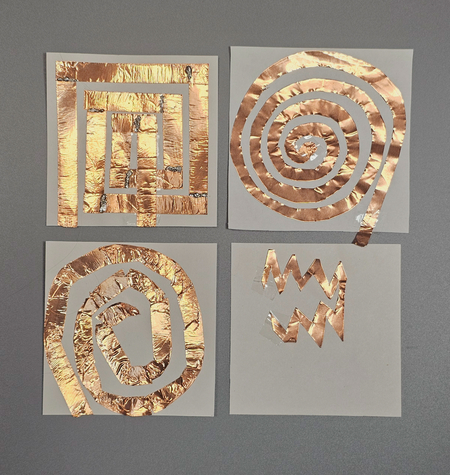
Paper Speakers — this is an exploration of sound through the deconstruction of the speaker into a two-dimensional plane. A speaker typically consists of a magnet, a coil, and a diaphragm. In this project, the coil and diaphragm are rolled into a flat, spiral form. The separation of the signal (the spiral coil) and the permanent magnet transforms the speaker into an instrument that reveals the laws of electromagnetism through experimentation.The simplest version involves a copper spiral cut from adhesive copper film and transferred onto a sheet of paper that functions as a lightweight diaphragm. The interaction between the spiral track and the magnet creates sound. Rotating and moving the magnet relative to the coil allows control over the sound source, frequency filtering, and volume.The geometry of the spirals influences volume, timbre, and frequency response, which encourages research into speakers of various forms and sizes.
Lissajous figures translate the sounds of an event into a visual form, recording oscillations that existed as an acoustic phenomenon and can be re-experienced through the image.The Laser Experiment acts as a mediator: it does not illustrate the sound, but rather materializes its trajectory, making invisible waves observable.