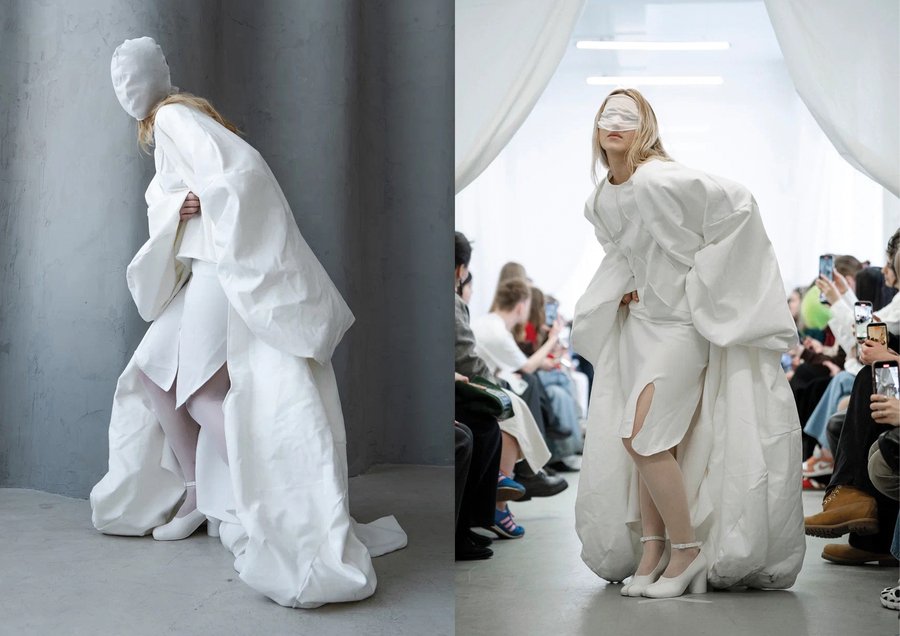
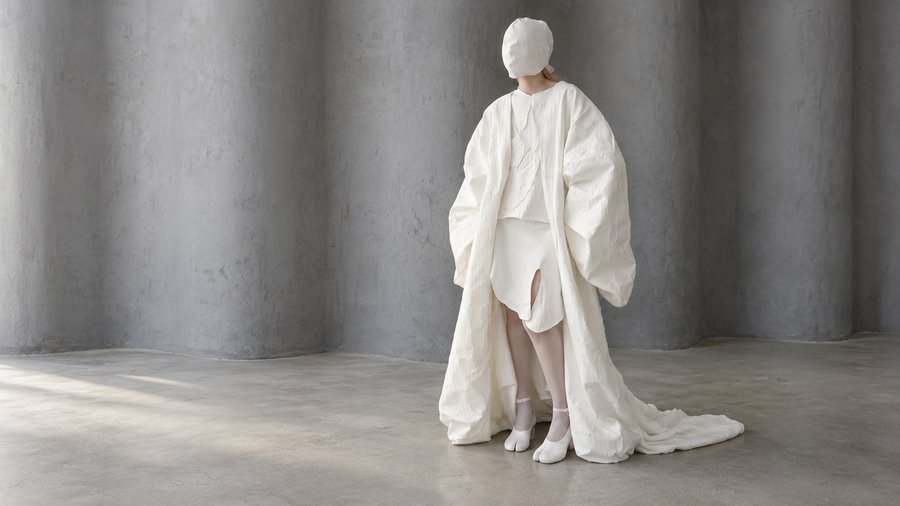
In the Tabi project, I researched cultural appropriation in fashion. I started with the form of Japanese tabi shoes—their characteristic split—which I translated into the silhouette, volume, and construction of the costume.
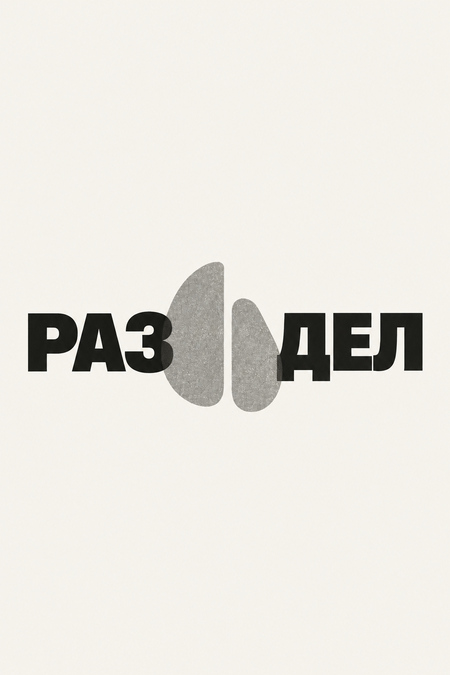
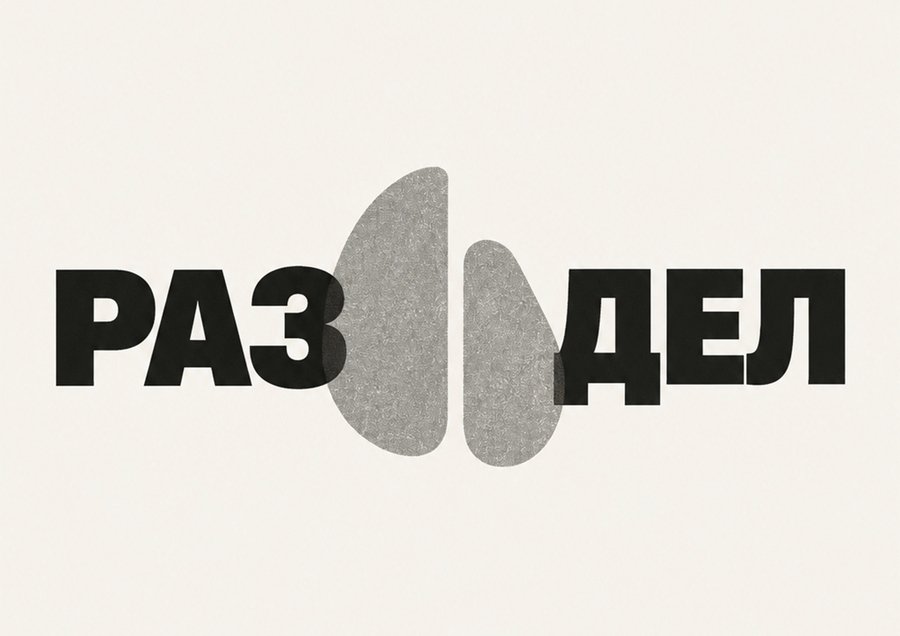
RAZ DEL—a concept for an experimental fashion brand that grew out of the Tabi project. The bifurcated form became the basis for the brand’s logo, identity, merchandise, and spatial design. Using neural networks, I created new imagery and developed the project’s visual language.
I wanted to develop the idea beyond a single garment. I saw the division as a universal motif that could unify clothing, graphics, and objects into a cohesive brand world.
Merchandise
Space
Promotional Materials
Identity
Technical Details
ChatGPT Images Primary image generation and editing: costume key visuals, product compositions, logos, final merchandise and space mockups, storefronts, advertising collateral, and slide identity. Text prompts and reference images were used. Nano Banana 2, via OpenArt Initial experiment with merchandise product composition: tote bag, notebook, and metal keychain. This tested the model’s ability to execute complex descriptions involving multiple objects, relative sizes, materials, and text. Seedream 4.5, via OpenArt Initial experiment with showroom space: concrete architecture, textile partitions, rail, table, and brand signage. This tested the conversion of a textual description into a coherent spatial scene. OpenArt This is the platform providing access to the two specified models, not a standalone neural network model itself. The results from these runs are saved as intermediate variations. Later images of the storefront, advertising, and identity were created using ChatGPT Images, not Nano Banana 2 or Seedream 4.5. Python and Pillow Technical conversion of PNG/WEBP to JPG, size verification, and file preparation. For the final exports, JPEG quality 97 was used, and color subsampling was disabled (subsampling=0). Conversion does not increase original detail fidelity.
Phase One: Analysis of the Original Costume. I identified the features that needed to be preserved across all frames and separated them from the variable parameters: background, pose, angle, scale, and composition. Screenshots were used as the source for the costume’s form; the laptop, interface, and borders were specifically excluded from the prompts. Phase Two: Creation of the Initial Image Series. A general overview, movement, composition between fabric panels, material exploration, and the suspended garment were developed. The same costume was shown through various visual objectives. This allowed the series to be diversified without arbitrarily changing the product. Phase Three: Experiments with Other Generators. A merchandise variation was created in Nano Banana 2, and a showroom variation in Seedream 4.5. For each prompt, the scene composition, materials, relative object scale, palette, and specific text overlays were predefined. These individual tests do not constitute a controlled comparative model test—they had different objectives. Phase Four: Selection and Refinement. The final merchandise and showroom images were independently generated in ChatGPT Images using refined text prompts. OpenArt images were not used to remove watermarks: the original options were saved separately, and the final images were obtained through a new generation process. Phase Five: New Materials Series for Portfolio. A vertical key visual titled «Rupture» was created, a horizontal frame of the suspended garment featuring the logo and color palette, two views of the store, promotional posters, a display window with a sidewalk sign, and a summary slide of the identity system. The approved logo was passed to subsequent generations as a visual reference. Phase Seven: Review and Export. I evaluated the preservation of form, readability of the name, composition, visibility of objects, and adherence to the overall color palette. The images were exported as JPG files.
Working with references. Each image was assigned a specific role: costume construction, logo appearance, or spatial styling. This reduced the ambiguity of the request. Decomposition. The task was broken down into costume, insignia, merchandise, space, and advertising. For example, the logo was first created separately, then provided as a reference for placement on items and integration into the interior. Structured prompt. The request was built according to this schema: task → references → object → composition → materials → lighting → palette → exact text → constraints. The format and placement of objects were specified along with the image content. Fixing immutable attributes. In the prompts, elements such as milk cotton, rounded sleeves, an open top layer, and a split edge were repeated. During local revisions, elements that needed to be preserved were listed separately. Constraints in the main text. Phrases such as «without lapels, ” „without additional items, ” and „do not change the costume“ were included in the primary prompt. The separate negative prompt parameter in the embedded tool was not configured. Iterative correction. The next prompt was formulated to address a specific deficiency in the previous result. Revisions were re-checked because removing one element could affect an adjacent part of the structure. Image continuity. A successful result became a reference for the next shot: the overall look of the store was used for the fitting room area, the logo for advertising and carriers, and the costume’s aesthetic for posters.
Task: To show a single empty piece of outerwear on a hanger. First result: A separate short top appeared inside the coat, even though it was not requested. Revision: Request the removal of the top while retaining the sleeves, hanger, fabric, lighting, and composition. Side effect: The model also removed the back panel because the instruction to show the wall through the open lapels proved structurally inaccurate. Next revision: Explicitly restore the opaque cotton back panel, extending from the neckline to the hem, and specify that this is the inner surface of a single coat, not a separate T-shirt. Conclusion: A negative instruction like «remove the top» is insufficient. For complex garments, you must describe what should occupy its place and check the structural logic after editing. Another example: The initial attempt at a close-up of a skirt on a model failed to generate an image due to automatic blocking. The task was reformulated as a still life of the item without a person. This allowed the same material and split hem to be shown in a different composition. Blocked requests are not counted as completed images.
Prompts
Use the attached screen photos as references for the costume: a full front view, the skirt silhouette, a side view, and the train. Create a photorealistic fashion photograph in a 16:9 horizontal format. One adult model, full body, slightly to the right of center, with open space on the left. Preserve the milky-white, layered costume: an open, long top layer without lapels with huge, rounded sleeves, a loose, short top, an asymmetrical skirt with a rounded front edge and a narrow slit, and a long train. Keep the oval fabric mask, light hair, and white strap tabi shoes. Matte fabric, natural drapes, and seams. A gray concrete space with smooth vertical curves and soft side lighting. Show the shoes and the entire train. Do not replace the costume with a dress or kimono. No laptop, interface, text, or frames.
Create a second key visual for TABI / SECTION: a photorealistic fashion shoot in 16:9 format. The first reference is the created look; the second is the real costume shown from the side and back. Keep the milky cotton, huge rounded sleeves, the open top layer extending to the floor, the short skirt with two uneven rounded lobes and a narrow slit, the train, the fabric mask, and the tabi shoes. Show the adult model in a turning motion, three-quarters view from the back. The fabric movement must account for its weight; the feet are supported on the floor. Gray concrete interior, diffused side light. The figure occupies the left two-thirds of the frame; the entire silhouette and train are visible. No new costume details, text, or other people.
Create a horizontal editorial photograph in 16:9 format. An adult model stands between two monumental, milky fabric panels. The full figure is visible through the passageway. Keep the entire costume from the reference: the open long top layer, voluminous sleeves, the cotton top, the asymmetrical split skirt, the train, the oval mask, and the white tabi shoes. The narrow vertical gap is slightly offset from the center. The costume must be distinct from the panels. Empty gray floor, soft cool light, visible folds and seams. No inscriptions, extraneous objects, or new clothing details. Leave space around the head and shoes.