It is difficult not to agree that the character archetypes in Soviet animation are generally archetypal, especially when dealing with a Slavic setting. Ivan the Fool, for example, despite being portrayed as foolish, actually possesses considerable cunning and always triumphs over evil by the end of the narrative. Furthermore, greedy and cruel antagonists are always punished for their misdeeds. In short, there is a certain canon that guides the development of the plot and its characters.
But is there a direct correlation between these elements? Is there a universally accepted principle governing how the image of the hero or the villain they oppose is constructed? Differences certainly exist, yet many fail to recognize the value of studying them. Such an examination not only aids in a deeper understanding of the work but also allows one to immerse oneself in the cultural specificities of the time in which it was created.
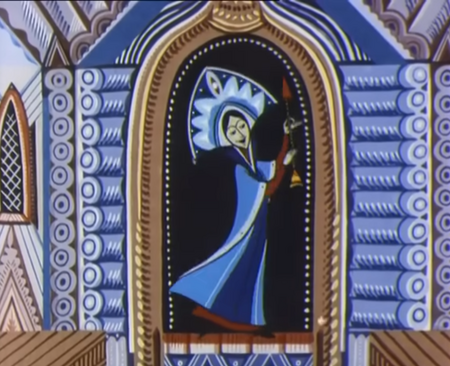
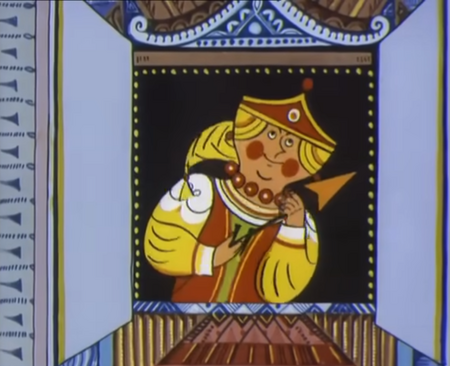
«Vasilisa the Beautiful, ” directed by Vladimir Pekar (1977)
Clothing from antiquity was considered one of humanity’s most vital assets because it reflected traditions, customs, and the fundamental characteristics and changes within society. It could reveal a person’s age, status, marital status, and even where they lived.
Soviet animators understood this profoundly; therefore, in their works, they strived not only to immerse the audience in a specific time period but also to illustrate the distinctions between different social strata. These visual differences allowed them to convey the core message of the work and develop the characters much more effectively—especially when depicting the protagonists and the antagonists they faced.
«The screen image of a character cannot be conceived outside of the dialogic interaction between the actor’s persona as the inner substance of the character’s world, the role performer, and the external shell of that image—the embodiment of the character’s individuality, which is represented in their costume. In this sense, the hero’s costume is one of the most universal tools in the overall palette of the cinematic work’s plastic forms.»
D. A. Kharkov «The Role of Costume in Realizing the Director’s Creative Goals (Using Andrei Tarkovsky’s 'Andrei Rublev' as an Example)»
Therefore, the objective of this visual study was to examine the distinctions noted between the costumes and character designs of the protagonists and antagonists, as even the smallest details in clothing can reveal not only the culture of ancient times but also the moods and worldviews of people during the Soviet era. The relevance lies in the fact that by analyzing these aspects, we can identify a certain pattern that can subsequently be used in further research into the cultural characteristics of various peoples and nations.
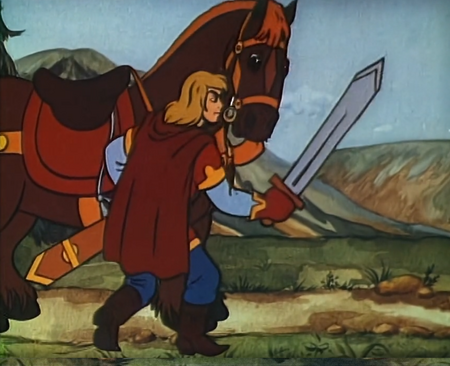
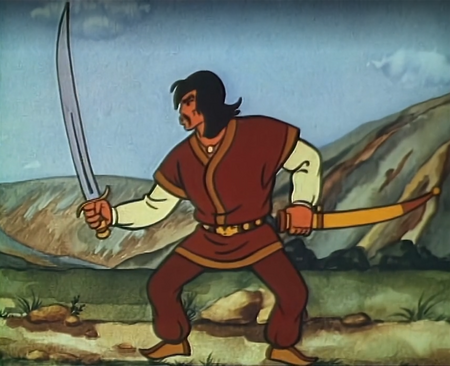
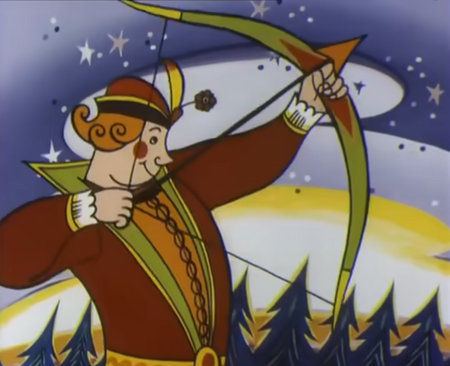
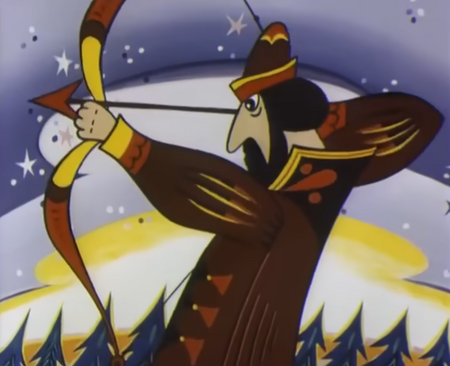
«Two Bogatyrs,» directed by Alexander Davydov (1989)
The study will examine not only the visual differences in costumes—such as form or color—but also the spiritual and symbolic differences, which reveal fundamental distinctions in the characters' representations. The subject of the research is animated films created during the Soviet period; by analyzing them, one can discern the main contrasts between positive and negative characters.
The structure of the research is as follows:
- Concept
- Color Palette
- Rounded Lines versus Sharp Lines
- Collectivity versus Individuality
- Conclusion
At the end of the research, the main conclusions regarding the analyzed material will be presented, enabling a characterization of the protagonists and the identification of major cultural trends and the prevailing moods of people during the Soviet period.
Color Palette
Color is one of the first elements of attire to catch the eye. In ancient times, particularly in Rus', it carried both symbolic meaning and indicated the social status of the person wearing it. For example, red and gold symbolized wealth and were often the primary colors in festive and wedding garments. White, meanwhile, was a symbol of purity and chastity.
«The Little Horse and the Humped Donkey, ” directed by Ivan Ivanov-Vano, Viktor Gromov, and Alexandra Snezhko-Blotskaya (1947)
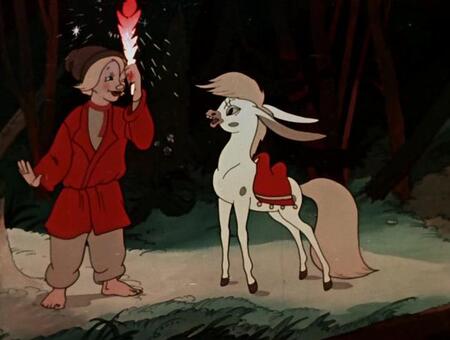
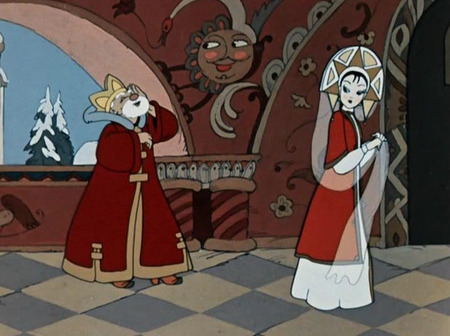
«The Horse-Boy» (Konёk-Gorbunok), directed by Ivan Ivanov-Vano, Victor Gromov, and Alexandra Snezhko-Blotskaya (1947)
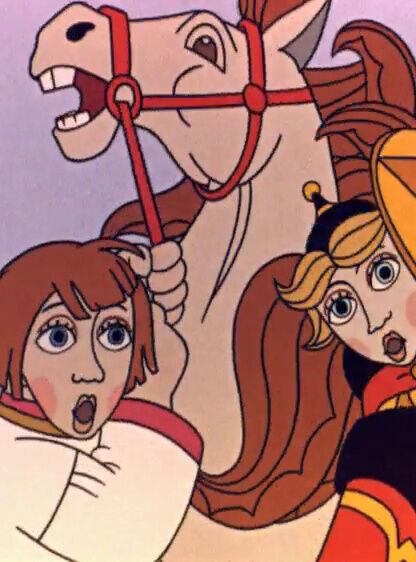
For instance, the character Ivan is depicted wearing a red coat and cap, barefoot, and sharply contrasts with the rich attire of the Tsar and his daughter. They are within the same color palette; however, it is the difference in their social status that allows for the color red to be interpreted in various ways.
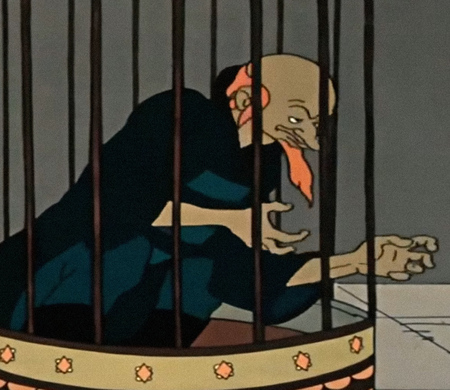
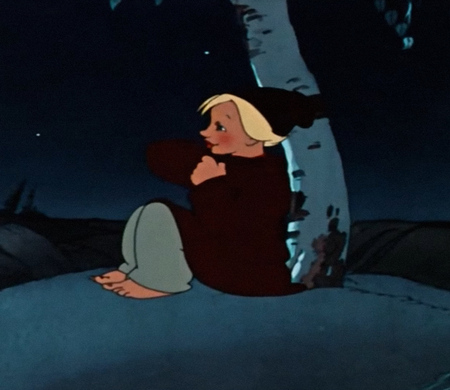
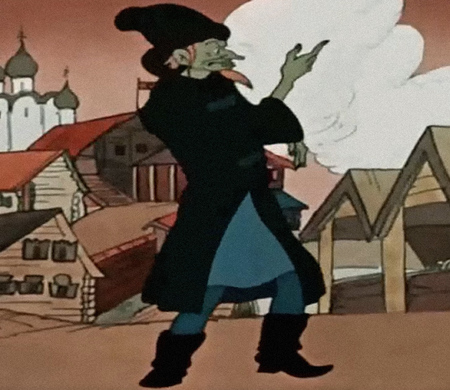
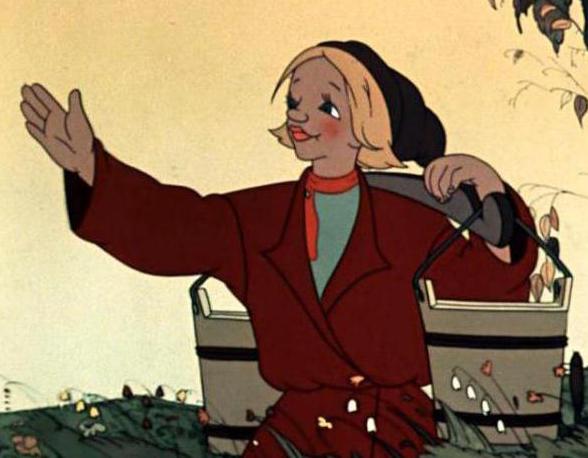
«Konёk-Gorbunok, ” directed by Ivan Ivanov-Vano, Viktor Gromov, and Aleksandra Snezhko-Blotskaya (1947)
The contrast is much more evident in Ivan, the jealous and malicious man with the royal bed, which is expressed through his green color palette.
Red and green are complementary colors, meaning the characters are complete opposites.
«Konёk-Gorbunok, ” directed by Ivan Ivanov-Vano, Viktor Gromov, and Alexandra Snezhko-Blotskaya (1947)
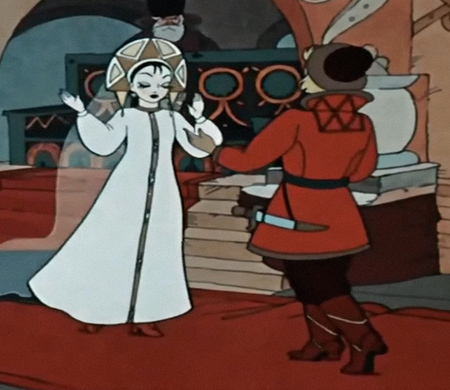
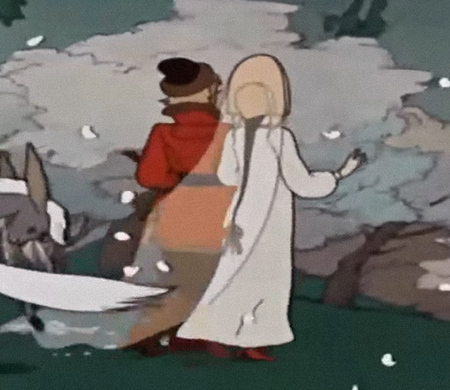
«The Little Horse and the Humped Donkey,» directed by Ivan Ivanov-Vano, Viktor Gromov, and Aleksandra Snezhko-Blotskaya (1947)
The climax of the work is also fascinating, where Ivan, after jumping into the three cauldrons, is transformed. His simple peasant rags become the attire of a true young prince. His kaftan is transformed, his hat gains fur trim, he is equipped with a belted dagger, and he gains heeled boots.
In essence, the hero transforms while retaining his original color palette. Red, for him, is the color of courage and love. The Tsarina remains in delicate white garments. The two protagonists also contrast, but here it symbolizes a forthcoming wedding rather than a clash of personalities.
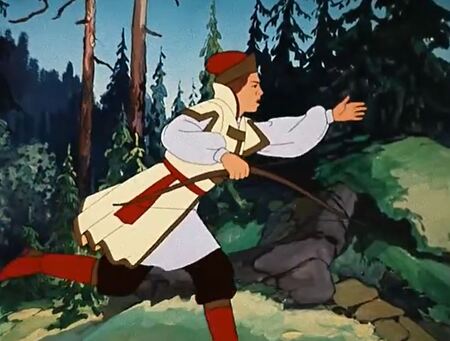
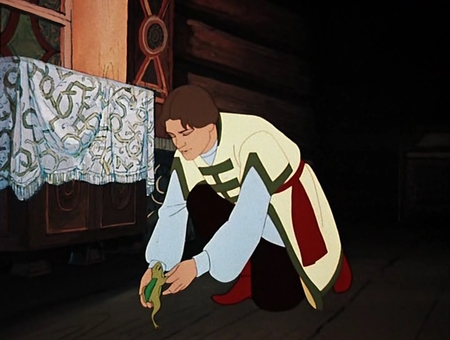
«The Frog Princess, ” directed by Mikhail Tsekhanovsky (1954)
Even Ivan Tsarevich from the cartoon «The Frog Princess» features red clothing elements—boots, a belt, and a cap—though white tones predominate. Moreover, the protagonist is dressed quite modestly for his status, perhaps to suggest that his noble lineage has not made him arrogant. The young man is noble, brave, and ready to show mercy.
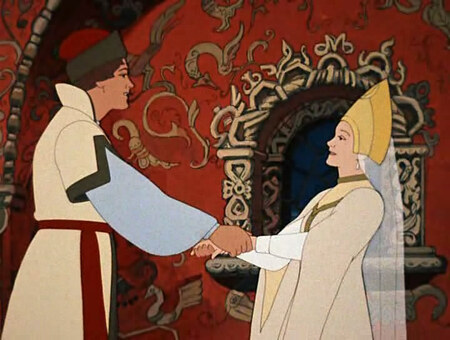
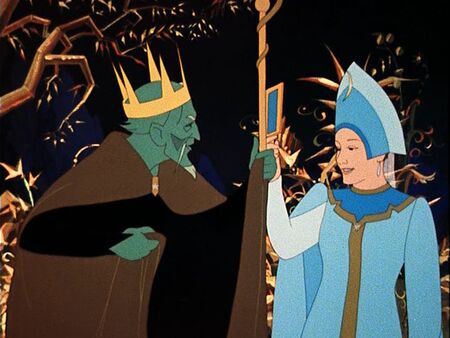
«The Frog Princess, ” directed by Mikhail Tsekhanovsky (1954)
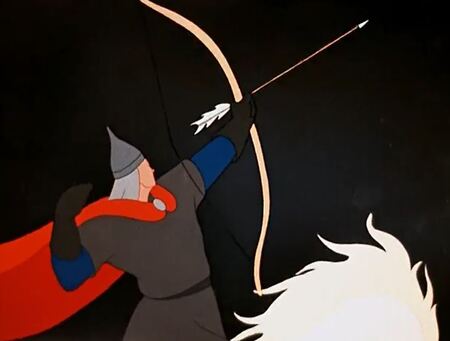
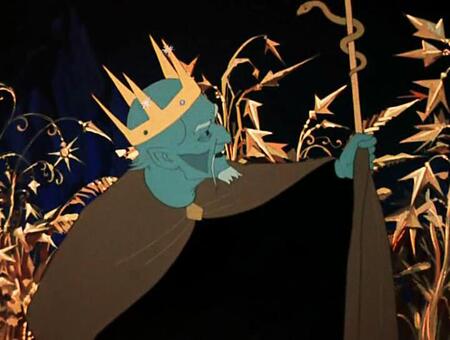
«The Frog Princess,» directed by Mikhail Tsekhanovsky (1954)
The color contrasts between Ivan, Vasilisa, and Koschei are interesting. When Vasilisa is not wearing her wedding attire, she is dressed in blue. Although Koschei also employs cool tones in his look, he contrasts completely with her. His color palette feels murky and unnatural.
Ivan’s bright red cloak, worn over his armor, stands in opposition to Koschei’s dirty, almost brown tunic. This difference mirrors not only their age but also their moral values. Even though Koschei is immortal for now, he is rotten to the core.
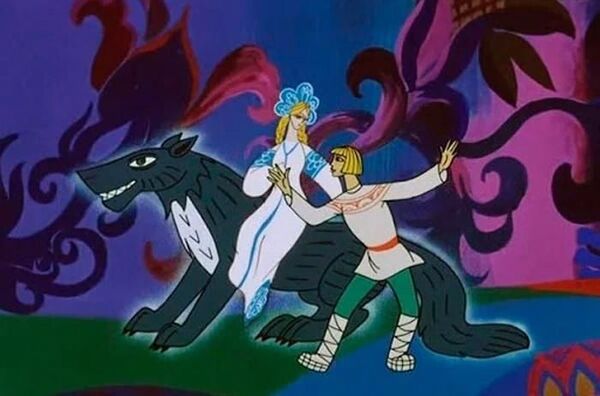
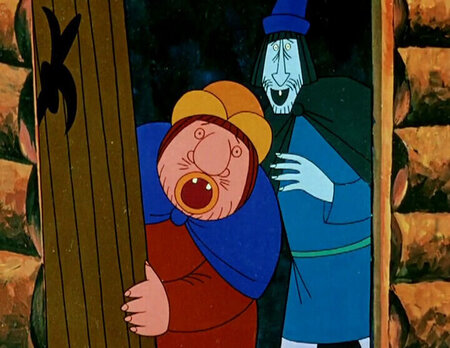
«Youthful Apples, ” directed by Ivan Aksenchuk (1974)
A similar use of color contrast in skin tones can be seen in Ivan Aksenchuk’s work, «Youth Apples.» The younger son, Ivan, has a typical beige complexion, unlike his brothers. One of them has bluish-green skin, which, as established, is intended to demonstrate his jealousy. The other has a rosy complexion, hinting at his penchant for drinking.
In the climax of the film, both brothers betray Ivan and their father, showing us just how bloodthirsty, treacherous, and lazy they are. The use of contrasting color palettes takes effect once again.
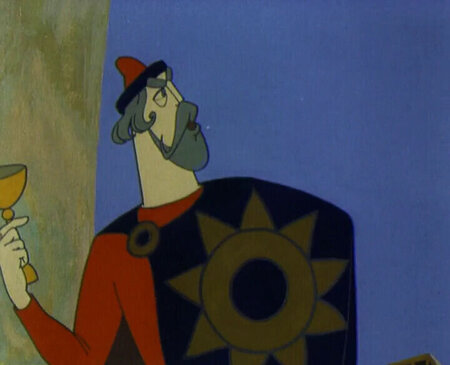
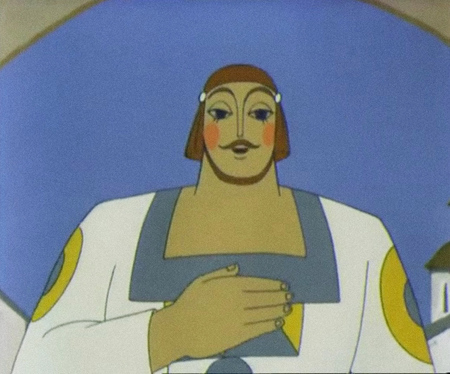
«Vasilisa Mikulishna, ” directed by Roman Davydov (1975)
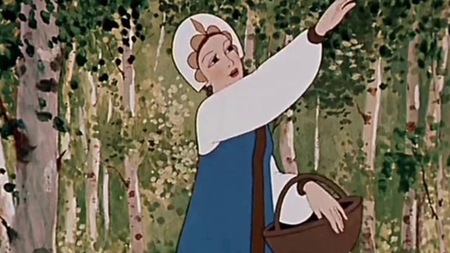
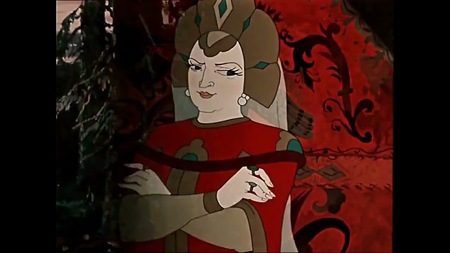
«The Tale of the Dead Princess and the Seven Knights, ” directed by Ivan Ivanov-Vano (1951)
In short, in many cartoons, red and black are set against white and blue. Noble people with inherited wealth come into conflict with common, yet noble-hearted individuals. If the color palette matches, the villain’s colors are dull—not as saturated as those of the protagonists.
Even if the protagonist is from a noble lineage, his clothing will never be overly laden with excess ornamentation to demonstrate his grounded nature.
Rounded lines versus sharp ones