Concept
«Dungeon Meshi» is a manga by Ryoko Kuroi, which was published in the Harta magazine from Enterbrain since February 2014 through September 2023. It was released in 14 tankōbon volumes and received an anime adaptation in January 2024. The story is set in a fantasy world where so-called dungeons periodically open up in different parts of the continent. These places attract adventurers and treasure hunters, but the dungeons grow and cause damage to the outside world. However, the main problem for travelers in such places is equipment and, of course, food. On their last expedition, the main characters encounter a red dragon and lose a member of their party. They must save their friend, but they have no money for provisions, so their only option is to eat the monsters from the dungeon.
The story blends elements of classic fantasy and draws heavily from the tabletop role-playing game, «Dungeons & Dragons.» The themes of dungeons and treasure hunting are common in manga, but the plot of this work primarily revolves around food, which sets it apart from others. Nevertheless, the game mechanics and inherent characteristics find a reflection in this narrative.
«Dungeons & Dragons (D&D)» is a tabletop role-playing game created in 1974 by Gary Gygax and Dave Arneson. Players create characters of various races and classes, and the game’s core objective is to explore locations, battle monsters, and complete quests to advance the narrative crafted by the Dungeon Master.
D&D cemented the image of the fantasy genre in the popular consciousness—its classes, magic, and basic narrative structure, where a group of disparate heroes embarks on a perilous journey through a magical world. The game has profoundly influenced literature, film, video games, and manga. Since the late 1980s, Japanese creators have drawn upon D&D’s imagery and mechanics, reinterpreting them within the shonen manga format.
While numerous works represent this theme, «Dungeon of Delights» most vividly reflects the classic world structure of D&D—from the races and character classes to the architecture of the dungeon itself. Overall, the manga’s plot shares a similar spirit with a tabletop gaming session, complete with moments of utter absurdity and unexpected twists.
I aim to analyze how Ryoko Kiu continues the traditions of «Dungeons & Dragons» (world, characters, mechanics) in her work while reimagining them within the context of her narrative. My analysis will reference the 5th Edition Player’s Handbook (Mearls, M. & Crawford, J. Player’s Handbook (5th Edition). — Renton, WA: Wizards of the Coast, 2014) and the official Russian localization of the manga published by XL Media.
The research will be divided into four sections: Characters: the portrayal of the main heroes, the characteristics of the classes and races, and how they function within both systems, as well as the archetypes of villains and secondary characters; Dungeon Design: locations and monsters, enemy specifics according to the system, and the laws governing the dungeon. Narrative: classic clichés and their reinterpretation, references to game mechanics, and their influence on the plot. Mechanics: their unique features and how they operate within the story.
«Tummy Treasure Trove» Vol. 10 Chapter 69 (2021) / Ryoko Kui
D&D as a foundation
The concept of dungeons found its reflection in manga. In many ways, the world of «Dungeon of Delicacies» is an ideal template for tabletop role-playing: the classic team introduction in a tavern, and the diverse classes and races are a perfect fit. The world is structured for gradual immersion into the story; the further the heroes travel, the tougher the monsters become, and despite the danger, they manage to survive thanks to the dungeon’s magic. In the context of a role-playing game, character death and the possibility of resurrection do not feel absurd; the dungeon itself is a series of levels that the heroes strive to pass without a specific goal—they are simply interested in testing their abilities, and a clear motivation emerges much later.
«Tavern of Delicacies» Vol. 1 Ch. 1 (2015) / Ryoko Kui
Dungeons & Dragons can be viewed both through the lens of a role-playing game that deeply immerses the player in the world and narrative, and as a collection of achievements, experience, and trophies. The heroes of «Dungeon of Delights» do not strive for experience because their world is real, not a simulation like is common in similar stories. However, achievements and trophies remain a significant part of the narrative, and in the case of this manga, those elements are new monsters and the dishes prepared from them.
Characters
Ryoko Kui devoted significant time to character development, which is visible in the sketches appearing at the end of some chapters. In addition to deeply refining both main and supporting characters, she paid close attention to the distinctive traits of each race. Inter-racial conflict is not the central theme of the work, nor is the detailed narration of each people’s culture, yet even within the established framework, one senses not only physical but also cultural differences among the characters.
«Lair of Delicacies» Vol. 5 Chapter 35.6 (2017) / Ryoko Kui
The main characters form a classic party that includes a warrior, a wizard, a rogue, and a cleric. Lyos Toden and Falin Toden are a warrior and cleric with a multiclass in wizardry, but if we examine the classic configuration, Falin’s class is «cleric.» Although both she and Marsil, the second wizard in the party, are half-elves with similar knowledge, Falin’s abilities in healing and banishing spirits are significantly more effective, which is a defining trait of clerics.
«Clerics combine beneficial magic—such as healing and inspiring allies—with spells that harm and hinder enemies. They can induce fear and dread, cast curses or diseases, poison, and even summon celestial fire to destroy their foes. When encountering sinners who can only be dealt with by a mace strike to the head, clerics rely on their martial training, which allows them to engage in melee combat alongside the divine forces on their side.»1
[1] Crawford, J. Player’s Handbook / J. Crawford, J. Wyatt, R. J. Schwalb, B. R. Cordell. — 5th ed. — Renton, WA: Wizards of the Coast, 2014. — 316 p
«Dungeon of Delights» Vol. 1 Ch. 1 (2015) / Ryoko Kui
«Labyrinth of Delicacies» Vol. 2 Chapter 11 (2015) / Ryoko Kui
The Wizard’s Class introduces Marsil, a half-elf. In the universe of «Dungeon of Delicacies,» half-elves live longer than other races; in the D&D system, while they live longer than humans, they are still significantly shorter-lived than elves. However, the internal contradictions and the issue of acceptance by human and elven societies remain relevant in both cases. In Marsil’s story, the problem lies in the fact that she is guaranteed to outlive all her loved ones. Despite being a half-breed, Marsil’s habits and appearance are closer to traditionally elven ones. For example, her extreme care for her appearance and her habit of relying on magic.
«Dungeon of Delights» Vol. 2 Chapter 14 (2015) / Ryoko Kui
«Labyrinth of Delights» T. 4 Ch. 27 (2017) / Ryoko Kui
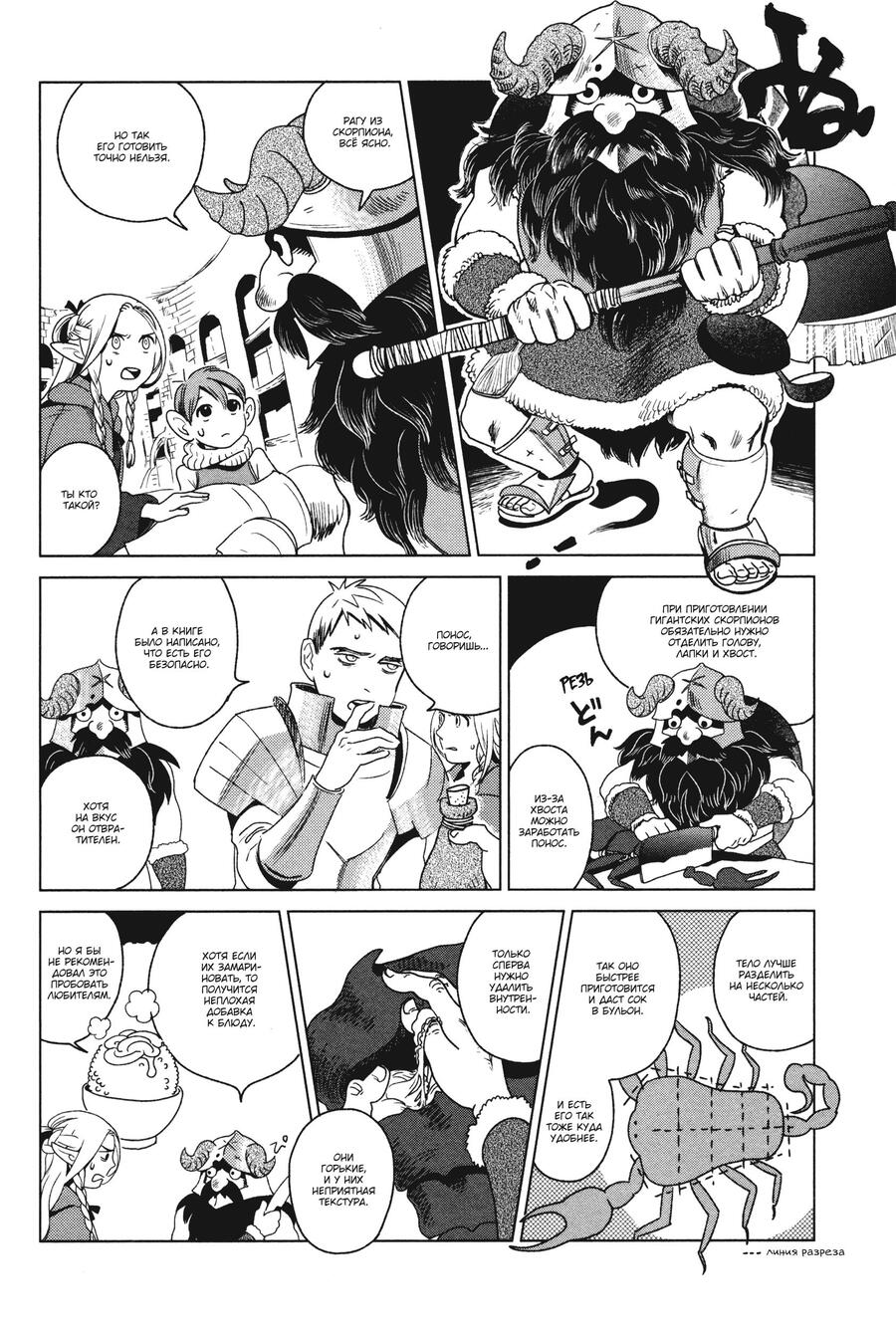
Marcel doesn’t use a spellbook as a traditional wizard accessory, but she was trained in magic at a specialized institution. It can be assumed that she knows the spells by heart and therefore doesn’t need a book. However, the wizard class is also indicated by the method of magic creation: verbal spells, the crafting of runes and magical circles, as well as the use of auxiliary items. Mana is also used for spells; from a D&D perspective, it can be viewed as spell slots—their quantity is limited and requires rest or potions to replenish. When slots are depleted, a wizard cannot cast spells, just as magic cannot be created here without mana.
«Dungeon of Delights» Vol. 3, Chapter 20 (2016) / Ryoko Kui
The narrative also features ordinary elves: most are depicted as shorter and more slender than humans. They also have sharper ear shapes, unlike the half-elves. Ryoko does not create distinctions between elf subspecies, so within the «canaries» you might encounter both the familiar image of a light-haired and fair-skinned elf, as well as those who would in D&D classification be considered dark elves.
«Lair of Delights» T. 8 Ch. 53 (2019) / Ryoko Kui
Another important character is Sissl—the dungeon master, also known as the insane wizard, which is somewhat inaccurate considering the nature of his magic if we are referring to the classical system. Sissl rather represents the sorcerer class: a creature that has sold its soul (in this case, its desires) to a powerful patron with the ability to use its strength. He is the canonical boss of the «evil wizard with an army of monsters» because, as the dungeon master, Sissl is the one who creates and controls the monstrosities. Moreover, as expected from one who sold their soul, at some point the patron comes to collect payment, and the wizard’s role as an antagonist ends.
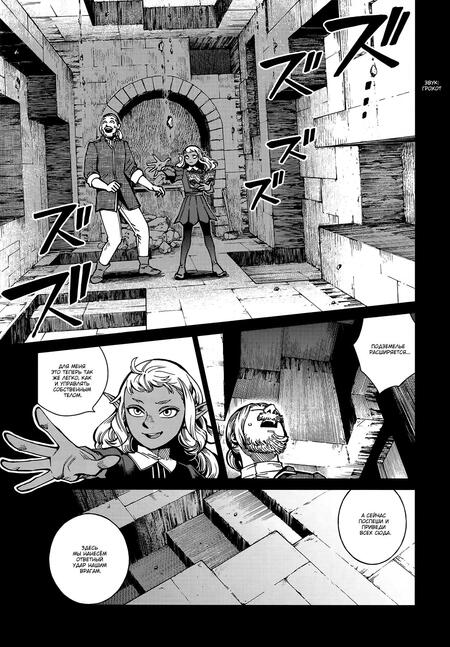
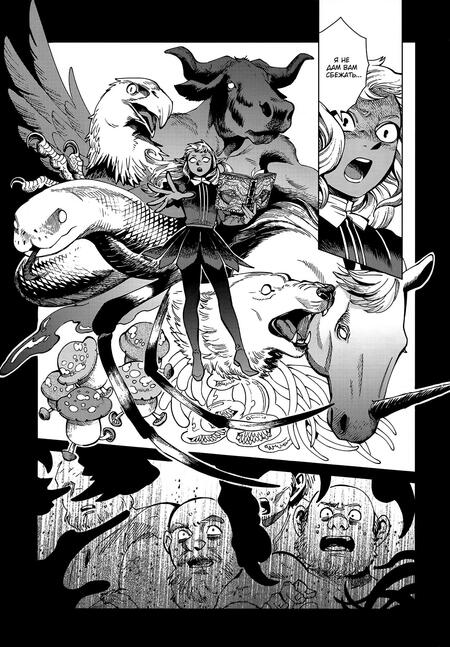
«Tavern of Delights» Vol. 10 Ch. 67 (2021) / Ryoko Kui
«Cave of Delights» Vol. 11 Chapter 72 (2021) / Ryoko Kui
Halfling Trickster represents the class Rogue. Their small size and weight make them expert infiltrators, and the Trickster emphasizes that they are the ones who should first inspect new areas for hidden threats. However, other halfling races are often perceived as children.
«Rogues exert extra effort to master various skills and hone their combat abilities, giving them a wide array of techniques that few characters can boast. While many Rogues focus on stealth and deception, others perfect skills useful in dungeons, such as climbing, trapfinding and disarming, and lockpicking. In combat, Rogues prefer cunning over brute force. A Rogue only needs to land one precise blow where the attack will inflict the most damage, rather than overwhelming an enemy with a flurry of strikes. Rogues possess almost supernatural agility for dodging danger, and some have learned magical tricks in addition to their innate abilities.»2
[2] Crawford, J. Player’s Handbook / J. Crawford, J. Wyatt, R. J. Schwalb, B. R. Cordell. — 5th ed. — Renton, WA: Wizards of the Coast, 2014. — 316 p
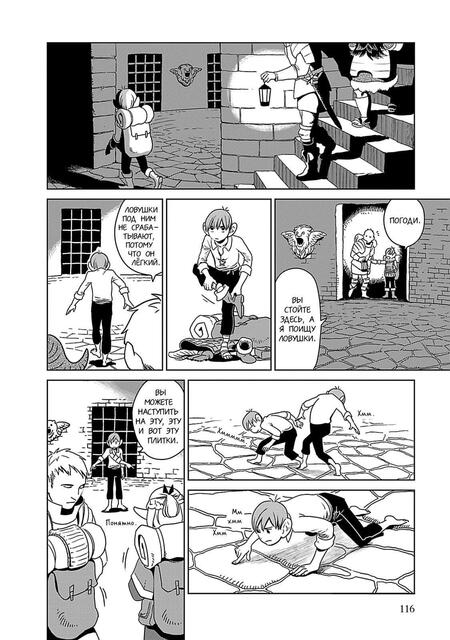
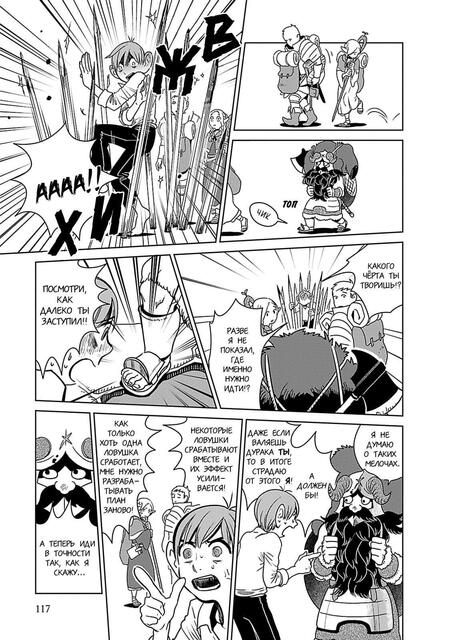
«Dungeon of Delicacies» Vol. 1 Ch. 5 (2015) / Ryoko Kui
«Lair of Delights, ” Vol. 1, Chapter 5 (2015) / Ryoko Kui
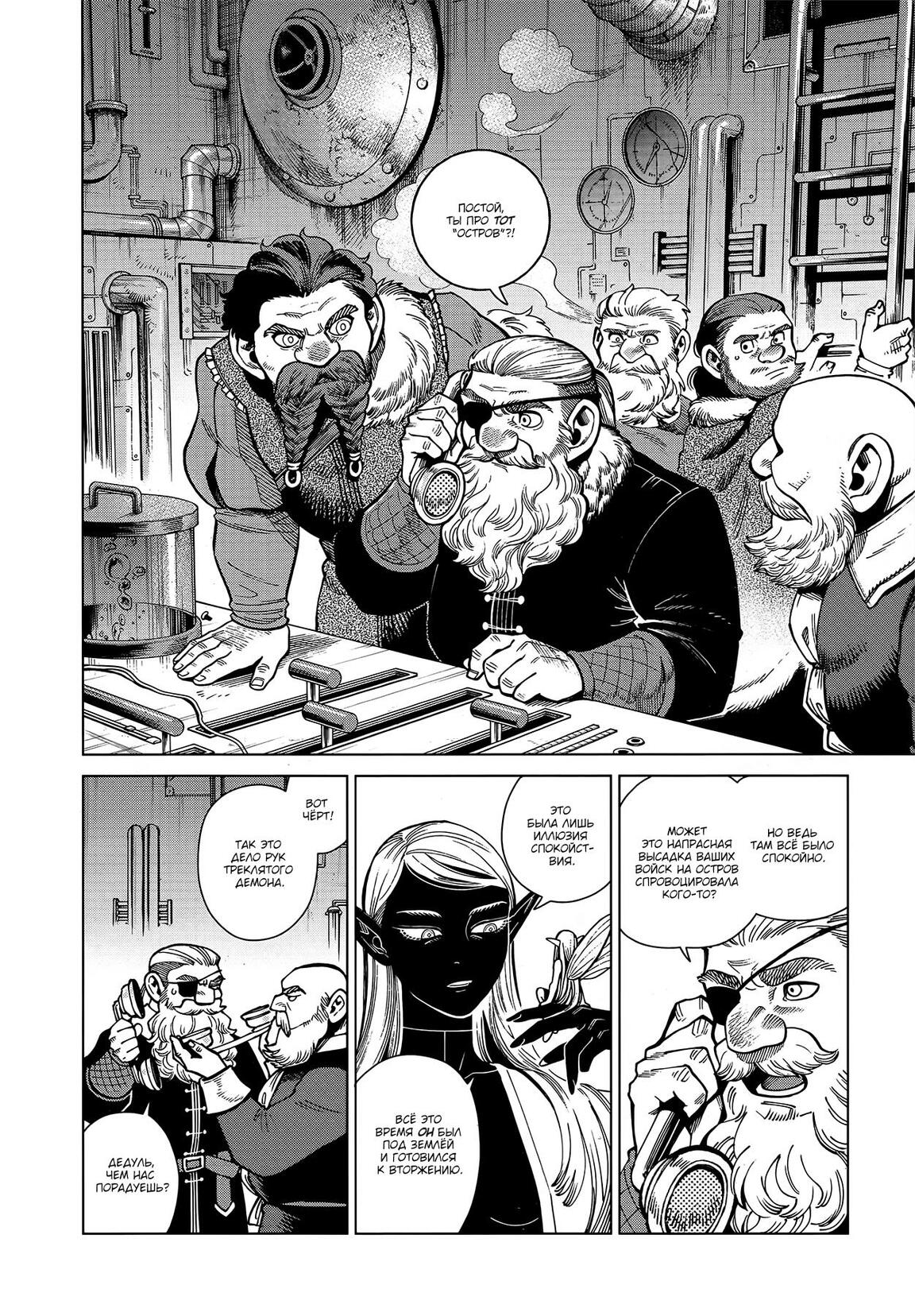
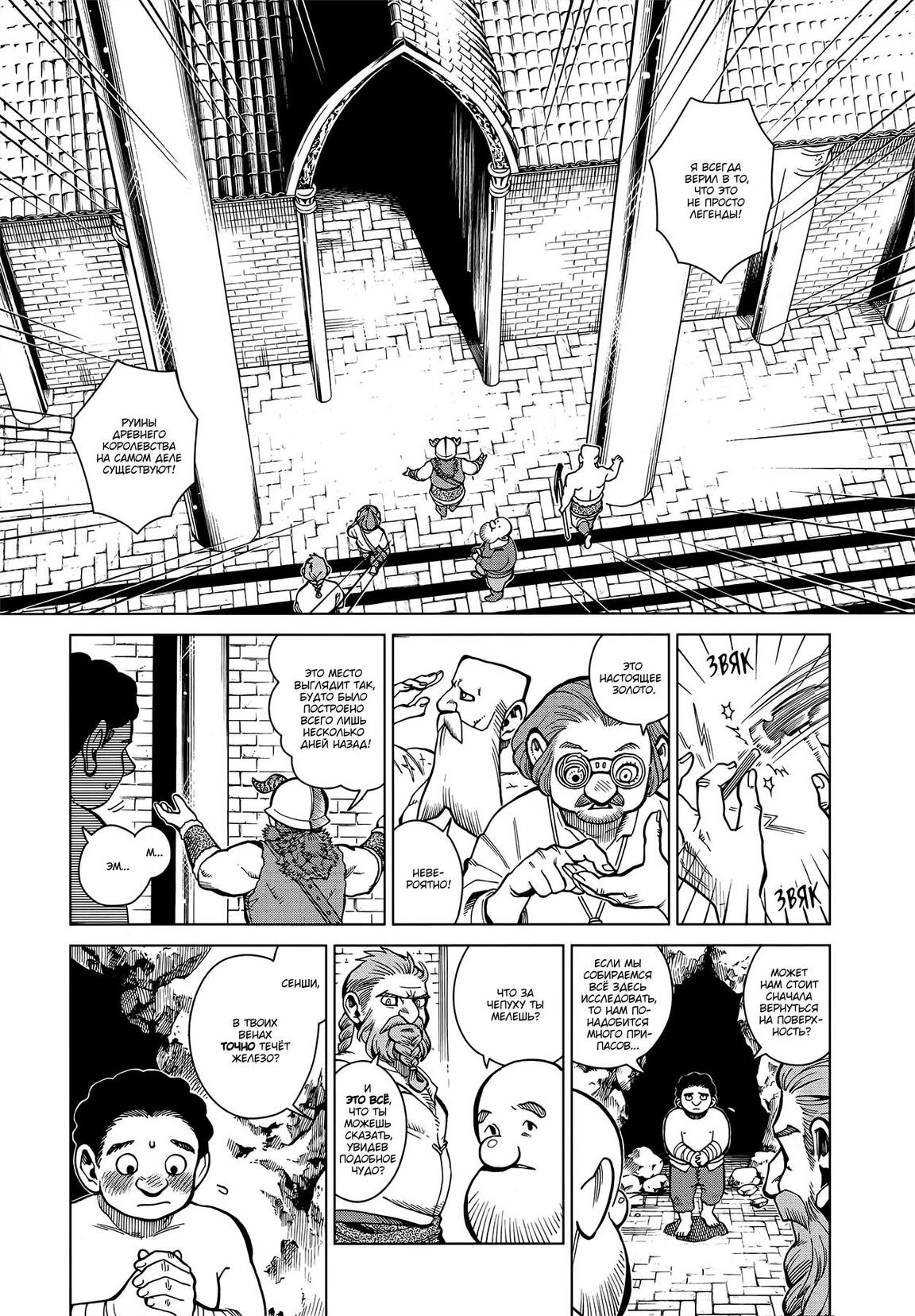
Dwarves are mainly depicted as blacksmiths and warriors; for example, Namari, who left Laios’s group, and some of Sensei’s acquaintances would likely fall into the warrior class. They are highly skilled with weapons and possess deep knowledge of them. Another path is the inventor class, given the manga’s mention of ancient dwarven technology. However, one of the main protagonists does not fit the classic mold and is more aligned with the tracker class.
Wilderness fighters and trackers specialize in hunting monsters such as rampaging beasts, monstrous creatures, terrifying giants, and deadly dragons that threaten to attack the civilized lands of humanoids. They track prey like predators—moving stealthily through undergrowth, hiding among bushes and rocks. In combat training, trackers focus their martial arts preparation on confrontations with select enemies
[3] Crawford, J. Player’s Handbook / J. Crawford, J. Wyatt, R. J. Schwalb, B. R. Cordell. — 5th ed. — Renton, WA: Wizards of the Coast, 2014. — 316 p