[media concept]
prod.by — a media channel for beginners in music production and songwriting who are overwhelmed and don’t know where to start. This media resource offers a structured path from absolute zero to the quality realization of one’s own ideas through a roadmap and a leveling system that combines various fields of study, ensuring a low and diverse barrier to entry.The goal of prod.by is to provide the lowest possible barrier to entry for all newcomers who want to try making music—in a maximally structured, clear, and low-investment manner.The target audience for the project consists of people who want to try music, or who wish to return to the field with a clearer vision and a better understanding of what to do. Therefore, the project is implemented in the B2C segment, and audience segmentation depends on their background.Segment: Educational media about music production.Niche: A structured approach from the ground up, with an emphasis on technical aspects plus foundational songwriting.Main distribution channels: Telegram, and eventually YouTube.
[Media Structure]
[source pool]
The primary sources for prod.by are similar media outlets with comparable content. Our media’s main objective is to clearly structure data and fill gaps either in the presentation or the material itself.
Thus, the pool of sources is primarily based on educational content, but it necessarily incorporates the musical environment to understand the contemporary context. This allows the learning to be not only beneficial but also flexible regarding new genres and trends.
[Data schema divided into human and machine processing]
[General logic of the scheme]
Information moves through six core stages:
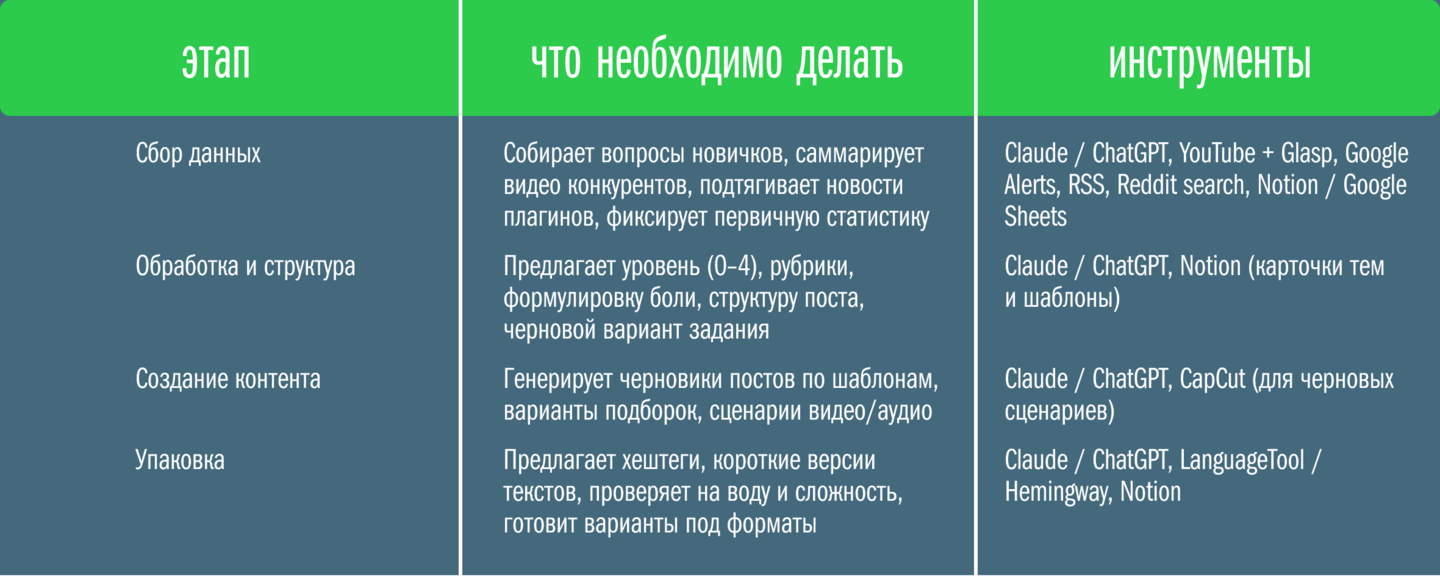
- Data Collection;
- Processing and Structuring;
- Content Creation;
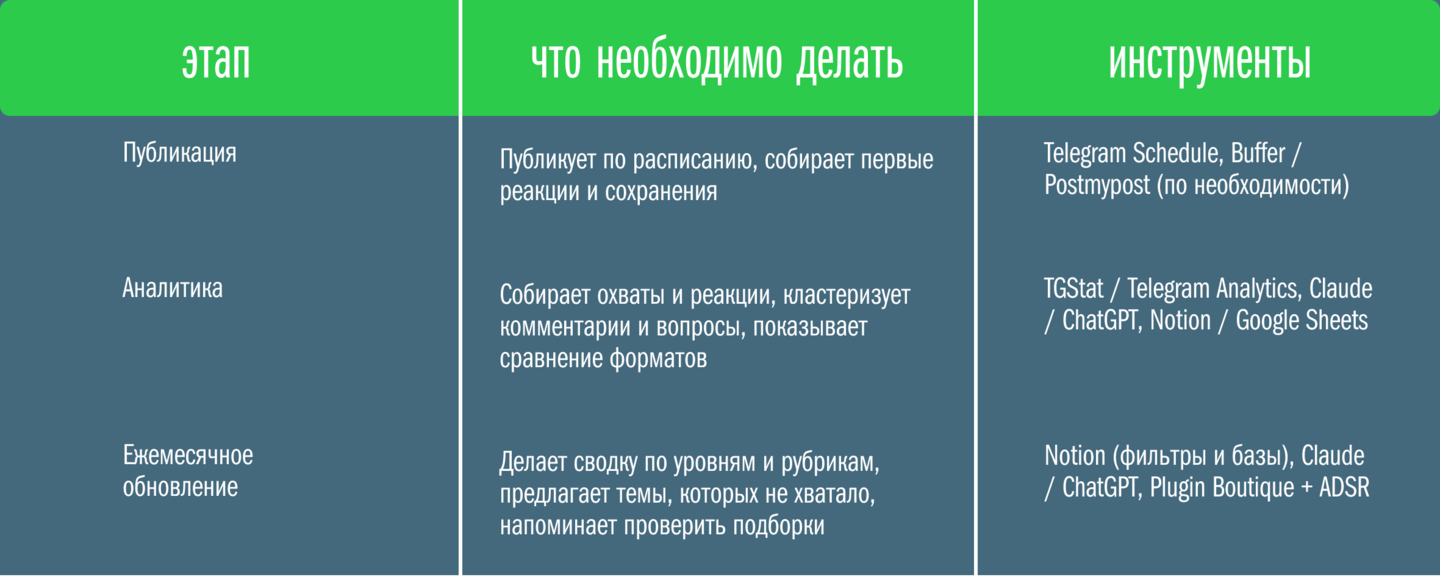
- Packaging and Publication;
- Feedback and Analytics;
- System Updates (levels, categories, plan). Each stage involves machine processing alongside human editing. Everything related to tool recommendations, complexity assessment, and integrity remains human-driven. Everything related to volume, sorting, drafts, and routine tasks is delegated to the machine.
[block 1. data collection]
In the first stage, the machine takes on a significant amount of work and information analysis. It monitors content and discussions from competitors, parses comments and social media chats, identifies the relevance of various topics, and compiles trend summaries. The human acts as an expert filter—one that selects, verifies, tests independently, and decides whether to recommend or report on a topic to the audience.
The result is a raw dataset plus topics prioritized by a human reviewer.
[block 2. processing and structuring]
In this block, the machine distributes information by tags, assigns a level, selects assignments, and updates the database. The human makes adjustments as they deem fit.
[Block 3. Content Creation]
The individual is responsible for all visuals. Their duties include designing post cards, shooting and editing videos, audio processing (if necessary), and editing posts. Machine helps by drafting text outlines based on a curated database, scripting videos and audio, and compiling collections.
[Block 4. Packaging and Publication]
The Machine allows you to select the optimal time for publication, logically continue past posts, and set reminders for channel component updates. The User retains the ability to review, update, and publish.
[block 5. feedback and analytics]
Thanks to the machine, this stage allows for the compilation of a feedback database, including statistics (metrics, reach), reports, a pool of similar questions, and points where interest declines. The analysis and synthesis of this information remain the domain of the human—who must analyze what resonated and what caused people to disengage from the content.
[block 6. system update]
In the final stage, the machine acts as a consultant: it suggests ways to improve content and metrics, generates new template options, updates lists, and cleans outdated information. The human filters and selects only the most effective results.
Thus, the entire process of material preparation and blog management is a symbiosis of machine and human, as the chosen niche requires careful curation and independent testing.
Guidelines for Automated Services in the Schema
[General Principles]
The Machine Suggests, The Human Decides Any text, selection, classification, or recommendation is merely a draft until a human makes the final decision.Do Not Imitate an Expert The machine must not sound like a «guru» or someone who has achieved mastery. The tone should be calm, clear, and accessible to a beginner.Usefulness Before Volume Fewer, more precise options are better than a flood of generic content.Status Transparency Everything generated by the machine must be clearly labeled as a draft, a suggestion, or requiring review.Caution with Recommendations The machine only proposes plugins, tools, presets, and workflows. The final recommendation is made by a human after thorough review.