Media Theme and Objective
Focus Areas
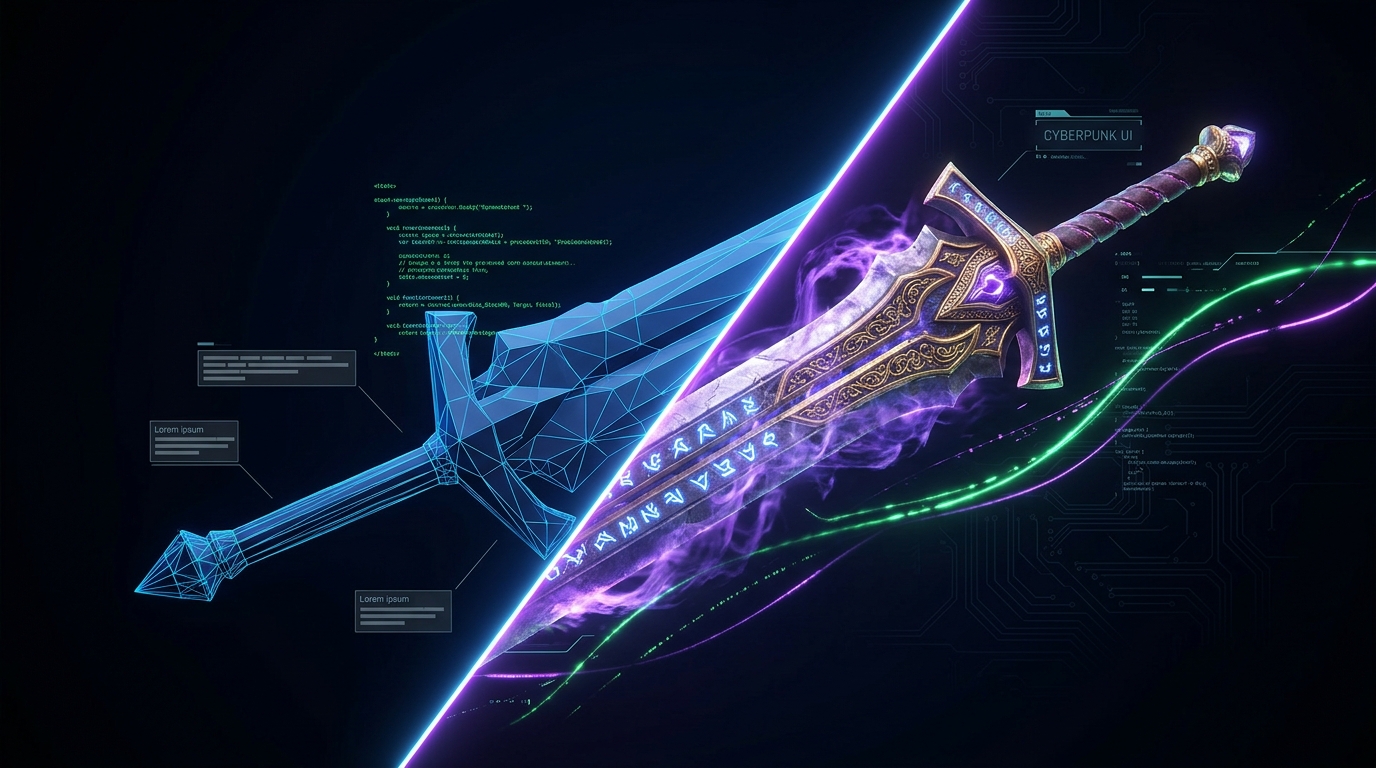
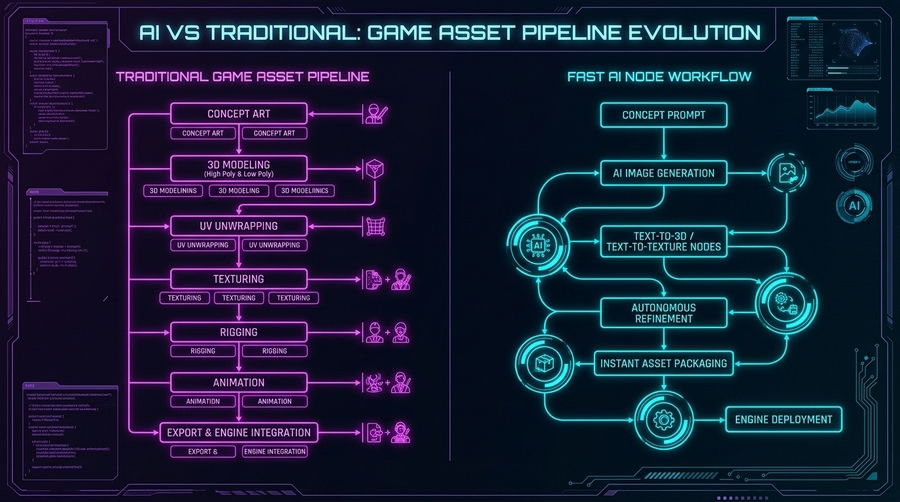
Sector: Game development and indie creation. Narrow topic: Integrating generative AI into game creation pipelines (from concepts to finished assets).
Goal
To help solo developers and micro-studios cut their pre-production cycle by three times, creating high-quality visuals and content without expanding their staff.
Target Audience
Solo Coder
B2C Segment
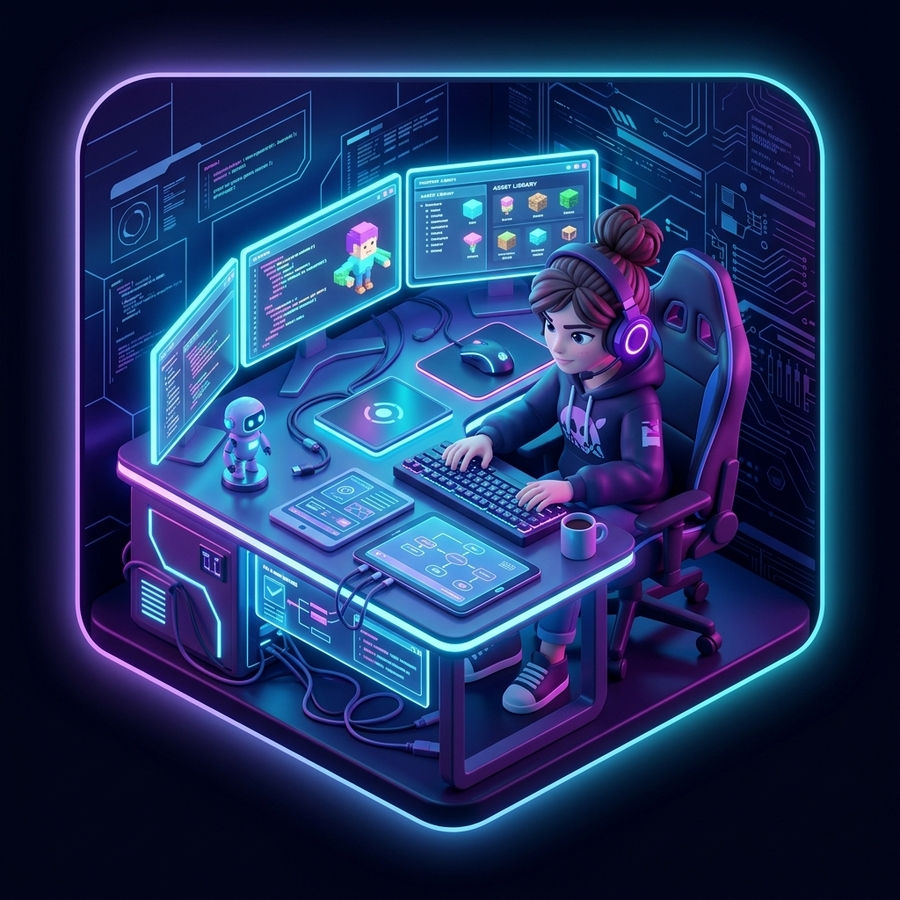
Context: Builds games in the evenings, can write code, but the visuals are at a «Paint» level.
JTBD: «When I’m assembling a game build, I want to quickly get stylish UI icons so the prototype looks professional for the publisher.»
Student Game Designer
B2C Segment
Context: Writing a design document for a course project.
JTBD: «I want to generate concept art for locations and characters so I can defend my idea to the HSE committee without downloading cliché images from Pinterest.»
2D/3D Artist
B2C Segment
Context: Works as a freelancer and fears that AI will take away their job.
JTBD: «I want to master ComfyUI to automate routine tasks (like texture generation) and take on more commissions while maintaining my unique style.»
Indie Studio
B2B Segment
Context: A team of 3–5 people working with an investor and tight deadlines.
JTBD: «We need ready-made AI pipelines to integrate into our studio workflow and reduce graphic costs when testing hypotheses.»
Competitive Analysis
Who are our competitors:
Direct competitors: Telegram channels about neural networks and AI art (for example, AI Art, Neural Networks/Prompts).
What’s lacking: They simply post beautiful images. There are no instructions on how to integrate these images into a game.
Indirect competitors: Websites and communities about game development (for example, DTF «Development, ” Habr, VK communities).
What’s lacking: Much is written about code and game design, but regarding AI, they only post news or debates, not step-by-step tutorials.
Potential competitors: International YouTube vloggers focusing on ComfyUI and AI in game development.
What’s lacking: Their videos are 40–60 minutes long and in English; they lack short textual summaries and downloadable files.
Comparison Criteria:Applicability in Games: Can the result be immediately integrated into Unity/Unreal Engine?Ready Files: Do the authors provide ready-to-use configuration files (.json, prompts)?Visual Quality: Does the output look like a professional game, or does it resemble «cheap generation»?Format: Are there short, clear guides without superfluous information?
Analysis Insight:
Insight: Readers are not looking for «just pretty images generated by AI.» They need ready-made game assets—seamless textures, background-free icons, and sprites—that they can download and immediately integrate into their games.
Distribution Channel
Media Core — Telegram Channel:
Publication of detailed tutorials, breakdowns of generation workflows, distribution of configuration files, and text prompt packs.
«Before / After» format with an in-depth analysis of errors.
Distribution Platforms — VK Clips / Shorts / Reels:
Short, dynamic videos (30–60 seconds): asset creation time-lapses, quick tips in one minute.
Distribution Goal: Capture viral attention and redirect traffic to Telegram for source files and presets.
Unique Selling Proposition
Focus on Game-Ready Assets: We teach how to generate only development-ready assets—UI icons, seamless textures, and sprites that are ready to be ported into Unity/Unreal Engine.
Anti-AI Quality Control: We train students on techniques for refining and fine-tuning neural networks so that the assets do not look like cheap, standard AI generation.
Open Pipeline & Presets: Each guide includes ready-made configuration files (.json) and prompt packages specific to different game genres.