STRUCTURE
- Media Goal Description
2. Future Media Theme
3. Competitors and Their Analysis
4. Distribution Channel
5. Target Audience Description
6. Unique Selling Proposition (USP)
MEDIA OBJECTIVE
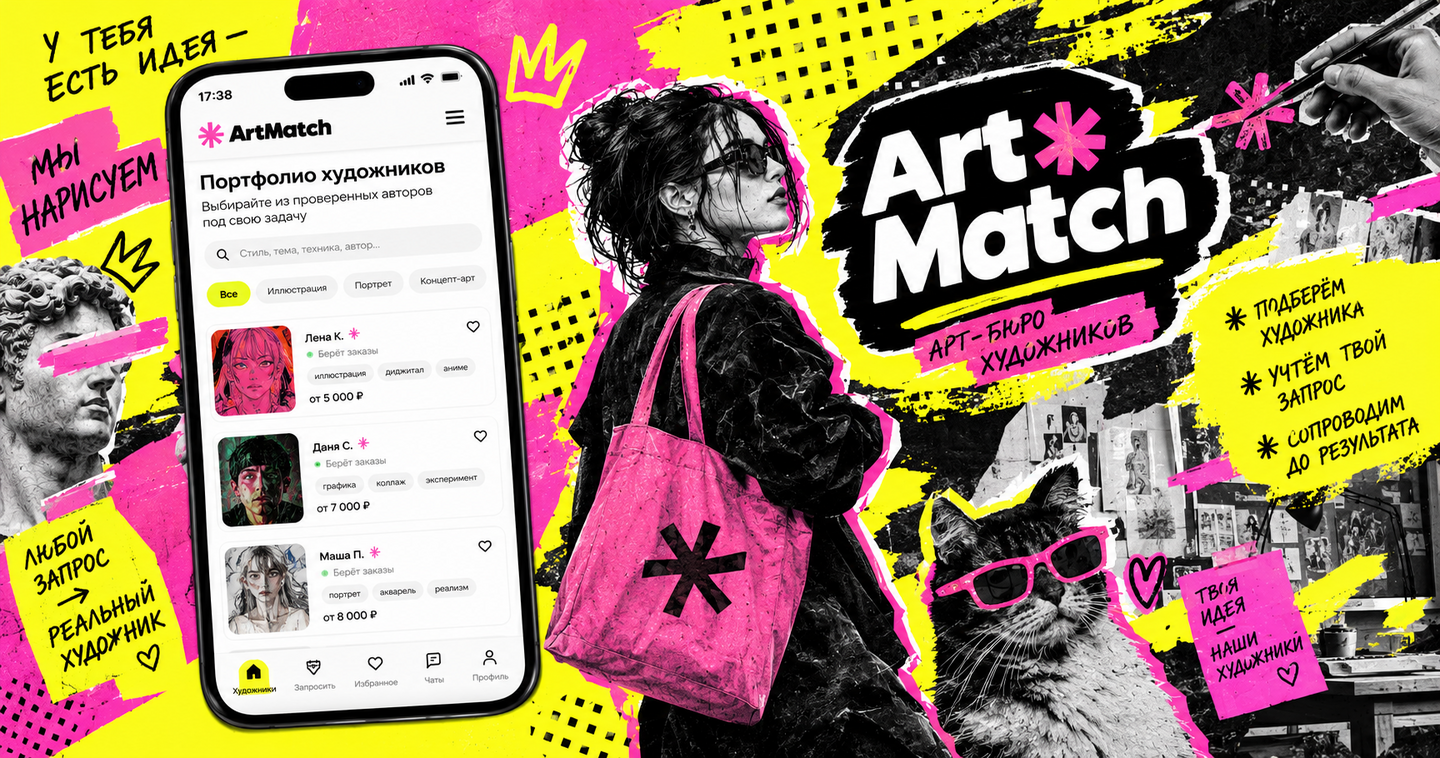
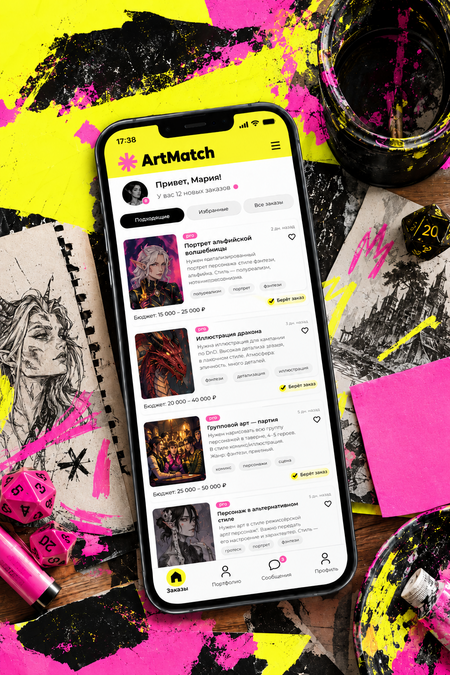
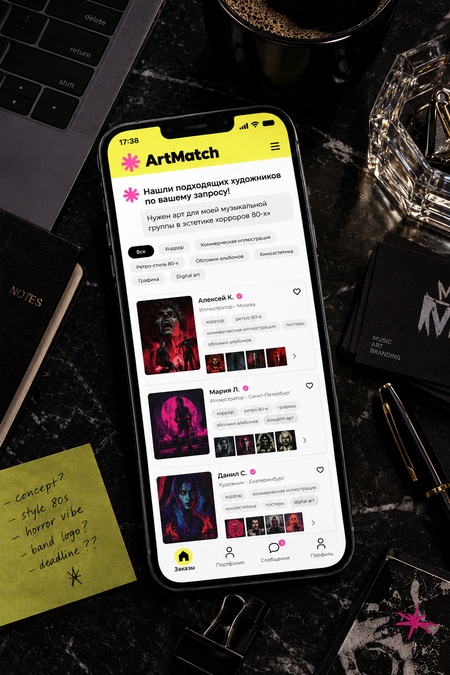
The working model is bidirectional—connecting artists looking for commissions with clients who need a specific illustration created. For the artist: there is no need to constantly promote oneself and wait for responses. The artist is entered into the database once, their style, specialization, pricing, and terms of service are structured, after which they receive relevant requests. For the client: there is no need to sift through dozens of portfolios independently. They formulate the task, and then the bureau selects several artists best suited to their request. After the «match,» the intermediary manager from the bureau oversees the workflow, ensuring the safety of the transaction—that the final result meets expectations, is delivered on time, and the artist is paid. The project’s key value is bridging the gap between creative demand and execution.
MEDIA THEMES
Segment: The market for individual artistic and illustration services in Russia.Niche topic: Rapid matching between artist and client based on filtering by style, skills, and budget.
COMPETITORS
Analysis Criteria:
- Platforms
- Visual Style
- Tone of Voice
- Communication Tools
- Search Usability
- Artist Curation Quality
DIRECT COMPETITORS
Illustrators.ru
(A specialized platform for artists)
Platform: A specialized website for finding illustrators and posting commissions. Users can view artists' portfolios, study authors' styles, and communicate directly with the freelancers.
Visual Style: A functional catalog emphasizing the artists' work. The main visual elements are the artist’s portfolio and examples of completed projects. The design is primarily oriented toward information retrieval rather than an emotional user experience.
Tone of Voice: Professional and neutral. Communication centers around the artist’s skills, experience, and collaboration terms.
Communication Tools: Artist profiles, portfolios, commission posting, and direct messaging between the client and the freelancer.
Search Usability: Search is reasonably structured due to the author database; however, the client must independently review a large number of portfolios to assess whether an artist fits their specific needs.
Artist Selection Quality: Selection depends entirely on the user. The platform provides access to artists but does not help the user choose the most suitable author for a specific concept, style, budget, or timeline.
Conclusion: Illustrators.ru solves the problem of accessing artists, but it leaves the selection process to the client.
Behance
(Freelance Platforms)
Platform: An international platform for showcasing creative projects by designers, illustrators, and other visual arts professionals. It functions as a professional portfolio and a source of inspiration.
Visual Style: Minimalist and focused on visual presentation. The primary emphasis is placed on the quality of the imagery and the presentation of the projects.
Tone of Voice: Professional and international. Communication centers around expertise, experience, and the aesthetic value of the work.
Communication Tools: Project publication, artist search, subscriptions, likes, comments, and direct artist contact.
Search Usability: The platform is excellent for finding visual references and studying styles; however, clients struggle to quickly determine the cost of work, an artist’s availability, or the author’s suitability for a specific task.
Artist Selection Quality: A high level of portfolio does not guarantee a suitable result—the user must independently analyze hundreds of projects to make a decision.
Conclusion: Behance helps in finding inspiration and assessing an artist’s caliber, but it does not solve the problem of quickly selecting a service provider.
Telegram Communities
(Commission, Jobs for designers)
Platform: Thematic Telegram communities where orders, job openings, and opportunities for artists and designers are posted. For example, channels that list artists' price sheets and contact information, or informational channels from companies advertising their search for specialists.
Visual Style: A simple and functional feed format. The main focus is on work samples, order requirements, and contact information. The visual component depends on the specific author or company.
Tone of Voice: Direct and quick. Communication is oriented toward practical outcomes: finding an order or a freelancer.
Communication Tools: Posts with orders, work examples, price sheets, contacts, and responses via private messages.
Search Usability: Search is limited by the Telegram feed format: information quickly gets lost among new posts, and there are no convenient filters for style, budget, or specialization.
Artist Selection Quality: Selection occurs through mass response: the client receives several replies but must independently evaluate who is best suited for the task.
Conclusion: Telegram channels are effective for the rapid exchange of orders, but they do not ensure a high-quality match between the client’s concept and the artist’s style.
Conclusion: Most competitors offer access to a large pool of professionals or a steady stream of orders, but the responsibility for selection and the integrity of the transaction remains with the user. The client must independently analyze portfolios, compare styles, and assess the artist’s suitability for the task.
INDIRECT COMPETITORS
Artistic Communities on VK
Platform: Open VK communities where artists promote their work for free, search for an audience, and post information about available commissions. These communities function like informal artist directories.
Visual Style: Vibrant, personalized, and diverse. Each artist styles their posts in their own way: showcasing work samples, adding a description of their specialization, using hashtags, and including links to personal pages or Telegram channels.
Tone of Voice: Informal and friendly. Colloquial language is frequently used, along with the artist’s self-presentation and description of their work (e.g., «drawing original characters, ” „taking comic commissions, ” „searching for an audience“). The main focus is on the artist’s personality.
Communication Tools: Posts with work samples, links to personal pages and channels, comments, and direct messages. The client interacts directly with the artist without intermediaries.
Search Usability: Medium to low: a user can find an interesting artist through recommendations and hashtags, but there is no unified structure based on styles, prices, deadlines, or availability. Finding an artist relies on randomly stumbling upon a suitable one.
Artist Vetting Quality: Can be high in terms of aesthetic matching: the user selects an artist whose aesthetic appeals to them. However, there is no professional matching to the brief—the client must independently assess whether the artist can complete a specific commission.
Conclusion: VK art communities compete through personal connection and emotional attachment to the artist. Their advantage is the feeling of familiarity with the creator, but their weakness is the lack of a convenient selection system. The probability of commissioning a piece through this model is moderate, as VK communities provide information about the artist’s personal blog, but not all artists are interested in taking commissions—many are only interested in developing their social media presence.
Tamblr
Platform: International creative platforms and social networks where artists publish work, build an audience, and have historically used the platform as a means of promotion and client acquisition, even though the service’s primary goal is not the sale of artistic services.
Visual Style: A visually driven environment where the author’s content plays the primary role—illustrations, sketches, characters, and art series. The communication style is shaped around the artist’s individuality and creative identity.
Tone of Voice: Informal, personal, and creative. Artists communicate with their audience in the first person, sharing their creative process, personal stories, and perspectives.
Communication Tools: Work publications, subscriptions, likes, reposts, comments, and direct messages. Commissions typically arise through the artist’s direct engagement with their audience.
Search Usability: Low for the client: the search is driven by user interests and recommendation algorithms, not by a specific task. To find a suitable artist, one must proactively follow and study various creators' styles.
Artist Selection Quality: High in terms of emotional resonance—the client can choose an artist whose aesthetic aligns with their own. However, the selection process does not account for formal parameters: budget, deadlines, specialization, or willingness to take on a commission.
Conclusion: Tumblr and similar platforms thrive due to their established status as places for artists to find commissions and to cultivate an emotional connection between the artist and the audience. Users are choosing not just a style, but the artist as a personality.
POTENTIAL COMPETITORS
- Generative AI ServicesMidjourney, ChatGPT image generation, Stable Diffusion, and similar tools. They are not direct competitors because they do not connect the client with a human artist, but they compete for the very need to generate an image.Conclusion: For us, the goal is not just to sell «getting a picture,» but to sell the human interpretation of a specific idea and the work applied to an author’s unique style.2. Independent Artist Sourcing Through ReferralsWord-of-mouth, recommendations from acquaintances, and searching in themed chats. A huge advantage for the client is that this process is free, requires no registration on a new platform, and involves no intermediary fees.Conclusion: We need strong arguments for the client to encourage them to choose an intermediary—to convince them of the value of an intermediary and the necessity of ensuring the deal’s reliability.
DISTRIBUTION CHANNEL
Separate application + information channel on TelegramVisual content: Posts showcasing complete pairs of «client request — artist’s work» to enhance the service’s reputation.Text content: Digests detailing user statistics. Which genres are popular, what is most frequently ordered, and how many requests received a response.
Target Audience
B2C project model (a two-sided creative marketplace). The art bureau connects two user groups: artists offering their services and clients needing to fulfill a specific creative brief.
Both sides are unified by an interest in individual visual creation and convenient interaction surrounding it. Artists want to receive relevant commissions without constant self-promotion, while clients want to quickly find an artist who matches their idea, style, budget, and timeline.
The target audience is divided into two segments for each side (artists and clients).
Segment 1. Emerging Artists
Students from art academies and aspiring illustrators aged 18–22 who already possess drawing skills but have not yet established a steady stream of commercial commissions. For this group, self-actualization, professional development, and the opportunity to monetize their creativity are paramount.