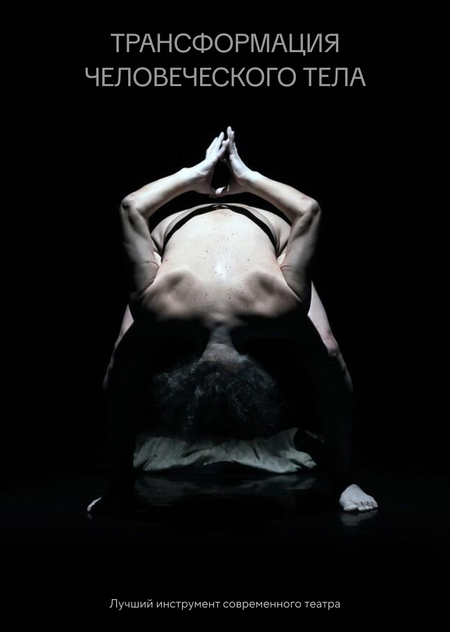
Transforming the human body into an instrument of contemporary theater.
BODY. TRANSFORMATION. OTHER
This visual study analyzes the transformation of the human body as a phenomenon and observes the shift in the audience’s perception of the actor, leading to the recognition of the human on stage as a particle—a part of a phenomenon in which he transforms into various images and becomes anything but human. VI examines this transformation by drawing from shamanism—as the progenitor of ritualism with the human as the central figure.VI will explore shamanism and its tools, followed by contemporary theater, and finally, the major trends and striking examples of how shamanism has evolved.
Theater is
Theatre is an art form where meaning emerges through the performer’s action in space and time. Its foundation is the presence of a live body before an audience. It can provoke anger, dissatisfaction, surprise, and sink deep into one’s neurons. The primary institutions of theatre are the stage and the actor.
A distinctive form of theatrical expression emerges where the body ceases to be merely a medium for portraying a character and becomes an autonomous material for artistic transformation. Changes in plasticity, repetitive movements, muscle tension, concealment of the face, silhouette deformation, and interaction with light have the power to alter the perception of the human form. The body begins to appear alien, unstable, and hybrid—existing between several possible states.
Main Hypothesis: The body is a flexible instrument capable of transmitting feelings and emotions that belongs to humanity.
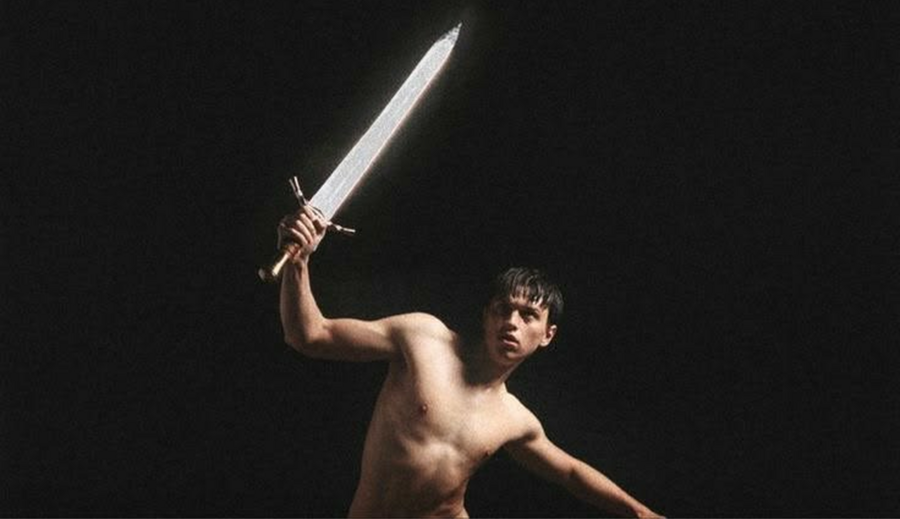
Problem Statement: How can one detach from reading a person as a body and perceive the action itself?
But what about theater? Which consists of a stage serving as the historical backdrop, and the human figure as the active agent through which the story is told. Many narratives, books, and cultural events have been created in the form of theater. On this foundation, performance was constrained by the actor, where the audience’s gaze was fixed on the character, on their movements and actions, which could only be viewed as tools for conveying the essence of the narrative, and emotions hung on the threads of the actor’s facial expressions—jokes, shouts, and dramatic events dictated the expressiveness of the performance. But this didn’t last long.
A Reason for Transformation.
Faith, religion, rituals, the surrounding world, endless contemplation and hyperfixation, a worldview that compelled a response to one’s emotions—emotions that were vivid and sincere—none of this required a person. Melancholy. At times, life feels incredibly romantic, as if you are in the right place at the right time—in those moments, you feel life and the act itself, not merely that you are present in a body, but that it is happening.
Actors and theater have already learned to narrate, display, and evoke emotion, but true transcendence and illusion have yet to be achieved; the necessary time and place did not align. The theatrical events were actions and performances of the body, but not manifestations. Everything was contrived. So, what can a performance aim for—a performance that positions the body as a tool for passage into something greater?
Chapter 1. Shamanism. Tooling that allows one to detach from the image and the body, intensifying the expressiveness of the action.
In shamanism, expressiveness ceases to depend solely on text, plot, and the character’s psychological image. Shamanism originally arose from the need to connect people with the surrounding world through rituals. These rituals prioritized the act itself and its customs above the individual and their presence. The focus shifts to the performer’s physical presence, corporeal action, rhythm, space, and the audience’s immediate perception. In several shamanic traditions, rhythmic action, sound, movement, ritual objects, and costume hold particular significance. Depending on the specific culture and rite, these elements contribute to establishing the performer’s special status and organizing the ritual space.
In summary: Shamanism is about performance and rituals, not about the individual person or their character.
The Body as Mediator. In specific ritual contexts, the shaman’s body functions not merely as the vessel of an individual but as a participant in the interaction between the human community and the spiritual world, as understood by the relevant tradition.
Transformation Through Action. Repetitive gestures, rhythm, voice, movement, and the use of ritual objects can accompany a participant’s change in state and status during the rite.
Alteration of External Appearance. Costumes, masks, implements, and mannerisms can shift the visual perception of the figure. The body begins to be perceived in connection with a specific entity, force, or ritual role, rather than simply as an individual human form.
Calla and the slowest wave—Shahriar Shahamat and Wangelin in Berlin
When the familiar plasticity is disrupted, the face is obscured, movement becomes repetitive, and the silhouette loses its recognizability—the body transcends the ordinary perception of a human being. It begins to be perceived as something in-between: between the living and the static, the human and the non-human, the recognizable and the indefinite. This is precisely where the starting point for research emerges: theater as a space where the body not only presents an image but also becomes the site of its genesis and transformation.
A captivating solo by Conan Amoka: The Folds.
In conventional theatrical perception, the actor’s body is a medium for conveying character, emotion, and action. However, in ritualized and experimental practice, it can cease to represent a specific persona. It begins to be perceived as something mutable, interstitial, and hard to define.
SASAYAKI — From Whisper to Scream Tadashi Endo and MAMU DANCE THEATRE
How does the body transform from a depiction of a person into an autonomous visual phenomenon?
In contemporary theatrical practice, the image of transformation is created not so much through the direct depiction of a spirit or mythological being, but through the disruption of the familiar perception of the human body. Unnatural plasticity, repetitive movements, changes in silhouette, obscuring the face, and interaction with light compel the viewer to perceive the body as a transitional form—between human and nonhuman, material and imagined, recognizable and undefined.
The human body is typically perceived as a cohesive figure with defined boundaries. However, in experimental choreography and theater, these boundaries can become ambiguous: several performers form a unified mass, limbs visually interweave, and an individual figure loses its integrity. The body begins to be perceived not as an autonomous character, but as a collection of parts, movements, and connections. In certain stage compositions, it becomes difficult to determine where one performer ends and another begins.
Ink Whale — In memory of Tatsumi Hidakate
Chapter 2. Buto. From the Human Body to Transformation.
The second-generation Butoh group «Sankai Juku» in the performance «KOSA: Between Two Mirrors»
Butoh dance—a Japanese performance art that emerged in the mid-twentieth century—has captured the attention of audiences worldwide with its unique expressiveness and focus on deep emotional exploration. This style of dance, often described as «the dance of darkness, ” distances itself from traditional conventions and plunges into the depths of the human psyche, sending both performers and spectators on a journey of self-reflection and contemplation.
Butoh dance embodies its unique aesthetic and its focus on the body as a means of expression.
This originated in Japan in the late 1950s and became a movement within avant-garde dance and theatrical art. In the work of its founders, Tatsumi Hijikata and Kazuo Ono, the body ceases to be solely a tool for virtuosic movement or the conveyance of a psychological state. Instead, it becomes a space for experimentation where movement can express vulnerability, decay, aging, animalistic urges, and imagined modes of existence.