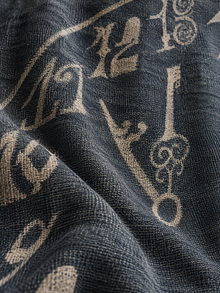
Concept
Transitions aren’t always defined by a specific moment. There is an interval between the conclusion of one state and the emergence of another—a period where the former rules have ceased to apply, but the new ones have not yet been established. In anthropology, this intermediate position is examined through the concept of liminality. Arnold van Gennep identified three stages in rites of passage: separation, the liminal state, and incorporation into the new status.
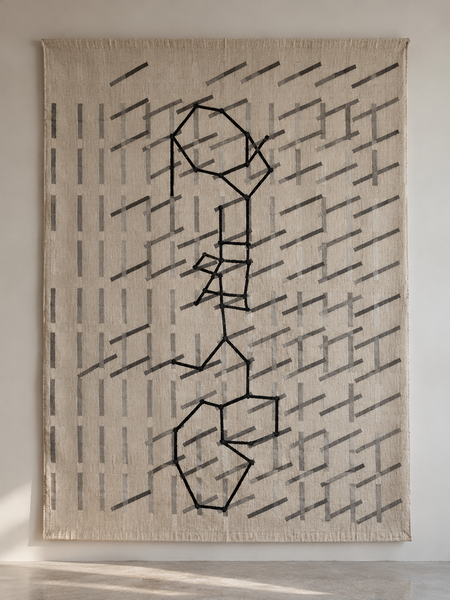
«The Threshold» addresses the middle stage, viewing it not as a void between two events, but as an independent space for transformation.
Why a tapestry?
Weaving is based on the sequential repetition of actions and the interaction of two thread systems; their interlacing creates a new, unified structure.
This principle serves as the starting point for the project. Just as repetition and interlacing form a material textile, the interaction of multiple rhythms in an image becomes the condition for the emergence of a new structure.
The connection to ritual here is not one of equating weaving with ritual action, but in a shared interest in repetition as a process capable of formalizing transition.
Generative System
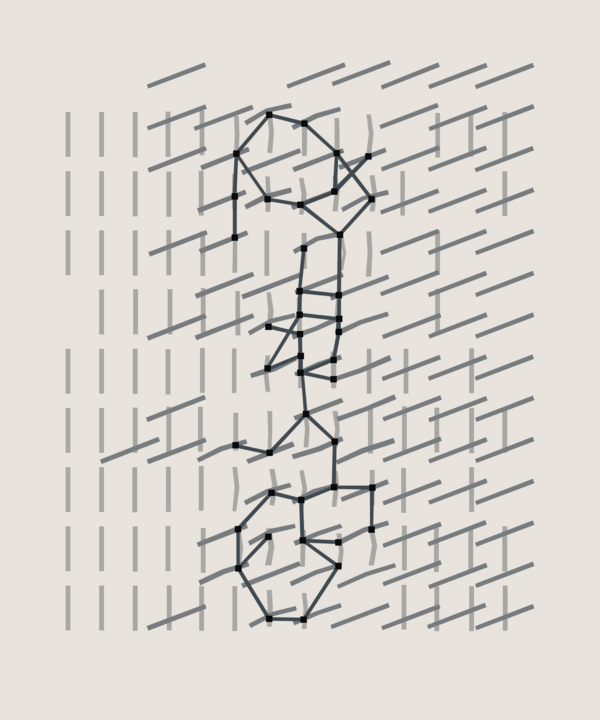
The image was generated using generative graphics, based on rules defined by an algorithm and elements of randomness. This method was chosen so that the emergence of a new structure became part of the creative process.
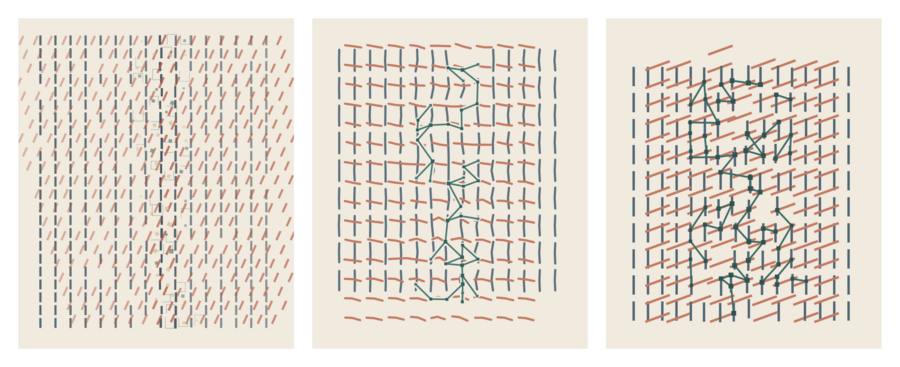
The composition is built upon two recurring rhythms: a vertical and a diagonal. In the initial experiments, supplementary elements were layered over these rhythms independently, but the principle gradually shifted: the third structure began to form directly from the intersection points of the original rhythms.
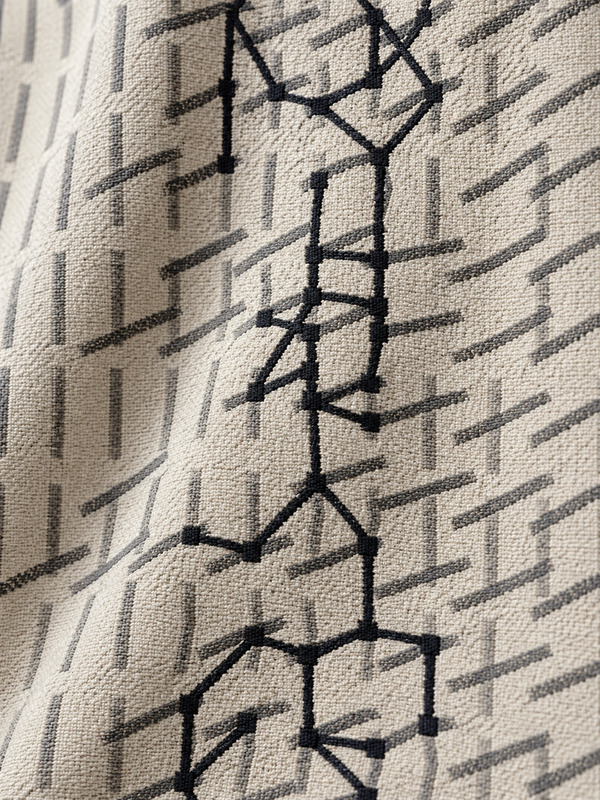
Final Tapestry