Manifesto and Concept
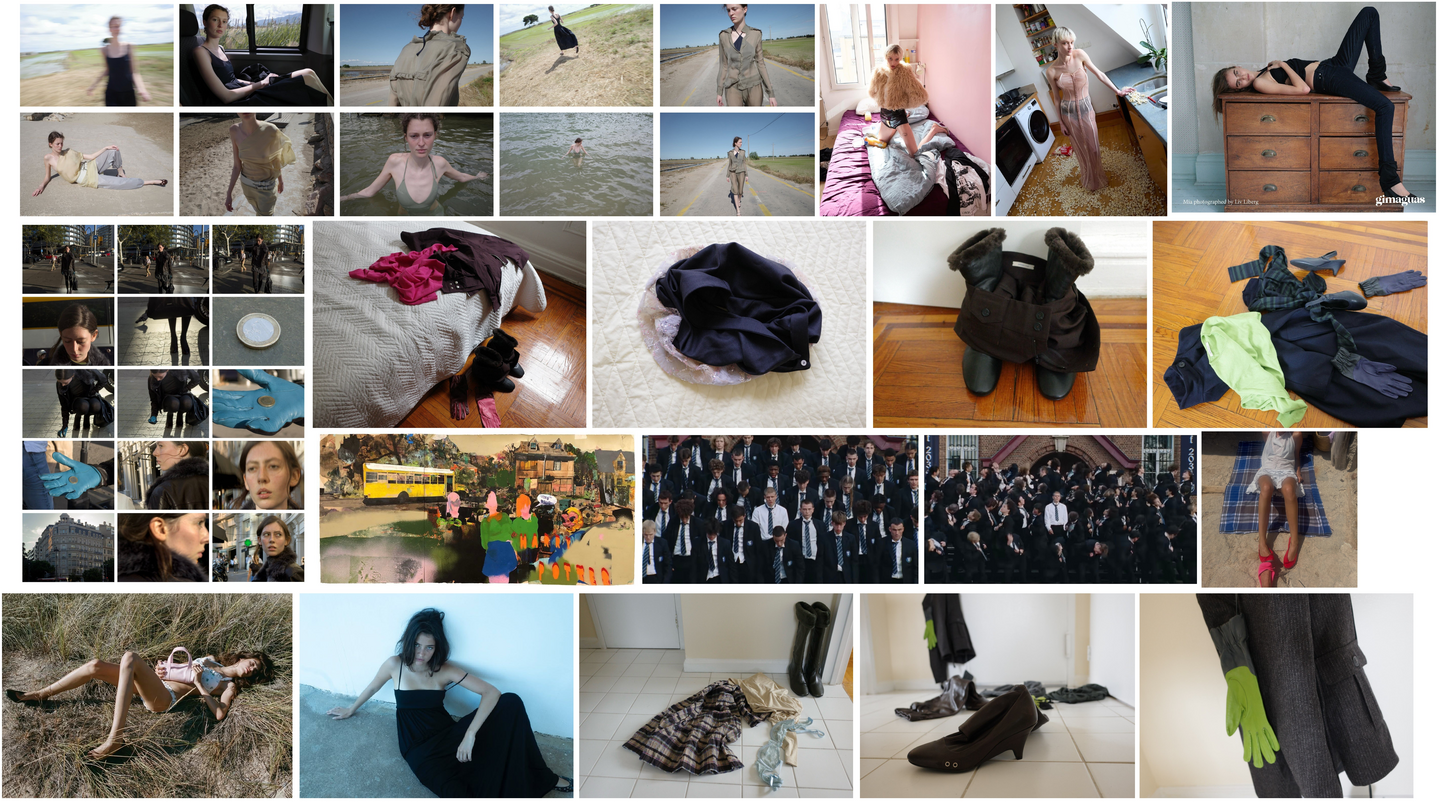
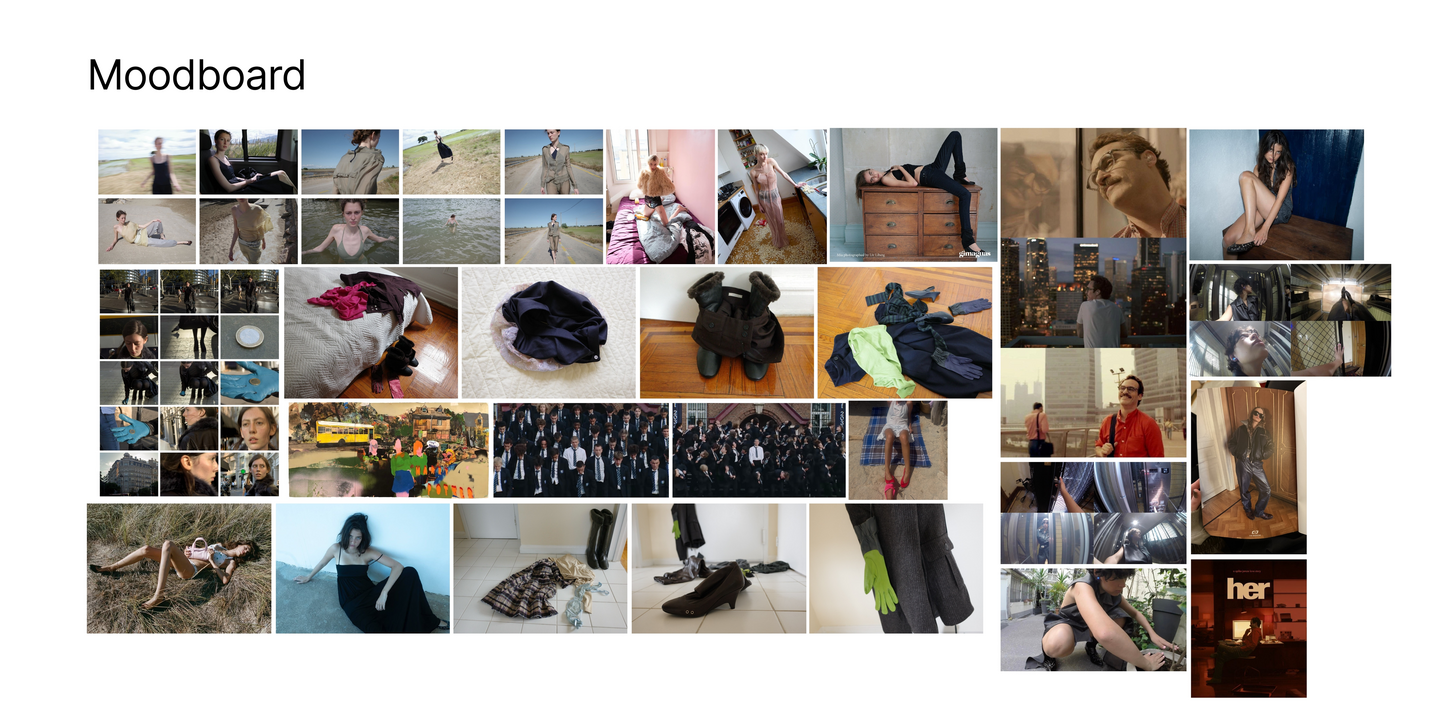
We live in a world that constantly presents us with ready-made images, meanings, and ways of being. Information, trends, and the opinions of others influence how we see ourselves and the world around us. We are interested in how an individual shapes themselves within this flow and learns to distinguish their own desires from external influences.We do not believe that identity is something pre-made that one eventually needs to find. It is constructed from our experiences, memories, impressions, and everything we encounter. We inevitably absorb something from the surrounding world, but we are the ones who decide what to incorporate into ourselves, what to re-evaluate, and what to let go of.This idea is at the heart of our women’s apparel brand. We view clothing as a means of self-expression, not as a way to conform to a pre-set ideal. We are interested in how different elements can connect, transform, and gain new meaning; therefore, we aim to work with layering, transformation, and the reinterpretation of familiar structures. Through these approaches, we explore how a multitude of influences coalesces into one’s own visual language—one that does not dictate who a person should be, but rather leaves room for individual choice.Our approach is founded on the idea that a person is in constant flux, continuously reshaping themselves. We are not trying to eliminate external influences or completely order the chaos around us. Rather, we are more interested in understanding how something uniquely personal emerges from it. For us, being yourself does not mean remaining static. It means having the capacity to change, reconsider your perspectives, and independently choose your direction.
Problem and Objective
Amidst a constant flow of information, it grows increasingly difficult to distinguish one’s own desires and beliefs from those shaped by the surrounding environment. Simultaneously, the drive toward individuality exists alongside the constant influence of ready-made images and behavioral models.
Problem Statement lies in the contradiction between the influence of the external environment on the formation of human identity and the individual’s drive to maintain autonomy in self-definition.
Research Goal is to examine how the surrounding environment affects the formation of human identity and how this process can be expressed through the concept, visual language, and product design of a fashion brand.
Market Analysis
Global Market
In 2025, the global women’s apparel market was valued at approximately $1.06 trillion.
According to IMARC Group’s forecast, this market could reach $1.41 trillion by 2034.
The projected compound annual growth rate for 2026–2034 is around 3.1%.
Europe held the largest market share, accounting for about 39.8% in 2025.
Key market segments include mass-market, premium, and luxury apparel.
Factors driving market development include e-commerce, the influence of social media, accelerating fashion cycles, and growing interest in athleisure and functional clothing.
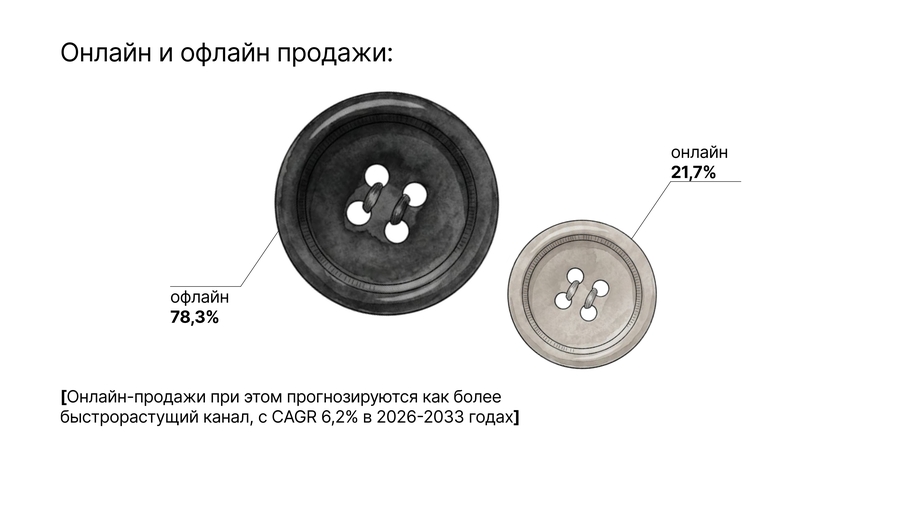
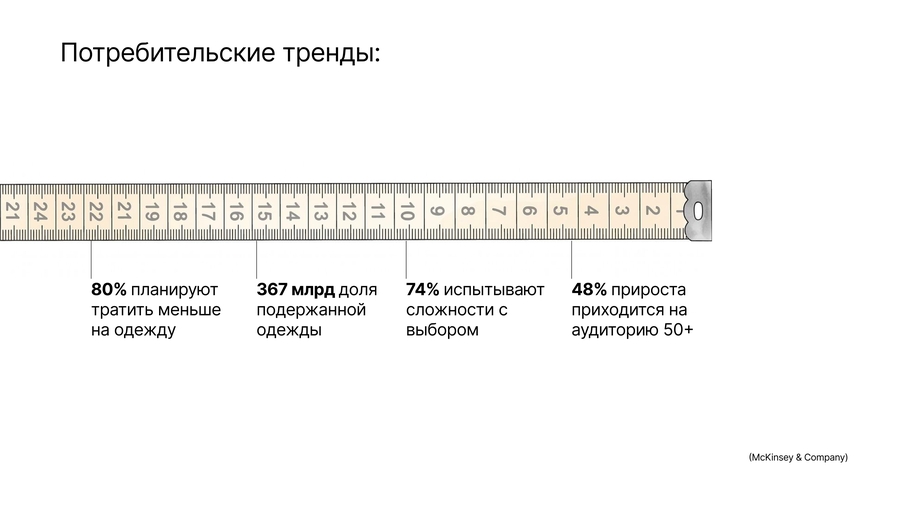
1. Online and Offline Sales 2. Consumer Trends
The Russian Market
The Russian market for clothing, footwear, and accessories was valued at 3.94 trillion rubles in 2025, marking a 6% increase compared to 2024.
However, sales in physical volume decreased by 8–10%.
The projected compound annual growth rate for 2026–2034 is approximately 3.26%.
Factors driving market growth include the rise of e-commerce, the expansion of online platforms, the personalization of the customer experience, and growing interest in more sustainable consumption.
Price Tier Segmentation
Online and in-person sales
Consumer Trends
1. Rationalizing PurchasesShoppers increasingly buy items for a specific season, event, or weather condition, rather than stocking up. Approximately one-third of consumers compare prices across different platforms before making a purchase.2. Declining Trust in SalesAccording to Lamoda, the percentage of consumers who aim to buy items on sale has decreased from 46% in 2023 to 42% in 2025. In the same study, 42% of buyers stated that they do not trust sales.3. Diverse Consumer GroupsFashion-oriented shoppers make up 38% of the audience but account for 59% of the market’s monetary volume—approximately 2.32 trillion rubles. For this group, assortment and the overall purchasing experience are particularly important, while price holds less significance.
Local Market. Moscow
The Russian fashion brand apparel market in Moscow was estimated to be worth 153 billion rubles in 2025.
Moscow’s fashion industry turnover for 2024 was 255 billion ₽.
+35.2%—this reflects the growth in turnover of Moscow textile and apparel producers from January to September 2025, adjusted for inflation, year-over-year.
However, the market is becoming more complex for new players. High rental costs, a limited number of suitable retail spaces, and declining consumer activity are making it difficult to open new stores. No more than 30 new fashion stores were expected to open on Moscow’s key shopping streets in the coming year—— 46% fewer than in 2024.
Factors driving market development include the growth in local brands, the expansion of online sales channels, the development of design markets and showrooms, and increasing interest in original design.
Online and in-person sales
Consumer Trends
Target Audience
Age: Women aged 22–35Geography: Moscow, primarily central districts and other urban spaces with active cultural and fashion scenesIncome: Middle to upper-middle class—this individual is willing to invest in designer clothing but prioritizes the value-to-quality ratioOccupation: Specialists in creative industries, designers, architects, photographers, artists, employees in media, marketing, and communications, as well as young entrepreneurs and professionals from other fields who are interested in culture and designPsychology: Interested in art, architecture, photography, music, film, and contemporary culture—they do not want to be entirely dictated by seasonal trends or ready-made looks. They value original design, unique silhouettes, layering, and interesting combinations. They embrace contradictions in their own style and do not aim to look the same every time.
Target Audience Segments
Competitor Analysis
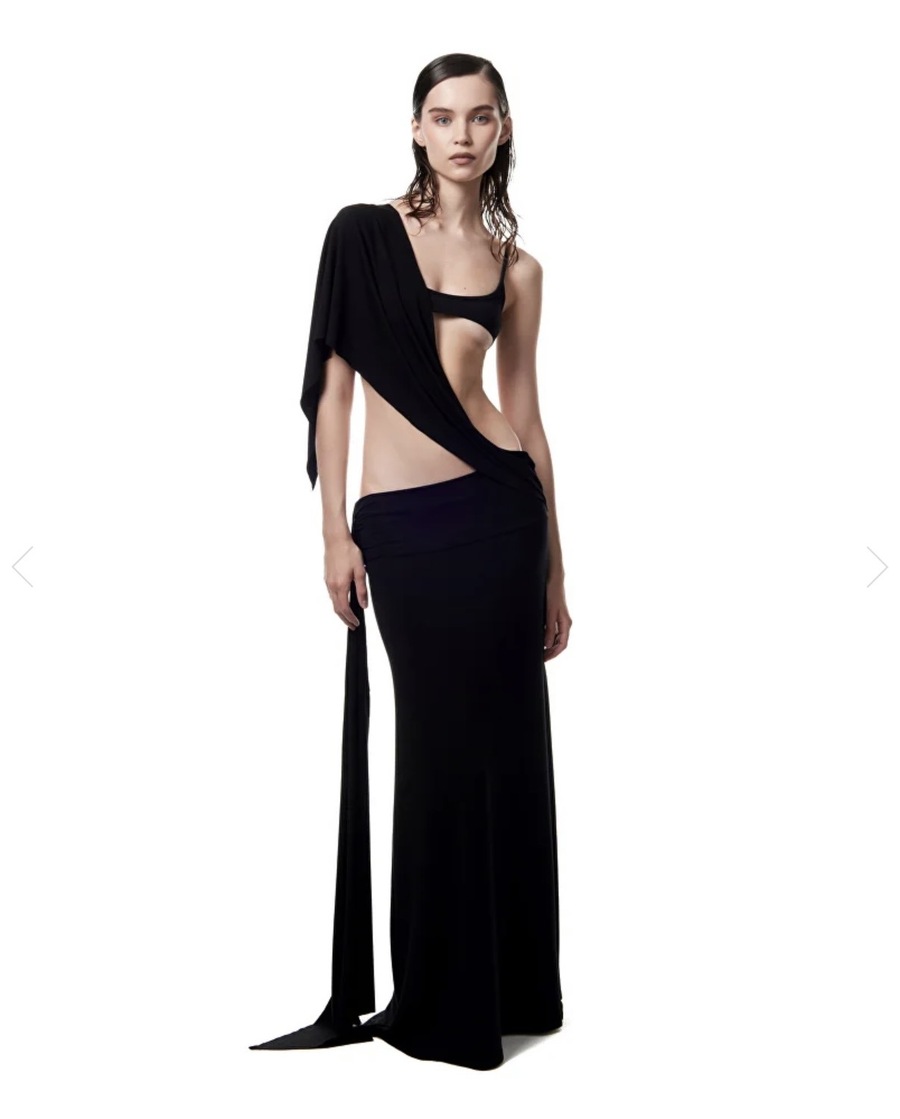

01. SUEL 02. ANVI.BRND
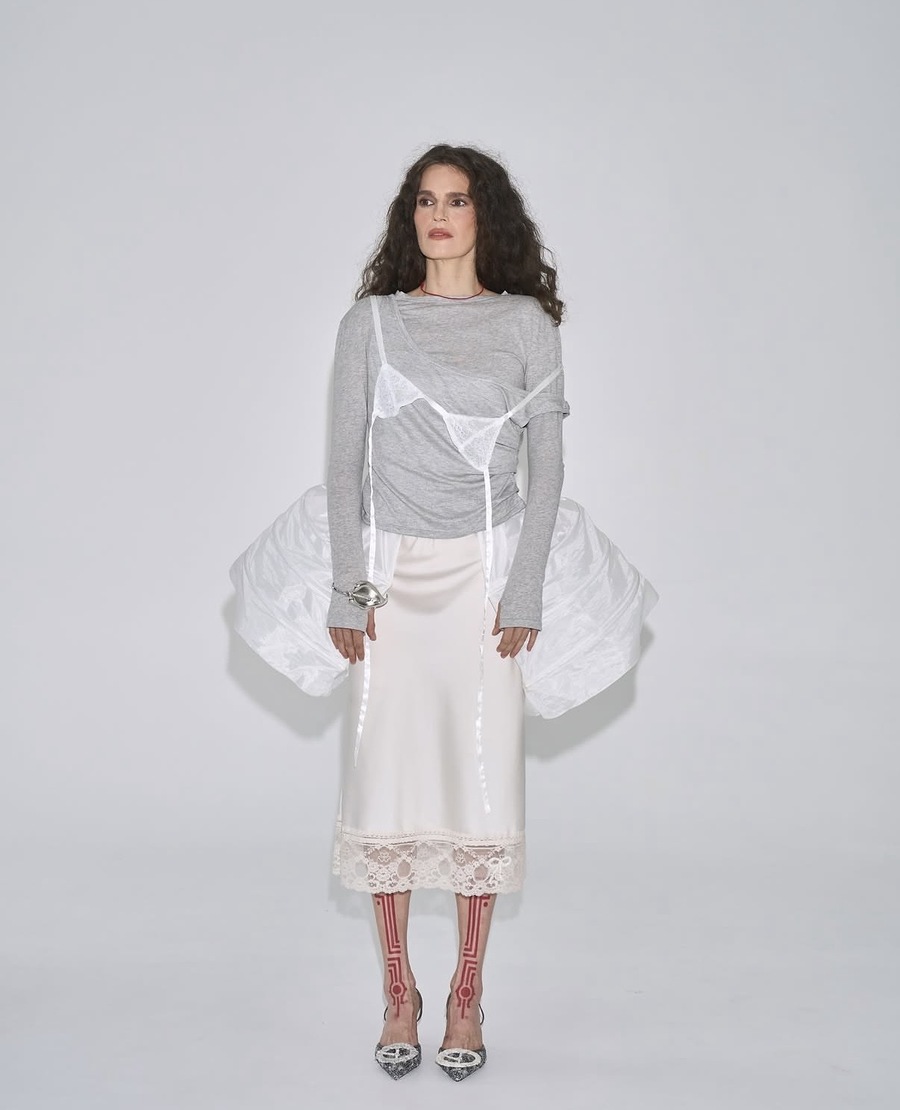
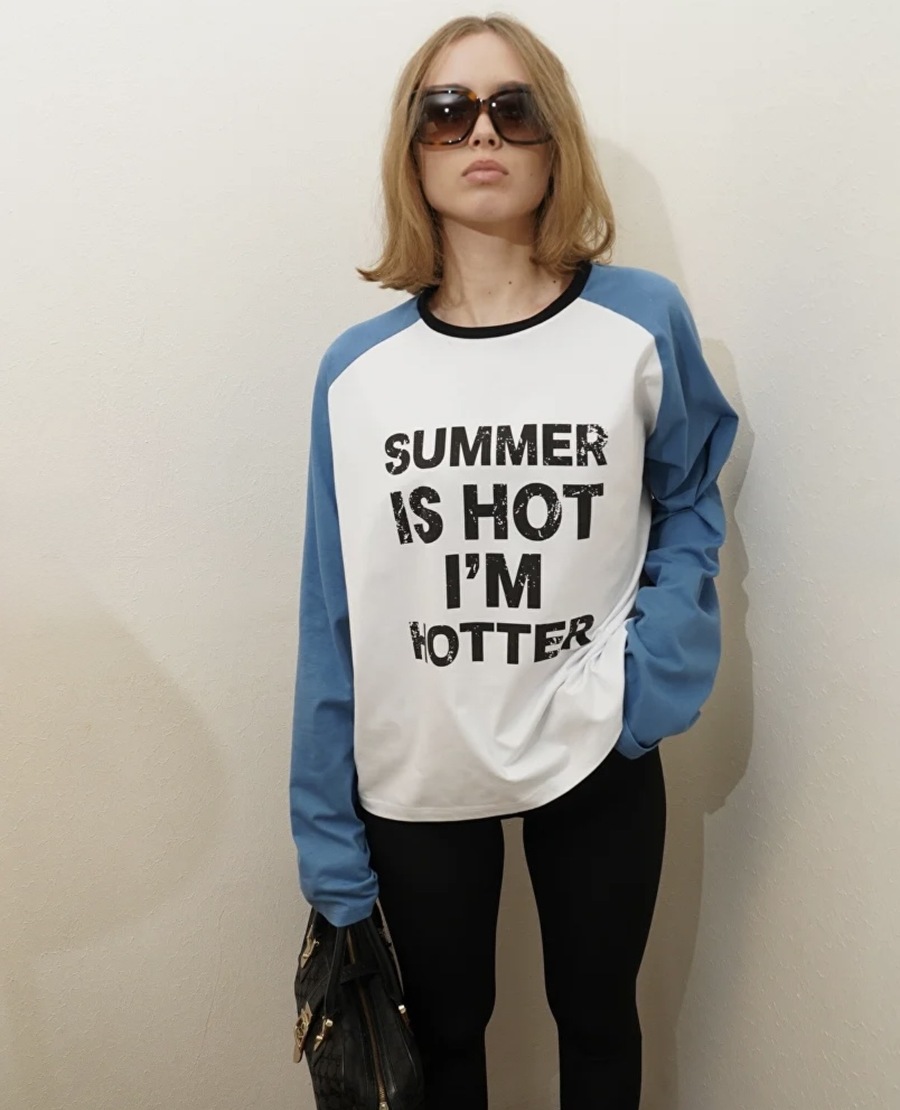
03. The VOW 04. ILLULLLLN
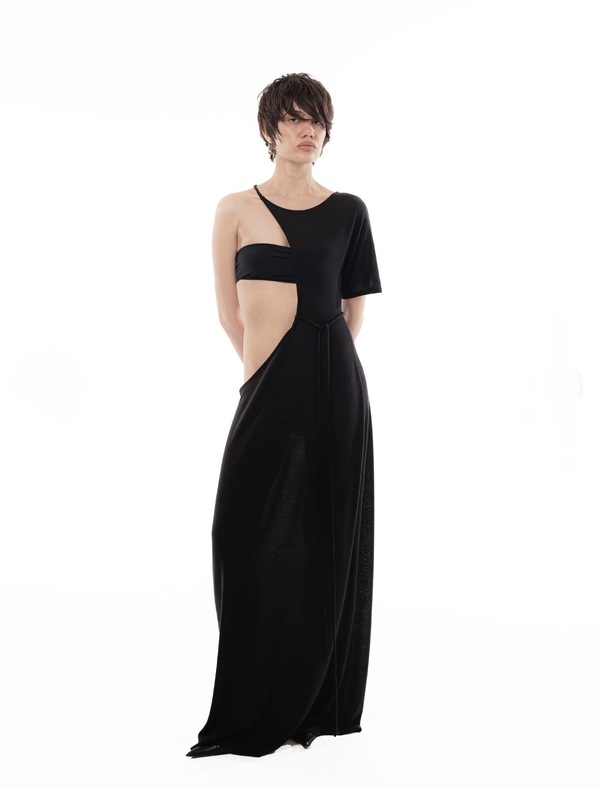
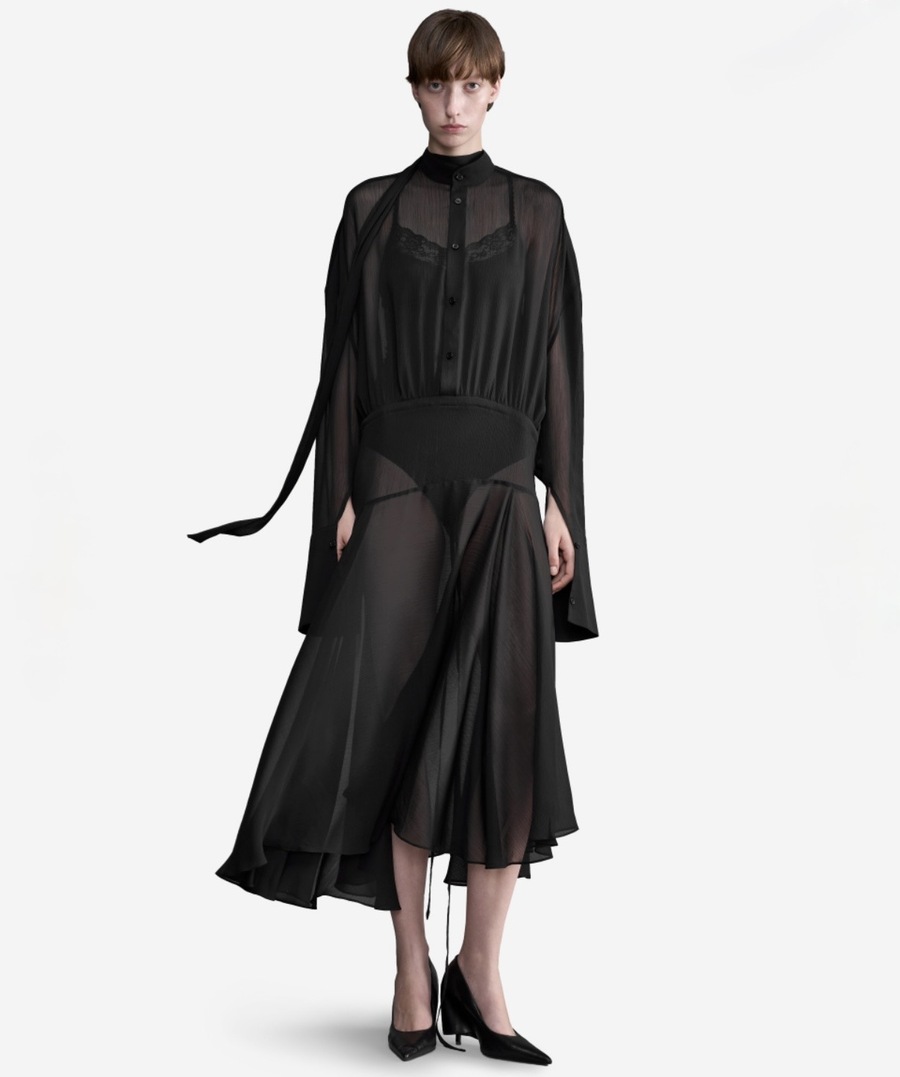
05. 08SEQUOIA 06. Ushatava
Competitive Positioning Map