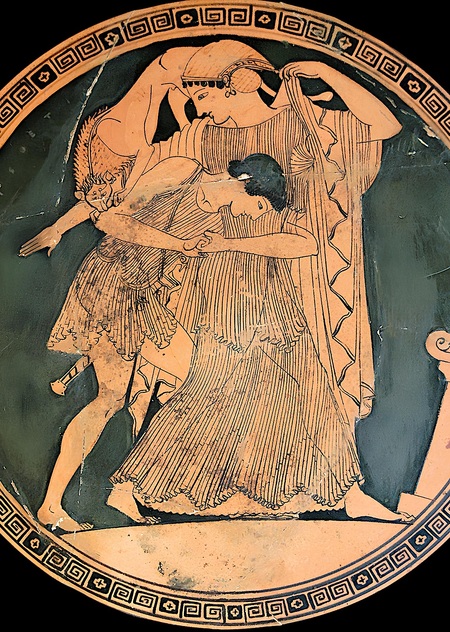
Concept
Ornament—this is one of the most ancient forms of human visual activity. It served as a semantic mediator between humanity and something sublime, expressing ideas about order, harmony, and the ideal structure of the world. Ancient Greek masters used ornament to convey concepts of order and the cyclical nature of life through rhythm, form, and symmetry.
Research Goal — to determine how ornamentation functioned in ancient Greek culture: what structural principles, motifs, and compositional schemes shaped it, what meanings and cultural values they expressed, and how the thought processes of the ancient Greeks were manifested through ornament.
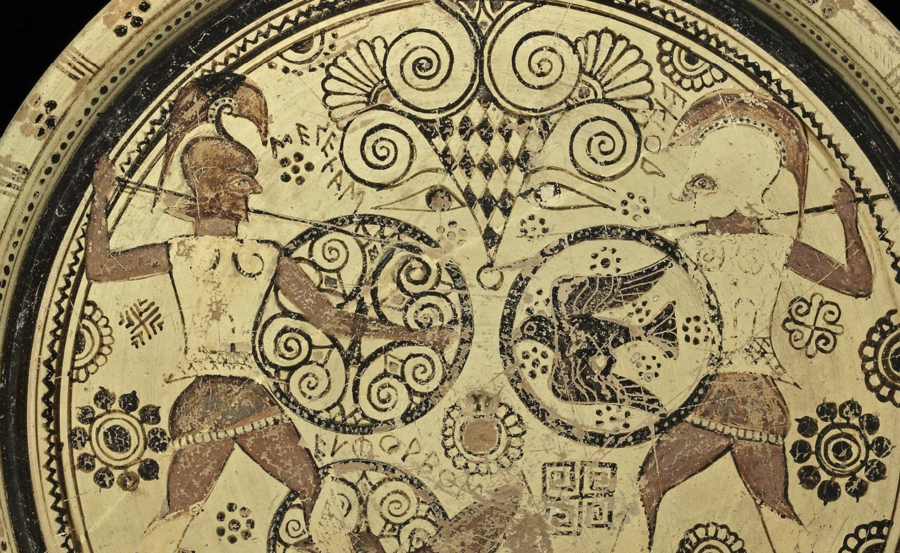
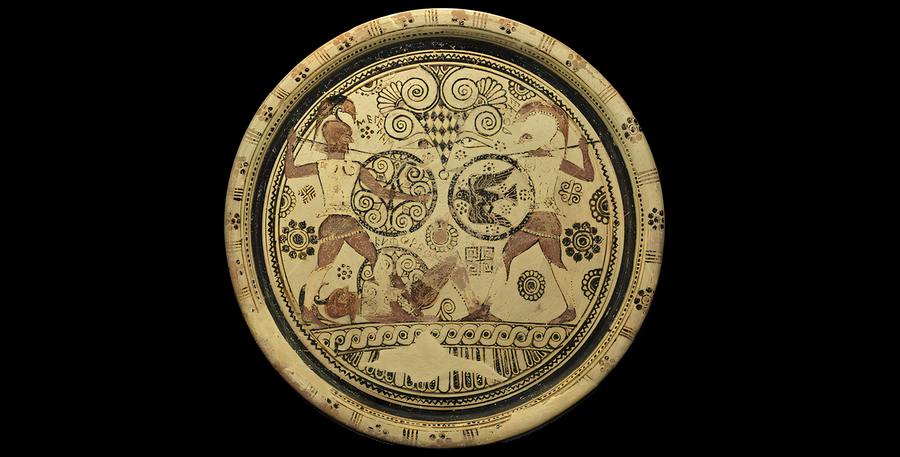
Rhodian dish Ephorbus. By Brunn. Housed in the British Museum
Ancient Greek ornamentation represents one of the most cohesive and developed decorative elements in the history of world culture. Its formation was closely linked to the development of architecture, vase painting, and even fashion; thus, ornament in Greek art never existed in isolation.
In the contemporary world, it is not uncommon to encounter repetitive Greek patterns on clothing, interior design objects, and in graphic design. This popularity is explained by the universality and clarity of the compositional principles embedded in the ancient Greek ornamental system. Symmetry and natural plasticity make these motifs relevant regardless of the era. The continuity of the symbolism and the recognizability of the forms allow Greek ornament to integrate organically into the visual culture of the 21st century. This enduring demand underscores the significance of ancient Greek ornament not merely as a decorative technique, but as a visual code.
Preserved ornament on the Celsus Library, Ephesus
This visual study examines how ancient Greek ornament shaped the artistic appearance of architecture, vase painting, and other decorative objects—what meanings it embodied, and how it influenced the perception of space and form in ancient culture. Analyzing the ornament allows us to trace how the Greeks, through rhythm, symmetry, and repeating motifs, sought to express ideas of order and harmony.
The selection of material for the study was based on authoritative historical and cultural sources, academic publications, archaeological catalogs, and visual materials, including fragments of ancient architecture, examples of vase painting, and pieces of decorative art.
The research is structured to gradually unfold the role of ornament in ancient Greek culture: from an introduction to its origins and basic visual principles to an analysis of specific motifs and their significance within the structure of both object and architectural space.
Introduction
Ornament is a pattern composed of the repetition or alternation of elements. The term originates from the Latin word ornamentum, which means «decoration.» Vladimir Dal’s dictionary interprets this concept as «adornment, embellishment, especially in architecture.»
Part of the mosaic floor from the palace of Attalus II
Ancient Greek ornamental art developed along two primary avenues: vase painting and architectural décor. Vase painting offers a detailed chronicle of the development of Greek ornamentation, while architecture essentially picks up and continues this historical thread.
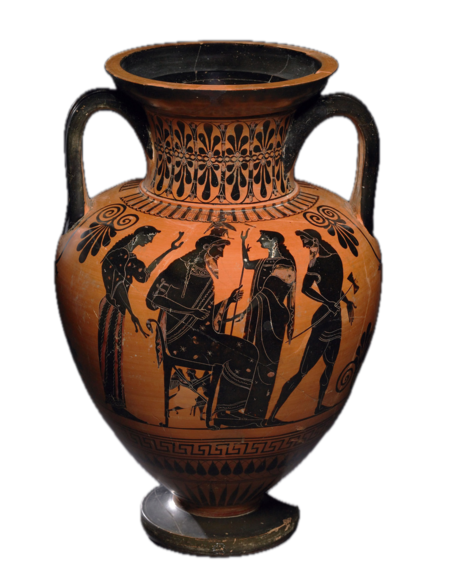
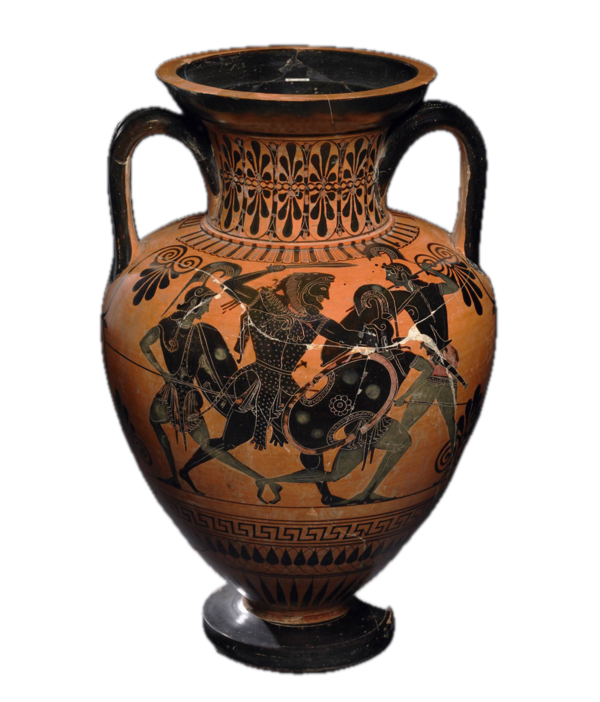
Two sides of one amphora. Attributed to the master Antimen. Birth of Athena from Zeus’s head. / Heracles’s battle with the Amazons.
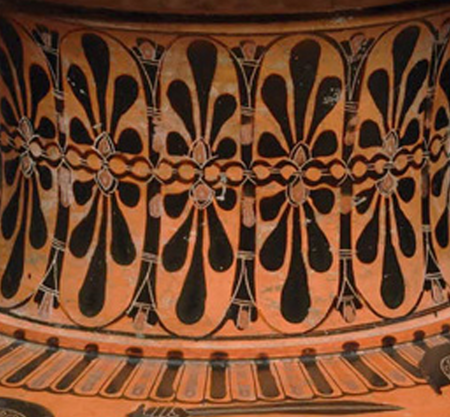
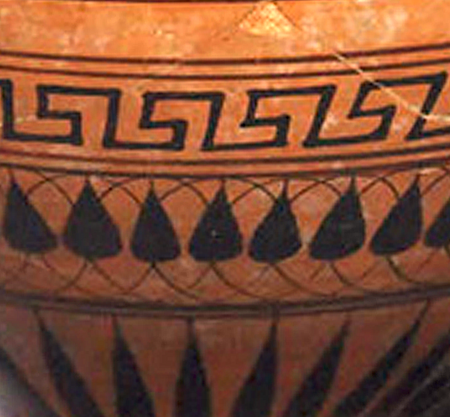
History of Development
Ornament evolved with the periodization of the Greek world.
In the «Homeric period» (12th–9th centuries BCE), the style was entirely geometric. This is when the basic elements—meander, dentil, triangle, wave, and grid—were formed.
During the Archaic period (8th–5th centuries BCE), which is historically characterized by the process of Greek colony formation in Asia Minor, Mesopotamia influenced the development of Greek ornamentation. Vertical compositions, Eastern motifs, and animal figures appeared in the ornamentation.
In the Classical period (5th–4th centuries BCE), the ornament became more harmonious, and traditions of narrative painting emerged. New elements also appeared in the ornamentation.
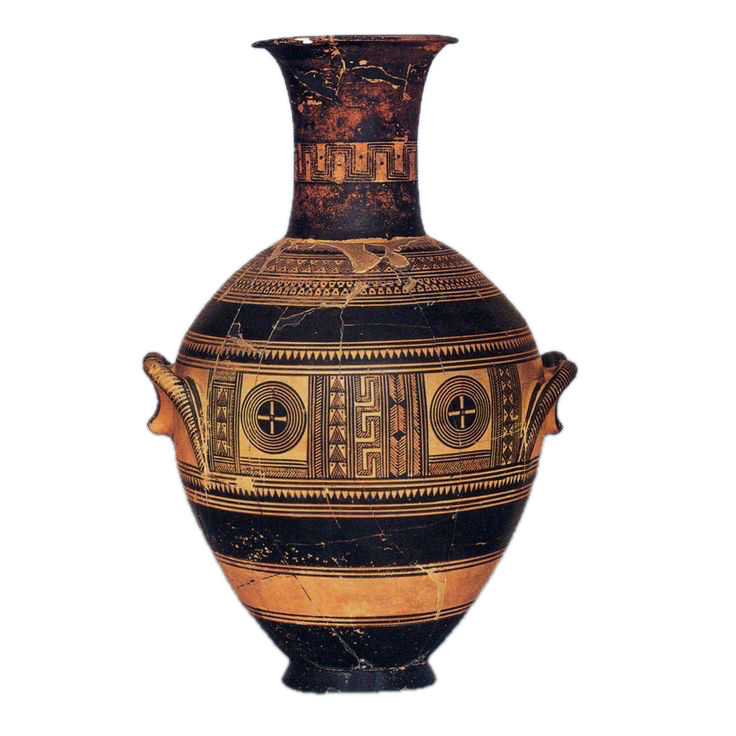
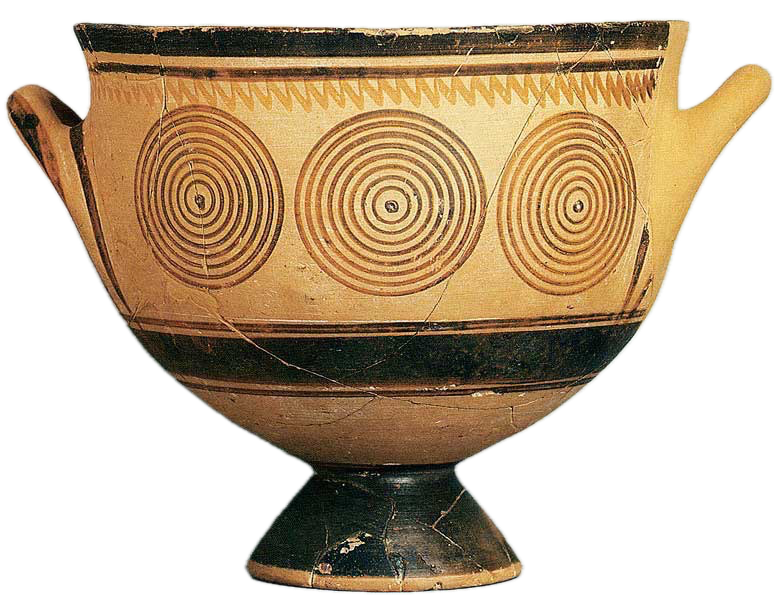
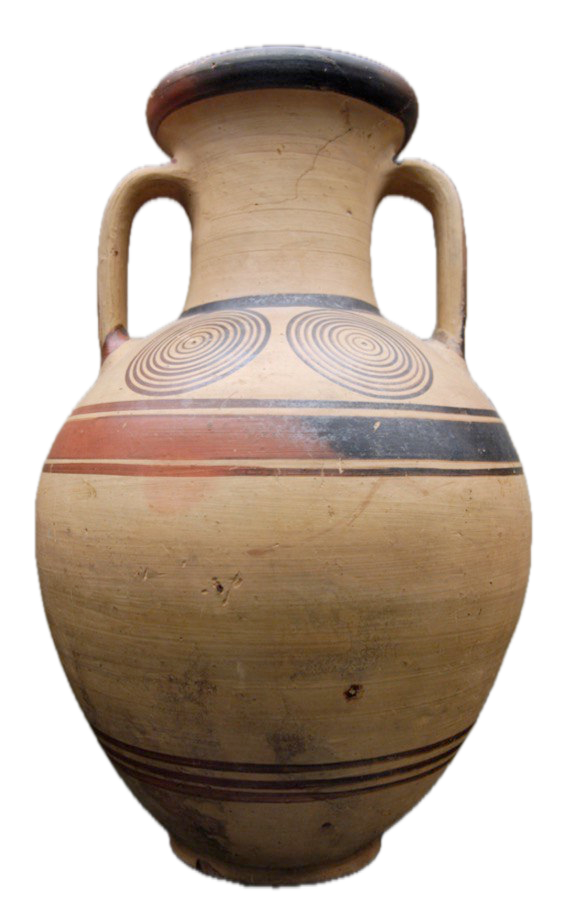
Scythian protogeometric style, 11th century BCE / Early geometric style amphora, 10th century BCE / Geometric style amphora, 9th century BCE
In the Archaic Period (8th–4th centuries BCE), which is historically characterized by the formation of Greek colonies in Asia Minor, Mesopotamia influenced the development of Greek ornamentation. The ornament began to feature vertical compositions, Eastern motifs, and animal figures.
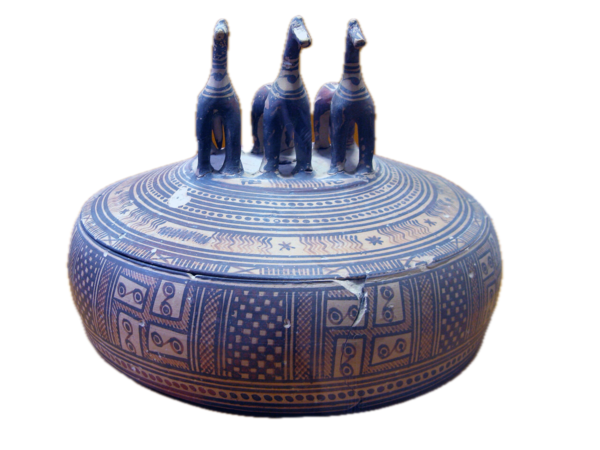
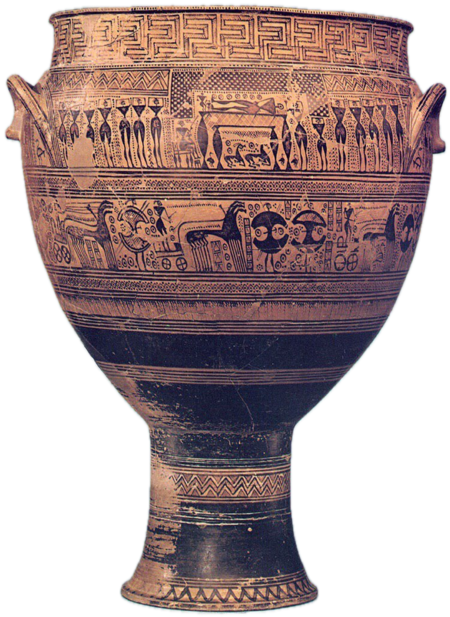
Pixid from the Athenian Agora Museum, 8 BC / Geometric style amphora, mid-8th century BC
During the Classical and Hellenistic periods (5th–1st centuries BCE), ornamentation became more harmonious, and traditions of narrative painting were established. New elements began to appear in the ornament. Architectural ornament, mosaic, and wall painting started to develop.
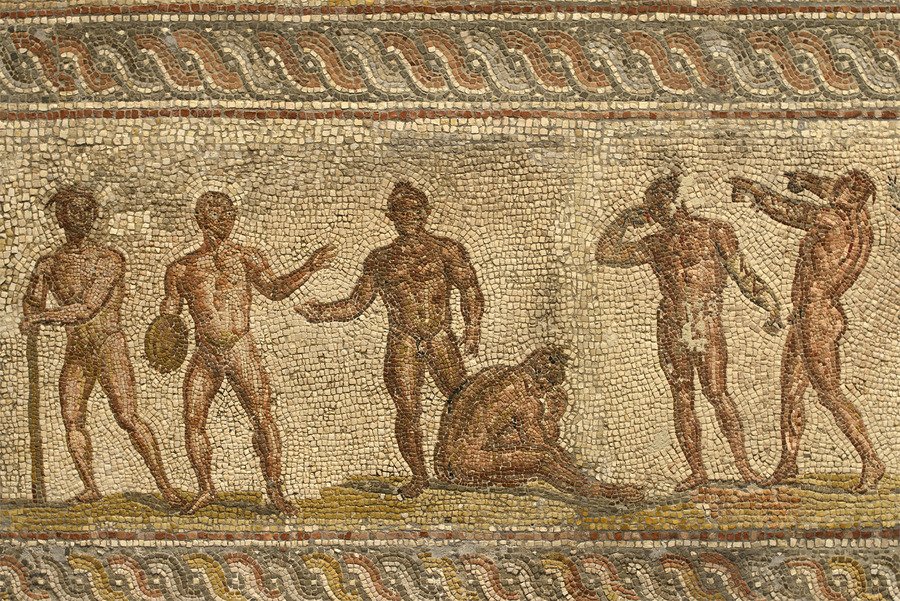
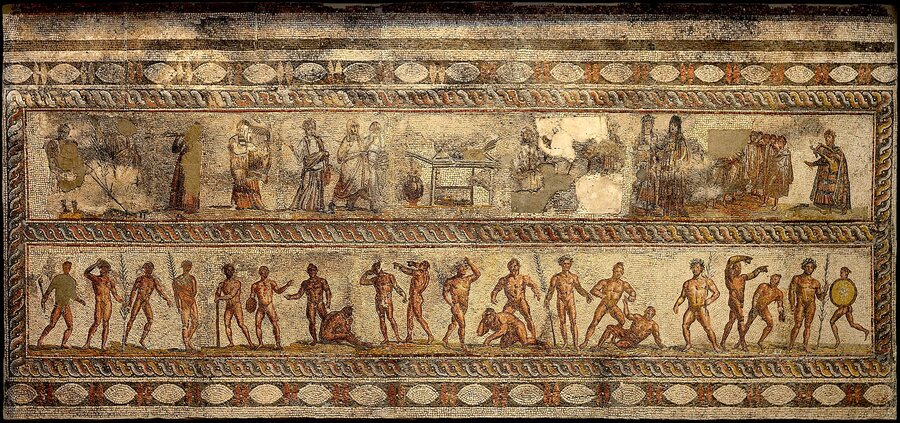
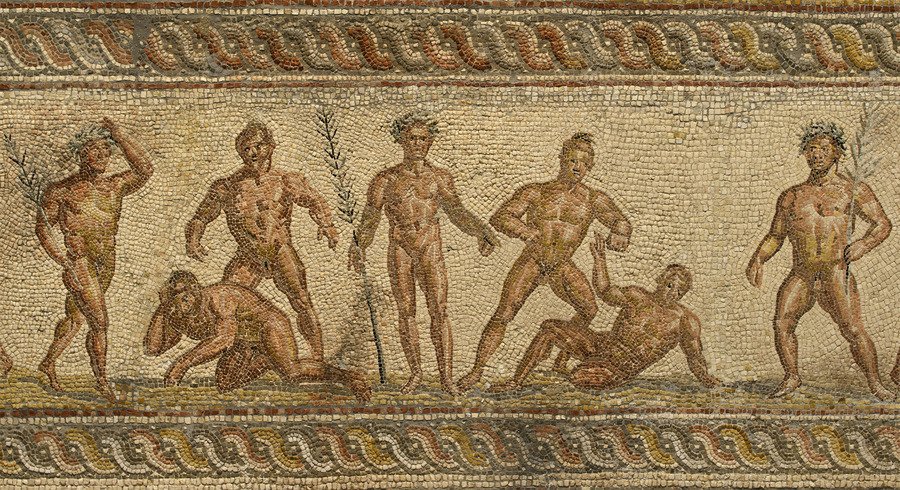
Floor mosaic depicting musical and athletic competitions. Patras. Late 2nd — early 3rd century CE.
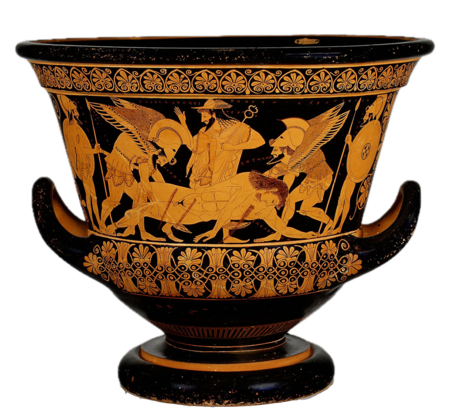
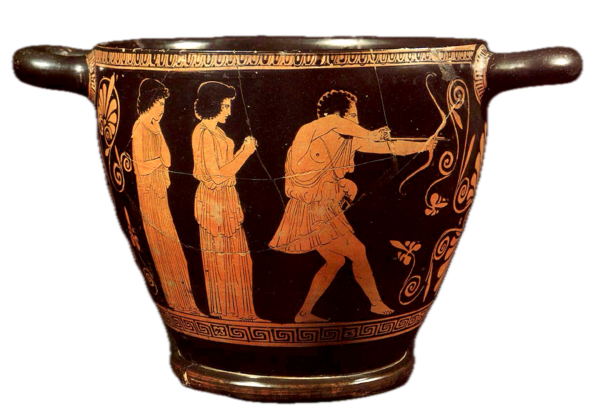
Hypnos and Thanatos carry the corpse of Sarpedon in the presence of Hermes, 515–510 BCE / Odysseus shooting an arrow into a crowd of suitors, 440 BCE
It can be observed that as ancient Greek art developed, the ornament gradually lost its leading role. While it functioned as an independent expressive element during the Archaic period, its function shifted by the Hellenistic era: the pattern became more of a vignette surrounding the narrative field.
Meander
The most famous and recognizable Greek ornament is the meander—a continuous ribbon broken at right angles. It has even been found on artifacts dating back to the Paleolithic era.
It is believed that the word «meander» originated from the name of the Büyük Menderes River (from the Turkish menderes, meaning «bend» or «curve»), located in western Anatolia. In ancient times, the river was known as Meander, and it is noteworthy because its course features numerous bends.
The linear meander expressed the idea of universal motion—not as a mythic concept, but rather as a philosophical worldview. In other words, in Greek ornamentation, the idea of continuous, infinite movement became fundamental, embodying itself in the brilliant expressiveness of the linear meander. Many also believe that the meander depicted the human life path and its choices, while the right angle symbolized virtue.
«Everything flows, everything changes. And no one has ever been in the same river twice. For in a moment, the river is different, and he himself is no longer the same.» — Heraclitus of Ephesus
Meander example
For many, the meander became a symbol of divine defiance—the notion that mortals could confront the gods and even triumph over them.