Table of Contents:
- Introduction
- Orientalism
- Hyperbolization
- Contrast
- Conclusion
Introduction
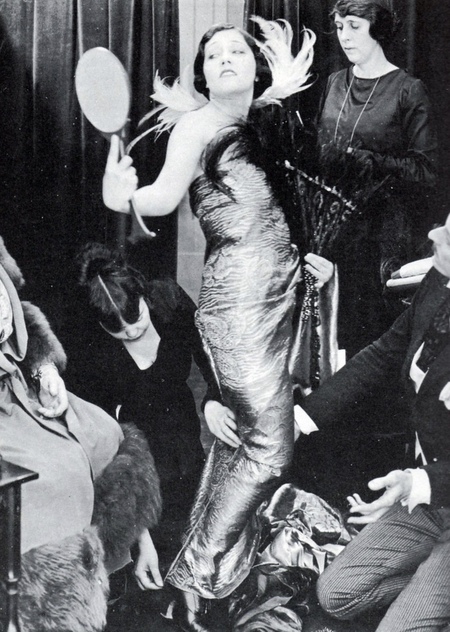
Cecil B. DeMille (1881–1959) was one of the first directors of the early twentieth century to pay special attention to costumes on screen. Thanks to his work, a new standard for filmmaking and artistic detailing of onscreen characters was established [2]. Throughout his career of over thirty years, the director worked in genres such as the Western, romantic comedy, historical drama, and biblical epic.
Starting in the 1910s, the director’s focus turned to the themes of difficulty and misunderstanding within marital relationships. Several films from that period dealing with infidelity, marriage, and divorce among the affluent segments of society are grouped under «remarriage comedies» or the «matrimonial cycle» [2]. This visual study examines four films from this era: Old Wives For New (1918), Don’t Change Your Husband (1919), *Why Change Your Wife? * (1920), and The Affairs of Anatol (1921). In all the films, in addition to the overarching theme of marital crisis, similar plot tropes are present. Examples include a spouse encountering a new romantic interest, dissatisfaction with the established relationship, or reconciliation and reunion with the original partner. His films also feature recurring archetypes, such as the young, vain mistress, the wife who has become complacent in marriage, and the resolute seductive woman. It can be posited that the visual portrayal of the characters in these films utilizes common stylistic devices. Meanwhile, the male wardrobe remains rather unremarkable, while the female wardrobe not only reflects the heroine’s personality but also illustrates changes within her soul and character.
The beginning of the 20th century brought changes to traditional gender roles and the perception of marriage; the image of the business-woman—an independent woman—emerged in artistic works, and marriage began to be viewed as a means of pleasure. Cecil B. DeMille’s films vividly reflect the Art Deco era, illustrating fashion trends and social shifts. When creating a new and relevant visual narrative through costume stylization, the director drew specifically from these influences. Among the techniques Cecil B. DeMille employs, the aesthetics of Orientalism, the hyperbole of individual costume elements or the heroine’s overall appearance, and the contrast between visual imagery stand out.
All these techniques were selected for the purpose of cataloging the visual study and analyzing their narrative function within the films.
Academic works focusing on the costume analysis in Cecil B. DeMille’s films were chosen as literary sources.
Orientalism
Orientalism was one of the striking fashion trends of the early last century, largely characterizing the Art Deco era. Eastern motifs can often be found in the interiors of homes and clubs, the clothing of servants, and the wardrobes of the film’s heroines in films by Cecil B. DeMille.
Eastern references in imagery often allude to female sexuality.
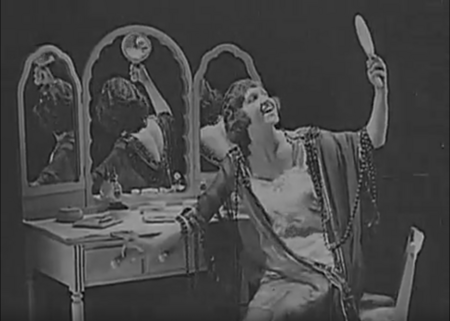
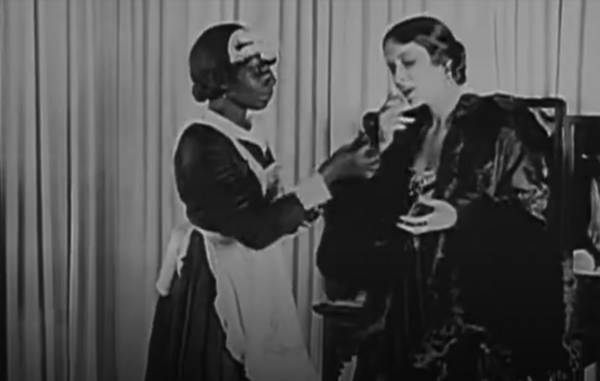
Stills from the film «Don’t Change Your Husband, ” 1919 (left) Stills from the film „New Wives in Exchange for Old Ones, ” 1918 (right)
In the films «Don’t Change Your Husband» and «New Wives in Exchange for Old Ones,» Mr. Satfen and Mr. Murdoch become dissatisfied with their wives and find romantic interests outside of marriage. The initial scenes with the future mistresses in both movies share similar characteristics. The heroines are dressing in front of a vanity, wearing Eastern-style robes, yet these looks possess distinct differences. Nanett, the future mistress of Leila’s second husband, is dressed in a semi-transparent, heavily embellished robe, while Juliet’s look combines dense fabric and fur. Because of this, the first heroine is initially perceived as coquettish, while the second appears composed and elegant.
Still from the film «Why Change Your Wife?», 1920.
The image of the other lover—Sally Clark in the film «Why Change Your Wife?”—is the most explicit of all, with the heroine’s actions being a straightforward seduction and flirtation with Mr. Gordon. The image, set within the aesthetic of Orientalism, combines sheer fabric with fur trim, and the heroine removes her undergarments to affix a heart to her shoulder, heightening the eroticism of the look.
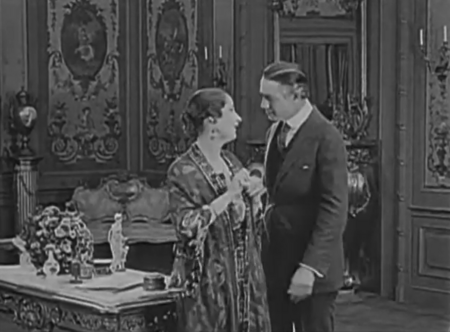
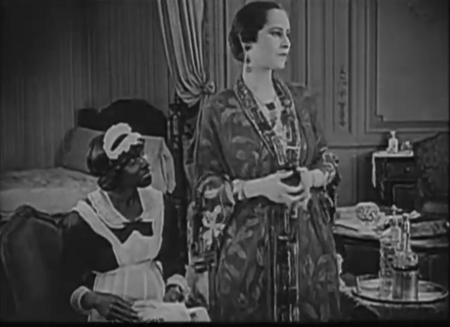
Frame from the film «New Wives in Exchange for Old Ones, ” 1918.
At the end of the film «New Wives in Exchange for Old Ones,» Juliette accepts the marriage proposal while wearing a kimono-like garment. Although the fabric is lighter and features more patterning, the look is neither suggestive nor frivolous. In it, the protagonist embodies a desirable woman and a future wife.
Another function of Orientalism in Méliès' films is the creation of fantastic scenery.
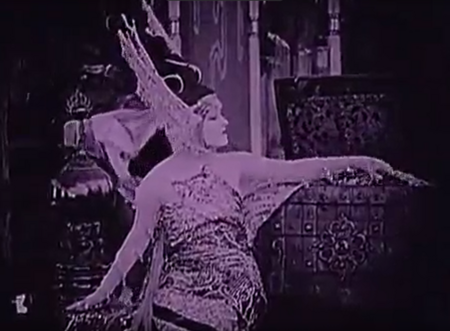
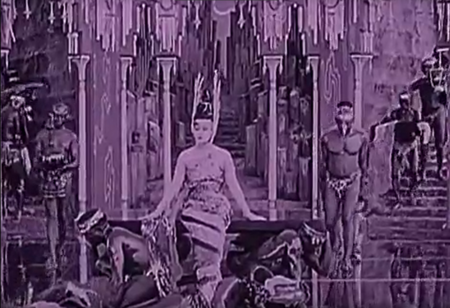
Stills from the film «Don’t Change Your Husband,» 1919.
In the film «Don’t Change Your Husband,» Leila listens to compliments from a recent acquaintance and succumbs to fantasies of kingdoms of «Pleasure, Wealth, and Love.» The heroine presents unknown Eastern countries, incredible treasures, numerous servants, and herself at the center of attention. The abundance of detail and the fairytale quality of these short episodes transport not only the heroine but also the viewer, who is immersed in the aesthetics of Orientalism, away from the real world.
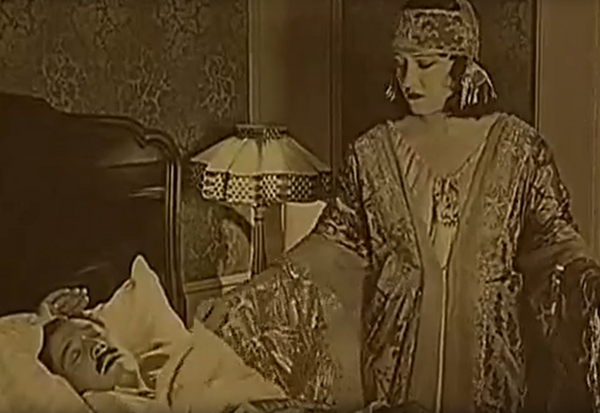
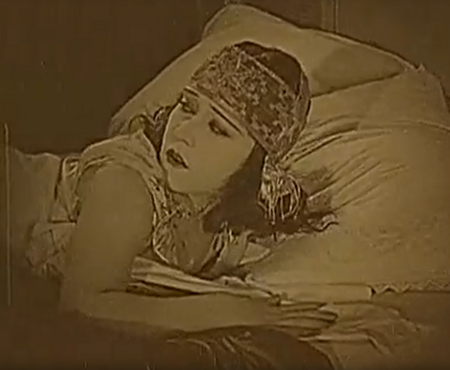
Stills from the film «Don’t Change Your Husband,» 1919. The heroine’s domestic appearance, kimono, and Eastern-style cap.
Eastern motifs in Leyla’s wardrobe—the foundation of her style. From nightgown to traveling dress, the influence of Orientalism is evident everywhere.
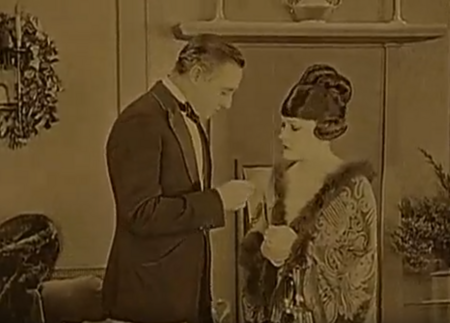
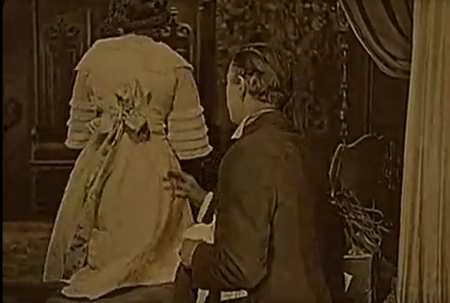
Stills from the film «Don’t Change Your Husband,» 1919. The heroine in Orientalist-inspired costumes. A dress inspired by a kimono (left) and a belt with a voluminous flower (right).
This style characterizes the heroine’s romantic nature [2]. On one hand, it presents her as a fairy-tale beauty whom heroes vie for, but on the other, it reflects the heroine’s own desire to live in a fairy tale. However, her dreams crash against reality: marriage to the «King» turns out to be a mistake, and she is not indispensable in her new husband’s eyes. This is well shown in the new husband’s lines, where he no longer delights in his wife’s Oriental attire.
Laila, is there truly nothing else for you to wear in the mornings besides that oriental rags?
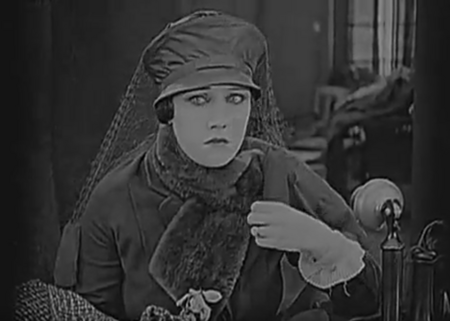
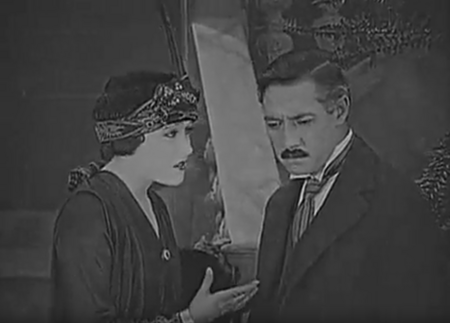
Stills from the film «Don’t Change Your Husband,» 1919. Mrs. Gordon’s street ensembles. Hat with veil (left) and embroidered turban with a feather (right).
So, in Layla’s case, Orientalism reflects not only sensuality but also the heroine’s dreaminess[2].
Hyperbolization
A common characteristic of the costumes in the films of Cecil B. DeMille is the use of hyperbole—creating a sense of absurdity and excess in the appearance of the heroines.
This technique is also used in films during scenes where the main character meets her husband’s mistress. Mrs. Gordon and Mrs. Porter are not afraid to wear eccentric outfits and stand out in society. However, against the backdrop of their rivals, their inherent elegance and refined taste become apparent—qualities that another woman lacks.
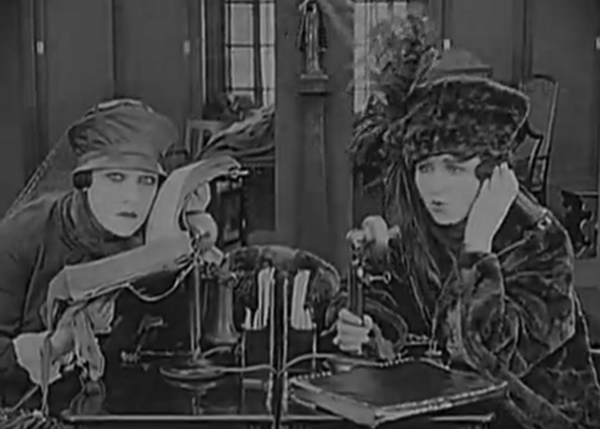

Still from the film «Don’t Change Your Husband,» 1919.
In the film «Don’t Change Your Husband,» Nanne, the second husband’s lover, combines fur and feathers in her look. Both materials are statement pieces, and together they create an over-the-top image: a shiny fur coat with a hat and a lush feather arrangement. Leila’s look is perceived as more subdued; the unusual detail—the veil—is an elegant way to vary a monotonous ensemble. The drabness of the wife’s clothing and the kitschy look of the mistress also suggest who now holds the favor of Leila’s new husband.
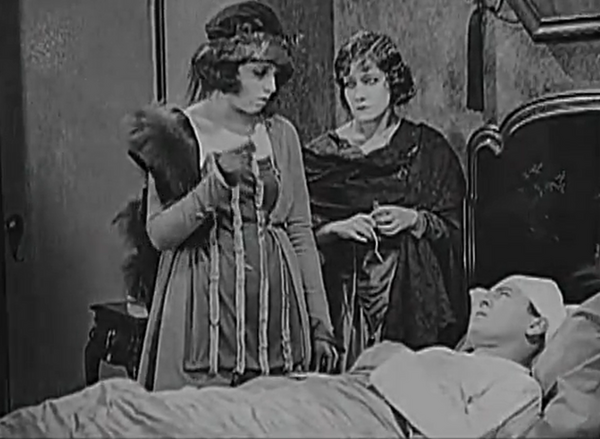

Frame from the film «Why Change Your Wife?», 1920.