Navigation
- Organ History — Organ as a cultural phenomenon — The transformation of the organ’s function within jazz culture
- Sound — Characteristics of the organ that influenced the sound in jazz
- Object in Space
- Performers — Jazz
- Development
Sacred Organ
Hydralos, water organ
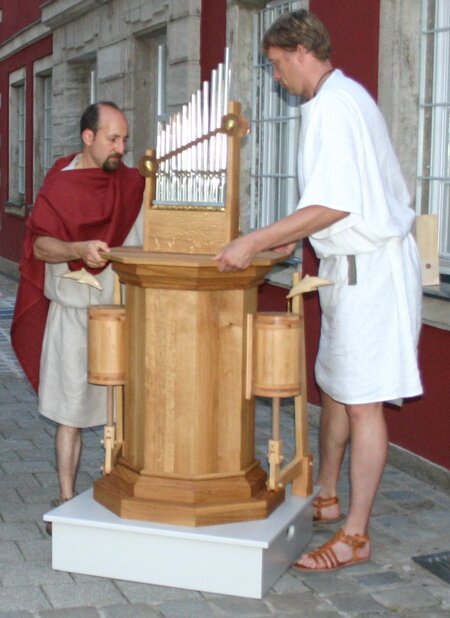
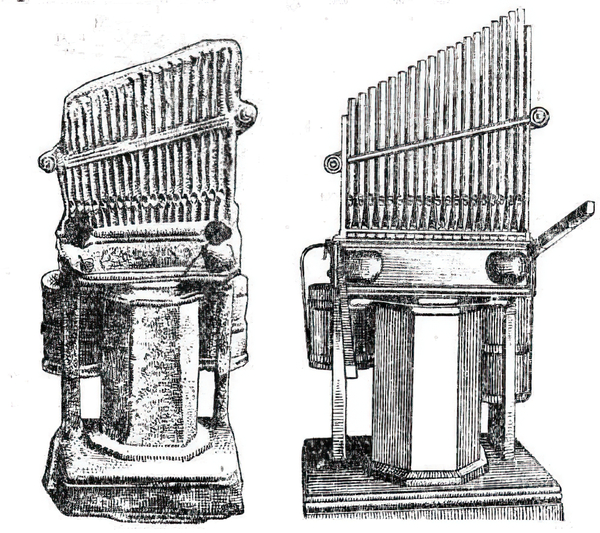
The hydraulis is considered the first organ in history—a water organ that emerged in the Hellenistic world around the 3rd century BCE. Over the subsequent centuries, the organ developed in Europe and gradually assumed an important place in Christian worship. The hydraulis was used to accompany choirs, perform liturgical music, and create independent musical compositions. The sound in this organ was also generated by air supported by water pressure.
The hydraulic mechanism was gradually replaced by a system of air compressors. This transition was fundamental: the tool no longer required a complex water pressure regulation system to operate. Air could be mechanically pressurized and directed to the tubes.
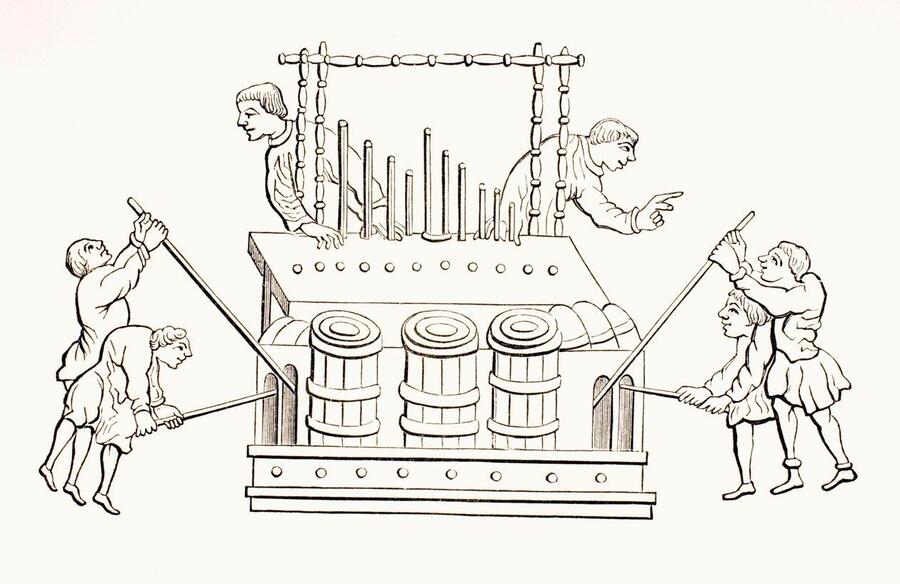
Organ with Two Keyboards, from «Les Arts au Moyen Age,» lithograph, 1873
In 757, the Byzantine Emperor Constantine V gifted an organ to the Frankish King Pepin the Short. Subsequently, the instrument spread among European courts and gradually became integrated into church musical practice.
In the sacred space, the functioning of the organ played a distinct role: the power and the «singing» quality of the timbres (due to the air passing through the monumental metal pipes) created an unparalleled effect. The organ could fill a large cathedral with sound, support the singing of the congregation, and create a sense of musical unity.
Portable Altar. Master Bartolomew. Cologne, 1490–1495. Organ Positive, Second Half of the 17th Century. Barcelona Music Museum, Organ in the Church of the Virgin in Munich.
The organs differed in size and functionality: Portable organ—a small, movable instrument used in processions and chamber music. Positive organ—a larger, stationary chamber organ that lacked a pedal, and whose keys were smaller. Large organ—a static, monumental instrument with large pipes and bellows, intended for large spaces.
The evolution from the hydraulis to the pipe organ created the technical foundation upon which electronic organs, including the Hammond, arose much later.
Origin — African American gospel
In African cultures, there was no rigid separation between the sacred and the secular. Fats Waller is one of the earliest examples of a jazz musician connected to the church organ: his father was a pastor, and Waller learned to play the pipe organ before he learned to play the piano. By the late 1920s, he was already playing jazz on the pipe organ (Victor recordings in an abandoned church in Camden, New Jersey), and in 1942, he recorded «Jitterbug Waltz» on the Hammond Model A.
Bill Doggett, «Honky Tonk, Part 1 and 2» (1956)
Hammond B — a church budgetary body
The Hammond B organ is not only smaller than a traditional cathedral organ, but it is also smaller than a piano. It resembles a small cabinet box, about the size of a folded piano. Nevertheless, the functionality of this cabinet is quite extensive.
Sound
Fundamental functions of the organ:
Polyphony: one performer can manage multiple musical lines simultaneously.
Sustained Sound: the organ is capable of holding long tones and dense harmonic texture.
Separation of Functions: bass, harmonic accompaniment, and melody can be performed concurrently.
A performer on stage in a jazz club
The Organ as a Symphony of a Single Musician
Key Figures
Jimmy Smith
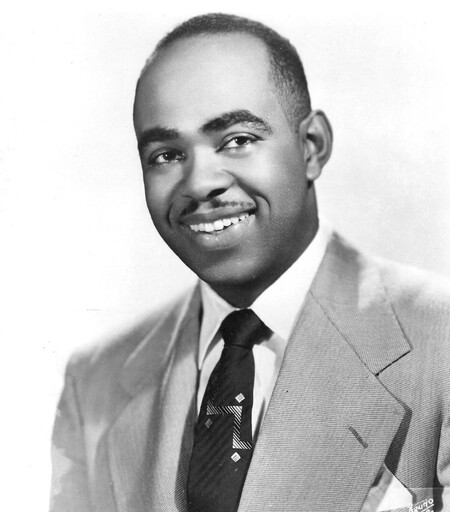
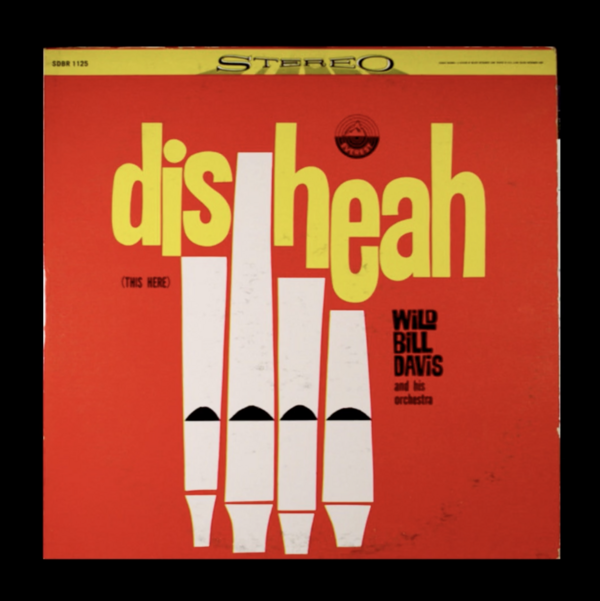
Wild Bill Davis and His Orchestra — Disc Heath -1960
Development