Concept
«Maslovka» opened just over a year ago, so it is obvious that it is still in the process of developing its exhibition strategies and concepts for engaging the audience. However, from its very beginning, the museum positioned itself as an unconventional organization. Its mission can be found on the website. «The museum activates the creative life of the neighborhood; it doesn’t just collect, study, and archive heritage, but also fosters a community of artists, art critics, collectors, and viewers, ” state the organizers [1].
„Maslovka“ presents an interesting case of an institution that proclaims its unconventional nature and integration into a living environment (the Artists' Quarter), while operating under strict constraints: the absence of canonical masterpieces and limitations not only in time but also in physical space—which severely narrows the potential selection of themes and exhibits. Like any other museum in Moscow, it must constantly prove its right to exist in the city’s competitive exhibition landscape. It is this duality—between the ambitious mission of „community formation“ and the pragmatic task of attracting an audience to material that doesn’t „speak for itself"—that makes «Maslovka» a productive case for analysis.
The maxims of Alex Farckhursen, formulated as the ethico-political program of «new institutionalism,» find an unexpected application in the case of «Maslovka»: they are used not so much as a critical framework, but as a set of practical adaptation strategies. Hospitality, popularity, interdisciplinarity, and working with pleasure—these principles align with the museum’s need to create a unique offering in the Moscow leisure market while simultaneously preserving research integrity.
Material is selected along three lines of inquiry:
a) Programmatic documents and the museum’s self-presentation: website mission statements, exhibition announcements, and event descriptions. These sources document how the museum frames its objectives and what Farccuhrson’s maxims it articulates (explicitly or implicitly).
b) Visual materials from events and exhibitions: photographs from exhibition openings, footage of other events hosted by «Maslovka, ” and images of the exhibition space. These materials reveal how declared principles are realized within the space.
c) Critical and analytical texts concerning „Maslovka“ and new institutionalism: exhibition reviews, articles about the Artists' Quarter, and Farccuhrson’s work, „Institutional Customs.“ These sources establish the theoretical framework, allowing for a comparison between the museum’s declarations and critical perspectives. The material must either explicitly state the museum’s operational principles, visually capture their implementation, or provide the theoretical framework for their analysis.
The work consists of the following sections: an introductory concept, the main body of research—which is organized around Farccuhrson’s maxims serving as analytical rubrics—and a conclusion.
The selection of sources operates on the principle of aligning with three levels of analysis. The declaration level—texts created by the museum itself (mission statements on the website, announcements, exhibition descriptions)—is analyzed to determine which of Farckuharsons' maxims are articulated explicitly (for example, «community building, ” „accessibility, ” „interaction with artists and heirs“) and which remain unstated. The theoretical framework level is based on Farckuharson’s work, „Institutional Customs.“ The critical reception level consists of reviews and analytical articles about „Maslovka.“ These sources allow us to see how the institution is perceived from the outside—which of its strategies are noticeable and which are not, and what the museum perhaps draws from the history of the site itself.
The analysis principle is comparative: the museum’s textual and visual materials are correlated with Farckuharson’s maxims (the theoretical ideal) and the visual material (the realization). This analysis reveals gaps between the three levels: where the declaration aligns with the ideal but is not realized; where the realization precedes the declaration; and where both the declaration and the realization deviate from the ideal.
Key Question: Which tenets of Alex Farckhurs’s «new institutionalism» are adopted by the Scientific and Museum Center «Maslovka. Artists' Village,» and how do they transform within the museum’s operational context?
Hypothesis: «Maslovka» selectively borrows from Farckhurs’s tenets, employing them primarily not as tools for institutional critique or social change, but as pragmatic adaptation strategies to create a unique museum offering for Moscow. This aims to draw audiences to lesser-known material and to compensate for resource limitations. Crucially, core principles of «new institutionalism"—critical self-reflection, internalization of institutional critique, and long-term research projects—remain unfulfilled.
«Maslovka» in Dialogue with Farcukharson’s Maxims
Maksima Perva: work across different levels to create spaces for audience participation.
Farkhuhrson proposes creating diverse engagement opportunities within the museum so that the visitor becomes not a passive observer standing beneath the institution, but a full participant and even a co-creator.
The Museum offers a variety of formats: lectures (including series bundled into courses featuring both video recordings and in-person meetings), field trips to locations associated with the «Maslovka» artists, curator workshops, and other integrated formats, such as «Curatorial Kitchen.»
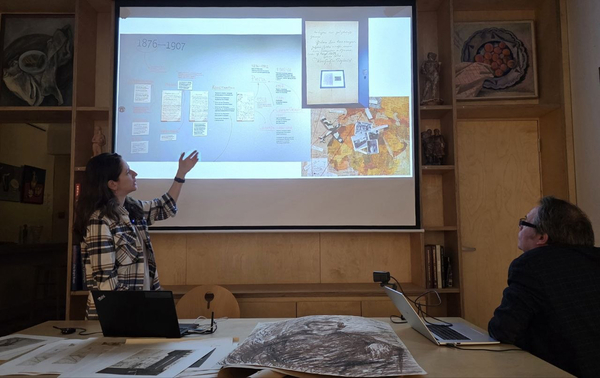
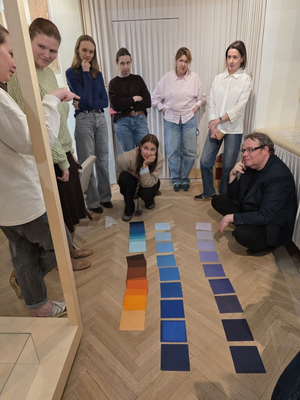
The most vibrant example of a museum actively engaging with its audience as an equal partner, gathering feedback, and integrating it into its operations is the curatorial school. The museum opens its doors—and even its archives—to those interested in participating in exhibition organization. The school participants, alongside curators and researchers, study the archives, discuss the exhibition’s concept, and work on the layout. Essentially, ideas from «ordinary people» are heard and utilized in the creation of the exhibition.
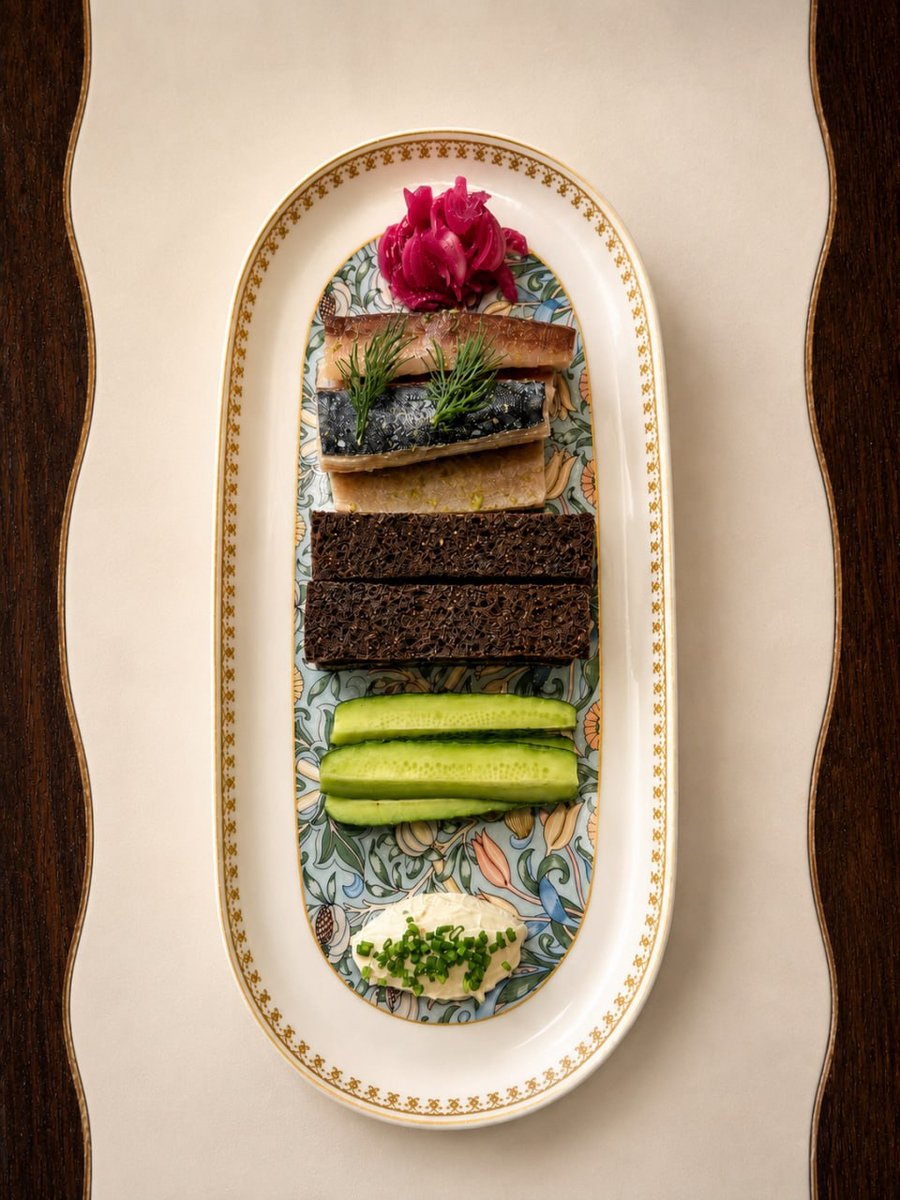
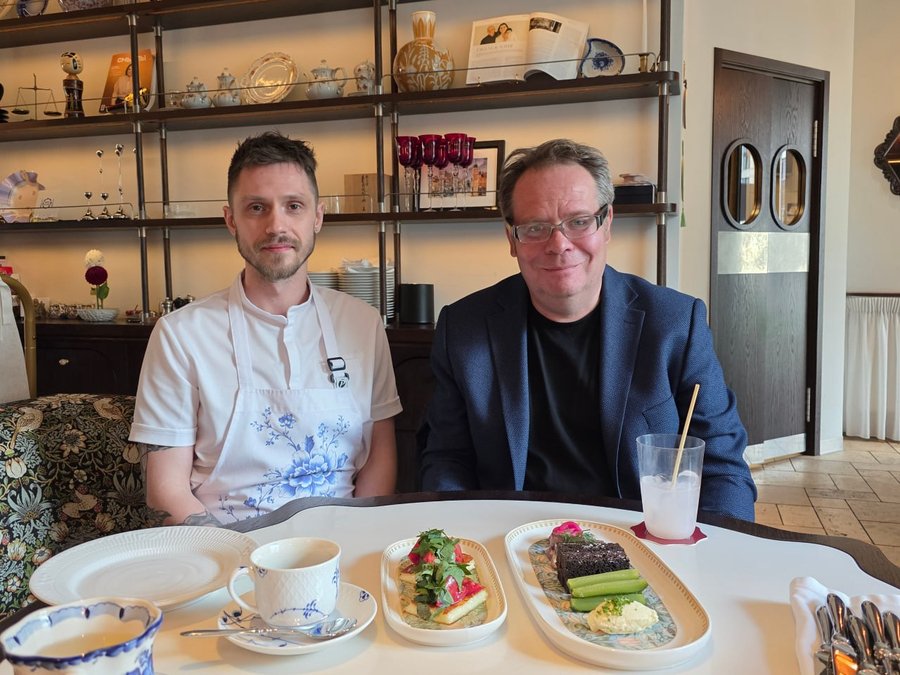
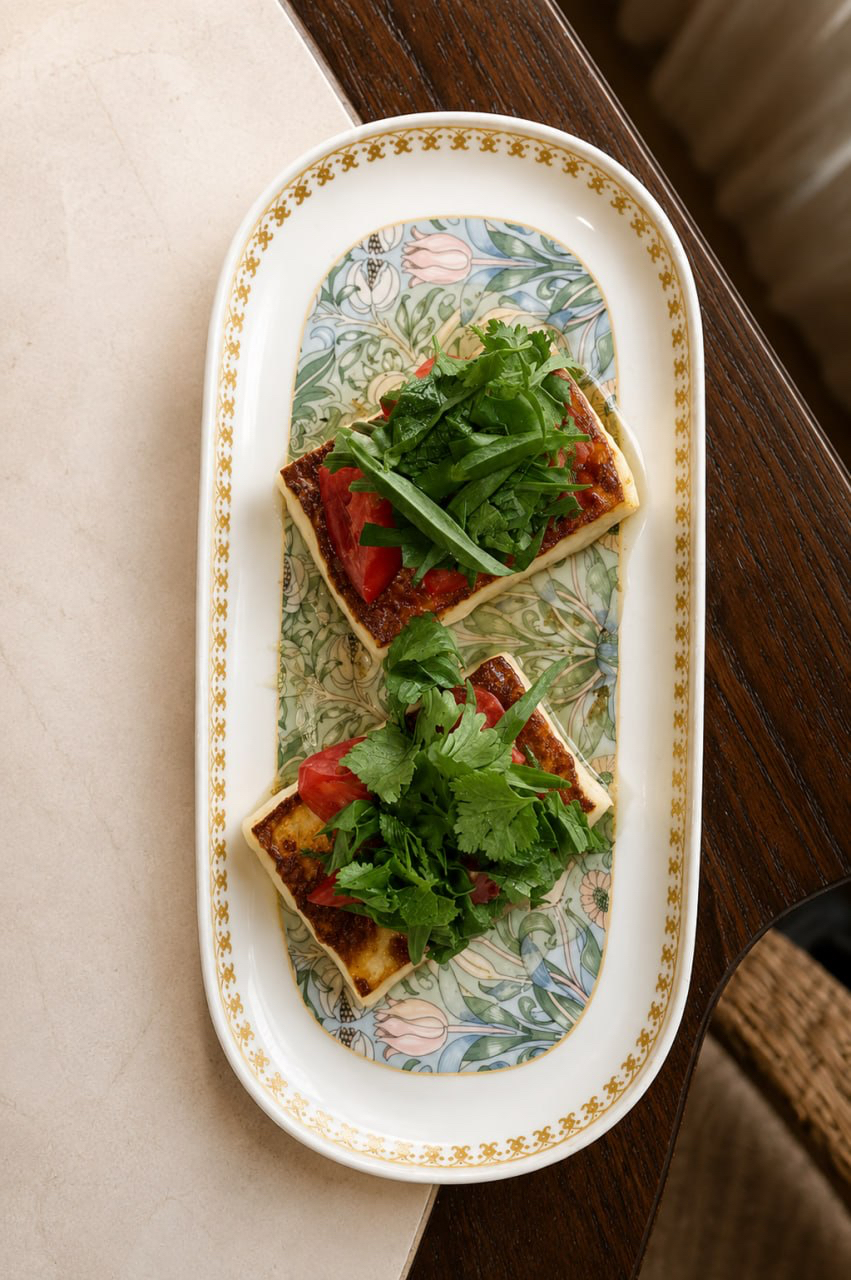
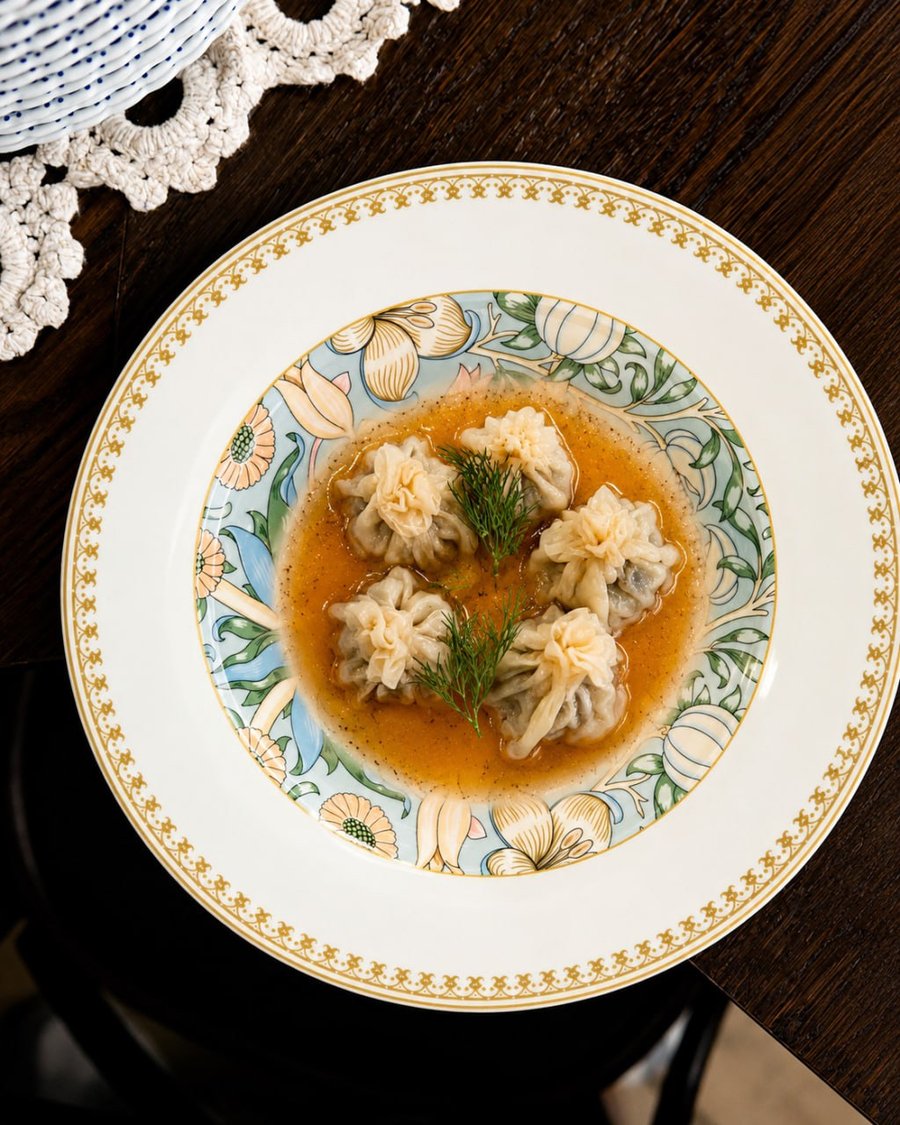
«Maslovka, ” adhering to Farquharson’s maximums, seeks its audience in quite unexpected places. Cosmetic brand collaborations with restaurants have become tiresome in the last year. However, the same is not true for museums, and „Maslovka“ is one of the pioneers. In September, the museum partnered with Anna Bistro to launch a special menu dedicated to the exhibition held at „Maslovka“ at the time. By presenting a ticket to the exhibition, one could receive one of the dishes for free. Because the restaurant was chosen in the Artists’ Quarter area according to the museum’s program, local residents and visitors of the neighborhood who had not yet discovered „Maslovka“ were able to learn about it. (It should be noted, however, that this is not simple: the museum does not have a separate building, and the entrance resembles a standard apartment building entryway, meaning that even knowing its existence, coming to the exhibition requires navigating a true urban quest.)Similar collaborations in Moscow restaurants occurred between Geradine and the A. S. Pushkin Museum in 2022 [3] and SAPIENS and the Museum of Moscow in 2024 [4]. This season, only Savoy and the Kolomenskoye Museum-Reserve organized something similar—by purchasing a dessert dedicated to the exhibition „Sacred and Radical: The Red Thread of Russian Art, ” one could win a photoshoot on the reserve’s grounds [5].
Museum Entrance. Source: Yandex Maps
Maxim Vtoraya: Hospitality.
Farkhursan postulates: «Don’t skimp on connection; try to make people feel welcome. All we can expect in return for our hospitality is openness and a little curiosity» [2].
One vibrant format that reflects this principle is the «Curatorial Kitchen.» The museum periodically hosts events where museum curator Kirill Svetlyakov holds an informal meeting with visitors. This event incorporates both traditional ways of interacting with the curator—such as a guided tour—and unconventional practices, like a brunch and a conversation about the behind-the-scenes aspects of museum work.
The format of sharing a meal, seating museum staff and visitors literally at one table, is intended to convey a sense of «hospitality» and a readiness to speak with the audience as equals. The museum emphasizes that this is truly a conversation, not a lecture.
«Curator’s Kitchen.» Source: https://t.me/gorodokMaslovka
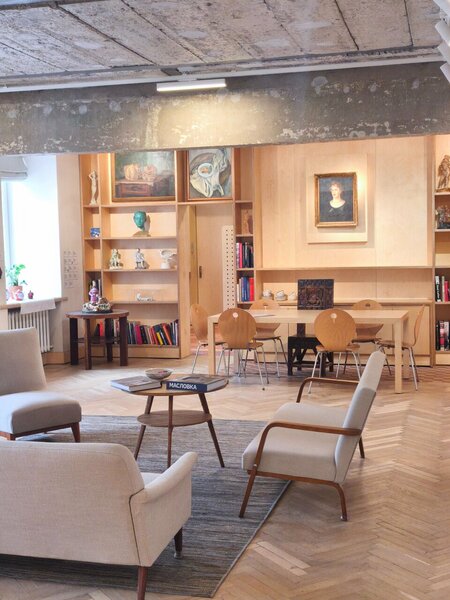
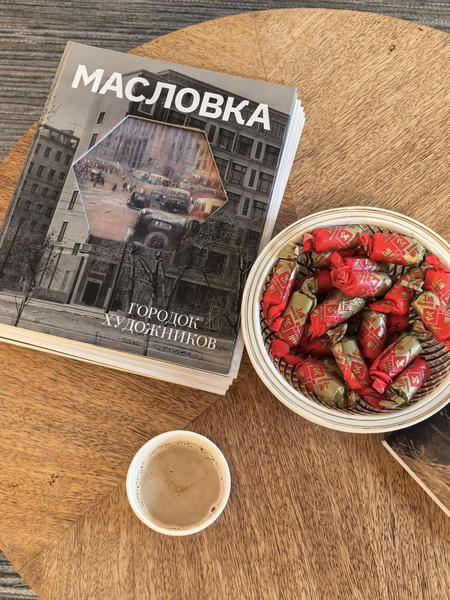
The Museum warmly invites visitors to feel at home: in the large hall featuring the permanent exhibition, there are sofas and a coffee table that always holds a vase of candies—not just any sweets, but Rotfront bars that evoke the Soviet era in every aspect. The museum also has a kitchen where anyone can make tea or coffee before settling onto a sofa to read books or magazines from the museum’s collection.
Источник: Яндекс-карты
Источник: телеграм-канал «Масловки»
The small size of «Maslovka» also contributes to, and likely compels the museum to be «closer to the people.» Regular tours are held at «Maslovka» with researchers and the curator. There are no official guides at the museum. Since few people know about it yet, tours usually have only two or three registered participants. As a result, it is practically a personal conversation with the people who worked on creating the exhibition.
Telegram Channel «Maslovki»: https://t.me/gorodokMaslovka (Date of access: 10/18/2026).
Maxim Third: Generosity stems from the hospitality and public nature of organized institutions.
When these principles were formulated, Farquharson was the director of the Nottingham Center for Contemporary Art—a state-funded organization. Speaking of generosity, he emphasizes the importance of keeping museum materials publicly accessible.
However, the situation at «Maslovka» is different. It is a private organization that must secure its own existence, meaning the commercial aspect cannot be ignored.
It is worth noting that the pricing at «Maslovka» is above the average for Moscow. For comparison: a series of 8 lectures at the Tretyakov Gallery (SEASON PASS 11, 2026–2027, Moscow Collectors) costs 4,400 rubles, while 10 sessions at «Maslovka» (Art History as a Personal Experience. Module I. Portrait—the Experience of Self-Reflection) cost 60,000 rubles. The course includes 8 lectures and 2 meetings with the artist. On one hand, there is again the unique integration of the viewer—the opportunity to learn not only about the process of exhibiting art but even its «creation.» On the other hand, the true possibility of this interaction is debatable. Not everyone can afford it.
Is the museum inviting engagement or trying to make a profit by offering a unique experience? A realistically optimistic answer, which is what we would like to settle on, is: both.
Spring Mentorship School at Maslovka. 15 spots filled (cost: 50,000 RUB). Photo: «Maslovka» Telegram channel
However, the British curator also emphasizes in this section his work and the provision of museum visitors access to the museum library, using the same materials that museum staff utilize for their research.
«Maslovka, ” as mentioned previously, also houses a library, albeit one that is quite modest in size. Its materials would clearly not be enough for the research staff. Nevertheless, with what is available, visitors can browse.
Additionally, one of the rooms contains a chest of drawers filled with numerous graphic works. Since the museum has a rather modest space, it is not possible to display every piece. Because graphic art often lacks the visual impact of large oil paintings, it was not included in the permanent exhibition. However, all visitors can view it. Yet, this option is usually reserved for the most inquisitive—only those who decide to pull on every drawer pull will discover that the drawers contain a complete collection of graphics by the artists of Gorodok. No sign indicates this possibility.
Chest of drawers with graphics. Source: Yandex Maps
Maxim Fourth: Interdisciplinarity.
One of the principles of the «Maslovka, ” articulated on her website, is interaction. However, this applies only to activities related to art; it does not refer to the merging of various professional communities, which is implied by Farkuharson: „The Museum is in constant contact with artists and heirs, and it also seeks new figures who currently work at the Maslovka, as well as outside of it. The result of this interaction is exhibitions and shows that preserve the ‘spirit of the workshops, ’ where everything matters—from paintings and sculptures to everyday objects, rarities, and reproductions that hung on the walls as sources of inspiration“ [1].
Nevertheless, a physician was involved in creating the upcoming exhibition, «Feminine Passions.» «The project was prepared with the participation of Natalia Bekhtereva, a psychiatrist and psychotherapist, and a successor to the Bekhterev family of brain researchers, which expanded the possibilities for research through psychological approaches, ” the museum reports [6]. Thus, Farrukharsun’s postulate „Maslovka“ was not overlooked either.