Project Idea
For my project, I chose the works of Helen Hyde—an American artist known for her colorful engravings and woodcuts inspired by Japanese culture. She is considered one of the first Americans to study Japanese printing techniques in Japan and a leading figure in the Japanese art movement in the U.S. from the late 19th to the early 20th century. Her pieces are distinguished by a delicate color palette and harmonious composition, often featuring an additional border around the scene.
The project’s goal is to train a neural network to analyze and generate images that retain the visual aesthetic and stylistic characteristics of Helen Hyde.
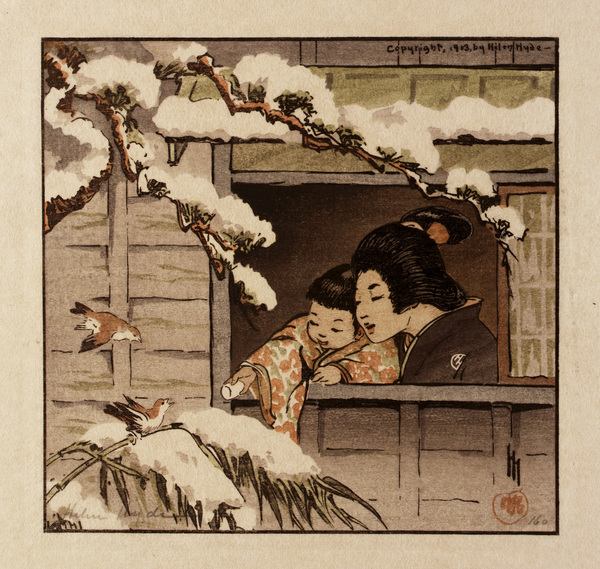
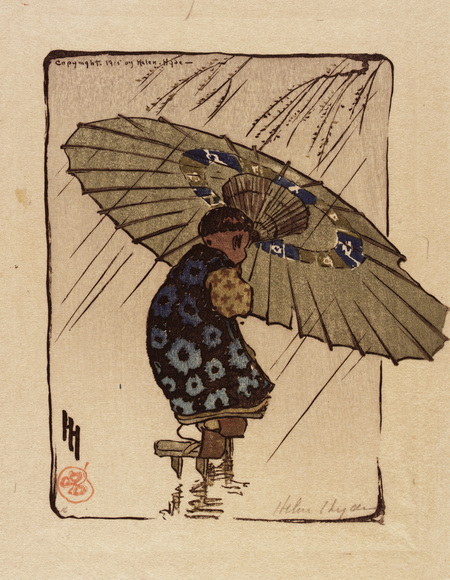
Helen Hyde’s Work Examples
Dataset
A dataset consisting of 25 works by Helen Hyde was prepared to train the neural network, selected for their representativeness and adherence to the characteristic features of her artistic style. All images were pre-processed and standardized to a 1024×1024 pixel square format.
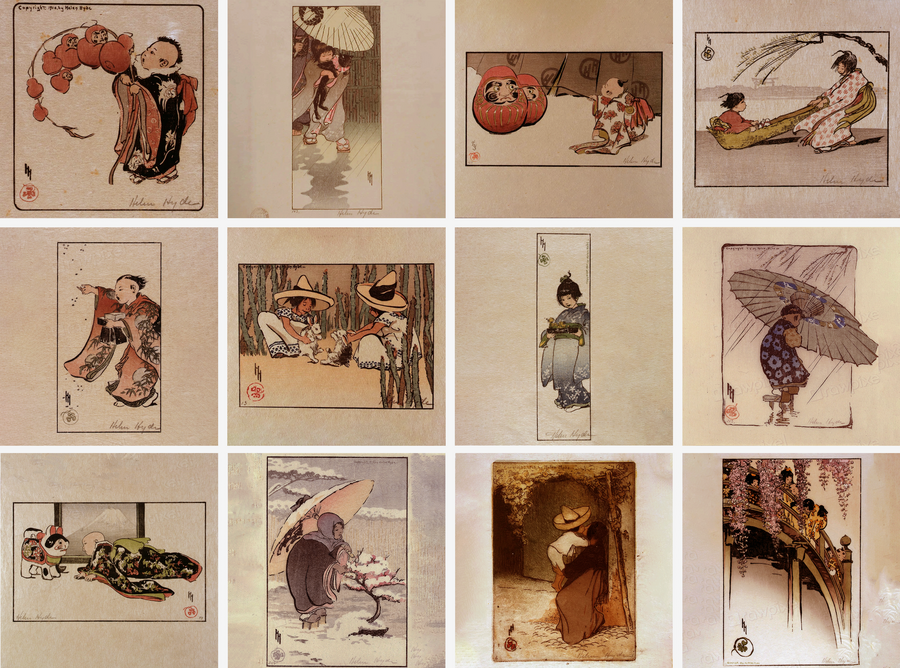
Part of the collected dataset
The Learning Process
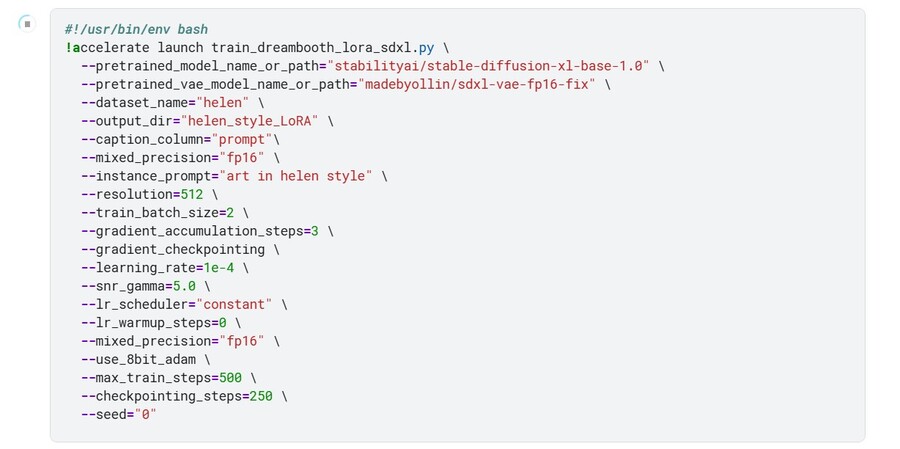
The Kaggle platform was selected as the environment for implementing the project. At every stage—from data preparation to image generation—the work was carried out in accordance with the instructions presented in the course video tutorials.
The dataset work phase involved loading images and generating custom captions using the BLIP model.
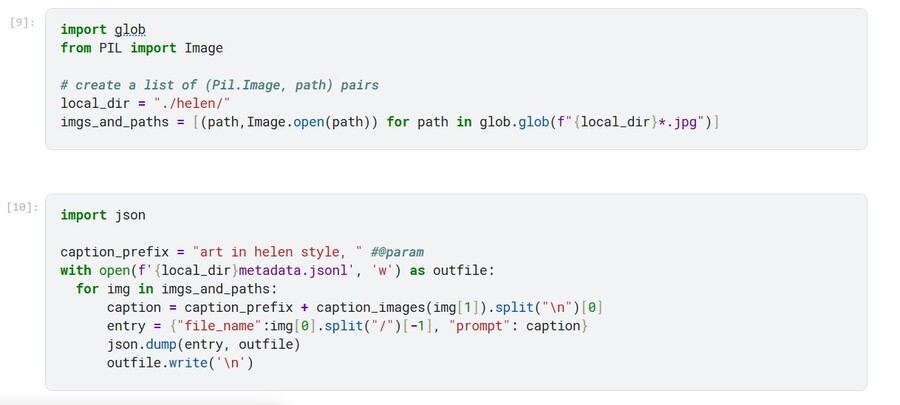
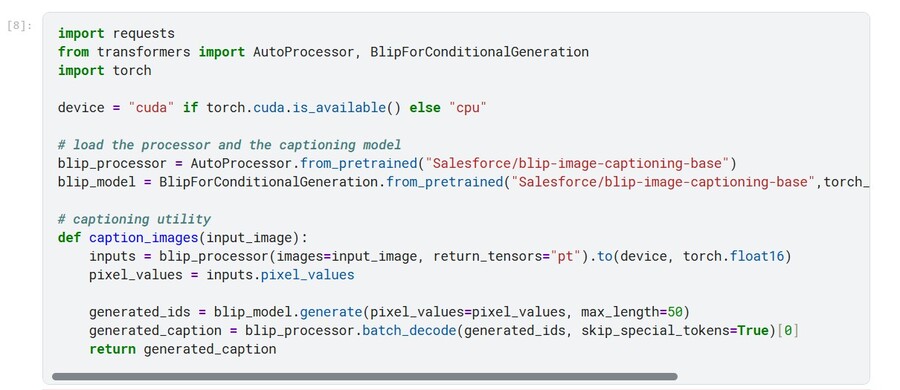
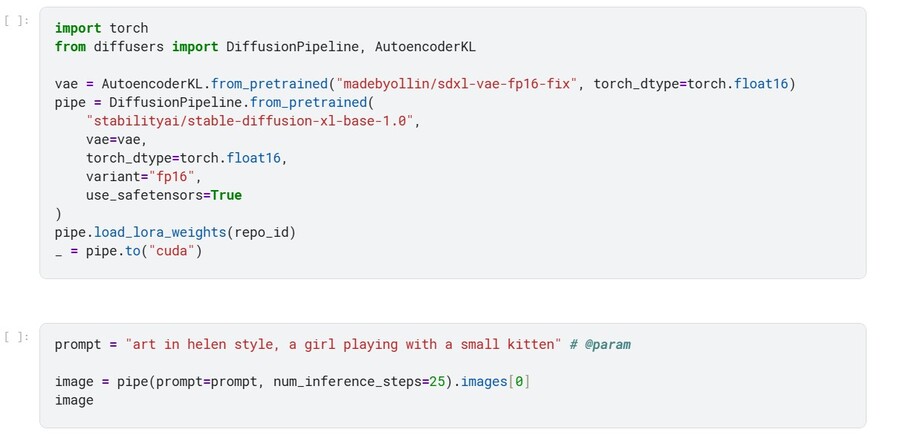
Integration with the Hugging Face platform has been completed. The final stage of the project involved image generation.

Initial Results
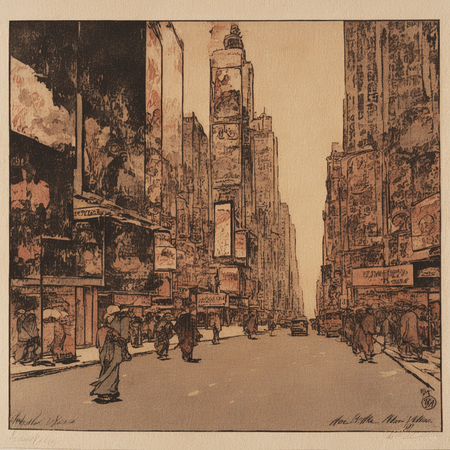
The first trial generation featured a scene set in Times Square, New York. Since the model was trained predominantly on works depicting people rather than architecture, an acceptable result was only achieved by adjusting the pipe.fuse_lora (lora_scale=0.15) parameter. Nevertheless, Helen Hyde’s overall artistic style—her distinctive color palette, handling of white space, paper texture, and pencil markings—was preserved.
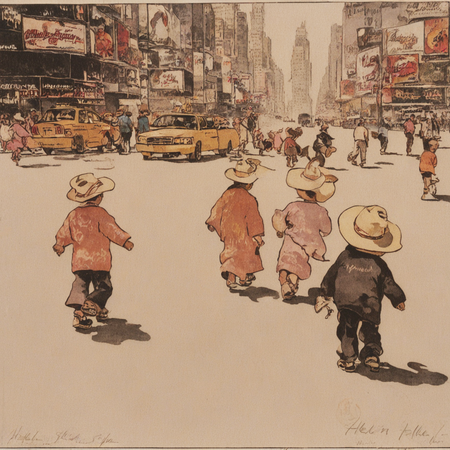
For scenes featuring people, the process proved significantly easier: the results closely approximated the style of Helen Hyde. The only drawbacks were artifacts in the anatomy and incomplete facial renderings.
The prompts and ideas for the following were generated using ChatGPT:
Girl with an umbrella under the cherry blossoms
A small Japanese girl in a detailed kimono holding a paper umbrella, standing under a blooming cherry blossom tree, gentle wind blowing petals, soft pastel watercolor style, delicate paper texture, dreamy and calm atmosphere, highly detailed, soft lighting
Children feeding koi fish in a pond, stone bridges and bamboo plants surrounding it, reflections in the water, soft pastel watercolor style, gentle color gradients, transparent water, soft shadows, warm and joyful atmosphere, highly detailed, serene scene
A girl and a kitten on a wooden veranda
A girl in a kimono playing with a small kitten on a traditional wooden veranda, Japanese garden with stones and a miniature pine tree in the background, warm earthy watercolor tones, detailed textures of the kimono and kitten fur, cozy and intimate atmosphere, soft lighting
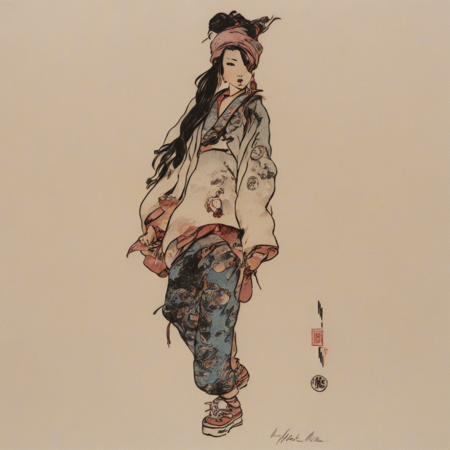
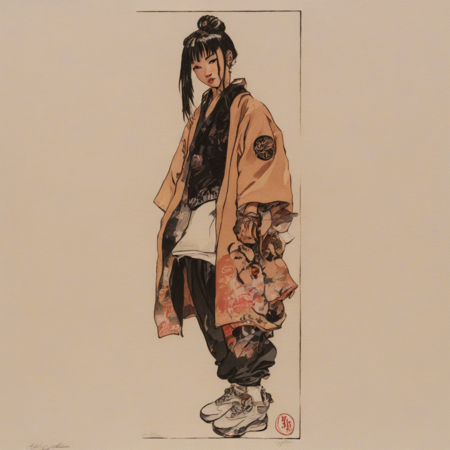
The lower the lora_scale value, the higher the probability that the characteristic black border around the image will disappear.
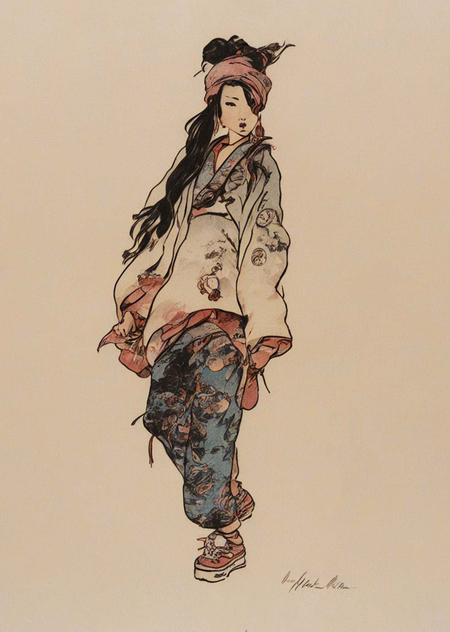
At one point, I became curious whether the model could generate images of people outside of the Asian region—without a traditional Japanese setting. In the initial attempts, the results looked strange: when prompted with «american hip-hop girl, ” the model most often limited itself to simply changing the footwear to sneakers. Nevertheless, these kinds of results also seemed useful, for instance, for developing costume or character concepts.
Final Series