Concept
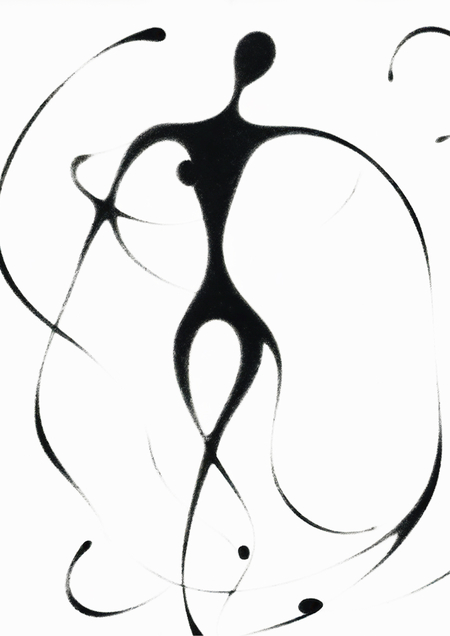
The project is based on training a generative neural network using a series of original graphic illustrations of abstract human figures. The series is rooted in simplifying the human body down to a minimal set of lines: anatomical details are virtually eliminated, and the focus shifts entirely to silhouette, movement, and the fluidity of form.
The visual language of the images is constructed upon minimalism and linearity. The smooth line simultaneously shapes the figure and conveys the character of its movement, transitioning from thin strokes to denser, more expressive areas. The abundance of negative space further underscores the succinctness and plasticity of the silhouettes.
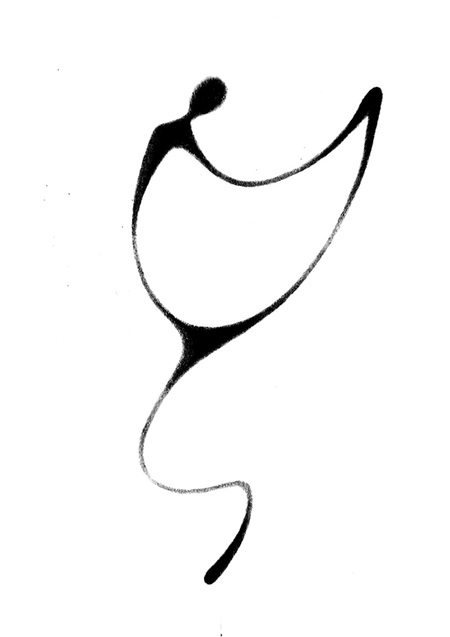
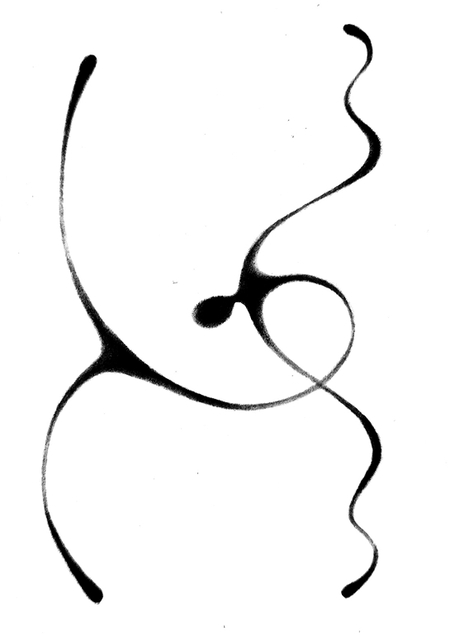
The neural network trained on these images becomes a tool for continuing and developing an existing series. It utilizes the distinctive features of the original works to create new figures and compositions, interpreting the specified visual language in its own way.
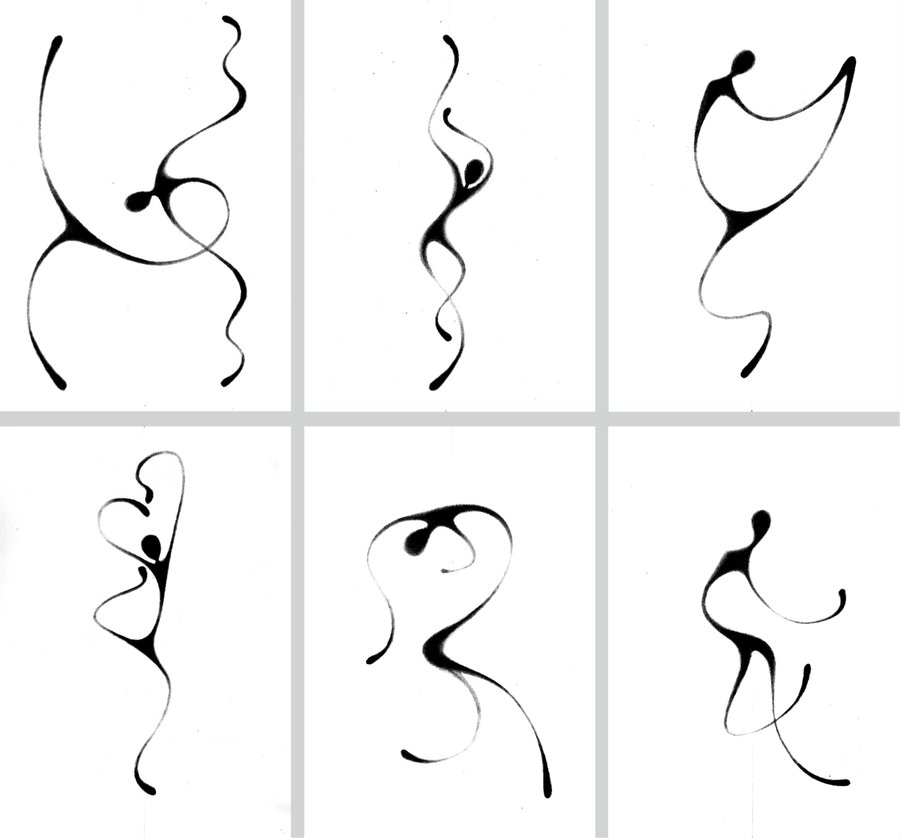
Source Images
The Learning Process
In the initial phase, an environment was prepared to train the generative model Stable Diffusion XL (SDXL) using DreamBooth and LoRA methods. The necessary libraries—diffusers, transformers, accelerate, peft, and bitsandbytes—were installed, and a script for training DreamBooth LoRA on SDXL was uploaded.
A proprietary dataset of images featuring abstract human figures was prepared for model training. The works are unified by a consistent visual style: minimalism, linearity, fluid, sweeping forms, and an emphasis on the movement of the human silhouette. A separate directory was created in Google Colab:
my_lineart
Automatic text descriptions were generated for each image using the BLIP (Bootstrapping Language-Image Pre-training) model. BLIP analyzes each artwork and forms a textual description of its content. A special identifier was added to these descriptions: in my_line style
This serves as a designation for the trained visual style. Consequently, each image is linked to a text description, for example, using the structure: in my_line style, [image description]
The resulting data is saved in the metadata.jsonl file, which contains the name of each image and its corresponding prompt.
After preparing the dataset, the fine-tuning procedure for the Stable Diffusion XL 1.0 model was initiated using the DreamBooth method with LoRA. The concept used for training is: in my_line style
In the final stage, new images are generated using text prompts. Each prompt begins with the identifier «my_line style,» followed by a description of a new composition or the placement of human figures.
For example, models are asked to create a single figure in motion, two dancing figures, a seated figure, two embracing figures, three figures in circular movement, a reclining figure, or a human silhouette transitioning into a flower shape.
Throughout this process, the core characteristics of the original visual language are maintained in the prompts: smooth continuous lines, minimalist human figures, the absence of distinct facial features, varying line weight, monochromatic tones, and generous use of white space.
Generated Images
my_line style, a single abstract human figure in a graceful dancing pose, the entire body formed from a few continuous flowing black lines, extremely elongated curved silhouette, dramatic variation between very thin and thick strokes, soft charcoal-like edges, organic asymmetrical curves, minimal details, large areas of untouched white space, pure white background, monochrome black and white, minimalist gestural drawing, centered composition
my_line style, two abstract human figures dancing together, their bodies intertwined and constructed from long continuous sweeping black lines, simplified oval heads without facial features, extremely minimal anatomy, elegant curved gestures, lines crossing and merging into each other, varying line weight from delicate grey-black strokes to dense velvety black areas, soft dry-brush texture, lots of negative white space, pure white background, monochrome minimalist drawing
my_line style, an abstract human figure stretching upward with both arms raised above the head; the body is reduced to a single, elongated, flowing gesture, with long, curved limbs merging naturally into the torso and a tiny, featureless head. It features a sweeping S-shaped silhouette, expressive variations in line thickness, a soft, fuzzy charcoal texture at the edges, and black pigment fading into gray in the thinnest areas. The piece is isolated on a completely white background, forming a highly minimal monochrome composition.
my_line style, a seated abstract human figure viewed from the side, knees drawn toward the body, anatomy reduced to elegant loops and continuous curved strokes, one small oval head connected directly to a sweeping shoulder line, no face, no clothing details, black flowing lines with strong thick-to-thin transitions, soft airbrushed charcoal edges, delicate grey fading in narrow strokes, large empty white background, minimalist gestural figure drawing
my_line style, a single abstract human figure leaning dramatically backward, body represented through one long sweeping curve, head as a small solid black oval, torso opening into a large empty loop, extremely elongated arms and legs suggested by only a few lines, fluid calligraphic movement, dense black junctions where lines meet, thin strokes gradually fading to gray, slightly fuzzy dry charcoal texture, white paper background, monochrome minimalist gestural drawing
my_line style, three abstract human figures moving together in a circular dance, bodies rendered from sparse, continuous black curves instead of realistic anatomy, small oval heads, and elongated, flowing limbs. The lines intersect and weave through each other while maintaining visual simplicity, alternating between thin, delicate strokes and heavy, velvety black sections. The composition features an organic, calligraphic rhythm, soft charcoal-like edges, a vast amount of white negative space, and a pure white background—a monochrome, minimalist composition.