This material was prepared by the author based on the scientific article, «The Secret Room: Aesthetics and Functions of Wardrobe Spaces on Screen and the Visualization of Clothing Storage for Movie Characters, ” published in the journal „Fashion Theory: Clothing, Body, Culture.“ The full text of the article is available [here](https://nlobooks.ru/upload/iblock/5e3/3sca6bbrrwm07kt4e1eriwjr566h4qlb.pdf).
Costumes in cinema have long become an essential part of the visual world of films—a feature that rarely escapes the notice of even those viewers not highly versed in fashion or visual aesthetics. Furthermore, the history of cinematic costume has become a subject of interdisciplinary research within the academic field, where various aspects of this topic are analyzed—from the aesthetic qualities of costumes and their function within the visual style and plot of films, to more specific considerations, such as the role film costumes can play in shaping stereotypes surrounding specific character groups (Fyers 2024: 23–24) or film genres (Whitehead & Petrov 2018: 8–9).
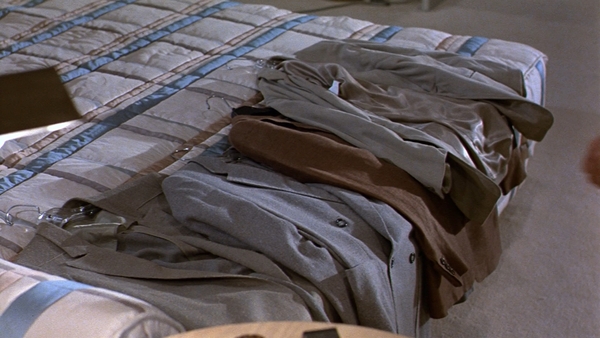
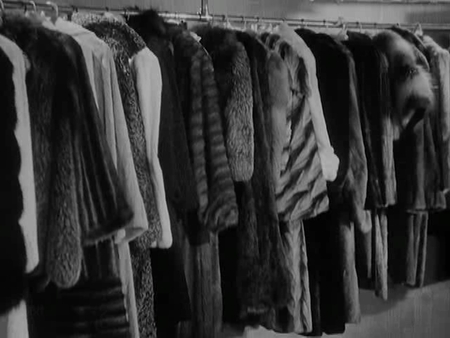
Left: a still from the film «American Gigolo» (1980, dir. Paul Schrader). Right: a still from the film «Easy Living» (1938, dir. Mitchell Leisen).
It is interesting that the question of how characters visualize the selection of specific garments to construct their own image—or the practices of storing characters' clothing within the film’s narrative world—is rarely covered in research on this topic. This question is addressed indirectly when studying narratives about the visual transformation of film characters and various variations on the Cinderella theme (Jeffers McDonald 2010: 41–42). In these cases, the focus is most often placed on studying the visualization of the transformation itself as a process. Whether it is a shopping scene where a film character acquires new clothes, or a scene of the heroine’s multi-stage transformation from an «unattractive person» to a «beauty"—in either case, the emphasis is placed precisely on the practice of changing appearance, replacing less appealing clothing with a more fashionable or presentable ensemble.
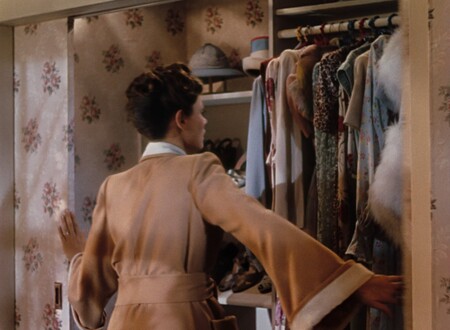
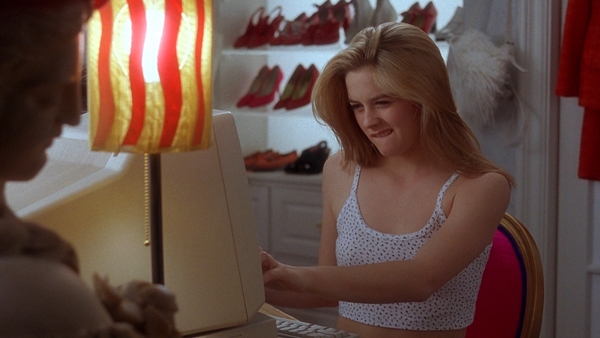
Left: A still from the film Leave Her to Heaven (1945, dir. John M. Stahl). Right: A still from the film Clueless (1995, dir. Amy Heckerling).
It is rare to encounter scenes in films where a character selects clothing not as part of a radical costume change, but within the context of daily practice—much like how we choose what to wear before leaving the house. At first glance, the routine nature of this process might explain why filmmakers traditionally give such scenes minimal attention or exclude them entirely from the film’s visuals. Consequently, this topic is rarely explored by scholars of costume history in cinema, as the aspects of clothing storage within the plot framework and the film’s visual aesthetics are far less noticeable and obvious than the costumes themselves and their function on screen. However, over the last thirty years, particularly against the backdrop of the recent surge in television series over the last two decades, episodes showing the selection and trying on of clothes stored in a wardrobe, as well as the visualization of those storage spaces, have increasingly appeared in cinema and television series.
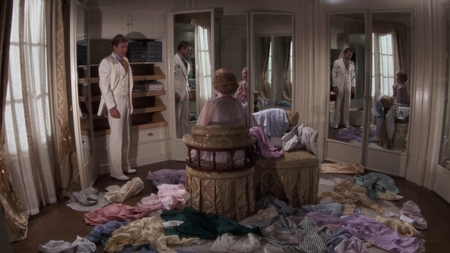
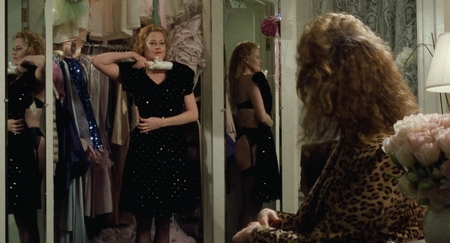
Left: a still from the film «The Great Gatsby» (1974, dir. Jack Clayton). Right: a still from the film «Working Girl» (1988, dir. Michael Nichols).
This trend is entirely predictable given the rise of consumerism and fast fashion, which began in the 1980s and intensified in the following decade with the emergence of the «fast fashion» phenomenon. Acquiring an increasing number of clothing items necessitated more space for storage; consequently, cramped closets were gradually being replaced by more spacious and functionally organized dressing room sections or entire rooms. This trend began to manifest in cinema during the same period—early examples can be seen as far back as 1980s films, and by the mid-2000s, the visual archetype of the «dream closet» had become a recognizable trope for fashionable cinematic and television characters. Although the 2010s and 2020s are more characterized by the concepts of sustainable fashion (Vasilieva 2019) and conscious consumption, large and meticulously organized dressing spaces, neatly filled with various garments, footwear, and accessories that communicate different behavioral aspects of the characters, can still be found in the films and series of these decades.
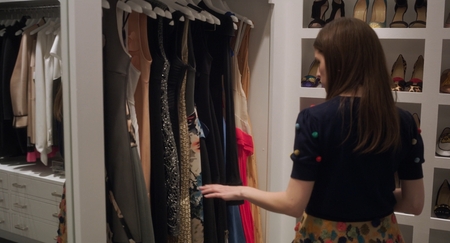
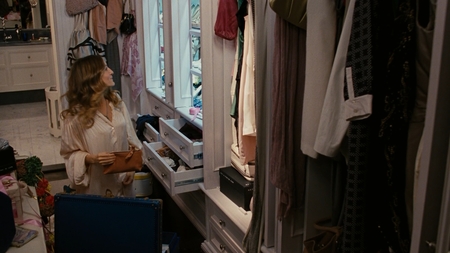
Left: A still from the film A Simple Favor (2018, directed by Paul Feig). Right: A still from the film Sex and the City 2 (2010, directed by Michael Patrick King).
The appearance of these kinds of «dream closets» on screen also testifies to the increase in screen time during which viewers can observe these spaces. Characters in past films spent minimal time with their wardrobes, if such scenes appeared in the film at all. Today, the visualization of storage systems in movies and series is intertwined with the time characters spend choosing their clothes and crafting an image—going through items in a closet, creating coziness, order, and a polished look within the storage area. In this context, it is particularly interesting to trace exactly how our perception of such an «unobtrusive» aspect of cinematic costume—the characters' on-screen wardrobes—has changed. Thus, the goal of this research will be to immerse ourselves in the history of character clothing storage in the visual world of film: specifically, how the cinema and series industry gradually moved from minimal screen time and cramped wardrobes toward an aesthetic of abundance and the open display of such an intimate space as the dressing room.
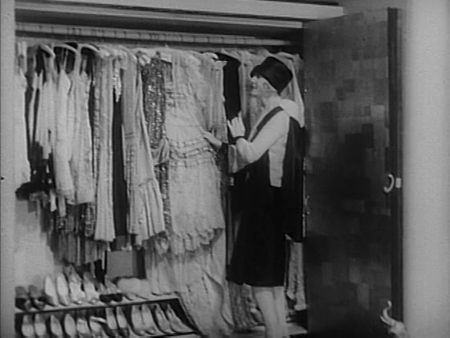
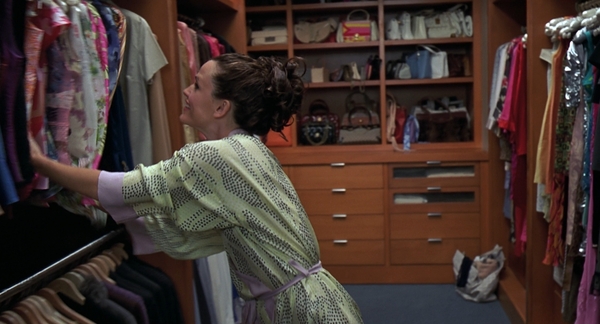
Left: A still from the film «Our Dancing Daughters» (1928, dir. Harry Beaumont). Right: A still from the film «13 Going on 30» (2004, dir. Gary Winick).
Bibliographic Citation:Bakina T. V. The Secret Room: Aesthetics and Functions of Wardrobe Spaces on Screen and the Visualization of Character Garment Storage in Films // Fashion Theory: Clothing, Body, Culture. 2024. Vol. 4. No. 74. pp. 133–153.The journal «Fashion Theory» is a quarterly scientific, theoretical, and cultural journal dedicated to fashion as a cultural phenomenon. The journal features analytical materials on contemporary fashion: the work of renowned designers, problems of fashion consumption, fashion journalism, fashion and PR, and fashion and photography. The journal publishes translations of articles by Western scholars from the leading international fashion journal, Fashion Theory: The Journal of Dress, Body & Culture, works by Russian costume historians, and classic texts on fashion theory.
The journal is indexed in the Russian Index of Scientific Citations (RINC).
Vasilyeva E. Fashion Strategy: The Phenomenon of the New and the Principle of Sustainability // Fashion Theory: Clothing, Body, Culture. 2019. No. 52.
Fierce J. The False White and the Immaculately Dressed Evil // The Criminal Wardrobe: Features of Deviant Costume / Ed. by J. Turney. Moscow: Novoye Literaturnoye Obozreniye, 2024. pp. 23–37.
Jeffers McDonald T. Hollywood Catwalk: Exploring Costume and Transformation in American Film. London: I.B. Tauris, 2010.
Whitehead G. D., Petrov J. Fashion and Fear // Fashioning Horror: Dressing to Kill on Screen and in Literature / Ed. by J. Petrov, G. D. Whitehead. London: Bloomsbury Visual Arts, 2018. pp. 1–24.
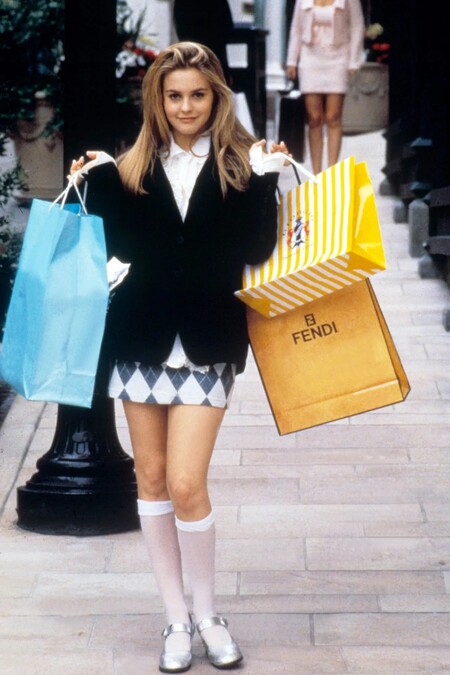
Cover Image: A scene from the film «Clueless» (1995, dir. Amy Heckerling)
A scene from the film «American Gigolo» (1980, dir. Paul Schrader).
A scene from the film «Easy Living» (1938, dir. Mitchell Lazenby).
A scene from the film «Leave Her to Heaven» (1945, dir. John M. Stahl).
A scene from the film «Clueless» (1995, dir. Amy Heckerling).
A scene from the film «The Great Gatsby» (1974, dir. Jack Clayton).
A scene from the film «Working Girl» (1988, dir. Michael Nichols).
A scene from the film «A Simple Favor» (2018, dir. Paul Feig).
A scene from the film «Sex and the City 2» (2010, dir. Michael Patrick King).
A scene from the film «Our Dancing Daughters» (1928, dir. Harry Beaumont).
A scene from the film «13 Going on 30» (2004, dir. Gary Winick).