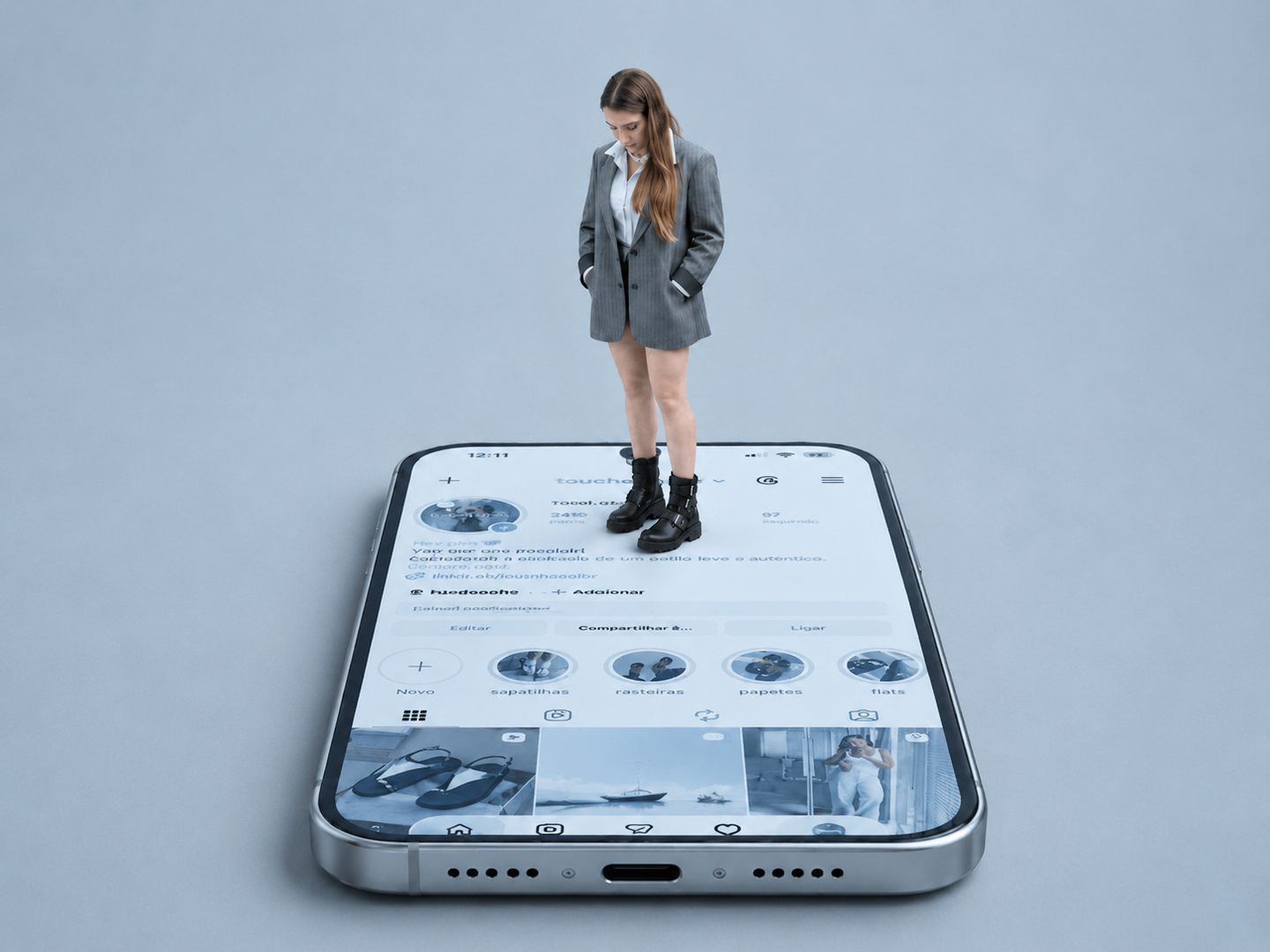
NOT ONLINE
Media on how to live on the internet without spending your entire life in it.
I want to stop picking up my phone every five minutes.

Media objective
The phone has long ceased to be a standalone device. Through it, people work, communicate, read the news, watch videos, shop, plan their day, and relax. The problem isn’t with the internet itself, but rather that using it consciously is becoming increasingly difficult.
Attach card
According to DataReportal, by October 2025, there were about 136 million internet users in Russia, with internet penetration reaching 94,4% of the population. Approximately 106 million user identities were registered on social media. This signifies that the digital environment is no longer a supplementary aspect of life for most people—it is its permanent infrastructure.
Data from Mediascope shows that in the first quarter of 2025, the average Russian citizen over the age of 12 spent 4 hours and 33 minutes online daily. For the 12–24 age group, this figure was already 6 hours and 49 minutes.
However, the issue is not limited to the number of hours. VTsIOM found in a 2025 study that 84% of internet users consume online news daily, but only 23% of Russians report regularly practicing digital news hygiene. This highlights the gap between constant information consumption and the skills needed to manage that flow.
The media’s goal is to help individuals understand their own digital habits and learn how to use their phones and the internet in a way that supports their lives, rather than subtly consuming all their free time and attention.
We are not advocating for deleting social media, abandoning smartphones, or scheduling eternal digital detoxes. Instead, we explore why people constantly check their phones, how notifications and endless feeds are structured, how to separate useful internet activity from informational noise, and what changes can genuinely be integrated into daily life.
After reading this material, the reader should not feel guilty about using their phone. They should understand what is actually happening with their digital habits and what they can do about it.
Future Media Topics
Segment: lifestyle, technology, and the psychology of everyday life.
Niche Topic: The human relationship with smartphones, the internet, social media, and the constant flow of information.
Here, the goal is not to turn media into another project about «digital detox.» There are already countless tips suggesting things like «delete apps, ” „set screen time limits, ” or „don’t bring your phone into the bedroom.“ A more compelling editorial niche lies at the intersection of technology and psychology. It answers not just the question, „How do I spend less time on my phone?“ but also probes questions like, „Why do I keep going back there?“ „How is this habit formed?“ „What is happening to my attention?“ and „How can I customize my digital environment?“
Five Editorial Sections
«Why I Picked Up My Phone Again» discusses habits, automatic scrolling, infinite feeds, notifications, and application mechanics.
«Set Up Your Internet» provides specific instructions on configuring your phone, notifications, screen time, subscriptions, feeds, and work chats.
«Internet Without Noise» examines news, social media, algorithms, information overload, and methods for filtering content.
«The Experiment» tests various ways to change digital habits in practice. For instance, one week without push notifications, one week without a phone in the bedroom, or two weeks limiting short-form videos.
«Life Off-Screen» explores what happens to a person after changing their digital habits. This can include personal stories, interviews, experiment diaries, and observations.
Why is this topic relevant
By 2026, the internet will no longer be a discrete space from which one can simply «log off.» According to the latest available DataReportal figures for Russia, published in their Digital 2026 report, 94,4% of the population uses the internet. The authors specifically clarify that this data pertains to October 2025 and that this period forms the basis of their report.
Mediascope indicates that Russians spend several hours online daily, with this time being significantly higher among younger demographics. Social media and video are among the largest categories of internet consumption.
Another fact is important. Research shows that the issue cannot be boiled down to a simple formula: «more screen time equals worse health.» For instance, a randomized study published in BMC Medicine in 2025 involved 111 students. Participants in the experimental group limited smartphone use to two hours a day for three weeks. Following this restriction, they experienced slight to moderate improvements in well-being, stress levels, symptoms of depression, and sleep quality. However, once the restriction ended, screen time quickly returned to its original level.
This is a crucial editorial point: media should not promise a magical «detox.» Instead, it must examine the underlying mechanisms and test what changes the average person can realistically sustain.
For keyword research on this topic in Wordstat, I would specifically check the search queries: «how to spend less time on the phone, ” „how to stop endlessly scrolling on the phone, ” „screen time, ” „digital detox, ” „how to disable notifications, ” „how to break phone addiction, ” „how to limit social media, ” and „why am I always looking at my phone.“ The precise frequency should be taken directly from Wordstat on the submission date, not by inserting approximate values.
Competitors and Their Analysis
Objective
Goal: To understand who is currently addressing the relationship between individuals and smartphones/the internet, and what is lacking in existing content.
The search covers queries such as «how to spend less time on the phone, ” „how to stop mindlessly scrolling, ” „digital hygiene, ” „digital detox, ” and „how to reduce screen time.“ Additionally, we are analyzing content from Zen, Telegram, VK, major media outlets, technology publications, and psychology-focused projects.
Comparison criteria include: format, platform, audience, tone of voice, depth of material, practical value, presence of research, specific instructions, and real-life experiments.
Direct and indirect competitors
Major Media: RBK Education’s 2025 feature analyzes notifications, information overload, digital clutter, and attention management. This shows that the issue is already on the agenda of major publications. TJournal discusses digital detox practically, while readers debate in the comments whether they should delete apps. Inc. Russia writes about brain overload and concentration, referencing research. Lady Mail advises reducing the load gradually and with a gentle tone. «Arguments and Facts» approaches the topic through the lens of family and children.
Practical Publications: T2 Journal publishes specific advice, including from psychologists. Progressly, DayBooster, and other smaller projects view the phone as a behavioral habit and suggest limits and environmental changes, though they usually focus on just one aspect.
Corporate Media: Sovcombank’s journal presents statistics: 40,8% of Russian users over 14 occasionally practice digital detox. «Sportmaster» frames the topic through sleep and health. Samsung Explore chose the format of a personal experiment: the author lived without the internet for a week and recounted moments when they almost failed.
Cybersecurity: Cossa examines digital hygiene as the ability to vet content and recognize misinformation.
Indirect Competitors: Yandex Practicum’s media writes about productivity and focus, using humor, memes, and polls in Telegram. Lifestyle media offers practical tips on habits and energy. An industry publication shares materials on multitasking and the impact of smartphones on concentration.
Content is broken down by areas: safety, life hacks, psychology, and settings. There is a wealth of advice, but few personal experiments or deep dives into research. «Off the Feed» unifies these themes around one question: how to navigate the digital world without giving it all of your attention.
Insights and Solutions
First insight. Most advice starts with prohibition. Delete the app, set a limit, turn off your phone.Solution: Instead of prohibition, we present a system. First, the person identifies exactly where the problem arises, then changes one habit, and only after that assesses the result.Second insight. Content often mixes different problems. «I spend too much time on my phone» could mean work chats, entertainment, news, loneliness, or mindless scrolling.Solution: We categorize phone use by function, showing that the same screen time can mean something entirely different.Third insight. The technological side is usually left out.Solution: We explain how notifications, recommendations, infinite feeds, autoplay, and app mechanics actually work. We don’t demonize technology; we translate it from interface language into understandable human language.Fourth insight. People often know they are doing too much, but they don’t understand why they can’t change it.Solution: We create an «Experiment» feature where the editorial team tests various methods for changing digital habits and honestly shows not just the success, but also the relapses.