«To our precious, indispensable, brilliant Nadezhda Petrovna Lamanova, I roar at the top of my lungs: ‘Bravo, bis! ’» (K. S. Stanislavsky, Collected Works, Vol. 8, p. 349)
navigation
Concept On the Fashion Designer Theater
Productions: Life in the Claws Anna Karenina The Marriage of Figaro The Cherry Orchard
Legacy Conclusion
concept
Nadezhda Petrovna Lamanova earned the nickname «Russian Coco Chanel» and was recognized as a master of haute couture. Her talent was sought after in the imperial courts, and she held a key position in the USSR’s fashion industry. Her creations were worn by as many people as famous Moscow merchants as by stars of Soviet cinema, making her an icon of domestic fashion art.
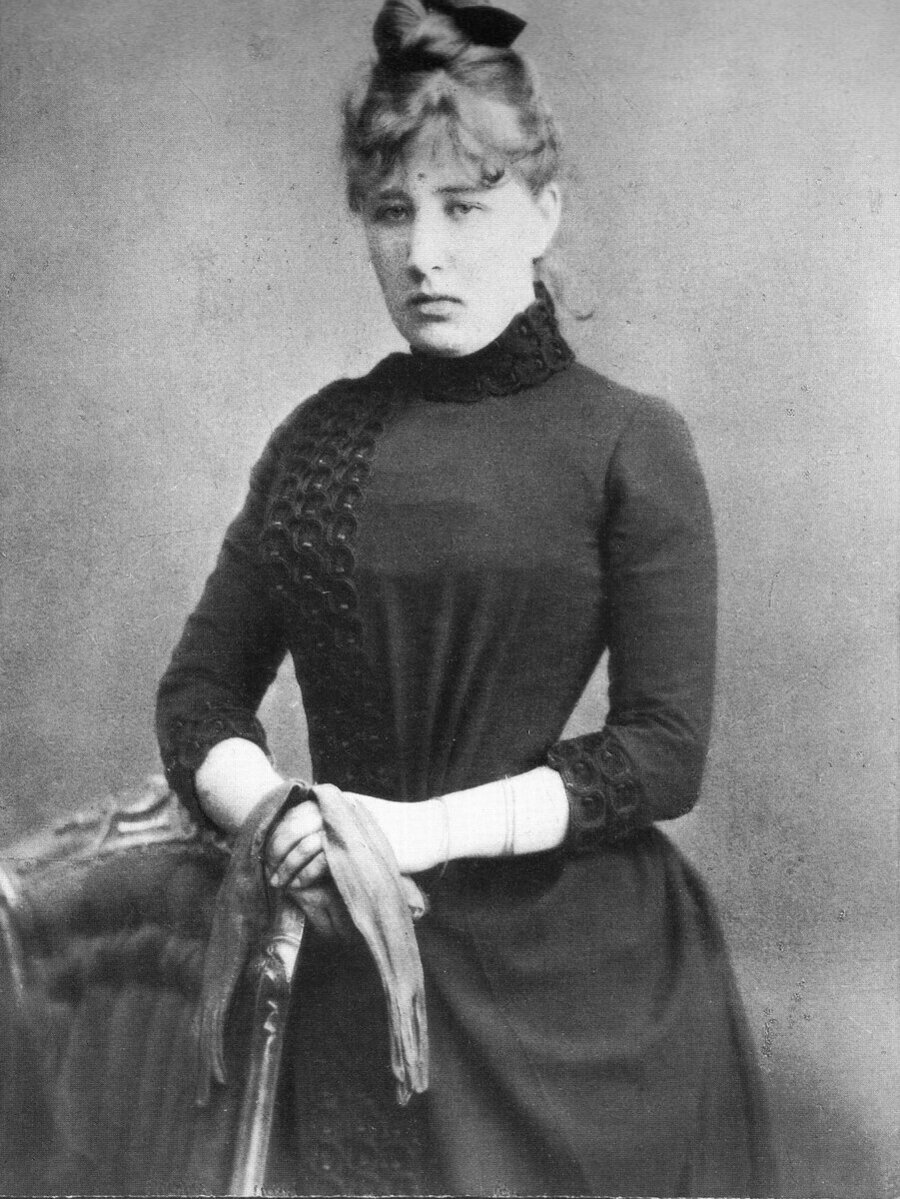
Nadezhda Petrovna Lamanova (1880s), photograph by A. O. Karelin
«The Vakhtangov Theatre, the Revolution Theatre, the Red Army Theatre—she managed to clothe every actor. She designed costumes for the films Elite, Alexander Nevsky, The Circus, Generation of Victors. But she never gave up her old love—for Stanislavski and his creation, the Moscow Art Theatre.» — Valentin Pikul
Lamanova’s creations were distinguished by the fact that they not only harmonized with the actor’s persona but also seemed to engage in a dialogue with the character, embodying the intended nature alongside the actor. This quality of her work was especially valued by Stanislavski, who was known for his meticulous attention to detail in acting technique.
Memoirs of Maria Osipovna Knebel:
«Stanislavsky would rise from his director’s seat and walk across the entire hall to greet N.P. Lamanova, kissing her hands to thank her for the brilliant costume execution. He would immediately tell us, the youth, that Nadezhda Petrovna Lamanova considers herself a good seamstress, but in reality, she is a great costume designer—as a sculptor, she understands anatomy and knows how to magnificently adapt the actor’s body to the body of the character.»
It is surprising, but this woman’s name was virtually forgotten until recently.
Today, interest is being revived in the work of the designer-artist who stood at the forefront of Russian fashion for many years. Her creations are now exhibited in places such as the Hermitage and the State Historical Museum, and articles about her are being published, as well as films being made.
On October 22, 2022, a commemorative plaque was installed at her fashion house on Tversky Boulevard.
About the Fashion Designer
Nadezhda Lamanova, who moved to Moscow as a young woman, quickly made a name for herself in the city’s fashion world, despite a modest start.
Her unique approach to creating clothing without preliminary sketches—designing directly on the client—drew attention and brought her numerous orders. This allowed her to open her own atelier.
Her talent for creating clothing that perfectly accentuated the figure and reflected the spirit of the age won the hearts of Moscow women and transformed her work into art worthy of museum exhibition.
Marina Tsvetaeva rhymed: «That goddess is marble-like, Dress up—by Lamanova»…
Валентин Серов, Портрет Марии Николаевны Ермоловой, 1905 г. (Платье мастерской Н. Ламановой)
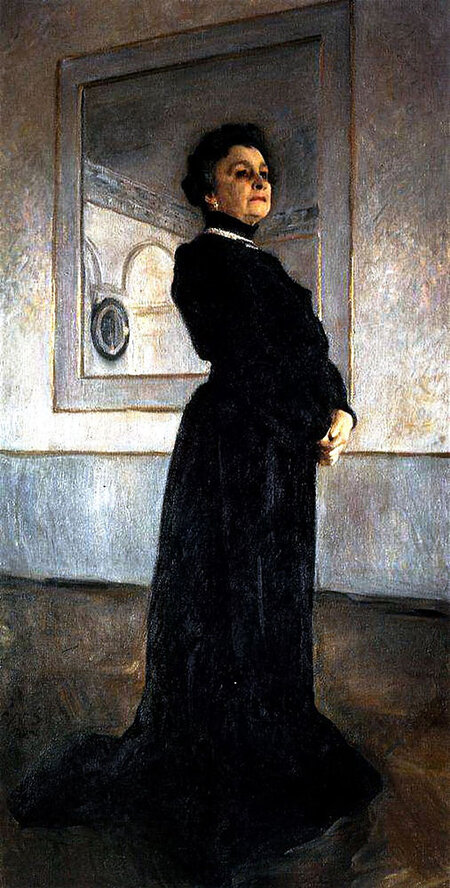
Константин Сомов. Портрет Евфимии Павловны Носовой, 1910–1911 гг. (Платье мастерской Н. Ламановой)
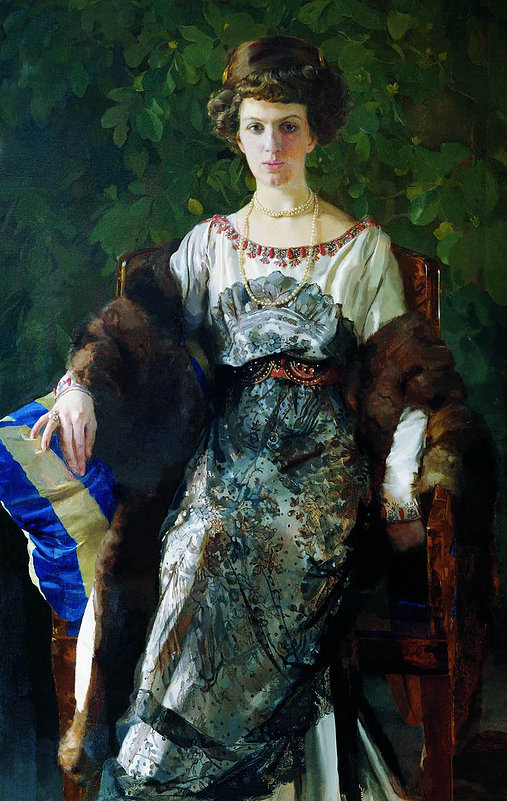
Nadezhda Lamanova quickly became a symbol of the highest quality and unique style in Russian fashion. Her talent attracted the attention of the most distinguished clients, including the Morozov, Mamontov, Ryabushinsky families, and even Grand Princess Elizaveta Fyodorovna. Her success reached its zenith when the Empress granted her the title of «Supplier to Her Imperial Majesty.»
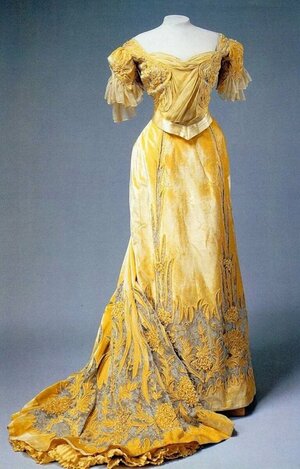
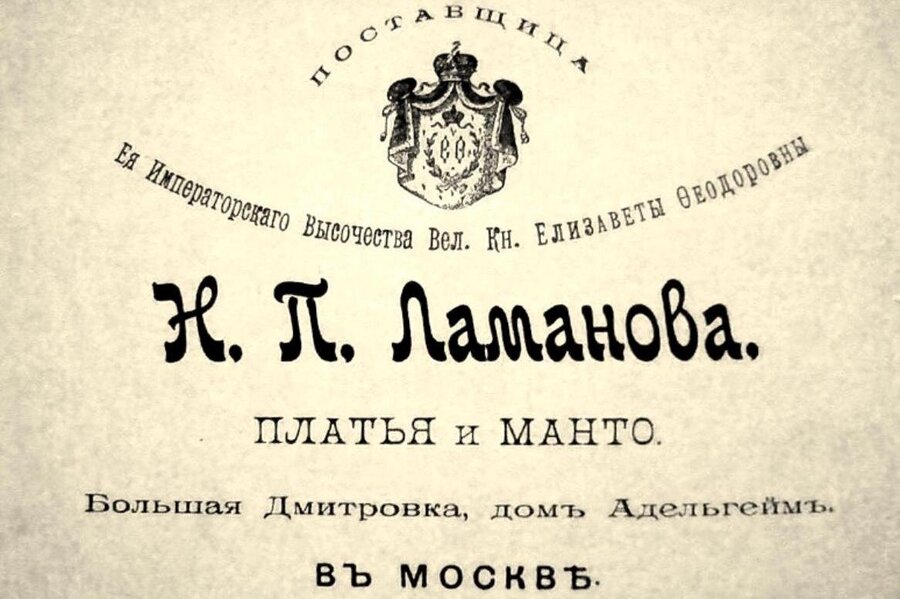
Empress Alexandra Feodorovna’s Dress (left), Lamanova’s Business Card (right), 1900s
Nadezhda Lamanova — Supplier to Her Imperial Majesty
Lamanova established her fashion house on Tversky Boulevard, which became a hub of beauty and fashion where she lived and worked alongside her seamstresses, whom she affectionately called her «daughters.»
The first fashion show in Russia took place in this house, featuring the renowned French designer Paul Poiret, who, inspired by Russian culture, created the «Kazan» collection.
«Driving through Moscow, I simply couldn’t resist stopping by the house of Madame Lamanova, the famous seamstress of those wonderful times, with whom I was friends and whom I always remember fondly. She opened the whole phantasmagoria of Moscow to me—this prelude to the Orient, ” wrote French couturier Paul Poiret, known as the „King of Fashion.“
Lamanova dedicated a significant part of her career to theater, creating costumes that came alive not only in daily life but also on stage. Her long-term partnership with the Moscow Art Theatre began with the first commission from Konstantin Stanislavsky in 1901 and continued throughout her life. Stanislavsky highly valued her talent, referring to Lamanova as a «great artist» and an «unrivaled master of theatrical costuming, ” comparing her skill to that of Shalyapin.
Елизавета (Нина Сластенина), спектакль МХАТ «Егор Булычев». 1934 год. Автор костюма Надежда Ламанова.
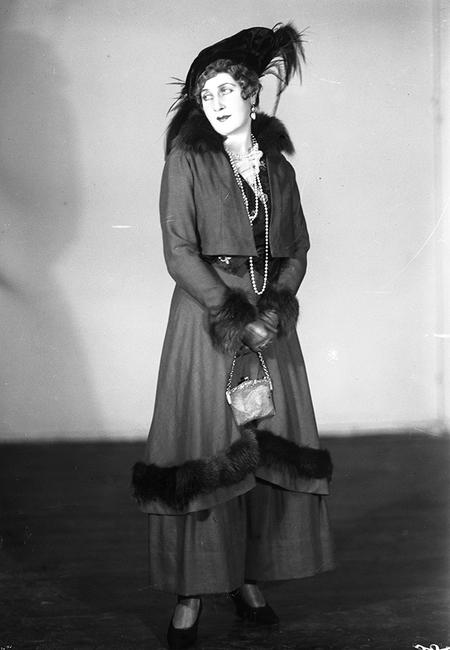
Антонина (Ирина Вульф), спектакль МХАТ «Егор Булычев». 1934 год. Автор костюма Н. Ламанова.
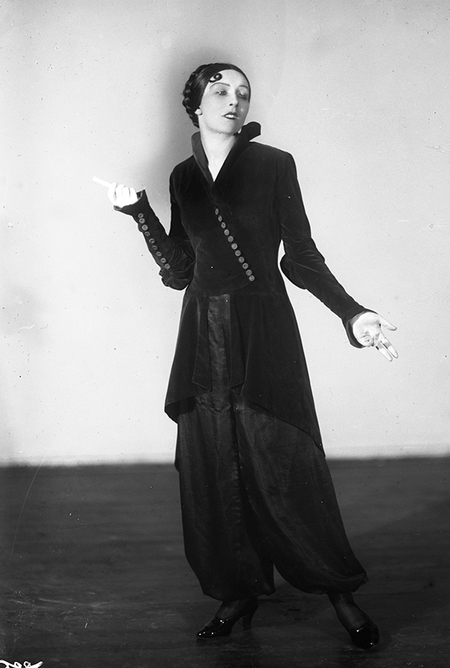
By 1917, Nadezhda Lamanova was a recognized master, dressing Moscow’s elite and artists, and she even worked with Stanislavsky.
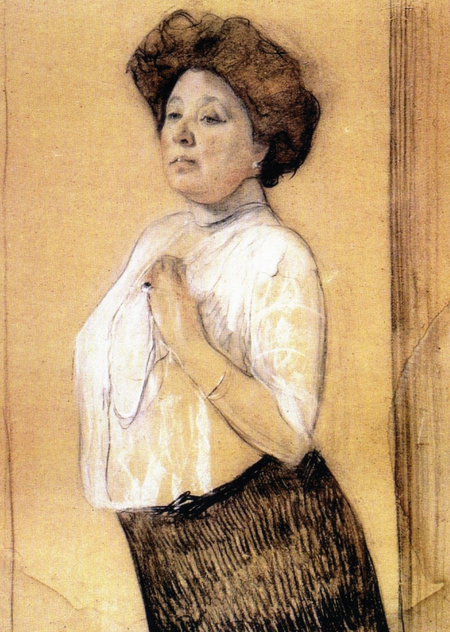
Her portrait, the last work by Valentin Serov, is held in a private collection.
V. A. Serov. Portrait of Lamanova. 1911
Maxim Gorky and actress Maria Andreeva, his common-law wife, saved Lamanov from death.
The Revolution turned her life upside down: she survived shootings near her home and was imprisoned, yet she refused to leave Russia. According to legend, she was saved by the actress Maria Andreeva, who was a partner of Gorky.
Later, Lamanova adapted her art to the conditions of the new Russia, creating dresses from readily available materials. Her work was highly praised at the World Exhibition in Paris in 1925, where she received the Grand Prix and a new surge in popularity.
MKhAT actresses in theatrical costumes designed by Lamanova: Knipper and Andreeva in the production «In Dreams» (1903), Androvskaya in «Advertisement» (1930), Tarasova and Stepanova in «Anna Karenina» (1937)
She was sought out by the wives and daughters of high-ranking party officials, military figures, and scientists. Her clientele included notable personalities such as Olga Knipper-Chekhova and Lyubov Orlova.
Lamanova also contributed to the film industry by creating costumes for movies like «Aelita, ” „The Circus, ” and „Alexander Nevsky.“
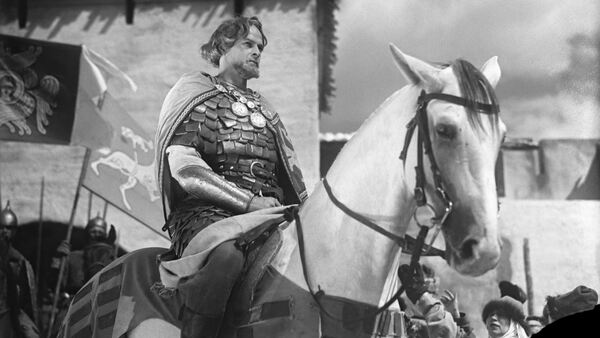
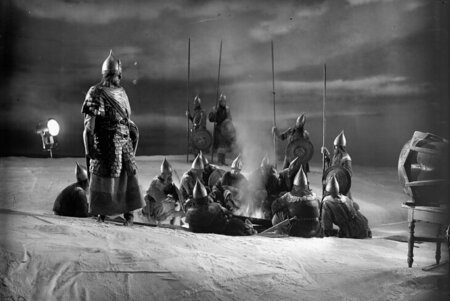
Stills from the film «Alexander Nevsky,» 1938
Nadezhda Lamanova continued her work with the Moscow Art Theatre (MXAT), and her collection of costumes is housed there today. In the autumn of 1941, as Wehrmacht troops approached Moscow, Lamanova was supposed to evacuate with the theater troupe, but she suddenly passed away from a heart attack, never leaving the city.
Theater