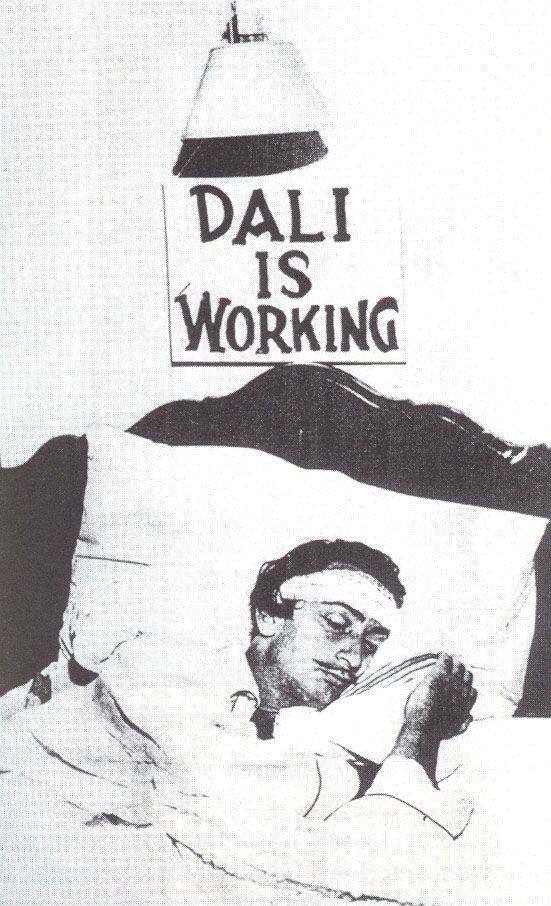
Музей как произведение искусства
Salvador Dalí Theatre-Museum in Figueres: architecture, viewer, institution
Наливайко Евгения, М26Д322, «Кураторство и критика в моде», 2026
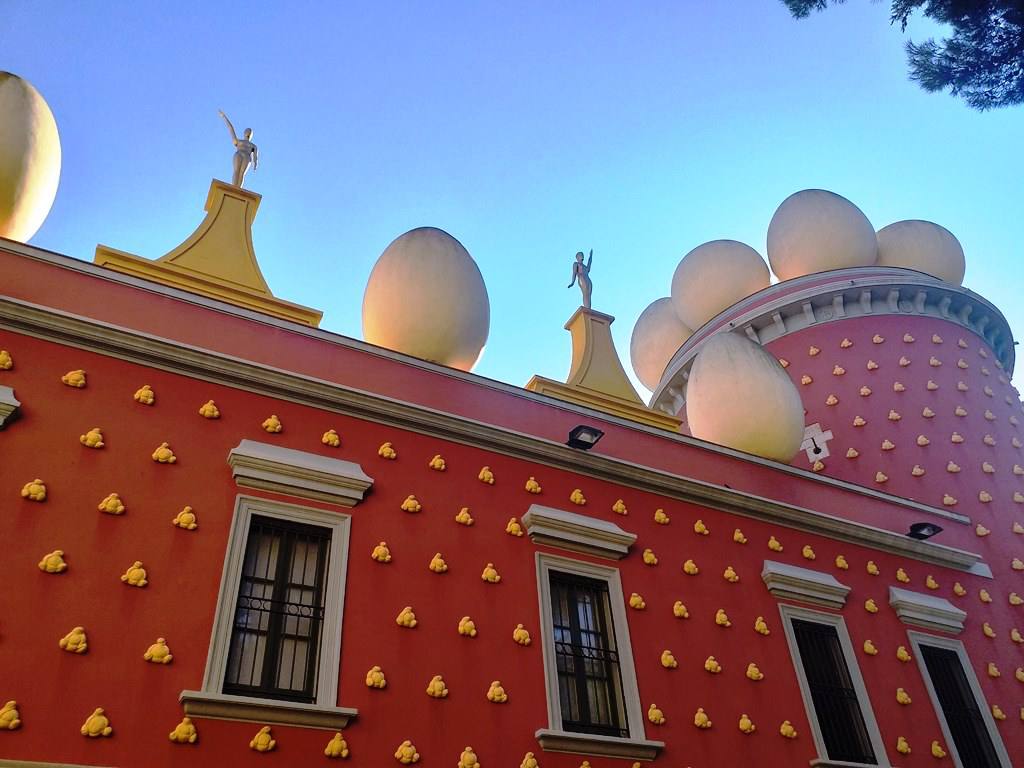
Salvador Dalí. The Galatea Tower design (formerly Gorgot), after 1981
Content / Study Structure
00 Concept: Question, Hypothesis, Method
01 The Building as Readymade
02 The Visual Language of the Facade
03 Route and Theatricality
04 Exhibition as Statement
05 The Museum as Institution
06 Conclusion
07 Bibliography and Image Sources
Введение / Объект
Dalí Theater-Museum in Figueres
1849 — Municipal Theater of Figueres was built
1974 — Museum opened on the ruins of the theater, September 28
1,500+ works and objects in the permanent collection
710,297 visitors in 2025The Museum was founded by Dalí in his hometown and is now managed by the Gala–Salvador Dalí Foundation. The artist participated in the building’s renovation, personally displayed the works, and continued to alter the museum even after its opening.
Введение / Обоснование темы
Why This Museum?
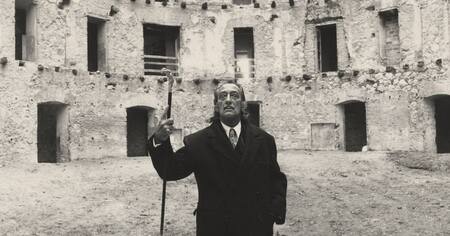
A Liminal Object Between Artwork and Institution.
In a typical museum, architecture serves as a vessel for the collection. At the Feijóo Museum, Dalí integrated the facade, the visitor route, the interiors, and the means of engaging the audience into a singular conception.For this reason, the museum is viewed through three lenses: as an authored work of art, as a space for visitor experience, and as an active institution.Введение / Актуальность
Why This Matters Now
50 Years of the Museum
In 2024, the foundation commemorated this milestone with exhibitions chronicling the building’s history: the artist’s museum became a subject of introspection for the institution itself.
Life After the Artist
Since 1989, the museum has existed without Dalí, and it must balance the artist’s original vision with accessibility, navigation, and mass tourism.
The Curator’s Perspective
For curating fashion, scenography is key to the presentation: much like a painting, the meaning of a costume is largely created by its environment. Figueras represents the ultimate case of an exhibition as a statement.
Ключевой исследовательский вопрос
How does the Dalí Theatre-Museum model redefine the traditional relationship between architecture, artwork, museum institution, and viewer?
Гипотеза
The Critic of the Neutral Museum and Its Hostage
Thesis
A theater-museum serves as an alternative to a «neutral» space for storing art. By merging architecture, scenography, exhibition, and artwork, it makes the mechanisms of meaning production visible and transforms the visitor from a spectator into a participant.
Contradiction
After Dalí’s death, the author’s original model encounters the demands of a modern institution: accessibility, navigation, and managing mass flow. The museum critiques the neutral model while being compelled to solve its problems itself.
Теоретическая рамка
The White Cube versus the «Living Organism»
Brian O’Doherty, «Inside the White Cube»
The modernist gallery—a deliberately constructed white environment: white walls, the exclusion of the external world, controlled lighting, and measured distance between objects. Space seems to dissolve, leaving the viewer alone with the autonomous artwork.Salvador Dalí, 1960
Dalí refused to see the museum as a «repository» of masterpieces for casual viewing, instead proposing the metaphor of a «living organism”—a space in constant motion that generates the artistic experience itself.The theatricality here is a principle of organizing experience: perception depends on the route taken, the point of view, and the viewer’s physical involvement.
Научная разработанность
What the research is based on
FIELD OF STUDY / WORK / CONTRIBUTION TO THE RESEARCHExhibition Theory — O’Doherty, B. «Inside the White Cube» — The «neutral» museum model from which Dalí departs
Museum Studies — Ruiz González, K.; Agar, M. — The museum as ready-made and «the largest surrealistic object»
Semiotics — Barthes, R. «Elements of Semiology» — Façade decor as a system of signifiers and signifieds
Institutional Critique — Fraser, A.; Duncan, K. — The museum as ritual and as a power that produces meaning
Archive Materials — 2025 Annual Report; Archive Website — Facts, statistics, and accessibility and navigation policy
Глава 1
The Building as a Readymade
Дали не строит музей с нуля, а присваивает руину театра — архитектуру, уже нагруженную историей.
From Theater to Ruin
After the fire, what remained of the theater was primarily the external structure. Dalí transformed this very shell—with the memory of the stage and the audience—into the material for his work.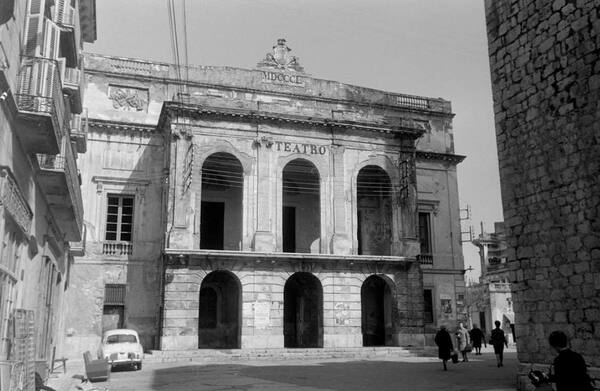
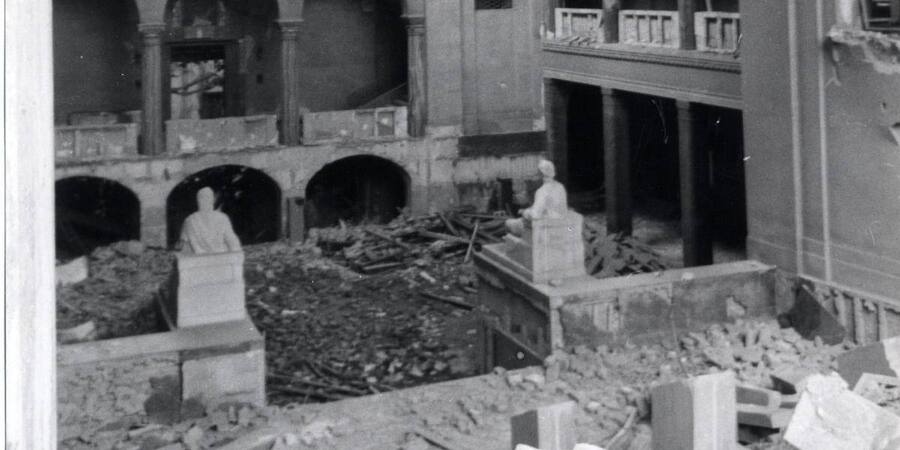
Josep Roca-i-Bros. Municipal Theater of Figueres, 1849. Archival photograph / Ruins of the auditorium after the fire at the end of the Spanish Civil War. Archival photograph
Dalí's Choice: From Ruin to Museum
1919 — One of Dalí’s first public exhibitions was held at the theater;Figueres is his hometown
1960–1961 — The city offered Dalí a hall in the future Empordà Museum—the artist decided to build a separate museum on the theater’s ruins
1963 — Reconstruction project: Architect Joaquim Rosselló i Domènech with the involvement of Alexandre Bonaterre; Dalí participated in the construction and display setup
1974 — Opening on September 28; Dalí continued to transform the space even after the opening
1989 — Dalí is buried in the crypt beneath the former stage—the artist becomes part of his own museum
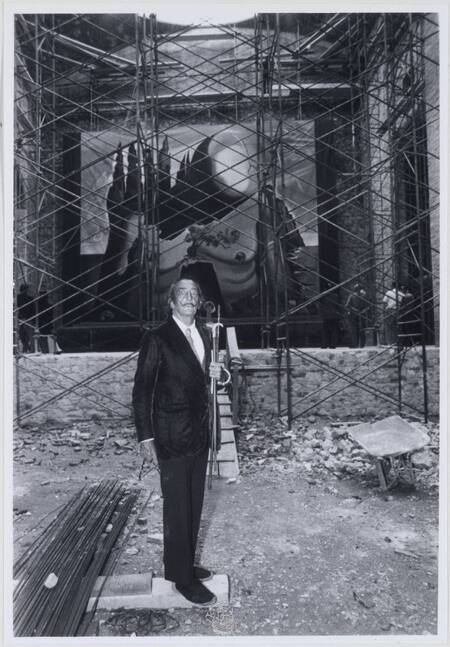
Construction as Staging
Dali himself participated in the construction, the decoration of halls, and the placement of works.
A backdrop, a car, a boat—these are ready objects that are assembled into the building, much like scenery on a stage.
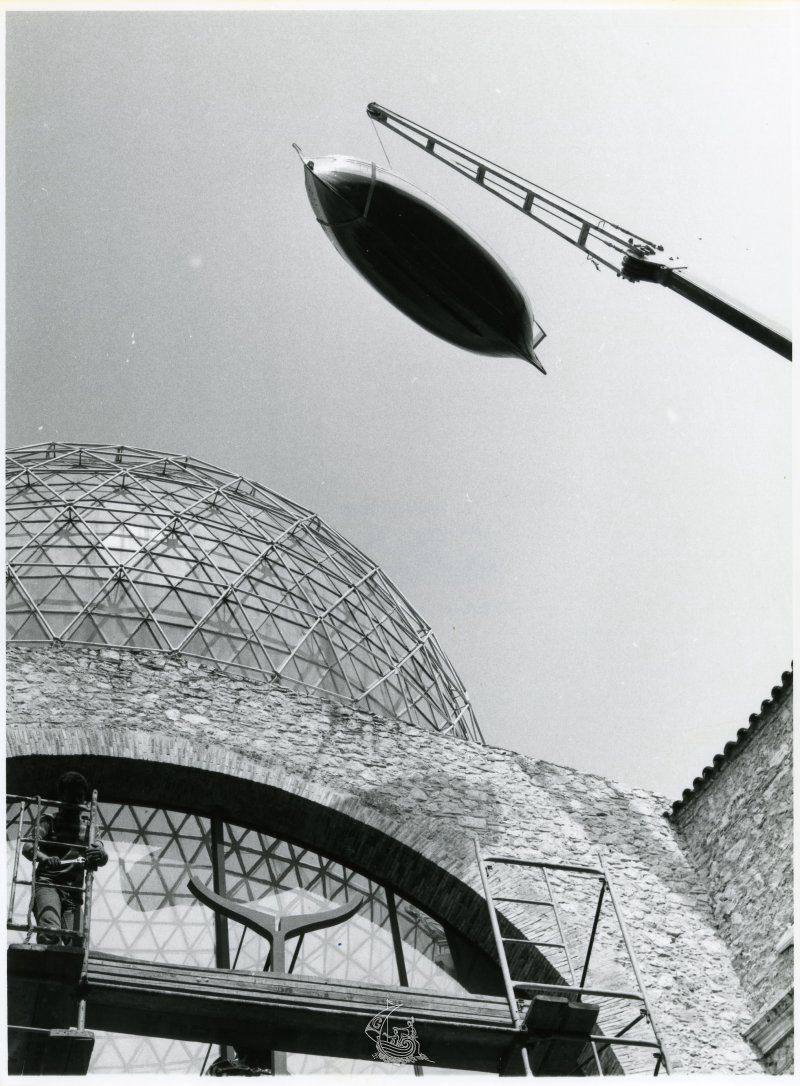
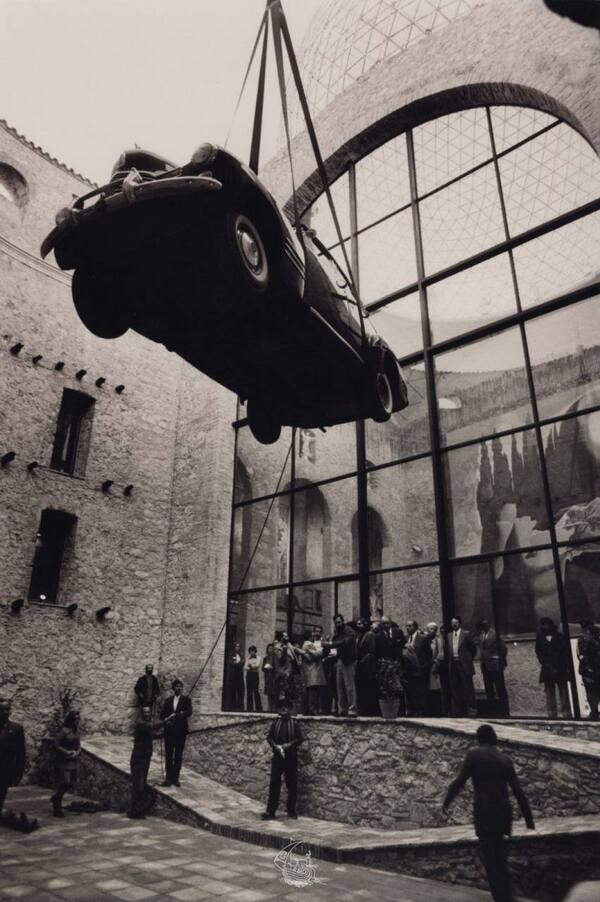
Theater-Museum Construction: Dali in front of the «Labyrinth» backdrop; «Cadillac» lift; Galla boat lift. 1970s–1980s. Archival photographs
Duchampian Museum Concept
Just as Duchamp transformed a found object into a work of art, Dalí selected an existing building and imbued it with new artistic status.(According to Carmen Ruiz González, Senior Curator at the Gala-Salvador Dalí Foundation)Dalí himself compared his decision to a ready-made.
The museum doesn’t begin with a neutral container, but with the transference of a non-artistic object—a building with history—into the sphere of art.
Глава 2
Facade Visual Language
Neoclassical Theatre and Surrealist Decor: Architecture as the Collision of Two Artistic Systems
Order and Intervention
Order. The façade preserves the neoclassicism of a 19th-century theatre: symmetry, order, arched openings.
Intervention. The red wall, croutons, eggs, and mannequins—Dali’s language imposed upon history.
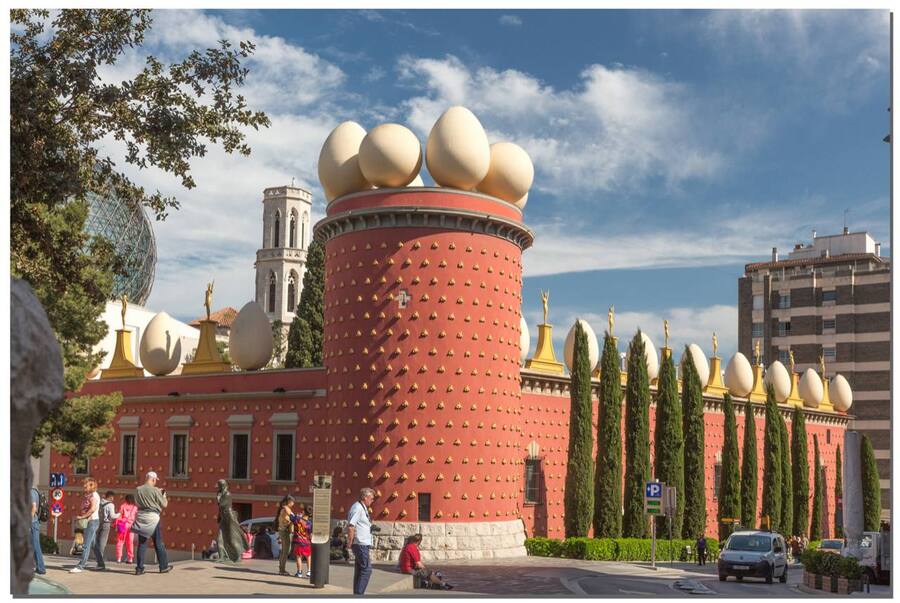
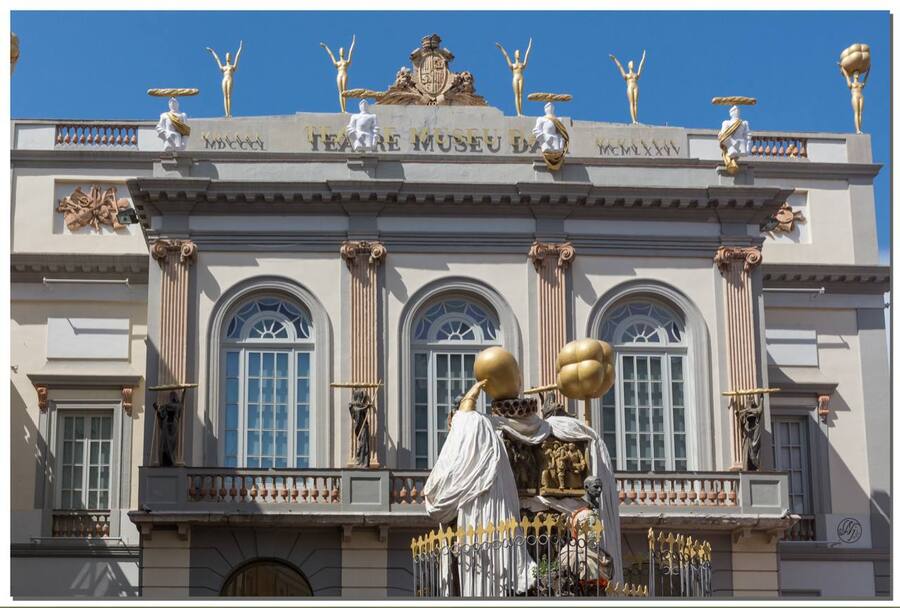
Salvador Dalí. Design of the Galatea Tower (formerly Gorgot), after 1981 /Main facade of the Dalí Museum-Theater, Figueres
The Facade as a Stage with Characters
A bust of the Catalan philosopher Pujolès, admired by Dalí, is mounted atop Homer’s head.
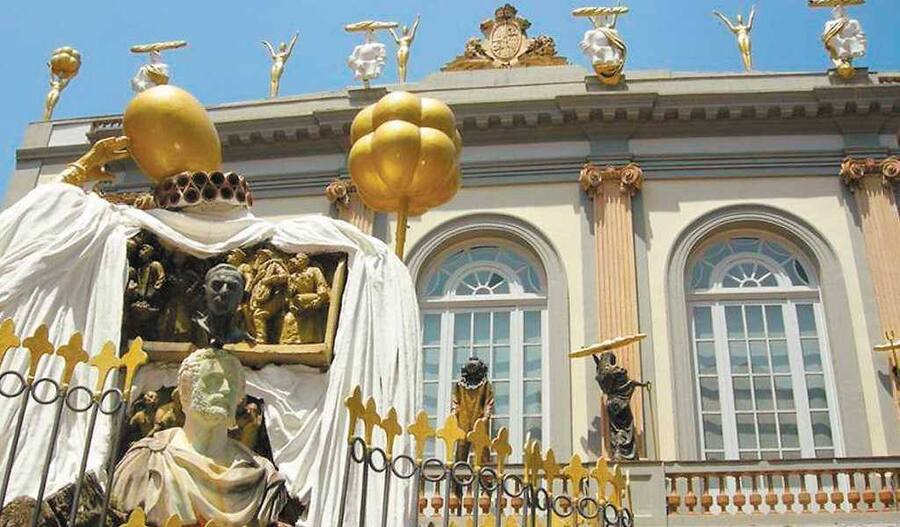
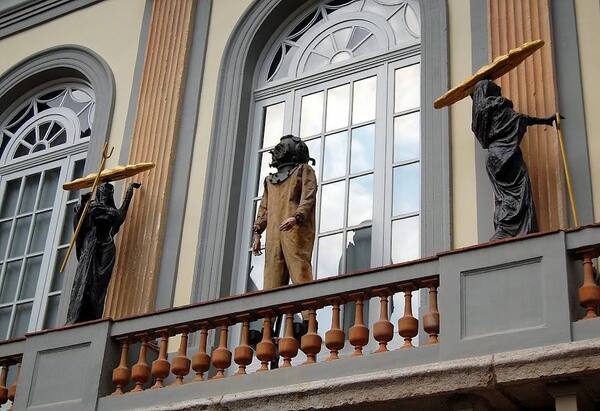
Salvador Dalí. Monument to Francesco Pujol near the main facade / Diver and figures with bread on the main facade balcony
Space as an Extension of the Museum
A giant head with a television mounted on its forehead—a Dalí installation; nearby is Wolf Vostel’s «Obelisk of Television.» A monument to painter Maisonne on tires is one of three dedicated to him.The viewer enters the artwork even before reaching the building.