микробро
Концепт медиа о микромире
Media about creatures invisible to the naked eye but that constantly interact with humans. Bacteria, microbes, viruses, insects, fungi—a world we must understand, not fear, because these beings are already around and inside us.
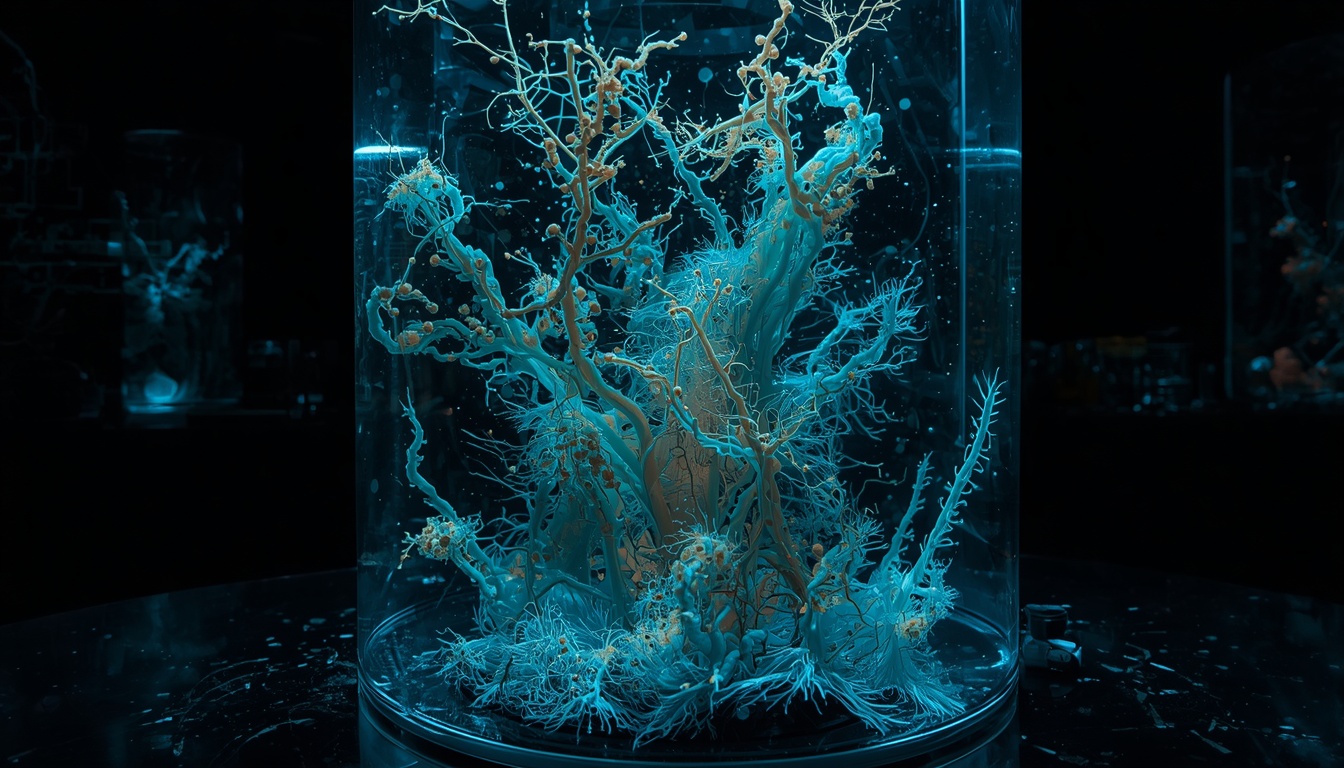
Anthropocentrism is no longer fashionable: humans are no longer the center of the universe, but a part of nature. Yet, a significant portion of this nature remains outside our attention. It is frightening and imperceptible, and yet our bodies, daily life, and behavior depend on it. Simultaneously, this indiscernible world—captured through AI and microscopes—is unexpectedly transforming into a new field of art: bioart.
Media Goal
Popularizing biological knowledge to improve the quality of life and deepen our understanding of the environment we inhabit.Microbro—a science-entertainment media outlet about the invisible living world of humans.It’s not about scaring people with microbes; it’s about introducing them to them.
It’s not just about explaining, but also showing.
It’s not just about showing, but also connecting it to human life.
Themes
Segment: medicine, biology, hygiene, science-popular contentNiche Topic: the microworld, bioart, microscopic organisms and their interaction with humans
You Are Not AloneMicroorganisms that live inside and on humans.those that live on the skin;
those that live in the mouth;
the gut microbiome;
ticks;
bacteria and mood;
microbes after the subway ride;
what happens to the microbiome after antibiotics.The World You Don’t SeeVisual discovery content.microphotographs;
videos;
macro photography;
«guess what this is»;
size comparisons;
AI vs microscope;
magnification ×100 / ×1000 / ×10,000.They Do Things TooMicroorganisms as active agents, not passive «germs.»bacteria controlling behavior;
fungi infecting insects;
bacteria helping animals digest food;
viruses interacting with cells;
microorganisms competing;
symbiosis;
parasitism.The Microcosm as MaterialBioArt + microscopy + creative practice.interviews with bioartists;
«how to photograph a bacterium»;
how a microscope works;
microbial art;
artists working with biological materials;
laboratories;
open calls;
work compilations;
analysis of visual language.
Competitors
Analysis Criteria:1. Positioning and Target Audience
2. Theme and Content Scope
3. Visual Presentation
4. Tone of Voice
5. Platforms (and how they are adapted for each)
6. Formats
7. Strengths: What can be taken away
This is a fascinating place to test a hypothesis: the microbial world is currently explained either as a science, used as a source of wow-content, or discussed in the context of health. The concept of «microbros» could potentially connect these three modes. Any project that can achieve the same effect—to surprise, clarify the obscure, assist with the body, or provide beautiful visual material—competes for the audience’s attention.
Direct Competitors
These are projects that significantly intersect an object of interest, science communication (sci-pop), and strong visual appeal.
Microbial Ecology / @microbioworld
Research on the Instagram project @microbioworld on OUP Academic showed that photographs of microbial cultures generate high reach and engagement. Moreover, the majority of the project’s audience was between 25 and 34 years old, and 77,6% of the reached accounts were not existing followers. This indicates that the visual microcosm is truly capable of extending far beyond the professional microbiological audience.
Positioning and Target Audience: Individuals interested in microbiology; broad audience reach via social mediaContent Themes and Scope: Microorganisms, microscopy, mycologyVisual Presentation: Very high—microphotography and video are content in themselvesTone of Voice: Curious, educationalPlatforms and Formats: Social-first. Photos, videos, brief explanations.Key Takeaways: Microphotography, video, the effect of the invisible worldWhat to Avoid: Overly narrow professional framing
Bacterium is Beautiful
Bacterium is Beautiful is very close to the original idea: the project deliberately seeks to move bacteria beyond the framework of «disease/filth/danger» to showcase their structure, beauty, and role in ecosystems.
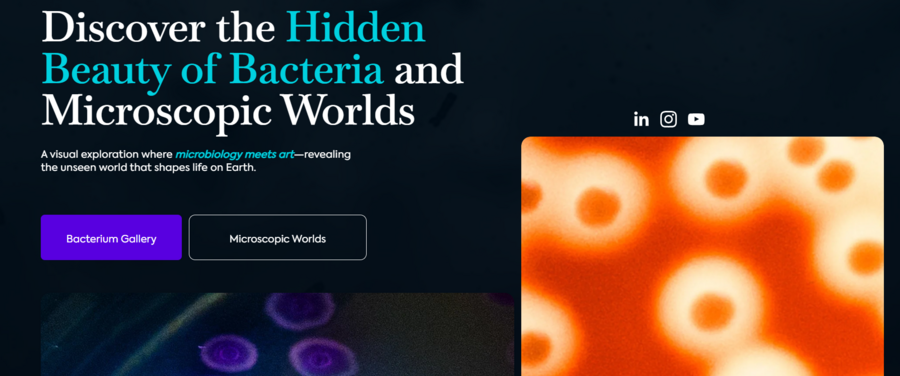
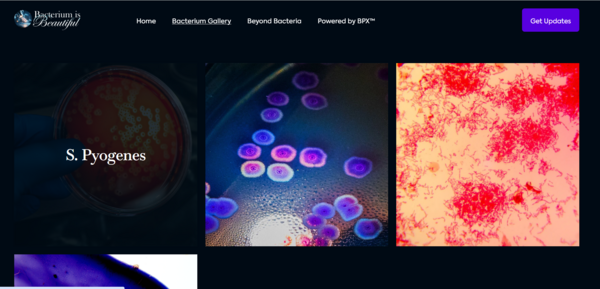
The Bacterium website is beautiful
Positioning and Target Audience: Curious audience + scientific/creative community
Content Themes and Scope: Bacteria, microbial structures, microbiology
Visual Presentation: Very high, aestheticizing the microworld
Tone of Voice (TOV): Contemplative, scientifically poetic
Platforms and Formats: Digital/gallery. Galleries, visual narratives.
Key Takeaway: The aestheticization of microorganisms
What to Avoid: Reducing the project solely to a gallery presentation
The Microbe Institute
The Microbe Institute Website
Positioning and Target Audience: Teachers, children, and families interested in science educationContent Theme and Scope: Microbiology + microbial artVisual Presentation: Gamified, laboratory settingTone of Voice (TOV): Friendly, educationalPlatforms and Formats: Digital + educational activities. Experiments, instructions, microbial art.Key Takeaways: Interactivity and engagementWhat to Avoid: The educational format specifically «for schoolchildren»
Indirect Competitors
They do not occupy the entire niche of the microcosm, but they are already addressing some of the audience’s needs.
PostNauka
Positioning and Target Audience: An educated audience interested in scienceContent Scope and Boundaries: Virtually all academic fieldsVisual Presentation: Illustrative, editorialTone of Voice (TOV): Expert, composedPlatforms and Formats: Website + social media + video. Articles, lectures, videos, thesaurusKey Takeaways: Expertise, terminological precisionWhat to Avoid: Academic distance
Knife
Positioning and Target Audience: Young, educated audience seeking unusual perspectivesContent Themes and Scope: Science + Culture + Society + Human ExperienceVisual Presentation: Editorial, often conceptualTone of Voice (TOV): Ironic, provocativePlatforms and Formats: Website + social media. Long-form articles, explanations, interviews.What to Take Away: Unconventional viewpoints and strong headlinesWhat to Avoid: Excessive provocation where precision is needed
Atlas Obscura