
Concept
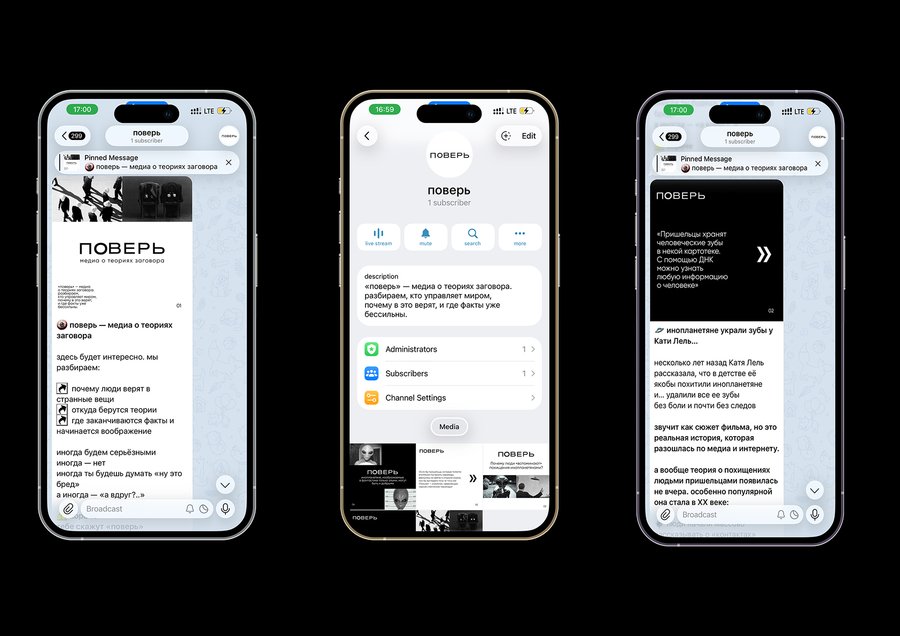
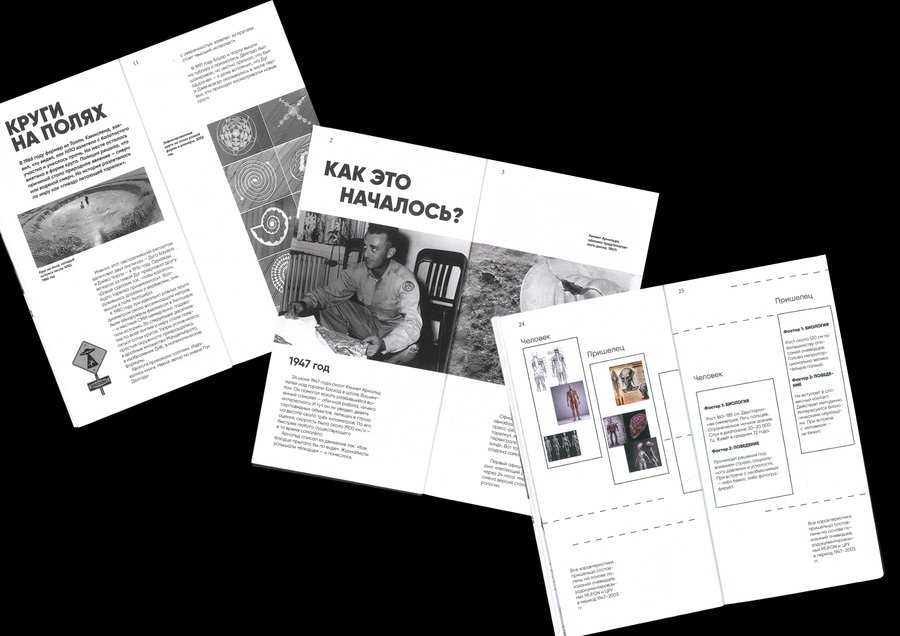
Media regarding conspiracy theories as a cultural, psychological, and informational phenomenon. The main objective is to explore: how these theories arise, why people believe them, how they spread, and where the line between skepticism and paranoia lies.
Visual
Data Sources
The media engages with three types of data. The first shows which theories people are currently discussing. The second is necessary to test those theories. The third tells us about our own audience.

Where do theories emerge?Social Networks and Messengers. Telegram channels and chats, VKontakte public pages, Zen, YouTube, and comments on popular posts. Theories emerge and dissipate here. We track them using a list of keywords and channels via monitoring services like TGStat and Brand Analytics.Search Queries. Yandex Wordstat and Google Trends show which topics are gaining interest and at what time of year. We use this data to select the right moment for a project’s release.News Feeds. Information agency feeds and news aggregators point to events around which rumors may soon surface: eclipses, rocket launches, high-profile incidents.Reader Submissions. The channel bot accepts theories, links, and images that subscribers want to have verified. Questions from comments and survey results are also submitted here.
How Do We Verify Theories?Scholarly Publications. CyberLeninka, eLibrary, and Google Scholar. Here, we search for research in conspiracy psychology, history, and astronomy. Primary Sources and Archives. Declassified documents (such as the CIA’s electronic reading room and US Air Force reports on Roswell), archives from NASA and Roscosmos, museum and library collections, and historical newspapers.Experts. Psychologists, sociologists, historians, astronomers, and digital forensics specialists. We interview them and ask them to review our completed analyses.Fact-Checking Projects. Lapsha Media, Snopes, AFP Fact Check, and Reuters Fact Check. Their materials guide us on where to find the original source, and we personally access and read every single primary source.Photo and Video Verification Tools. Reverse image search on Yandex Images, Google Lens, and TinEye, viewing file metadata, the InVID-WeVerify plugin for video, and services that assess whether an image was generated by an AI.
Audience Data • Embedded Telegram channel analytics: views, reposts, reactions, subscriber growth, and traffic sources. • TGStat: reach, engagement, and mentions of the channel in other channels. • Survey and quiz results. • Comments and messages sent by readers to the bot. • VKontakte community statistics.
Data Schema
The journey from the first signal to publication consists of eight stages. Automatic services handle the collection, sorting, publication, and metric counting. Humans choose the topics, fact-check, write the copy, and deliver the verdict.
1. Signal Collection — Machine Monitoring services collect posts and comments related to keywords every hour. A bot accepts reader requests. Once a week, Wordstat and Google Trends export search query dynamics. Everything collected is placed in the editorial team’s master spreadsheet.2. Sorting — Machine The AI classifier removes duplicates, groups similar messages into stories, assigns each story to a season theme and section, and calculates its spread rate. Images from the stories undergo reverse image searches and are checked by a neural network generation detector. Once a week, the editorial team receives a digest of 10–15 stories.3. Topic Selection — Human The Editor-in-Chief cross-references the digest with the content plan and decides which stories will become the «story of the week, ” polls, or AI-generated features. They also deprioritize topics whose analysis could harm someone—such as tragedies involving fatalities or stories about specific private individuals.4. Fact-Checking — Human with Machine Assistance An AI assistant finds scientific articles and archival documents, translates them, and provides a summary. The author reads the original sources, consults an expert, and formulates the verdict. Only a human issues the verdict, and only facts with references to verified sources are included in the analysis.
5. Content Creation — Human Assisted by Machine The author writes the copy, while the AI assistant helps with proofreading, suggests headline variations, and transcribes interviews and podcasts. The designer generates background images using prompts from the style library and assembles the cards in Figma. The editor proofreads the finished post and sets its status to «Ready for Publication.»6. Publishing — Machine Driven The auto-posting service releases finished posts according to the weekly schedule: «Feature Story» on Monday, a poll on Wednesday, and an analysis on Thursday. Cards and polls are automatically copied to VKontakte.7. Analytics — Machine Driven The service aggregates views, shares, reactions, poll results, and subscriber growth. Every Monday, the editorial team receives a brief report summarizing the previous week.8. Feedback — Machine and Human An anti-spam bot hides advertisements and offensive comments. The AI groups reader questions and requests by topic. The editor responds to comments, adjusts the content plan based on the report, and incorporates topics suggested by subscribers. This data then flows back into the collection stage.
Guidelines for Automated Services
Automated services expedite editorial workflow and operate according to established guidelines. First, general rules apply to all services, followed by a description of each service within the diagram.
Social Media Monitoring
Tools: TGStat, Brand Analytics, Yandex Wordstat, Google Trends. Objective: To identify emerging theories and topics with growing interest. Input: A list of approximately 150 keywords and 300 channels and communities. This list is updated at the beginning of each season. Output: A message table containing the link, date, view count, and repost count. Guidelines: It collects only public posts, always retains a link to the original post and date, and stores only the channel name, excluding author data. Reviewer: The editor cross-references the keyword list with the season’s themes monthly.
Application Bot

Task: To receive theories, links, and images from readers for review. Output: An entry in a shared table including the text, attachments, and submission time. Rules: Immediately confirm that the submission has been received and honestly warn readers that not every submission will be reviewed. Do not ask for phone numbers, email addresses, or other personal information. Write briefly, using an informal tone («ты»), and adopt a media-friendly voice. Who reviews: An editor reviews new submissions twice a week.