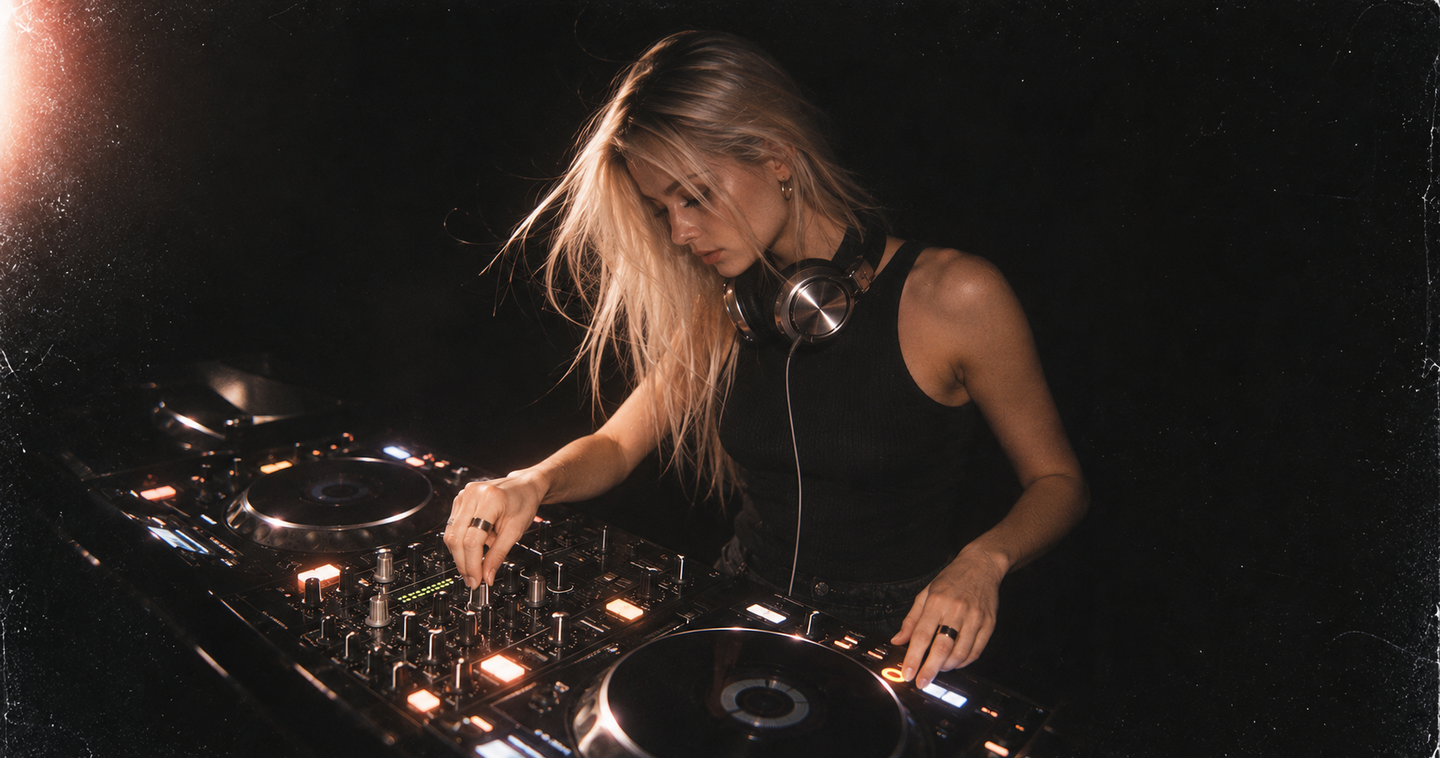
Heat: ПЕРВЫЙ ПУЛЬТ / 03
Telegram-медиа о диджеинге для тех, кто не знает, с чего начать
01. MEDIA CONCEPT
«Первый пульт» — Telegram-медиа о диджеинге для абсолютных новичков.
THE FIRST DECKS. FROM INTEREST TO PRACTICE
«The First Decks» is a Telegram media outlet dedicated to DJing, designed for absolute beginners. This project was created for people interested in electronic music and DJ culture—those who watch DJs perform and want to try their hand at the decks, but aren’t sure where to start.
The primary hurdle for a novice DJ isn’t a lack of information; it’s the complexity and fragmentation of that information. Educational materials are often tailored for individuals already familiar with the equipment and professional terminology. Newcomers are left to navigate software, mixer functions, and mixing principles on their own, making that first step seem much harder than it actually is.
«The First Decks» helps overcome this barrier. The media explains basic concepts in plain language, demonstrates DJ equipment, introduces musical rhythm, and gradually guides the reader toward their first independent experiments.
The project does not replace a professional DJ school nor is it a comprehensive training course. Its goal is to create an accessible entry point into DJing—a place where one can grasp the fundamentals, ask questions, and try applying new knowledge without immediately committing to long-term study.
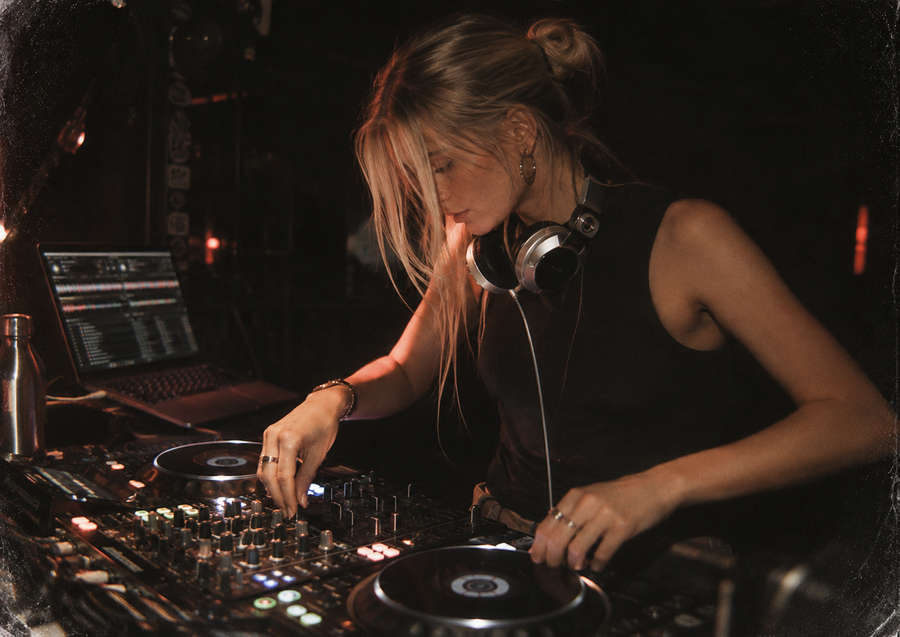
HOW THE «FIRST CONTROL» WORKS
The core principle of the media is: «one publication, one new, understandable thing.» Instead of lengthy theoretical materials, the reader receives concise explanations, visual breakdowns, practical exercises, and examples that help them immediately grasp a specific topic.
The content is distributed across regular segments: «Where to Click? , ” „Jargon-Free Dictionary, ” „Try It, ” „Why Does It Sound Bad? , ” „Ask Me Anything? , ” and „Set Breakdown.“ Each segment covers a specific way to engage with DJing—from explaining terminology to analyzing real-world mistakes.
The primary platform for the project is Telegram. The channel format allows for a combination of text, photos, diagrams, short videos, audio samples, and polls. Through reactions and comments, readers can share their difficulties and ask questions, which then form the basis for new publications.
The media’s operation is founded on selecting and repurposing information from diverse sources. Professional materials, technical instructions, and audience questions are transformed into short, easily digestible posts. Automation tools and artificial intelligence may be used to speed up this process, but verifying accuracy, editing, and final decisions remain human responsibilities.
COMPLEX INFORMATION. A CLEAR FIRST STEP.
02. MEDIA DATA SOURCES
WHERE DOES THE INFORMATION COME FROM?
To create materials for «The First Deck, ” we use several types of sources: official documentation for DJ equipment and software, educational resources, music platforms, and feedback from our audience.
Each source serves a distinct purpose. Technical manuals help verify facts, instructional materials demonstrate real-world DJ techniques, music catalogs provide track examples, and reader questions help identify timely topics for publication.
The media’s role is not simply to gather information, but to curate the most useful content for beginners and transform complex professional knowledge into understandable, accessible material.
TECHNICAL BASIS: ONLY VERIFIED INFORMATION
The primary source for technical data is official documentation from equipment manufacturers and DJ software developers.These include AlphaTheta and Pioneer DJ, the rekordbox documentation, Serato DJ Lite training guides, and open-source Mixxx instructions. These resources allow us to verify button functions, software operating principles, equipment connectivity specifics, and basic music mixing tools.For instance, when preparing an article about the CUE button, the editorial team consults the official manual, verifies the function description, and only then adapts the explanation for beginners.This approach helps prevent technical inaccuracies and stops the dissemination of erroneous advice.MUSIC AS A DATA SOURCE
Beyond technical information, «The First Deck» engages directly with music itself. To find examples and study musical genres, we utilize catalogs from Beatport, Bandcamp, SoundCloud, and available DJ sets.
Here, it is not just the tracks themselves that matter, but also the metadata: genre, tempo, structure, mood, and potential pairings with other songs. Based on this data, we create materials on music curation, set construction, and initial transitions.
Educational videos and analyses by experienced DJs also play a significant role. They help us find practical examples, which the editorial team then explains in its own words and supplements with visual diagrams.
When using music excerpts or third-party imagery, copyright and licensing agreements must always be strictly observed.
THE AUDIENCE HELPS SHAPE THE CONTENT
One of the most important data sources for the «First Booth» is the readership itself. Their questions, reactions, comments, and survey results help us understand which topics generate the most interest and what difficulties beginner DJs face.For example, if questions about selecting two tracks regularly appear in the comments, that topic can become the basis for the next analysis or practical assignment.Thus, the thematic plan remains flexible: the editorial team incorporates feedback and gradually adapts publications to the audience’s needs.For analysis, we primarily use aggregated interaction results. Subscribers' personal data is not needed to determine popular topics.HOW WE SELECT INFORMATION
Not every piece of material we find automatically becomes a publication. For «The First Deck, ” three main criteria are crucial: the reliability of the information, its timeliness, and its usefulness for a beginner DJ.When preparing content, we consider the material’s origin, the publication date, and the specific features of a program or piece of equipment. Essential details are retained alongside the source link so they can be verified and updated if necessary.As a result, we build our own editorial database—containing vetted technical explanations, musical examples, practical exercise ideas, and audience questions.This very foundation becomes the basis for further information processing and the creation of publications using both human effort and automated tools.
03. DATA SCHEMA WITH HUMAN AND MACHINE PROCESSING SEPARATION
FROM INFORMATION TO PUBLICATION
The «First Console» project is built upon the sequential processing of information. Data is sourced from technical manuals, educational resources, music catalogs, and audience feedback.
Some processes can be automated using AI. It assists in gathering and systematizing materials, identifying key points, finding recurring themes, and generating publication drafts.
However, the final decisions remain with the editor. The human element verifies the credibility of the information, selects examples, and tailors the material for beginners.
Automation speeds up content preparation but does not replace editorial oversight.
HOW THE RESOURCE DATABASE IS STRUCTURED
Collected information is stored in a unified editorial database. A card is created for every resource, containing its topic, source, link, verification date, key details, and intended publication format.For example, a card on BPM includes the definition of the term, musical examples, and ideas for visual explanation.This system helps track the preparation of publications, avoid repetition, and quickly find the necessary information. The database is utilized by editors and automated tools.What Does the Machine Do, and What Does the Human Do?
Automated tools handle repetitive tasks: sorting data, finding related topics, transcribing audio, summarizing materials, and creating initial drafts.The human is responsible for the quality of the outcome. The editor verifies information against original sources, corrects inaccuracies, selects musical examples, and ensures the clarity of the explanations.AI does not make autonomous decisions about material publication. Every text undergoes human review.The machine processes the information. The human is responsible for its content.FROM READER QUESTION TO FINISHED POST
Imagine a subscriber asks: «Why do two tracks with the same BPM sound bad together?»The question enters the editorial database. AI helps find related materials and prepare the answer structure. Then, the editor verifies the information, selects musical examples, and explains the root causes of the problem in plain language.The result is a publication for the «Why Does It Sound Bad?» column, featuring a brief analysis and a practical tip.Comments on the new post can become the source of future topics. Thus, audience feedback transforms into valuable content.AUTOMATION WITHOUT LOSS OF QUALITY
The proposed system helps quickly find, process, and transform information into publications. Meanwhile, the editor maintains control over the accuracy of the data, the quality of the explanations, and the final output.
Audience feedback is fed back into the editorial database, helping to select new topics.
Thus, artificial intelligence becomes a working tool for the media—it does not replace the human.
The core principle of the system is to automate processes while retaining responsibility for content.
04. GUIDELINES FOR AUTOMATED SERVICES