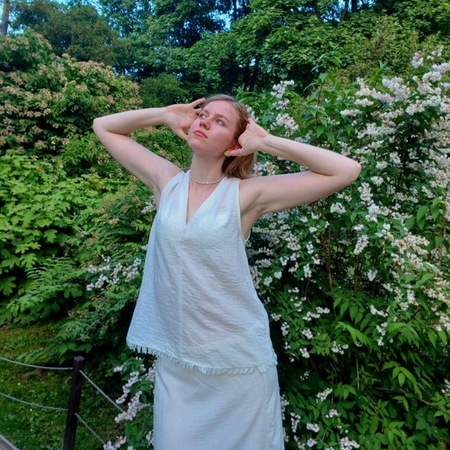
I’m Maria Borodina, an illustrator and book concept creator!
What can i do for you:— Develop complete, original book concepts (from historical non-fiction to interactive picture books).
— Use traditional techniques (gouache, graphite, printmaking) to give projects a unique, tactile feel.
— Expand book worlds into cohesive merchandise lines, including zines, textiles, and ceramics.
— Turn complex research and factual data into engaging visual narratives.I create detailed visual worlds for publishing houses, independent brands, and cultural projects. My work combines deep visual research with a multidisciplinary approach. I always think beyond a single illustration and focus on delivering production-ready, cohesive concepts that solve business tasks and create an interactive experience for the reader.
Thumberlina
A Scale-Accurate Picture Book Concept
The Concept
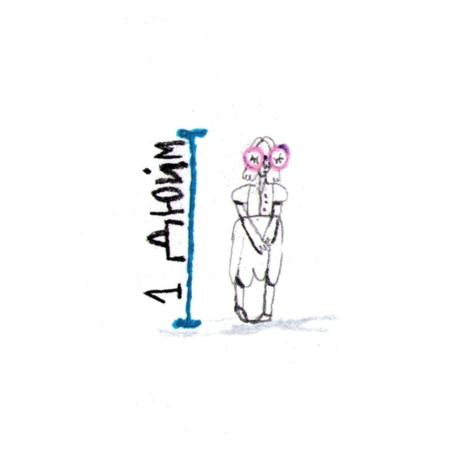
What if Thumbelina was exactly one inch (2.54 cm) tall on every page? In this visual reinterpretation, all plants and environments are drawn at a 1:1 real-life scale. Thumbelina acts as a visual ruler, introducing children to actual botany. For example, if a water lily leaf is 6 inches long, you can fit exactly six characters on it, creating a frame-by-frame mini-animation of her swimming.
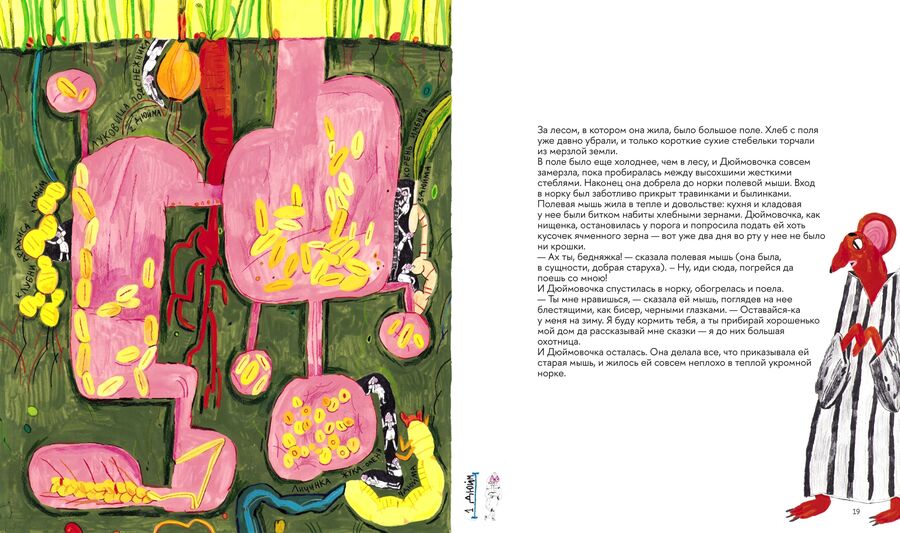
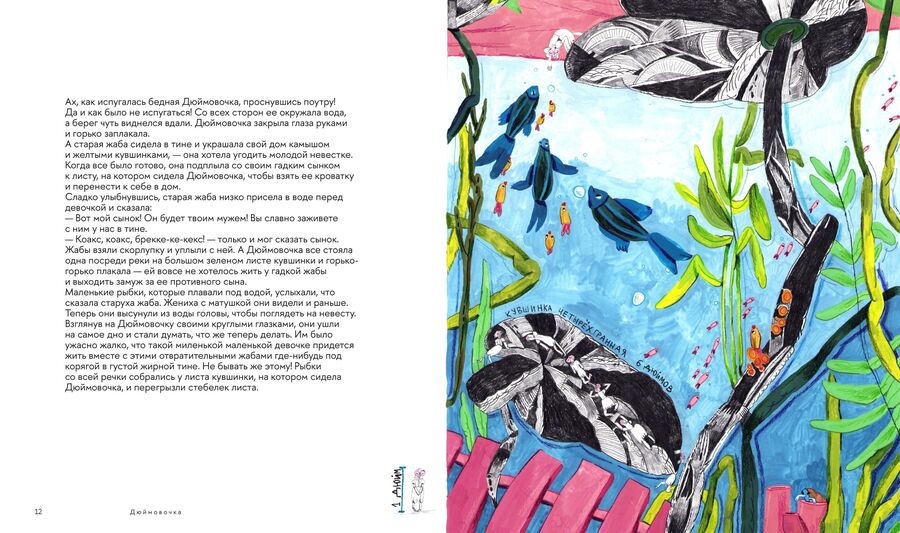
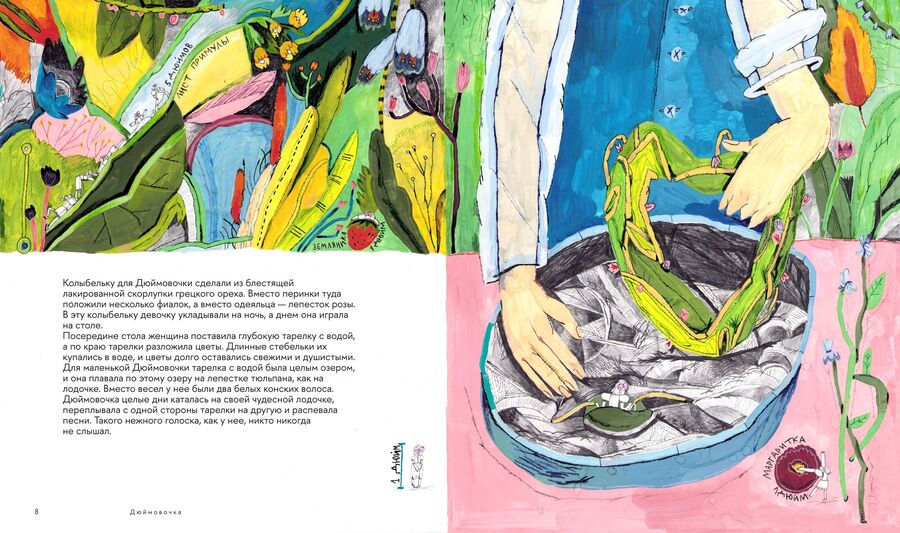
1/3
Visual Language & Technique
To ensure a high level of detail and realistic textures for a large book format, the entire series is executed in traditional materials: a base of gouache finished with heavy graphite pencil. I also use custom frames and borders as a storytelling tool to manage the chronology of events occurring in the text.
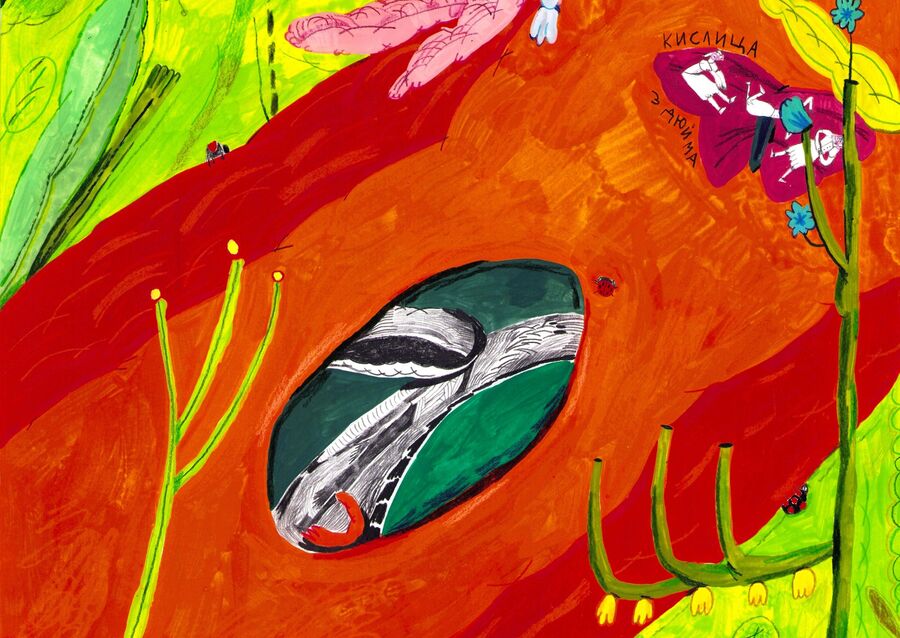
Original size 3500x2480
Original size 3500x2480


1/2
The Final Result
The story is visually divided into several contrasting arcs — from the bright river microworld of insects to the dark underground dwelling of the mole. The result is a fully developed, visually complex picture book concept that offers an interactive reading experience, ready for publication.
Original size 3500x2100
storyboard
Growing Letters
An Alphabet Book & Lifestyle Merchandise Concept
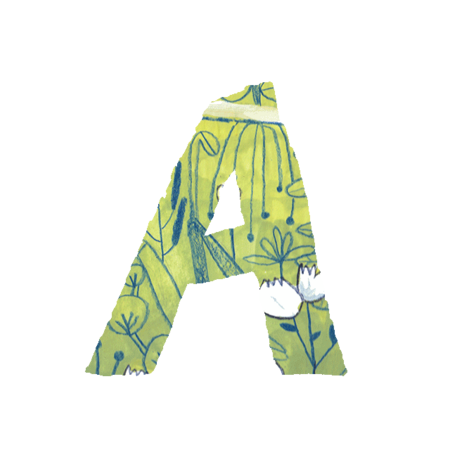
The Concept
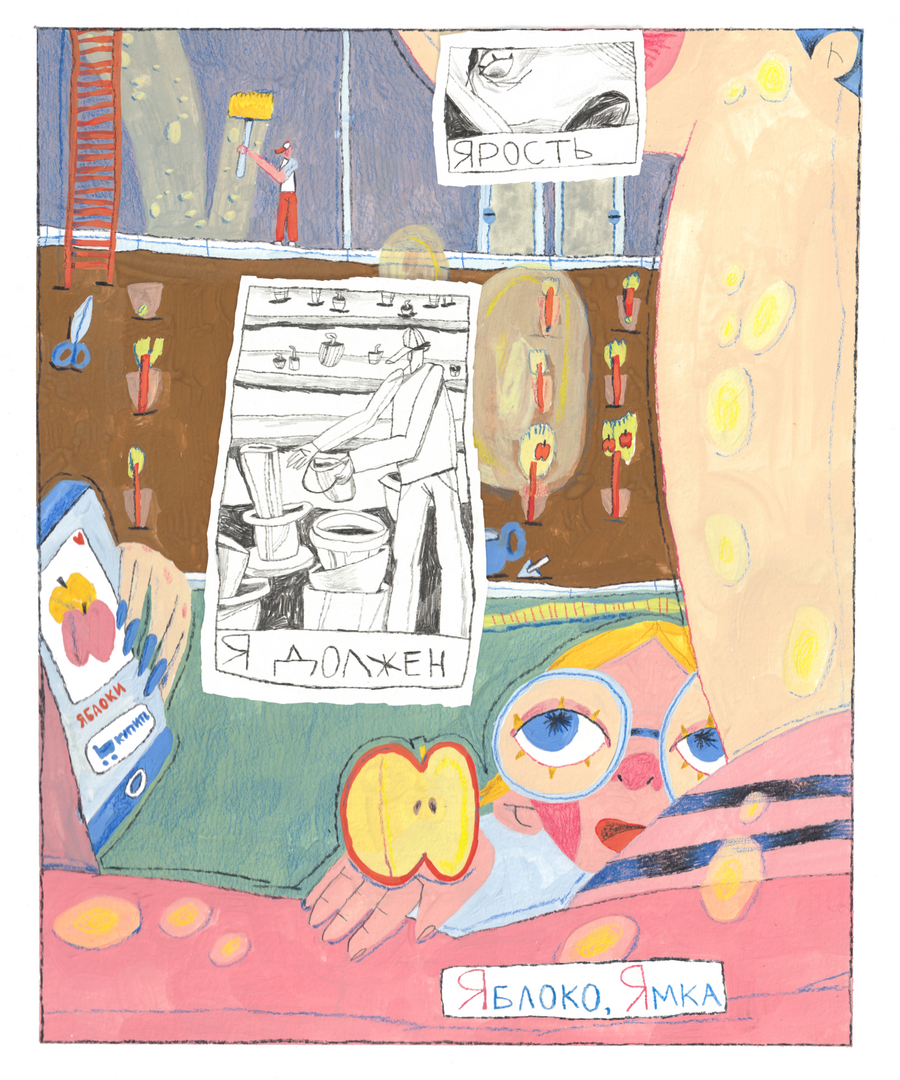
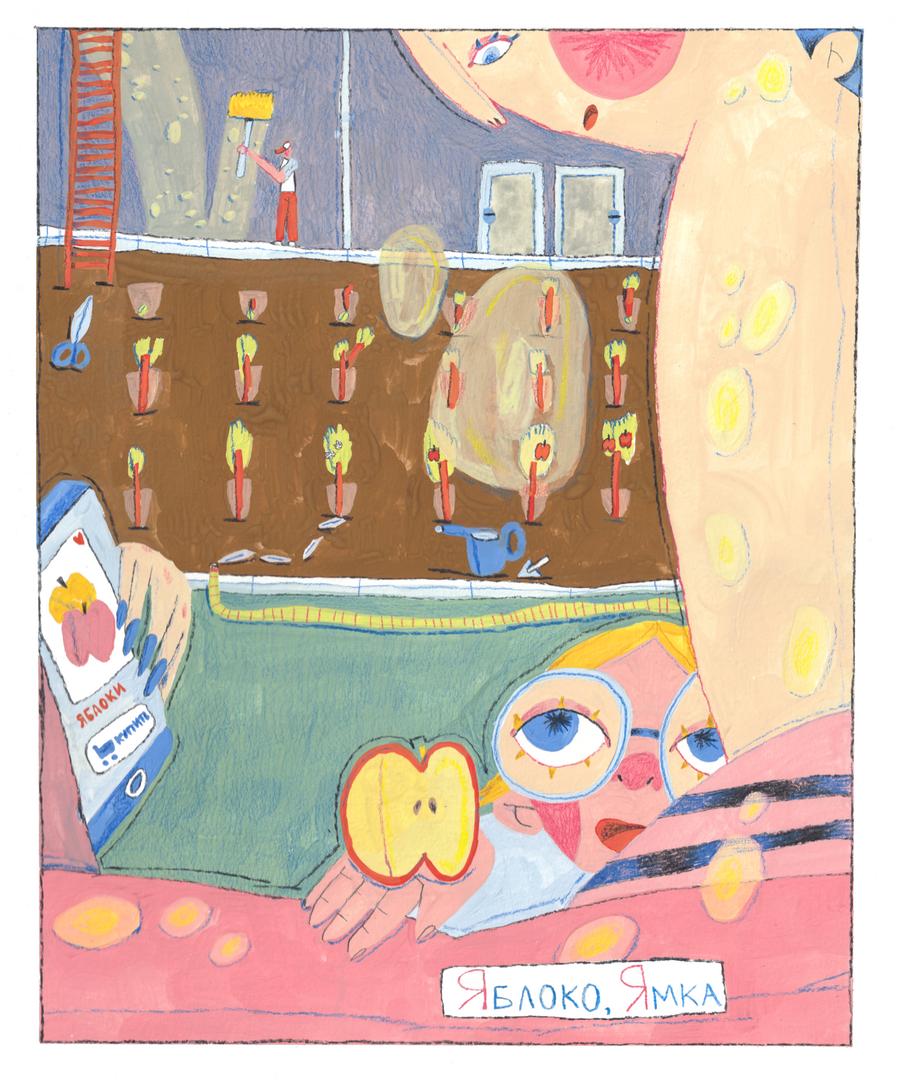
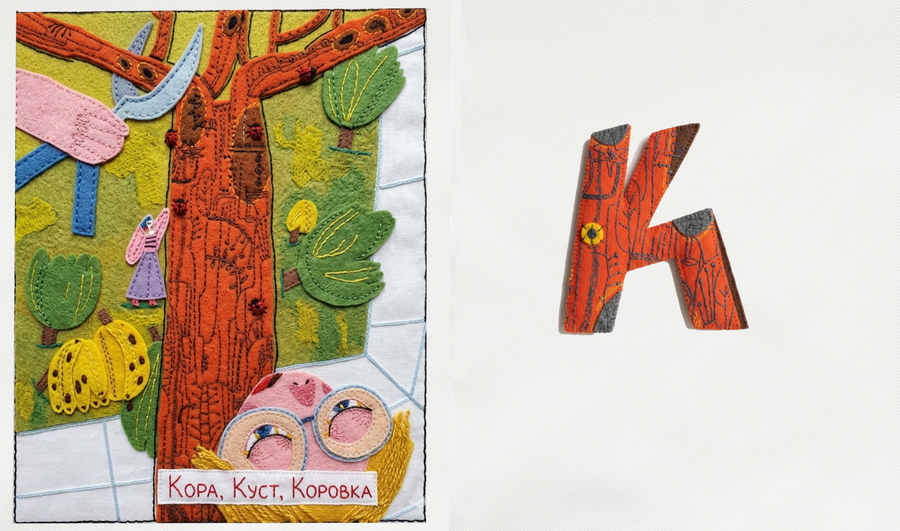
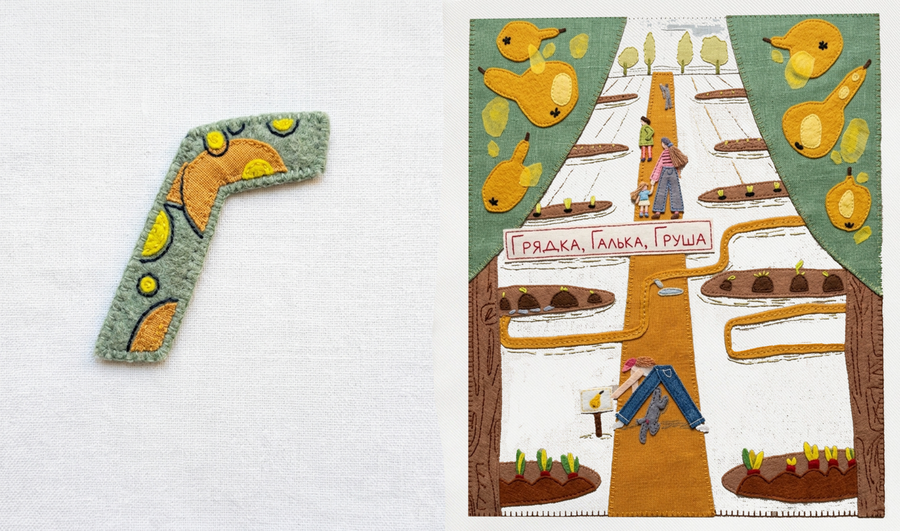
«Growing Letters» is a visual story about a walk through a Botanical Garden, told through a dual narrative. While a child notices leaves, scents, and fruits, the adult is immersed in thoughts, fatigue, and doubts. Instead of simply illustrating words, the letters gently guide the reader toward their meanings, creating a layered story for both children and parents.
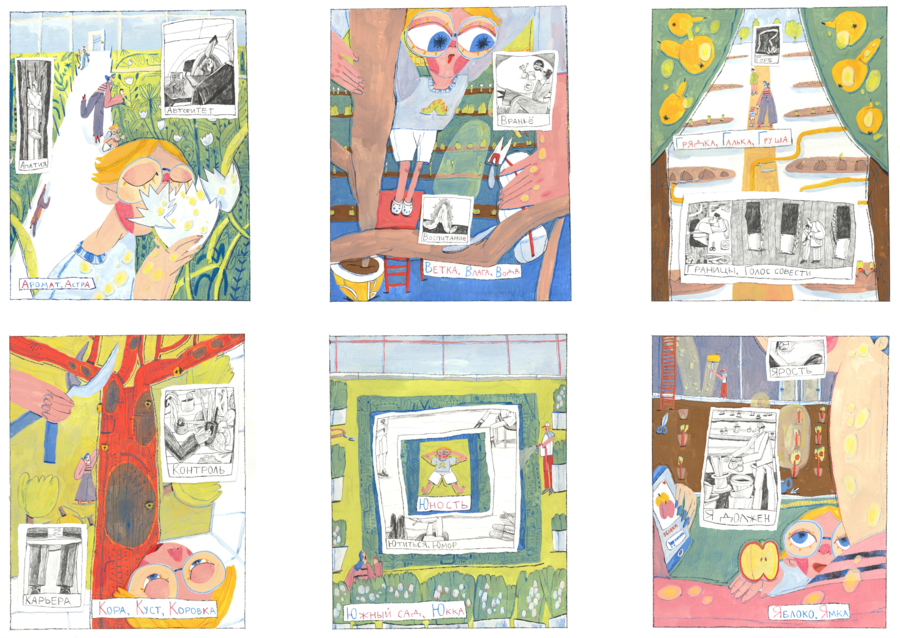
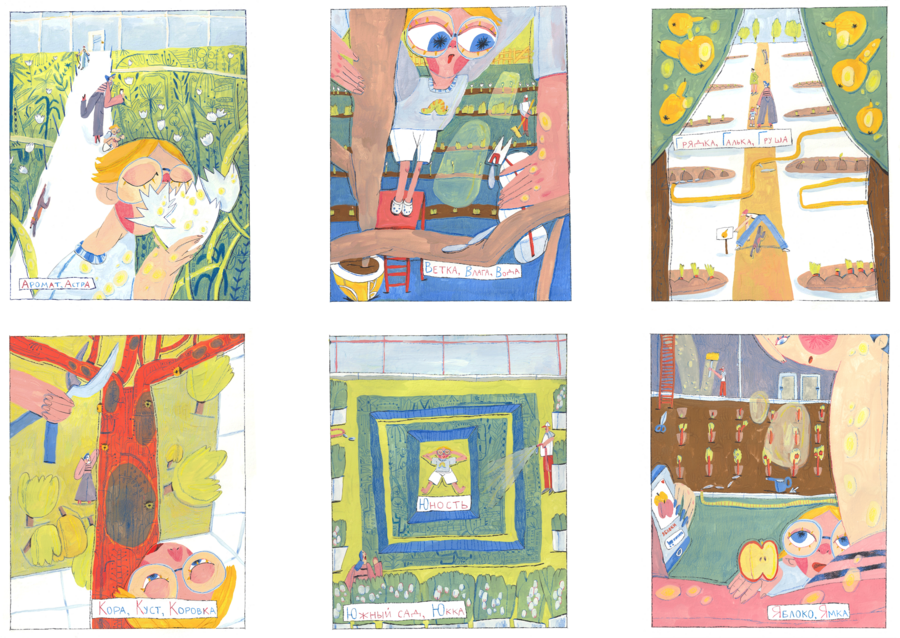
1/2
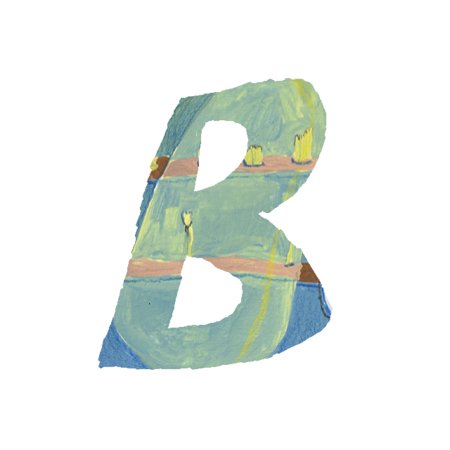
Visual Language & Technique
To separate these two worlds, I used traditional gouache to create the soft, naive environment of childhood, contrasting it with sharp graphite strokes that represent the adult’s inner experiences.
Original size 1440x1026
Graphite strokes
1/2
Traditional gouache
Beyond the Book: A Tactile Experience
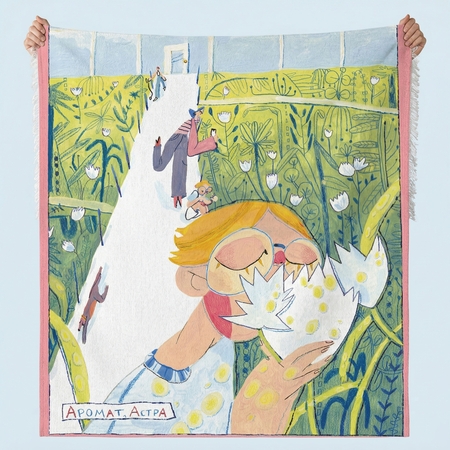
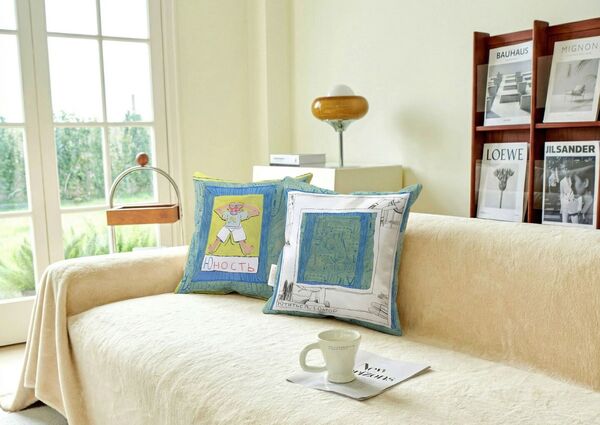
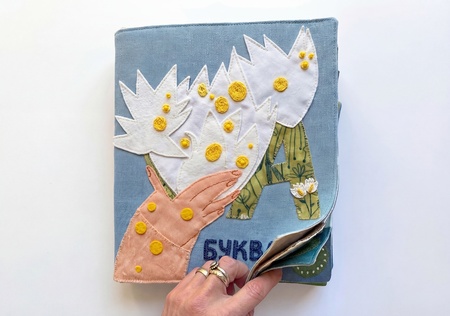
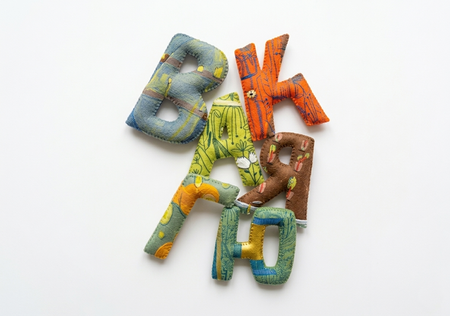
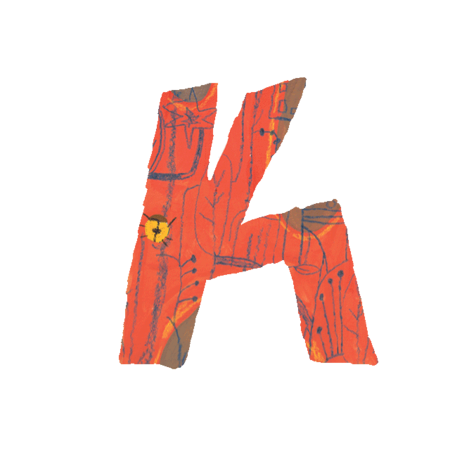
For publishers and concept stores, a book is just the beginning. I expanded this visual universe into physical, tactile objects designed for sensory learning and home decor. The «Textile Alphabet» uses the softness of felt to help children feel the letters, not just see them.
Original size 1440x1021
Merchandising Potential
To demonstrate the project’s commercial scalability, I designed a complete lifestyle collection: from ceramic tea sets and tableware to tapestries, pillows, and thermo-stickers. This adaptable visual system is ready for mass production and perfectly suited for museum shops, bookstores, and design markets.
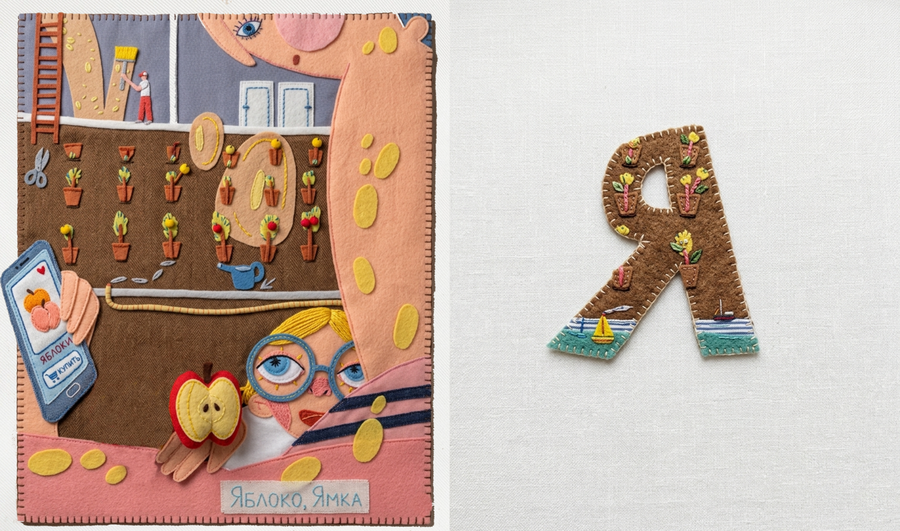
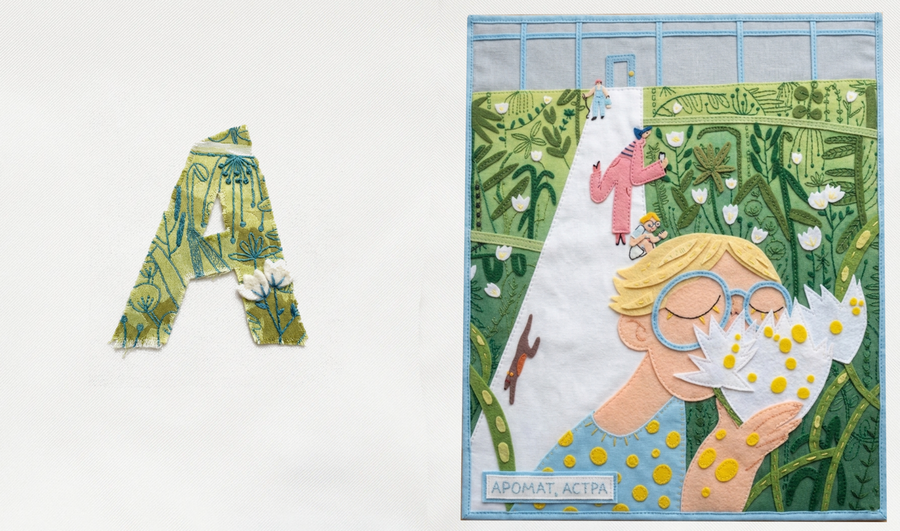
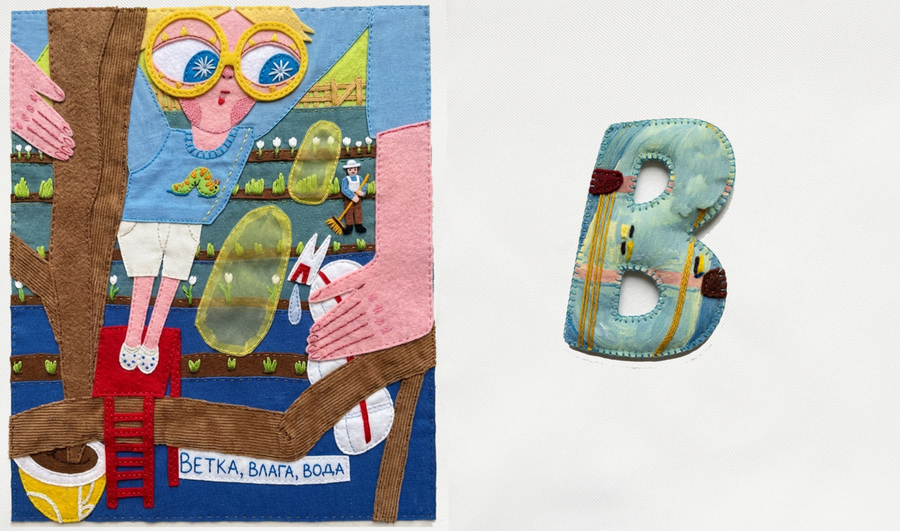
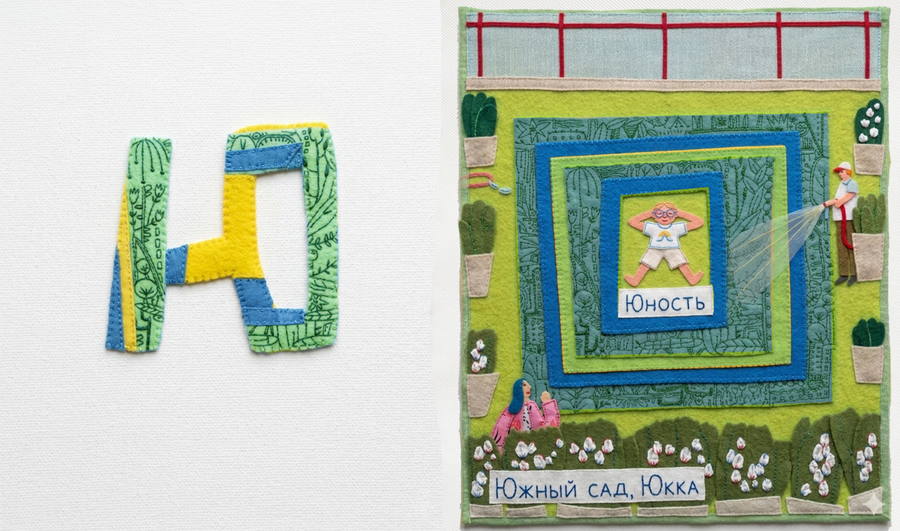
1/6
The bug matchbox
An Interactive Zine & Edutainment Concept
I love listening to a beetle rummaging around in a box.
Viktor Dragunsky
“What I Love and What I Don’t”
The Concept
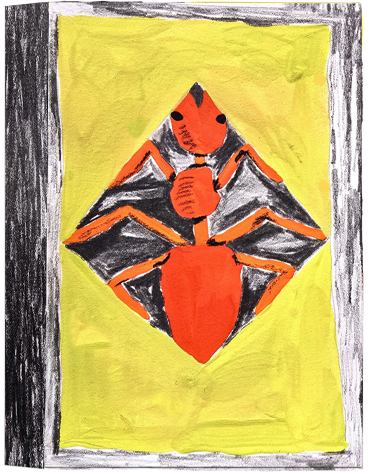
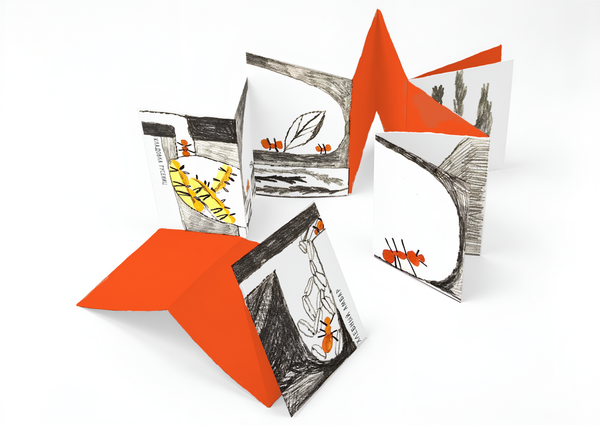
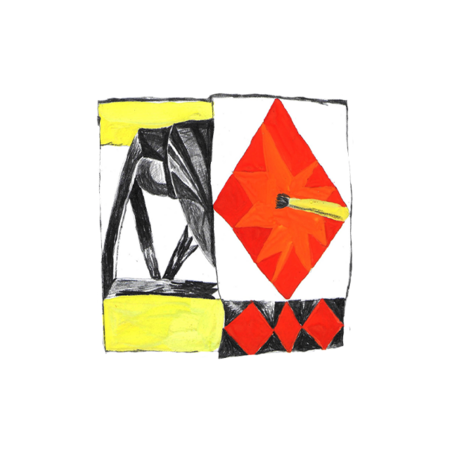
«I love listening to a bug digging in a little box.» Inspired by this quote from classic children’s literature and my own childhood memories of collecting insects, this project reimagines a book as a tactile «matchbox.» It is an interactive educational zine designed to help children explore spatial environments and natural ecosystems through play.
Original size 1440x960
Original size 1440x1020
Visual Storytelling & Paper Engineering
The layouts are highly detailed and auteur-driven, functioning as micro-worlds. One section acts as a cutaway, following a single ant’s journey through a complex, multi-room anthill. Another uses a «camera lens» perspective to examine insect dwellings hidden within a human home.