Concept
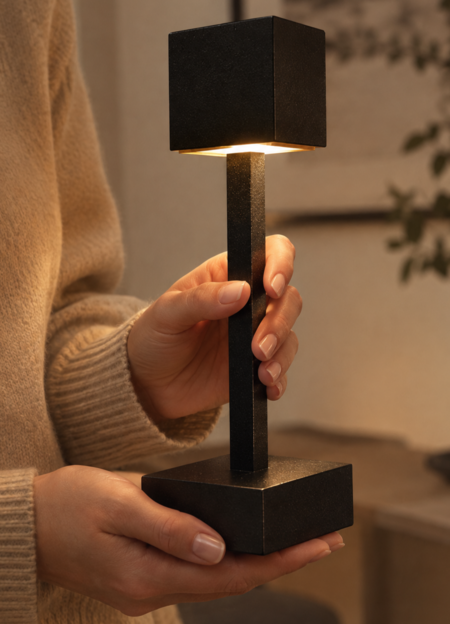
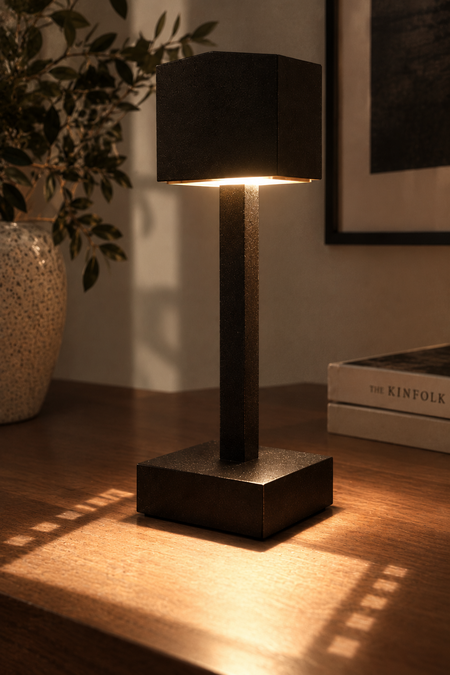
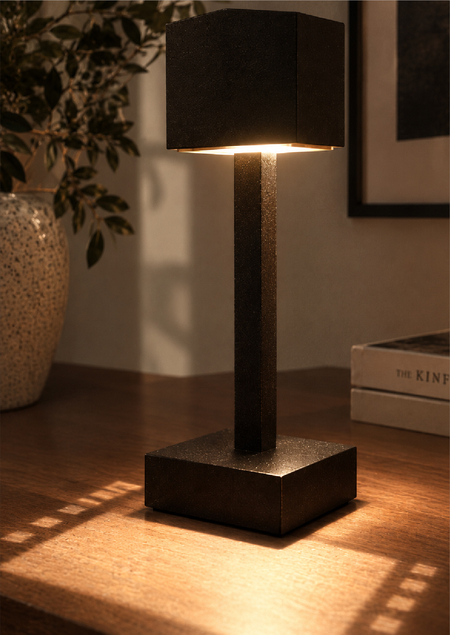
The lamp is inspired by a cinematic frame and the way light helps emphasize the most important elements in an image. Its form is built from simple geometric elements, and the directed light creates a sharp spot of illumination on the surface. The matte dark body and the contrasting point light become the main expressive elements of the object. The lamp’s idea is to translate the principles of how light works in cinema into an everyday object that not only illuminates a space but also changes the way it is perceived.
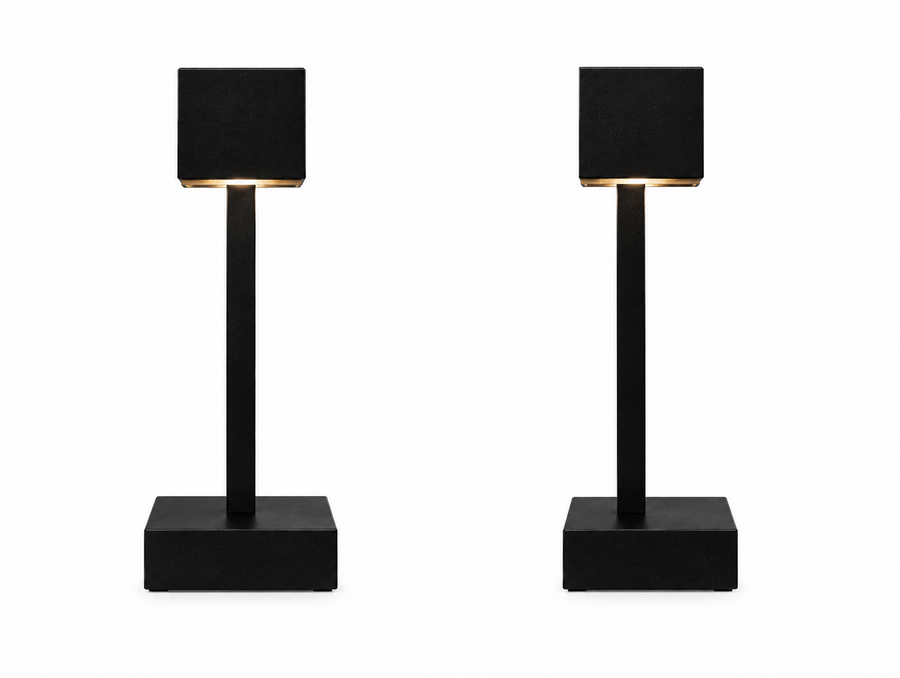
The lamp from the frontal and side views.
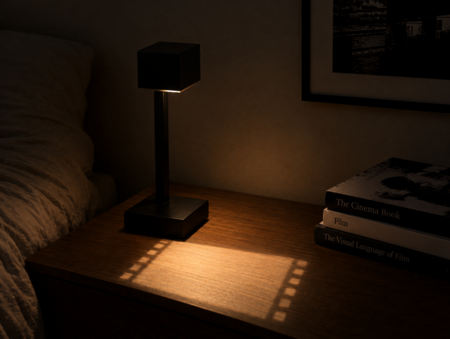
When activated, the fixture casts a focused spot of light in the shape of a rectangular beam, reminiscent of a film frame. The light isolates a specific area of space, creating a contrast between the illuminated surface and the surrounding shadow. Thus, the fixture not only serves as a light source but also translates the concept of highlighting a central subject in a frame into object design.
Parameters
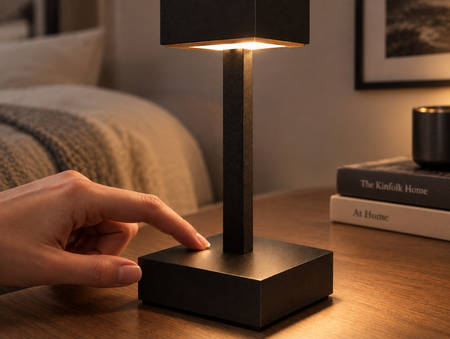
The fixture’s form is built upon a combination of a streamlined body and a focused light source. The geometry of the casing references the boundaries of a cinematic frame, while the light stream functions as an independent compositional element. The design allows light to be perceived not only as functional illumination but also as a medium for creating visual composition on the surrounding surface.
Materials
\- Housing: Aluminum or steel—to create a sturdy structure and precise geometry. \- Light channel inner surface: Matte black surface to absorb reflections and enhance light directionality. \- Diffuser: Matte optical polycarbonate or acrylic to soften the light flow. \- Light source: Energy-efficient LED module with warm or neutral white light.The exterior surface of the casing is intended to be matte, featuring minimal reflections and decorative elements. A black or graphite finish emphasizes the graphic nature of the form. The interior surface of the light channel can be finished in a contrasting manner to draw attention to the light source and its structural design.
250 × 250 × 350 mm
Production Method
The housing can be fabricated using laser cutting of sheet metal, followed by bending and assembly of individual components. An alternative option for prototyping involves 3D printing the housing from plastic, which is then sanded and finished with a matte coating. The internal light channel is shaped to restrict lateral scattering and create a focused light accent.
The cinematic frame pattern is formed by a rectangular light aperture placed in front of the light source. The LED directs light through this opening, while the opaque sections of the housing block its spread in other directions.