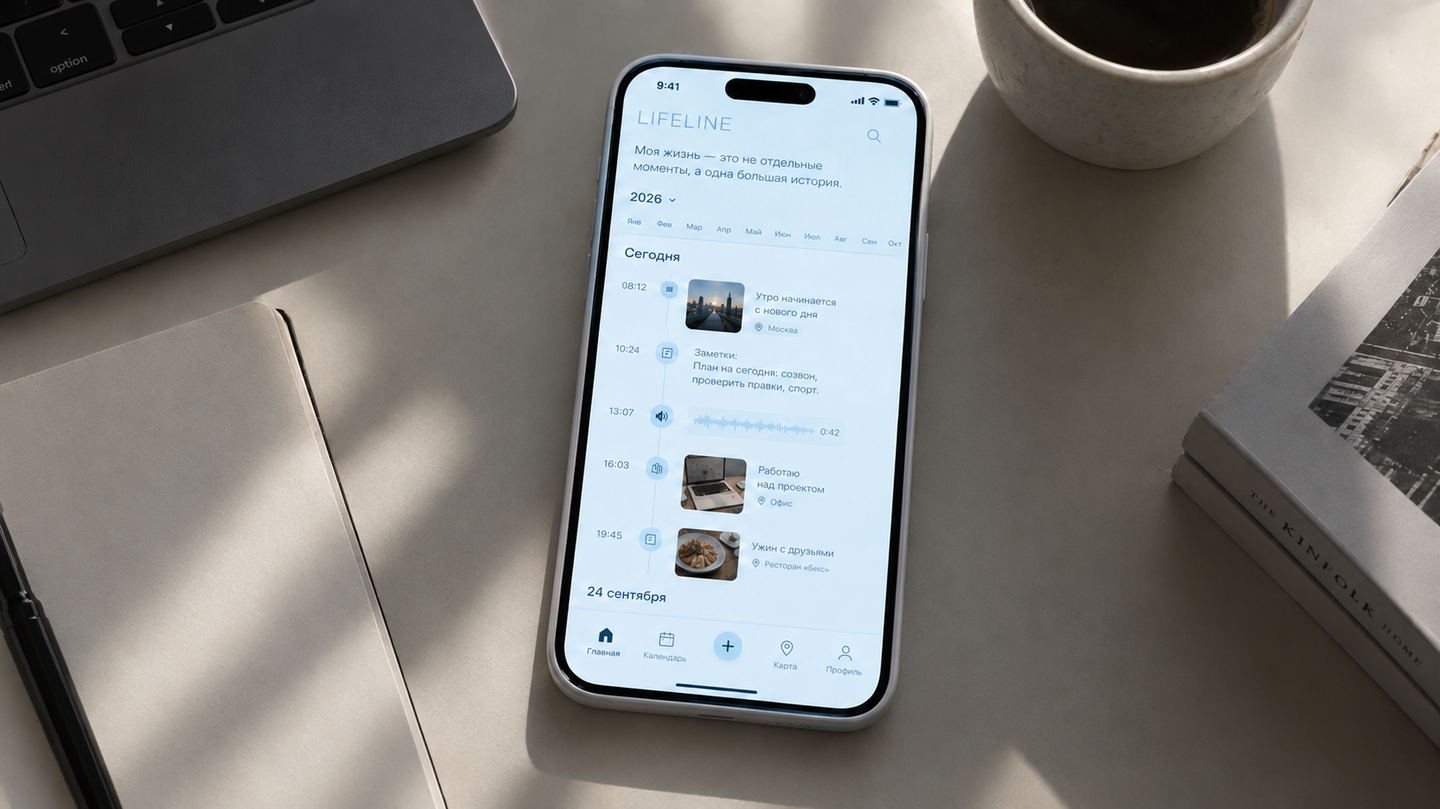
LIFELINE — a social platform and public multimedia journal.
The core concept of LIFELINE is to reimagine the conventional social media format. The user does not create discrete posts that exist independently; rather, they gradually shape a single, continuous chronicle of their life. Every photograph, note, voice recording, or video becomes part of a unified narrative that evolves alongside the person.
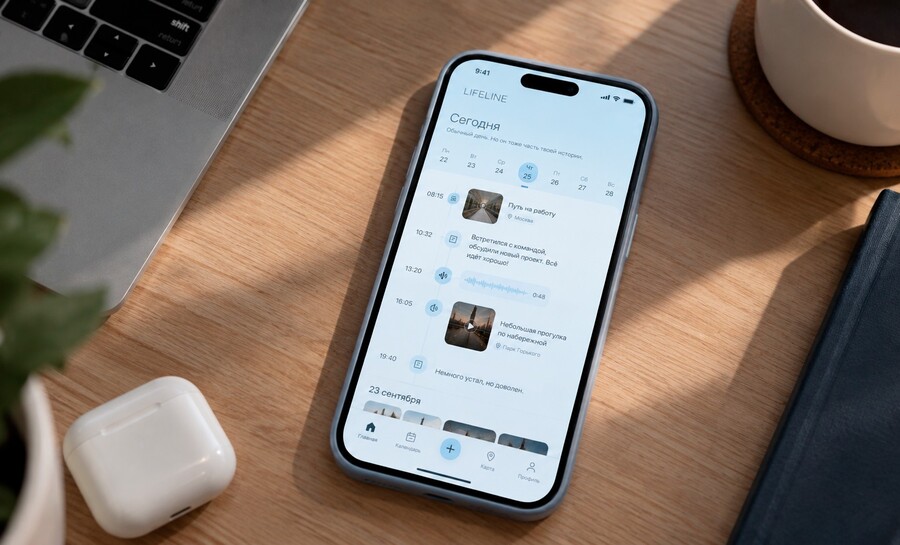
If, on traditional social media platforms, a person typically thinks about what exactly they need to post, here the basis becomes the moment of life itself.The user does not have to come up with a separate post or create «perfect content» every time.It is enough to simply save what happened.
Media Goal
The goal of the LIFELINE media project is to create a digital space where a person’s everyday life can be presented naturally, continuously, and without the need to construct an idealized self-image. The platform is built around simple, familiar moments: ordinary days, minor events, spontaneous thoughts, walks, encounters, studies, work, and other details that compose a personal narrative.
Users don’t need to turn every moment into separate content or only showcase the brightest aspects of their lives. LIFELINE is a digital diary enhanced with photos, videos, audio recordings, and text notes, where the core values are ease of publishing, authenticity, and preserving everyday life as it is.
Media Topics
LIFELINE belongs to the B2C segment and intersects several formats: personal media, lifestyle, and digital journaling. The project’s central theme is the public chronicle of everyday life.
The platform is not merely intended for showcasing striking events or carefully curated highlights. Rather, its purpose is to illustrate life as it unfolds throughout an ordinary day. This could encompass studying and working, taking walks and trips, pursuing hobbies, meeting friends, creative endeavors, significant milestones, personal reflections, or the smallest everyday moments that typically remain absent from social media.
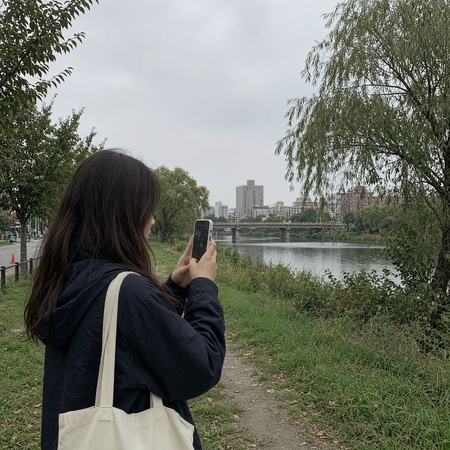
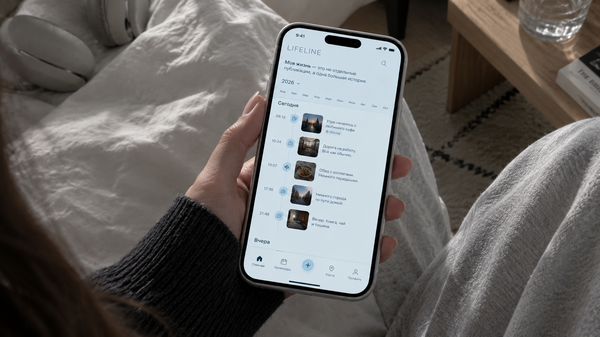
Everyday life is the central focus of LIFELINE.
The user determines how open their chronicle will be. The platform offers several privacy levels:
Public — content is available to everyone; Followers — only subscribers can view the content; Close Circle — posts are available to a selected group of people; Private — the journal remains completely personal.
This allows the same service to perform various functions: acting as a personal diary, a public blog, a means of connecting with loved ones, or an open chronicle of life. Thus, LIFELINE sits at the intersection of a social network, a personal blog, a digital diary, a photo album, and an interactive archive of life.
Competitors and their analysis
Among direct competitors, we can identify the digital journals Day One, Journey, and Daylio.


These services offer users tools for maintaining a personal chronicle: the ability to save text entries, photos, and other formats, view history through a calendar, use search, and revisit old materials. Their core value lies in helping individuals systematize their own memories. However, LIFELINE offers the chance to combine this function with a full social component. If a digital diary is often perceived as a private space, LIFELINE allows part of that history to become public, transforming it into a means of communication with other people.
Indirect competitors include BeReal, Locket, and Instagram*
Instagram is a social network owned by Meta Platforms Inc., whose activities are recognized as extremist and prohibited in the Russian Federation.

BeReal emphasizes spontaneity and the present moment. Locket centers on quickly sharing photos with loved ones. Instagram, on the other hand, provides a developed system for public self-expression through posts, Stories, and Reels.However, most traditional social networks organize the user’s life through discrete units of content: a post, a photo, a Story, a video, or a Reel. In LIFELINE, the underlying principle is entirely different.
Other social networks show your posts. LIFELINE shows your life.
Analysis of existing services shows that users are already accustomed to keeping a digital diary, but their history is often fragmented across multiple platforms. Photos are stored in a gallery, thoughts in notes, videos on social media, and memories remain scattered across various services.
LIFELINE unifies these formats into a single system.
The conclusion is that the less effort publishing requires, the more organic the content becomes. This is precisely why the LIFELINE mechanic must be as simple as possible: the user is not required to turn every event into a separate project. Furthermore, the archive itself can become a standalone value proposition of the product. It is important not just what the user publishes today, but what they will be able to see in a few months or years.
Therefore, LIFELINE must create value not only at the moment of publication but also in terms of temporal perspective. The core idea of the project is that a social network can store not just individual posts, but an entire human history.
Distribution Channels
The LIFELINE distribution channels are structured around a proprietary digital platform, with the mobile application serving as its core and the website acting as its public extension.
The mobile application is the primary product, housing all core functions: moment creation, timeline, calendar, profile, subscriptions, comments, reactions, notifications, memories, photos, and more. Its main objective is to allow users to create and view their personal chronology in the simplest, most convenient, and most natural way possible.The website, on the other hand, serves as an auxiliary public space for LIFELINE: here users can view open chronicles, explore archives, and review yearly stories.