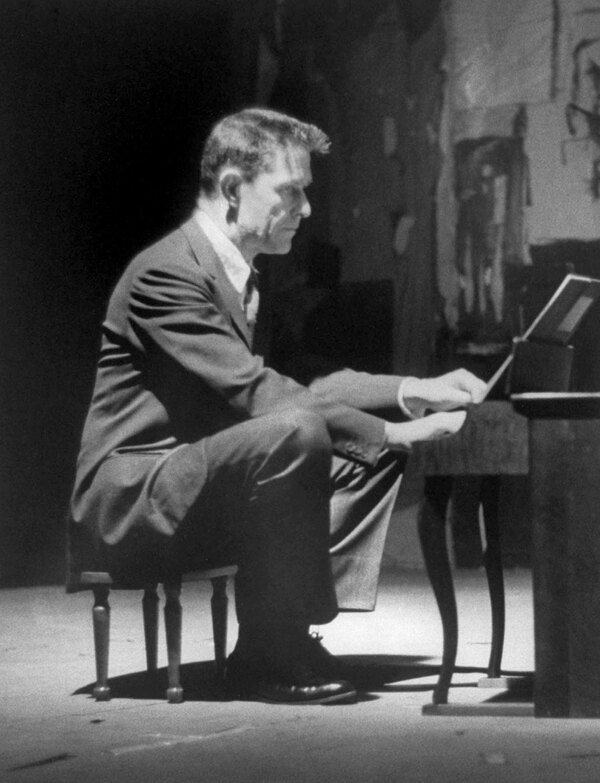
In the German city of Halberstadt, a concert has been ongoing for 25 years—one you can hardly afford to miss. This piece, which resonates within an abandoned church, began its performance on September 5, 2001, and is scheduled to conclude on September 4, 2640. We tell you its story.
In Halberstadt, John Cage’s ORGAN²/ASLSP is being performed—a work whose title stands for «As Slow As Possible"—meaning, quite literally, «as slowly as possible.» As is typical with Cage, the concept turned out to be terrifyingly literal. To date, the music in the church has changed only 17 times.
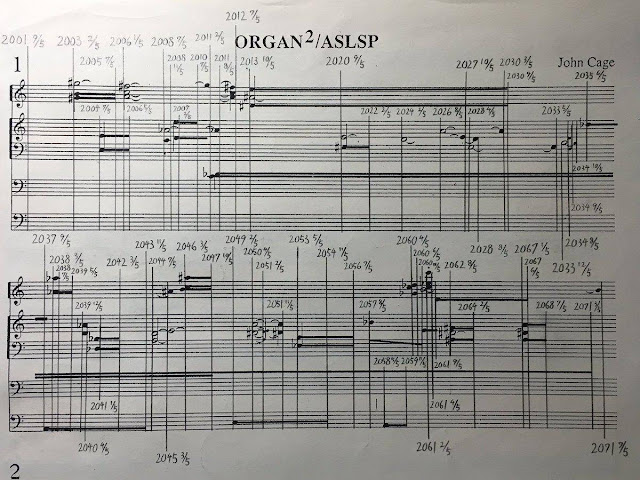
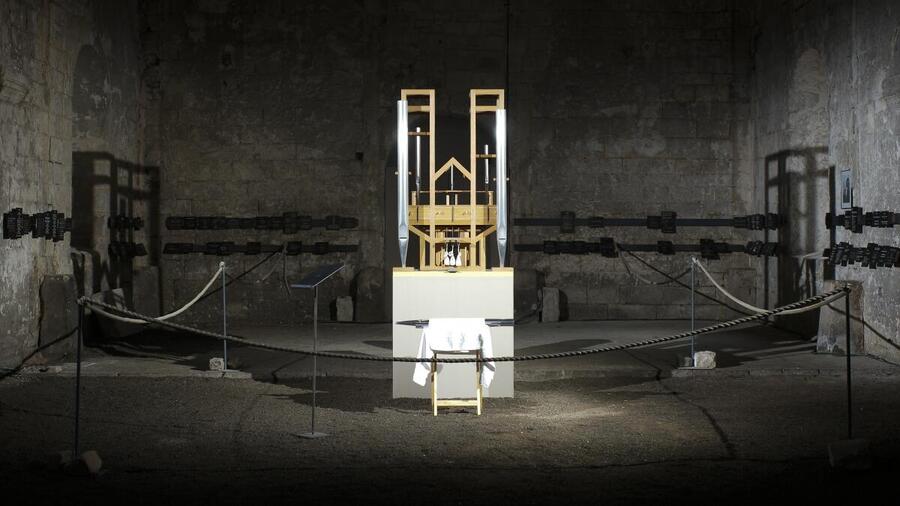
Cage composed a piece for piano in 1985, and two years later adapted it for organ. The score does not specify exactly how slowly it should be played. A typical performance lasts about half an hour, but the phrasing «As Slow As Possible» leaves the performer room for experimentation. At Halberstadt, they decided to test what would happen if the instruction were taken literally. The idea originated in the 1990s with a group of musicians and philosophers who were discussing the potential duration of the work. The organ proved to be the ideal instrument: unlike the piano, it can sustain sound for virtually unlimited time. For the project, they chose the abandoned St. Burkhard church—a 13th-century building in which a specially constructed organ was installed.
Where did the specific figure of 639 come from?
This is where the mathematical elegance comes into play. In 1361, the famous organ was installed in the Halberstadt Cathedral—one of the earliest major organs in history. There were 639 years between 1361 and the start of the new millennium. The project organizers decided to use this number as a kind of historical mirror: 639 years ago, there was a medieval organ, and for the next 639 years, Cage’s music would sound. This led to the chosen completion date—the year 2640.The performance began on September 5, 2001. Moreover, there was no music in the conventional sense at first; for the first 17 months, only air was heard until the organ moved to its first note. Subsequently, individual sounds and chords began to be sustained for months and years.
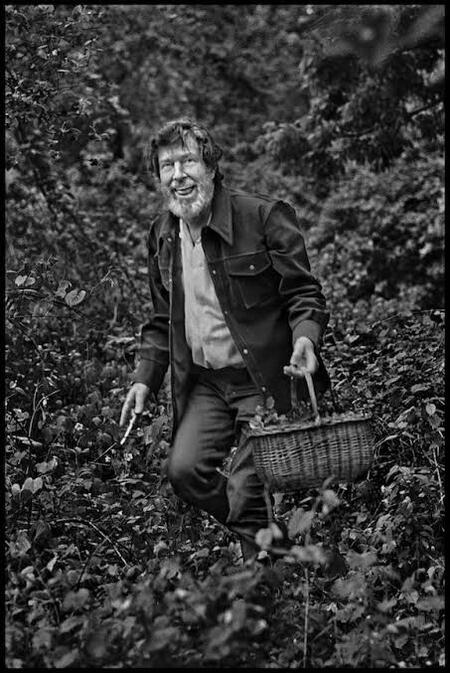
Not Just a Composer, But a Mycologist
John Cage had another passion, one that seemed entirely unrelated to music: fungi. In the 1950s, mushrooms saved him from hunger and financial hardship. Later, his knowledge in this field became so serious that his friends began joking that if Cage stopped feeding his music, the mushrooms would always sustain him. The composer was a member of the New York Mycological Society and even won $600 after participating in a television quiz where he answered questions about fungi.Fungi interested Cage not just as an object of study. He saw in them an example of a world that exists completely independent of human concepts of order and beauty. In nature, there is no need to classify everything, structure it into a harmonious system, or subjugate it to an author’s intention—one simply needs to look closely and listen.In this sense, Mycologist Cage and Composer Cage were the same person. In both endeavors, he was interested in what happens when a person stops imposing their own order onto the world. In music, he yielded some decisions to chance, while in the forest, he sought species that existed long before humans invented names for them.
Therefore, every new sound here becomes an event. When the chord changed in 2020, after 2,527 days of sound, visitors came from all over the world to the church. Another change occurred in February 2024. And on August 5, 2026, the organ changed its sound for the 17th time.
The most fascinating aspect here is not the scale of the experiment, but its relationship to time. A person enters the church, hears a sound that was initiated long before their arrival, and understands that they will never hear the complete composition. Furthermore, no living person will be able to do so: if the project reaches its conclusion, the final sound will be heard by people for whom 2026 will be as distant a history as the Middle Ages is for us.
And in this, there is a quite accurate continuation of Cage’s ideas. His music constantly questioned the boundary between composition and chance, sound and silence, music and the surrounding world. In Halberstadt, they also challenged the conventional notion of time in a musical work. Typically, a concert lasts for several hours and then ends. Here, the concert exists longer than a human life.
Moreover, the project has learned to exist not only in time but also across generations. The organizers sell special «final tickets» for the concluding event in 2640. The ticket costs 2640 euros, and it can be passed down to children, grandchildren, and future descendants. In other words, a person is literally buying the right to attend a concert they are almost certainly never going to see themselves.
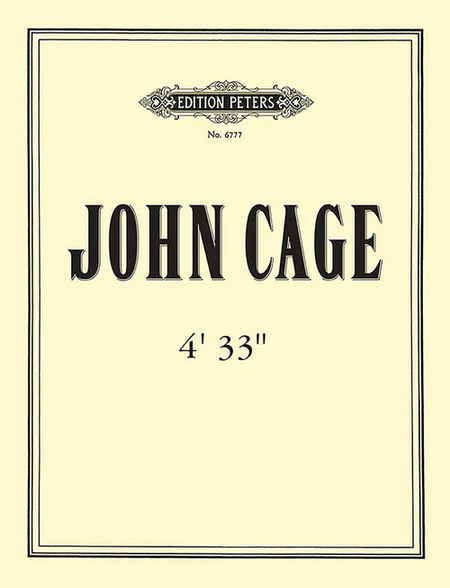
4′33″—Music with No Notes
In 1952, John Cage composed arguably the most famous work in the history of modern music. It is titled 4′33″—referring to the amount of time the performer spends with the instrument without producing a single sound.
Cage arrived at the concept of 4′33″ after visiting an anechoic chamber—a space isolated from external noise. He expected to hear absolute silence, but instead, he heard two sounds: his own circulation and the workings of his nervous system. Engineers explained to him that a completely silent state does not exist for a living human being.
From this, Cage drew a rather radical conclusion: true silence does not exist—meaning that any sound can become music if we begin to listen to it.
Perhaps this is the central paradox of As Slow As Possible. It is a work you cannot listen to in its entirety, but precisely because of that, it compels deeper thought about music than many readily accessible concerts. Its listener is less present at the performance and more integrated into a chain of people that began in 2001 and—if it stays on schedule—will conclude in 2640.
Currently, this chain is estimated to be about four percent complete. More than six centuries remain until the finale. So, if you have plans for September 2640, you might want to start clearing your calendar now.